Every day usually feels like a holiday when you’re living in a place like Sarasota, Florida, with its top-tier beaches, sunny skies, and endless ways to enjoy the outdoors. But while you’re planning weekends by the water or relaxing on the patio, there’s another outdoor space competing for your attention: your lawn.
Summer can be tough on grass. Long stretches of heat, strong sun, and humid conditions can leave even healthy lawns looking tired if they don’t get proper care. A lush lawn isn’t the result of luck. It comes from giving your grass what it needs at the right time and staying consistent with a few key tasks. From watering and mowing to feeding and maintenance, there are practical steps that help your yard stay green and healthy through the hottest months of the year. Let’s take a closer look at how to keep your lawn looking its best all summer long.
Add or Repair Sprinklers Before the Summer Heat Peaks
Summers in places like Sarasota are not just warm. They are extremely hot and humid. Grass loses moisture quickly during long stretches of high temperatures, which means consistent watering becomes one of the most important parts of lawn care.
A sprinkler system helps deliver water evenly across the yard without relying on a hose and guesswork. If you already have sprinklers installed, check them before summer settles in. Broken heads, clogged nozzles, leaks, and uneven spray patterns can leave some sections soaked while others dry out.
Scheduling sprinkler repair in Sarasota early in the season helps prevent those problems. A properly working system provides reliable coverage, supports stronger root growth, and reduces the risk of dry patches appearing when the hottest weather arrives.
Mow at the Correct Height for Summer Growth
Many homeowners think shorter grass means less mowing. In summer, that approach usually creates more problems than it solves. Cutting grass too short exposes the soil to direct sunlight and causes moisture to disappear much faster.
Instead, keep your mower blades high enough to leave the grass slightly taller. Longer blades provide shade for the soil, help roots stay cooler, and reduce stress during hot weather. Sharp mower blades matter just as much. Dull blades tear grass instead of cutting it cleanly, leaving rough edges that can turn brown.
Water Deeply Rather Than Frequently
Light watering every day often encourages shallow roots. Grass becomes dependent on constant moisture near the surface and struggles when temperatures rise.
A better approach is watering deeply and less often. Deep watering encourages roots to grow farther into the soil where moisture remains available longer. Lawns with deeper roots generally stay greener during dry periods and recover faster after heat stress.
Early morning is usually the best time to water. Less moisture evaporates, and the grass has time to dry before evening. Watering late at night can leave lawns damp for extended periods, creating conditions that encourage fungal growth and other lawn problems.
Feed Your Lawn with the Right Summer Fertilizer
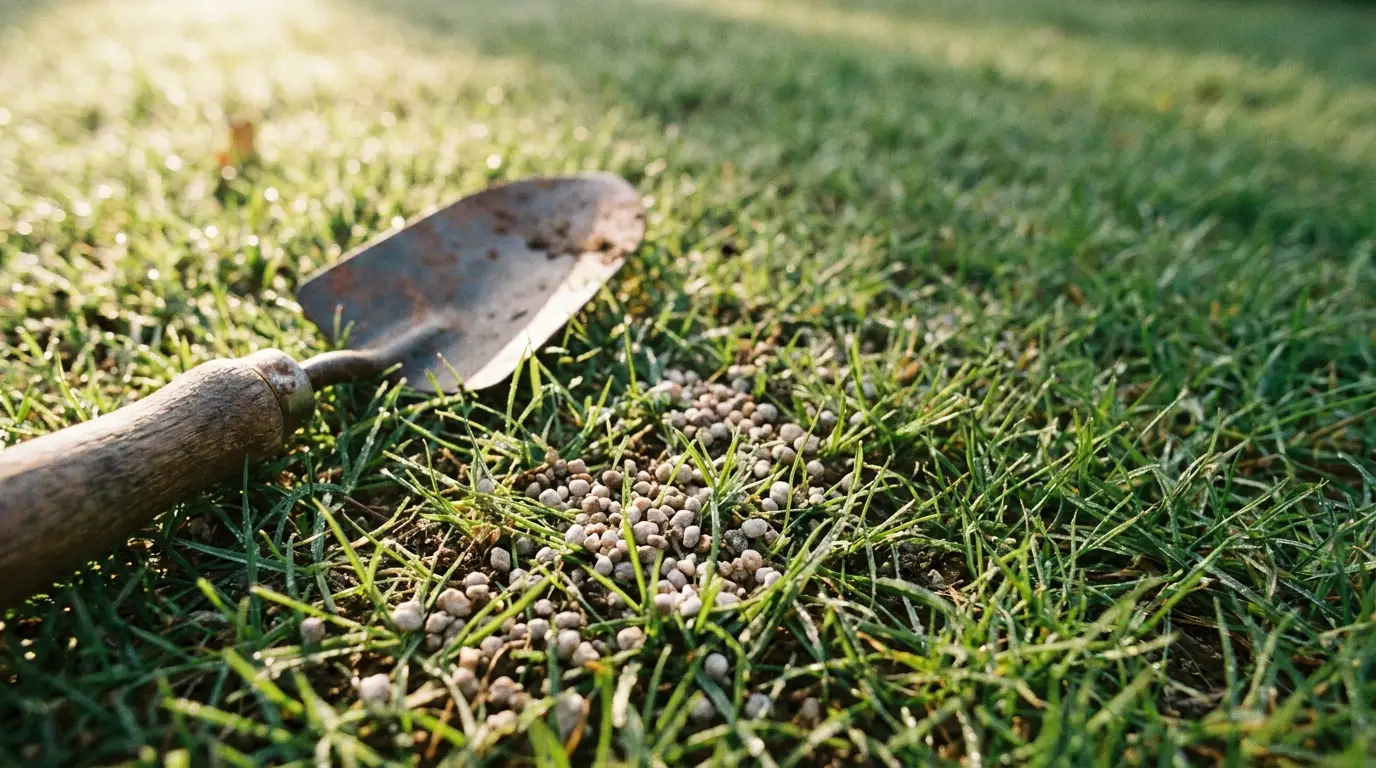
Grass works hard during the summer. It needs nutrients to support growth, maintain color, and recover from foot traffic, mowing, and heat exposure. That doesn’t mean applying as much fertilizer as possible.
Too much fertilizer can push excessive growth at a time when grass is already dealing with stressful conditions. Instead, choose a product designed for your grass type and follow the recommended application rate. A balanced feeding schedule helps maintain steady growth without overwhelming the lawn.
Keep Weeds Under Control Before They Spread
A few weeds might not seem like a major concern when summer begins, but they rarely stay in one place for long. Once temperatures rise and watering becomes more frequent, unwanted plants can spread across a lawn surprisingly fast.
The best approach is to deal with them early. Pull isolated weeds by hand when possible and use targeted treatments for larger problem areas. Healthy grass also helps crowd out weeds naturally. Thick turf leaves less room for weed seeds to settle and grow.
Improve Soil Health to Support Strong Roots
Most homeowners focus on what they can see above ground, but the real work happens underneath. Grass depends on healthy soil to access water, nutrients, and oxygen.
If the soil becomes compacted, roots struggle to spread. Water may run off the surface instead of soaking in where it’s needed. Aerating the lawn can help loosen dense soil and create better conditions for root growth.
Adding organic matter, such as compost, can also improve soil structure. It helps the ground hold moisture more effectively while allowing excess water to drain when necessary.
Watch for Signs of Lawn Pests and Disease
Summer creates conditions that many lawn pests and diseases enjoy. Warm temperatures, humidity, and frequent watering can attract insects and encourage fungal growth.
Pay attention to sudden brown patches, thinning grass, unusual discoloration, or areas that seem to decline despite regular care. These can be early warning signs that something is happening beneath the surface.
The sooner you identify a problem, the easier it usually is to address. Ignoring damaged areas often allows the issue to spread across larger sections of the yard.
Reduce Foot Traffic on Vulnerable Areas
Lawns are meant to be enjoyed, but constant foot traffic can wear down certain sections faster than others. Areas near patios, gates, walkways, and play spaces often receive the most pressure.
When grass faces heat stress, repeated traffic can flatten blades, compact soil, and leave bare spots behind. Those damaged areas often become entry points for weeds and pests.
If you notice heavily used sections starting to thin out, consider creating designated pathways with stepping stones or decorative pavers. Rotating play areas can also help distribute wear more evenly. Giving stressed grass a chance to recover helps maintain a fuller, healthier appearance throughout the season.
A great lawn changes how you use your outdoor space. It becomes the backdrop for cookouts, family gatherings, evening conversations, and quiet mornings with a cup of coffee. When the grass stays healthy through the hottest part of the year, the yard feels inviting instead of demanding constant attention. The effort you put in during the early part of the season pays off every time you look outside and see thick, green grass instead of patchy spots and weeds.
A lawn in good condition doesn’t just improve curb appeal. It creates a space you actually want to spend time in, all summer long.