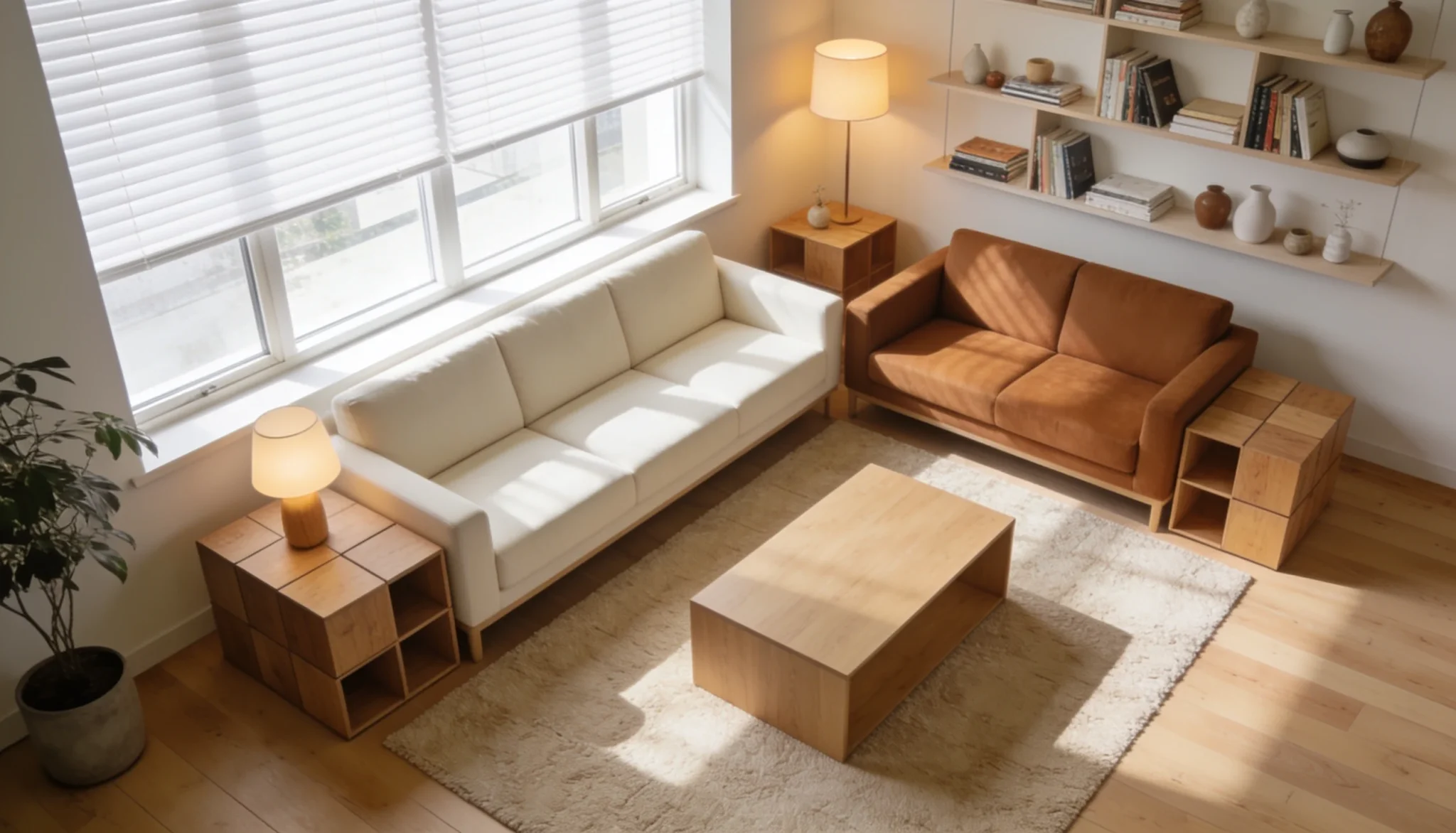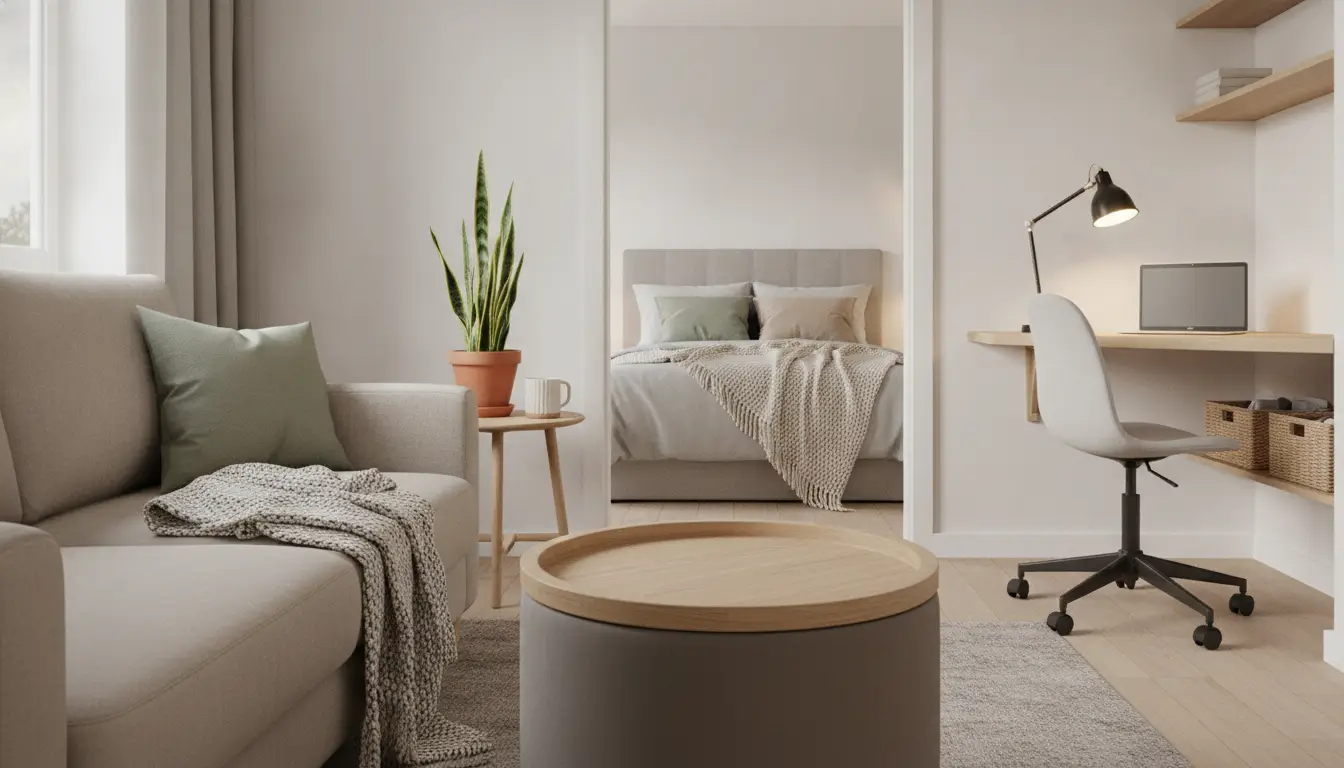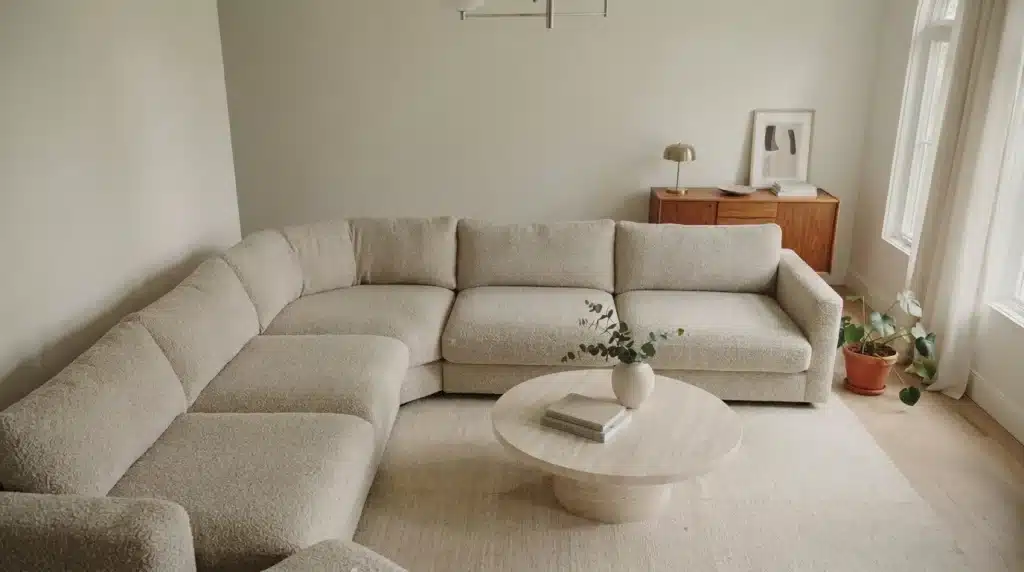
Do you ever walk into your living room and feel like there’s just not enough space to sit?
That’s where a sectional sofa comes in.
Unlike a regular coach, a sectional is made of separate pieces that connect to form one big seating area. It fits corners, fills up open rooms, and gives everyone a spot to relax.
But before you buy one, you need to know your options.
Read on to know what a sectional sofa is and how to pick the right size and shape for your home.
What is a Sectional Sofa?
A sectional sofa is a couch made of two or more connected pieces that fit together to form a single large seating area.
Some pieces sit at an angle while others sit flat. Together, they create one long, connected space to sit.
A regular sofa is just one fixed piece. You can’t split it apart or move sections around. What you buy is what you get, and it stays that way.
A sectional works differently as it gives you more freedom with your space. You can shape it to fit a corner, stretch it across a large room, or fit a smaller version into a tight apartment.
That’s what makes a sectional so different from a standard couch. It bends to fit your life, not the other way around.
Why are Sectional Sofas So Popular?
Sectional sofas have become a top pick for homes today, and it’s easy to see why. They solve a lot of problems that a regular couch can’t.
Below are a few features of sectional sofas.
More Seating
A sectional gives you a lot of seats in one piece. You don’t need to buy a couch, then a chair, then another chair. That saves you money, and it saves you the hassle of matching different furniture styles.
Better Use of Room Corners
Most living rooms have a corner that goes to waste. A sectional fills that space instead of leaving it empty. The corner piece tucks right in, so nothing gets wasted.
Flexible Layout Options
You can rearrange the pieces of sectional sofas when you want a new look, and this flexibility allows them to fit the new room.
Creates a Cozy Conversation Area
The connected shape naturally pulls people together. It’s easier to talk and connect when everyone faces the same direction.
Great for Small Apartments Too
Sectionals aren’t just for big houses. An L-shaped or small curved sectional can make a tiny living room feel more put together than a couch and a separate chair ever could.
The trick is picking a size that fits the space instead of fighting it.
Built-In Storage Options
Many sectionals come with hidden storage under the seat cushions. That’s a handy spot for blankets, remotes, or toys, so the room stays neat without extra furniture taking up floor space.
Works With Sleeper Options
Many sectionals include a pull-out bed in one section. That means guests get a real place to sleep, and you don’t need a separate guest room or a bulky sleeper sofa taking up space year-round.
Wide Range of Styles and Fabrics
From leather to linen to velvet, sectionals come in enough styles to match almost any decor, whether the room leans modern, farmhouse, or traditional.
Standard Sectional Sofa Sizes
Sectional sofas come in a handful of standard sizes, each built for a certain room footprint and seating need. The table shows the breakdown.
| Sectional size | Seating capacity | Width | Best room size |
|---|---|---|---|
| Small sectionals | 3 to 4 people | 80 to 100 inches | Apartments, studios, or rooms up to 10×10 feet |
| Medium sectionals | 4 to 6 people | 100 to 130 inches | Most standard living rooms, around 12×12 feet |
| Large sectionals | 6 to 8 people | 130 to 160 inches | Larger rooms, closer to 14×16 feet |
| Extra-large family sectionals | 8 or more people | 160 inches or wider | Open-concept homes or rooms around 16×18 feet or larger |
Different Types of Sectional Sofas
Not all sectionals look or work the same way. Each type suits a different room, lifestyle, and budget.
1. L-Shaped Sectional Sofa
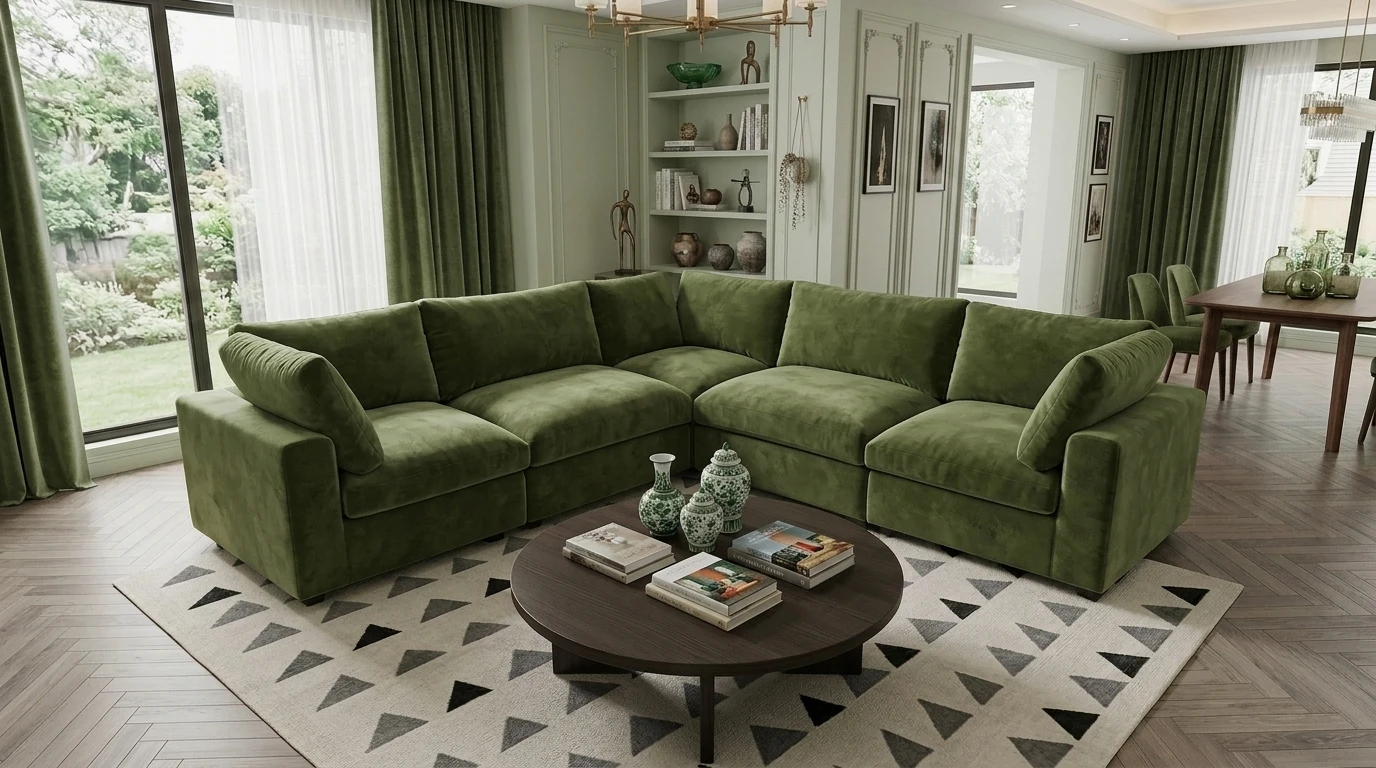
This is the most common sectional shape out there. It has one long side and one short side that meet at a corner, forming an “L”.
It works best in square or rectangular living rooms with a free corner.
The biggest advantage is how well it uses corner space while giving you plenty of seats. On the downside, it can feel too big for smaller rooms, and it doesn’t offer much flexibility once it’s placed.
2. U-Shaped Sectional Sofa
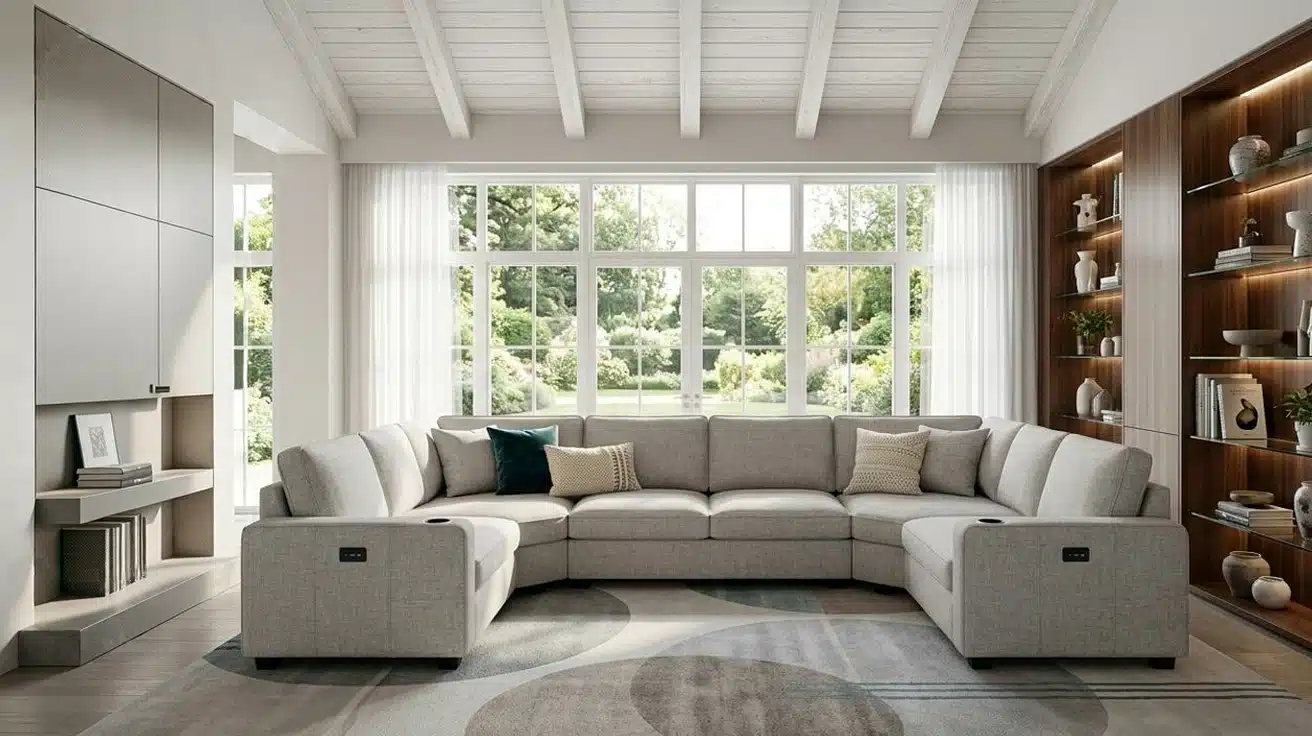
A U-shaped sectional wraps around on three sides, forming the shape of a “U”. This one needs a larger room to look and feel right.
In return, you get serious seating capacity, often enough for eight or more people. It’s a strong pick if you host often or have a big family.
3. Curved Sectional Sofa
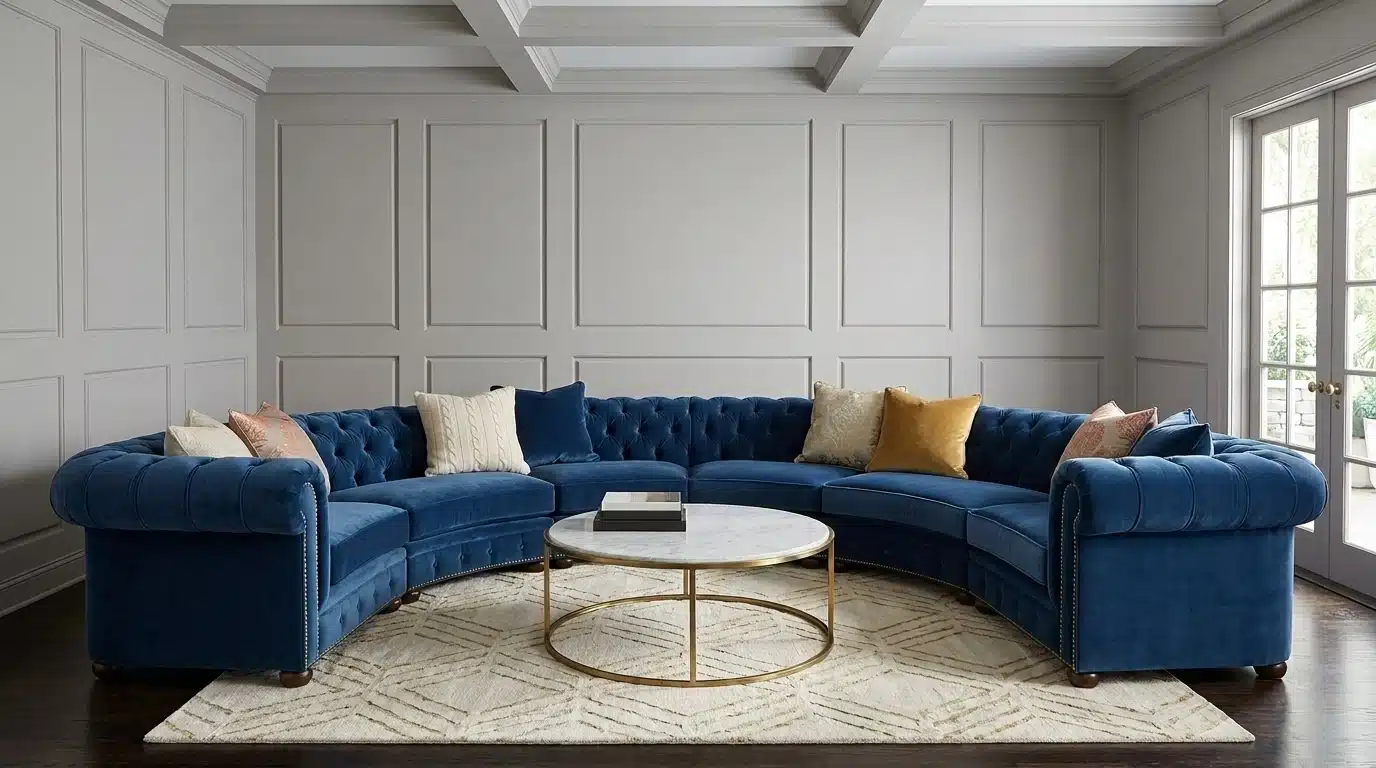
Instead of sharp corners, this sectional uses soft, rounded lines. It works well in rooms with a more traditional or elegant interior style, and it also suits open, curved layouts.
The main advantage is comfort, since the curve naturally cradles your body. The drawback is that it can be harder to fit against a straight wall.
4. Chaise Sectional Sofa
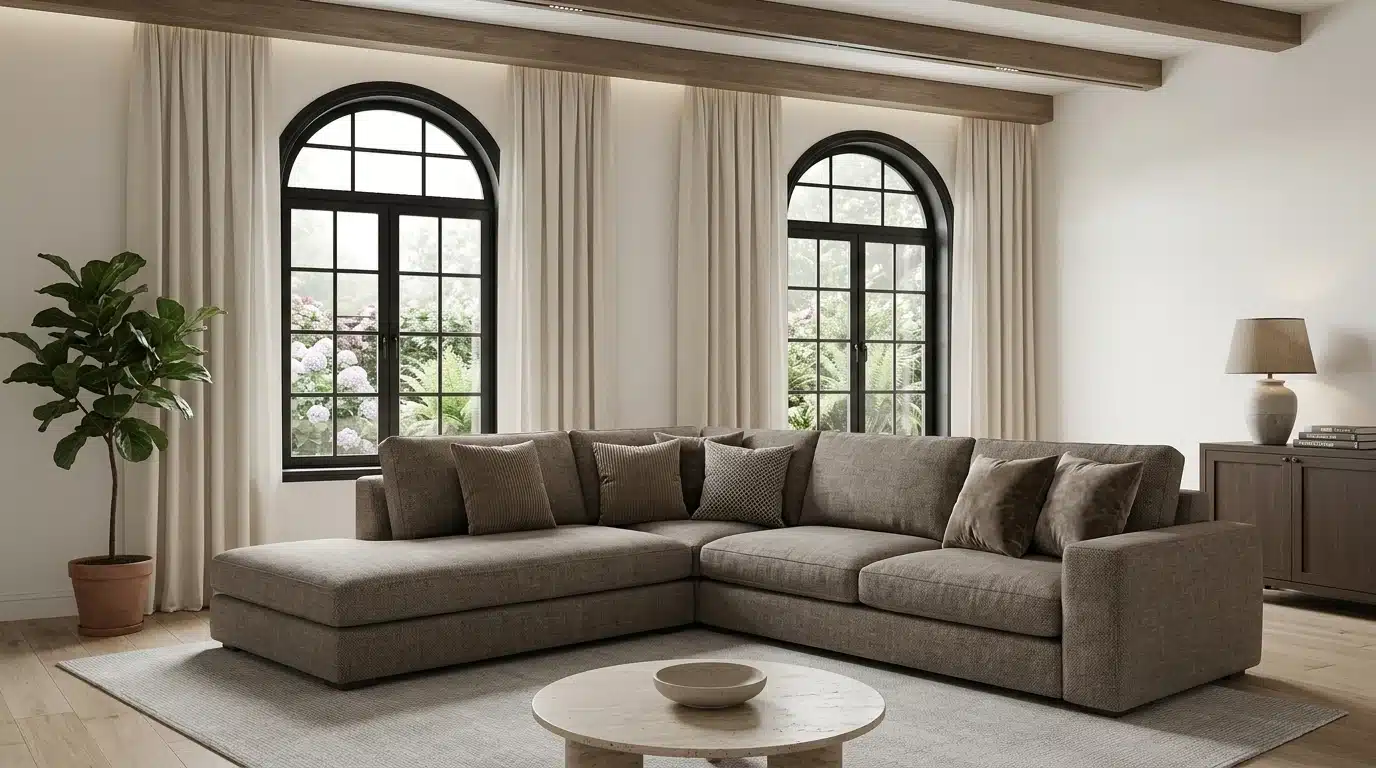
This type includes an extended chaise piece on one end, perfect for stretching out your legs. It’s great if lounging matters to you more than squeezing in extra seats.
It also works well in smaller living rooms, since it takes up less space than L- or U-shaped layouts while still feeling cozy.
5. Modular Sectional Sofa
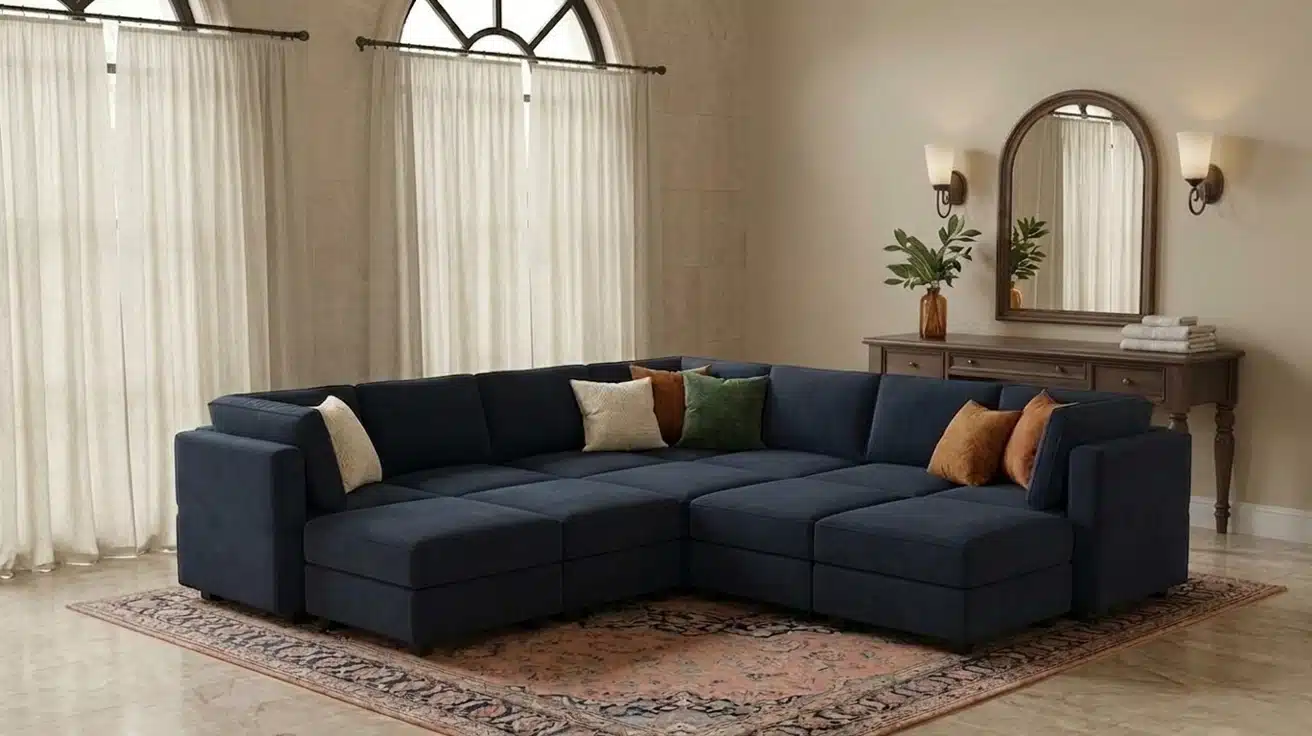
A modular sectional is built from separate pieces that aren’t attached. You can rearrange them anytime you like, based on your mood or your room’s layout.
This makes it a smart pick if you move often or if your space needs change over time. It’s built for the future, not just for right now.
6. Reclining Sectional Sofa
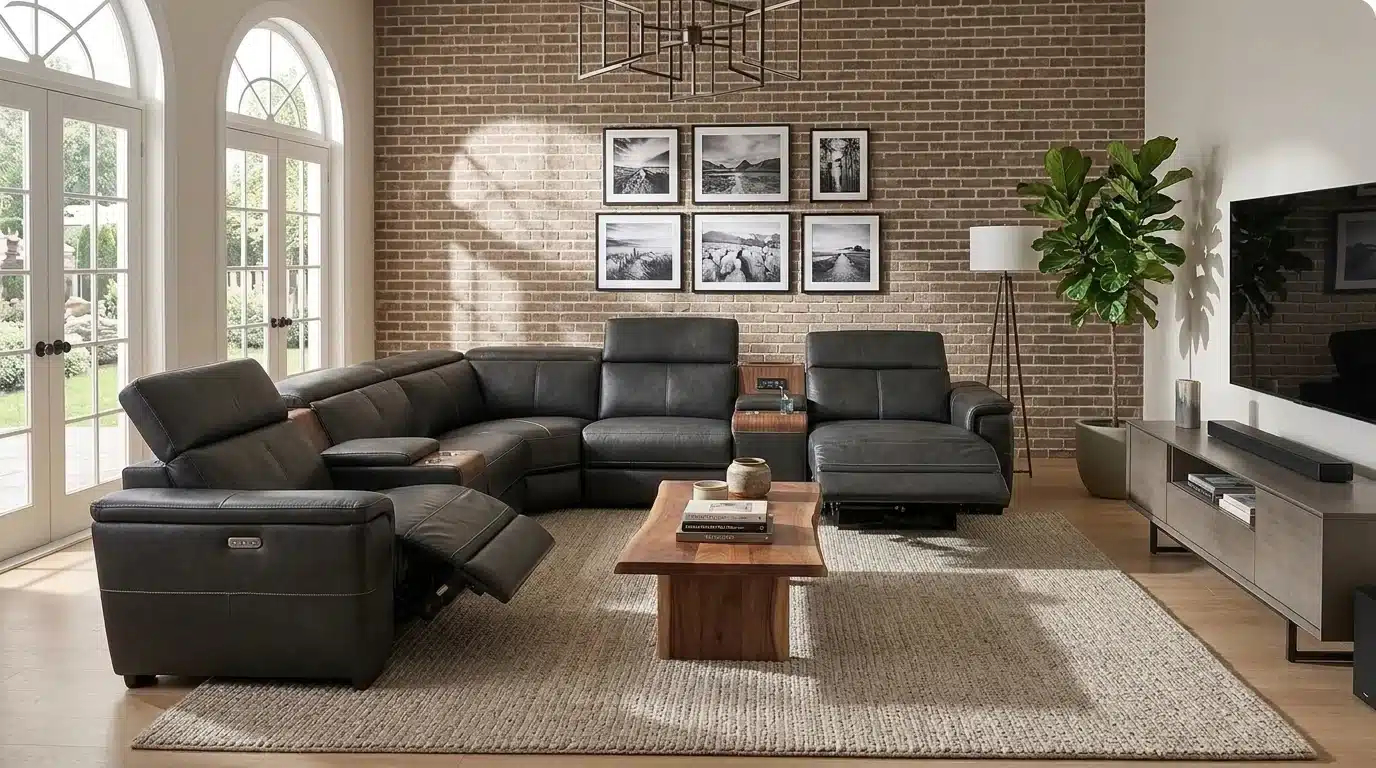
This sectional comes with built-in reclining seats, so you can fully kick back. It’s a favorite for entertainment rooms and spaces built around a TV.
The comfort features, like footrests and adjustable backs, make it feel more like a home theater seat than a regular couch.
7. Double Chaise Sectional Sofa
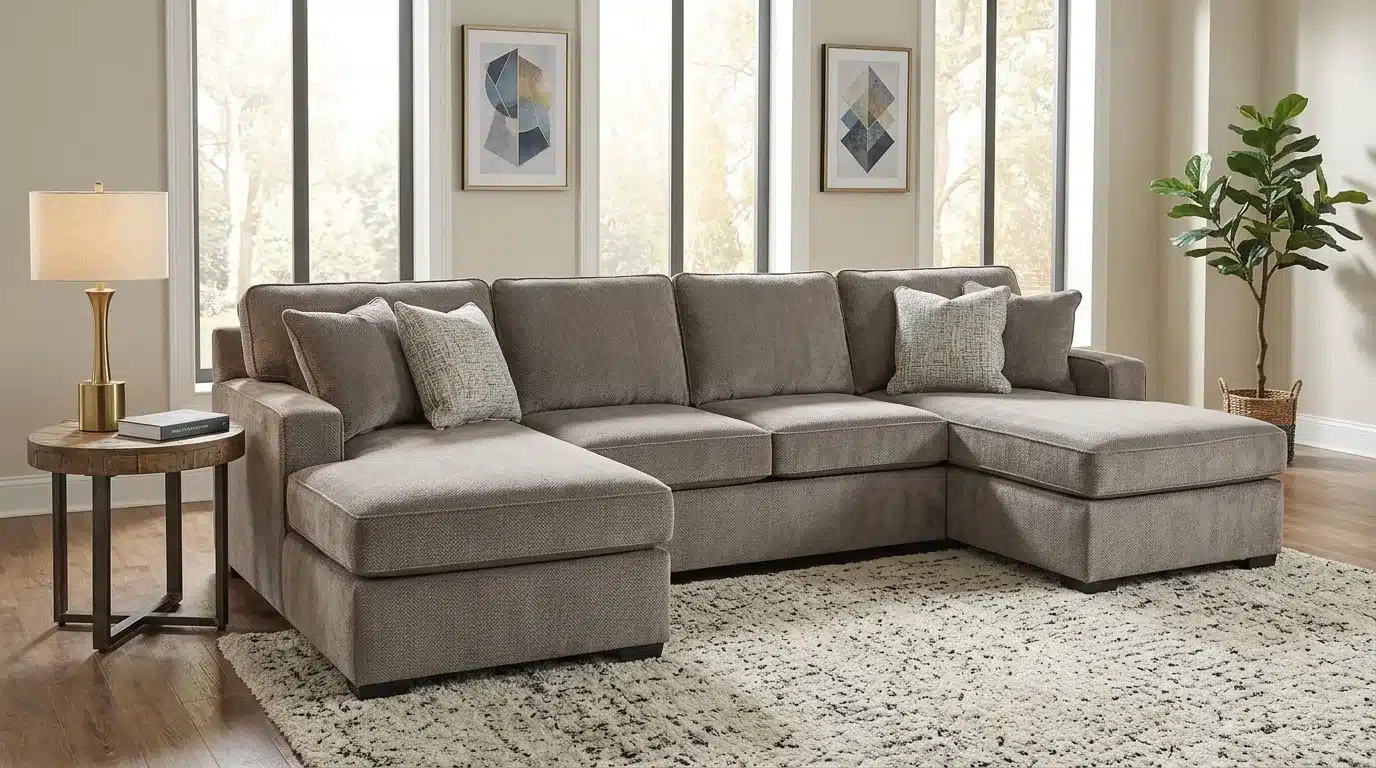
This sectional takes the U-shape and adds a chaise on each end instead of a regular armrest. That means you get lounging space on both sides, plus a full section in the middle for sitting upright.
It works best in larger living rooms or open-concept spaces, since the extra length needs room to breathe.
If your family likes stretching out just as much as sitting together, this type covers both.
How to Choose the Right Sectional Size?
The best way to pick a sectional isn’t just matching numbers to your room’s square footage. The room type itself tells you a lot about what will actually work.
Small Apartments and Studios
Tight square footage means every inch counts, so a small sectional with a slim profile is the safer pick here.
- Skip anything with wide arms or a deep chaise, since those eat up space fast in a compact layout.
- Stick to lower-profile designs that keep sightlines open across the room.
Open-concept spaces
Open floor plans give you the most room to work with, which is exactly where an extra-large family sectional makes sense.
- Let the sectional define the living area, since there are no walls to do that job for you.
- Leave space for a coffee table, TV stand, and side chairs so nothing feels squeezed together.
Standard Living Rooms
Most living rooms in the 12×12 range can handle a medium sectional without a problem. This is the size where you have the most flexibility.
- You can go with an L-shape or a U-shape depending on how the rest of your furniture is arranged.
- Leave two to three feet of walking space around the sectional so the room doesn’t feel cramped.
- Check doorways, hallways, and staircases first, since a sectional that won’t fit through the door is useless no matter how good it looks in the store.
Large Family Rooms
Bigger rooms call for a large sectional, but size alone doesn’t guarantee a good fit.
- Match the ceiling height to the sofa bulk, since a room with high ceilings can handle a bulkier sofa without feeling top-heavy.
- Watch the scale in rooms with low ceilings, since a large sectional there can make the whole space feel heavier than it should.
How to Arrange a Sectional Sofa?
Where you place your sectional changes how the whole room feels. The right layout can open up space or bring people closer together.
Against the Wall
This is the simplest setup. Push the sectional against one wall to save floor space. It works well in smaller rooms where every inch counts.
Floating in the Center
Instead of hugging a wall, place the sectional in the middle of the room. This works best in larger spaces and helps split the room into different areas.
Around a Fireplace
Angle the sectional to face the fireplace. This creates a warm, cozy spot for the whole family to gather.
Facing a TV
Set up the sectional directly across from your TV. This is a common choice for movie nights or everyday relaxation.
Dividing an Open Floor Plan
In open-concept homes, a sectional can act as a divider. Place it between the living room and dining area to separate the two spaces without adding a wall.
Sectional Sofa vs Standard Sofa vs Modular Sofa
Choosing among a sectional, standard, and modular sofa comes down to your space and needs. Each one works better for certain rooms and certain lifestyles.
| Feature | Sectional Sofa | Standard Sofa | Modular Sofa |
|---|---|---|---|
| Shape | L or U-shaped | Fixed, straight | Configurable pieces |
| Best for | Large living rooms | Small/medium rooms | Any size, adaptable |
| Seating capacity | High | Moderate | Variable, expandable |
| Flexibility | Low (fixed shape) | Low | High (rearrange anytime) |
| Style | Casual, relaxed | Classic, formal | Modern, minimalist |
| Price | Mid-high | Budget-friendly | Mid-high |
| Moving/storage | Difficult | Easy | Easy (modular pieces) |
| Ideal use | Families, movie nights | Apartments, offices | Frequent redecorating |
Features to Consider Before Buying
A sectional isn’t just about size and shape. Certain features can make daily life a lot easier.
- Storage Compartments: Some sectionals have hidden storage under the seats. It’s a handy spot for blankets, remotes, or extra pillows.
- Sleeper Function: A sleeper sectional folds out into a bed. It’s great for guests who stay overnight.
- USB Charging Ports: Some models come with built-in USB ports. You can charge your phone without leaving the couch.
- Cup Holders: Built-in cup holders keep your drink close and safe from spills. They’re a small feature that makes a big difference.
- Adjustable Headrests: These let you change the height of the headrest. It’s an easy way to get better neck support.
- Reclining Seat: Reclining seats let you lean back and relax fully. They’re a favorite for movie nights or long weekends.
- Reversible Chaise: A reversible chaise can switch sides. This gives you more freedom when setting up your room.
- Fabric options: Sectionals come in fabrics like linen, velvet, microfiber, and leather. Each one changes the look and the upkeep.
- Washable vs. spot-clean: Some covers can go straight into the washing machine, while others need only spot cleaning.
Finding the Right Sectional Sofa for Your Home
A sectional sofa is a smart way to get more seats, use your corners better, and bring the whole family together in one space.
A sectional sofa can be the easiest way to make your living room feel bigger, warmer, and ready for whatever life brings your way.
Now you know the different types of sectional sofas, such as L-shaped, U-shaped, and modular sectionals, each of which suits different rooms and needs.
So, grab a tape measure and first check your room’s length and width. Then consider your lifestyle and make your final pick.
Frequently Asked Questions (FAQs)
1. Do Sectional Sofas Work Well with Area Rugs?
Yes, a rug can anchor a sectional and tie the room together. Just make sure the rug is large enough for all the front legs to sit on it.
2. Can I Buy a Sectional Sofa in Separate Pieces Over Time?
Some brands let you buy one piece now and add more later. This works well if you’re on a budget or unsure of the final layout.
3. Are a Sectional Couch and a Sectional Sofa Different?
No, they’re not. Both terms mean the same piece of furniture. People just use one word or the other based on habit or region.