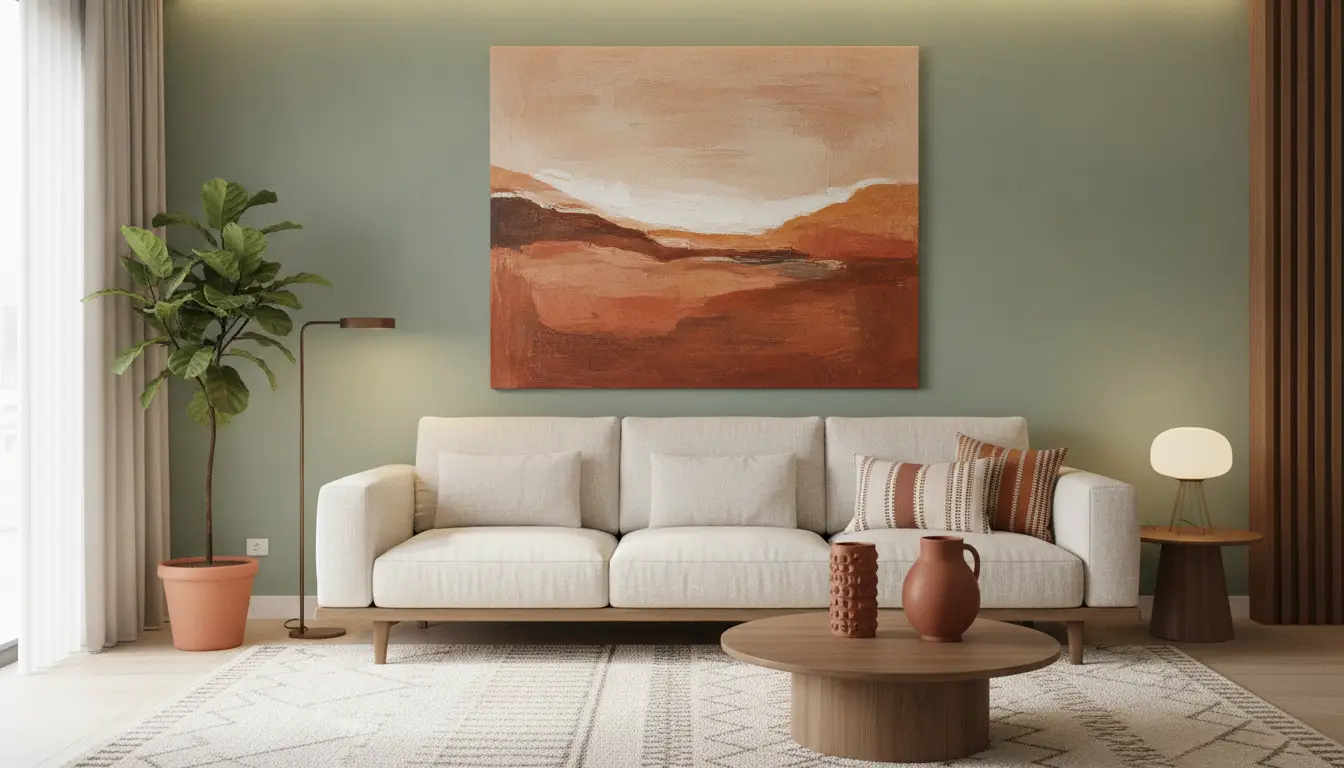
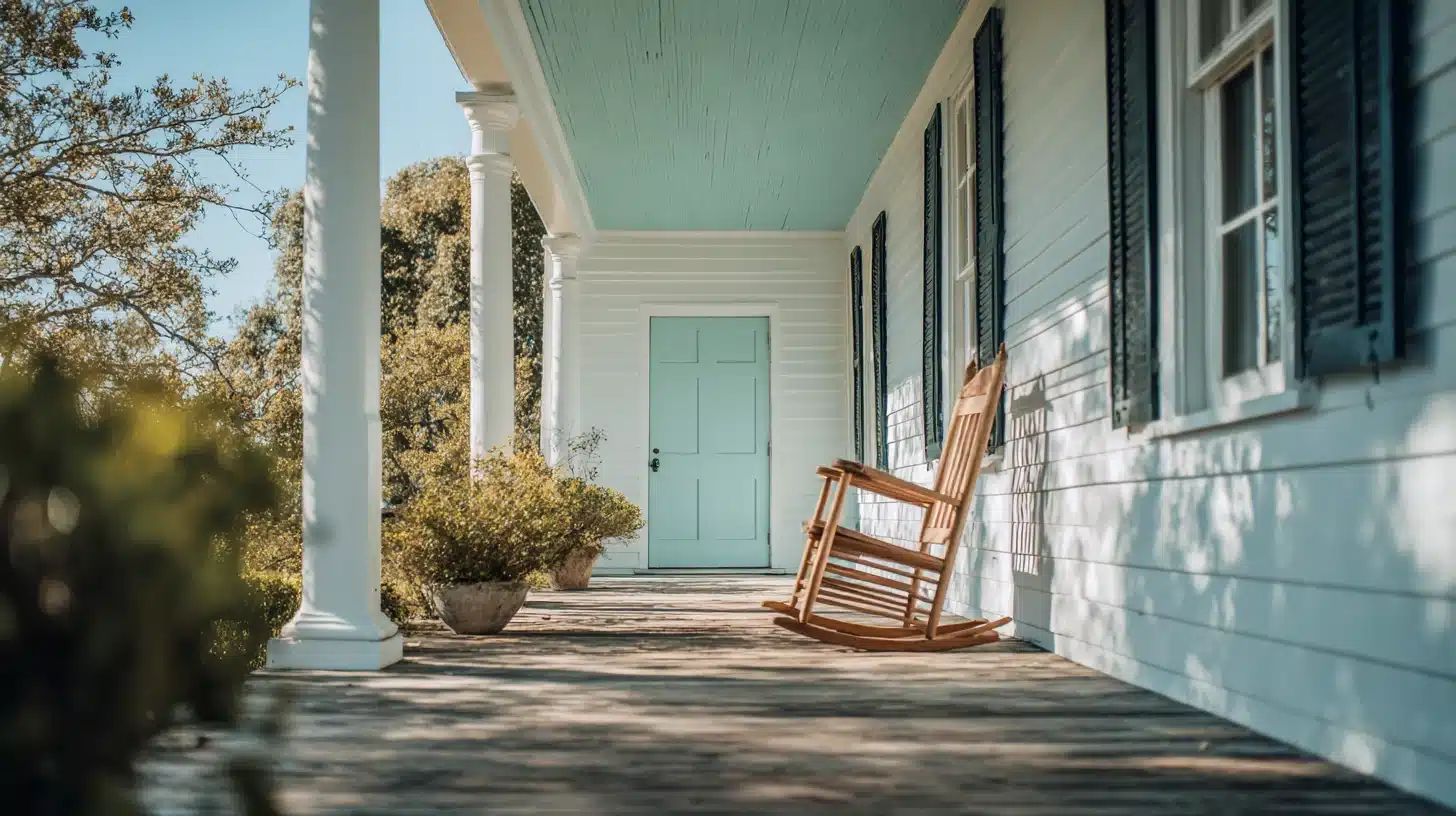
Beach Glass (1564) is a soft blue-green with gray undertones.
It reads bluer in cool light and greener in warm light, and it works in almost every room in the house, including some exteriors.
This blog explores all aspects of Beach Glass, including the colors that complement it and how the room’s lighting alters its appearance.
What Color is Beach Glass by Benjamin Moore?
Beach Glass (1564) is a gentle blue-green featuring gray undertones. It belongs to the blue- green color group.
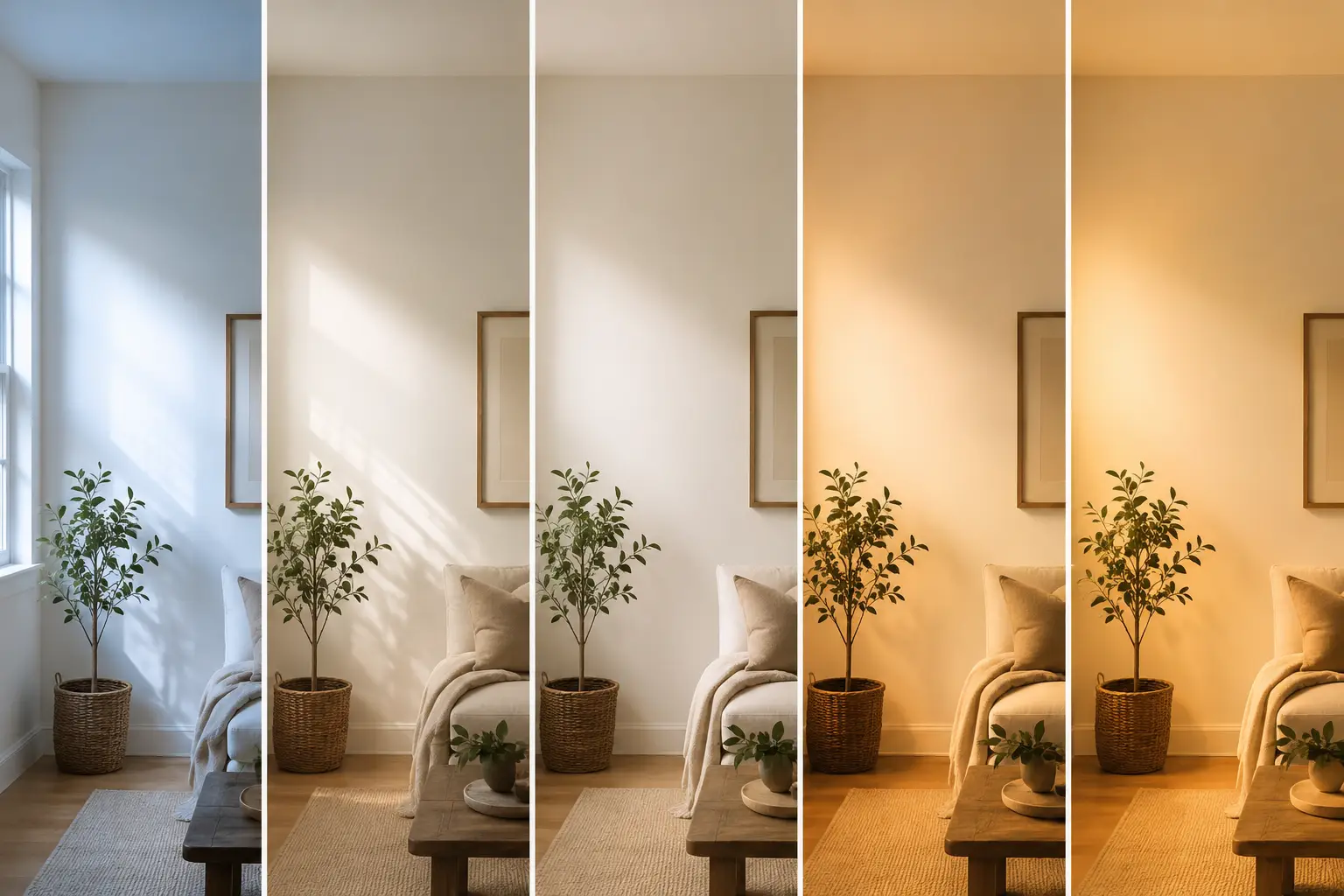
However, it’s not a uniform hue, it changes with the illumination in a space.
In cooler, north-facing illumination, it may appear more blue. In brighter, south-facing light, it may appear greener. That’s why it appears different during the day compared to at night.
Even the same wall can display two distinct shades of this color at sunset. This change relates to its LRV (Light Reflectance Value).
Beach Glass has a light reflectance value of 49.7. LRV qualifies the amount of light a color reflects, ranging from 0 to 100. Zero is complete darkness, while a hundred is completely white.
A value close to 50 places Beach Glass directly at the center. It’s neither too dim nor too luminous.
What Makes Benjamin Moore Beach Glass so Popular?
Some colors come and go, but Beach Glass has stayed a favorite for years. Here’s why:
- Calm and relaxing look: The soft blue-green shade feels peaceful. It brings a quiet, spa-like mood to any room.
- Fits many design styles: Beach Glass works with coastal, modern, and traditional homes. It doesn’t lock you into one look.
- Great for small and large rooms: Its mid-range LRV keeps small rooms from feeling boxed in. It also keeps big rooms from feeling cold.
- Pairs easily with neutrals: White trim, cream fabrics, and light wood tones all sit well next to it. Natural materials like jute and linen bring out its calm side even more.
Same Wall, Four Different Looks: Beach Glass Through the Day
Same wall, same paint, different color, depending on when you walk into the room. Here’s how it plays out over a day.
Rooms Facing North
The light from the north is constant and cool. In these spaces, Beach Glass appears more blue. It may appear somewhat subdued, perhaps even slightly grayish.
This is effective for a serene bedroom or a peaceful study.
Rooms Facing South
Southern sunlight is warm and intense. Here, Beach Glass becomes gentler and more vibrant. Rooms appear vibrant and spacious for the majority of the day.
This is an excellent choice for kitchens or living rooms.
Rooms Facing East
Morning light is strong initially, then diminishes. Beach Glass appears vibrant and transparent at the beginning. By afternoon, it transitions into a more profound, serene tone.
This change is ideal for breakfast corners and home workspaces.
Rooms Facing West
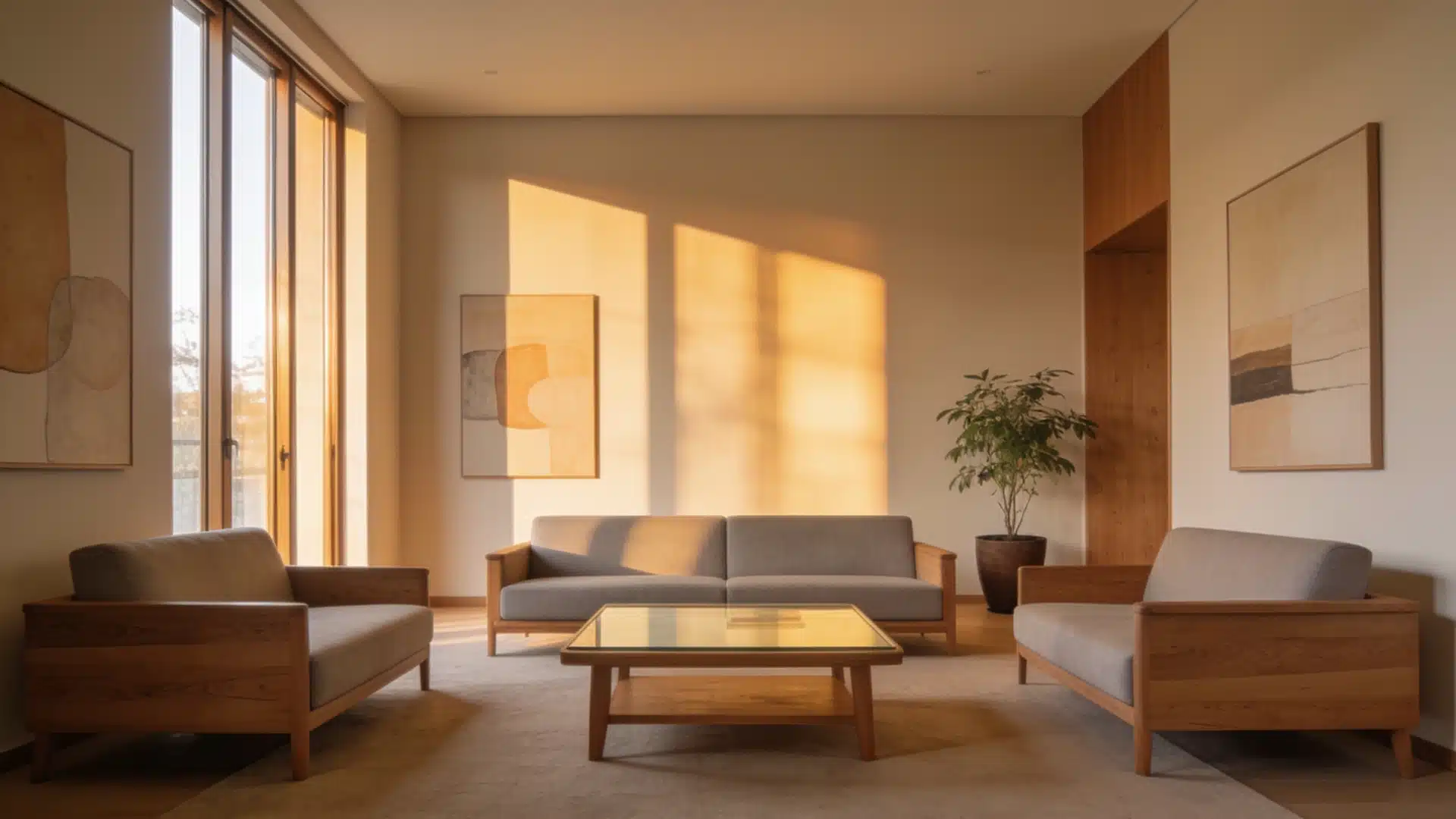
Morning light is gentle, transitioning to a warm, golden tone by the evening. Beach Glass may initially appear gray. Subsequently, it radiates a comforting, green light.
This makes it well- suited for dining rooms.
Best Rooms to Paint with Beach Glass
Beach Glass’s soft blue-green tone and mid-range LRV let it work almost anywhere in the house. From bedrooms to kitchens, it adjusts to the mood of each space.
Living Room
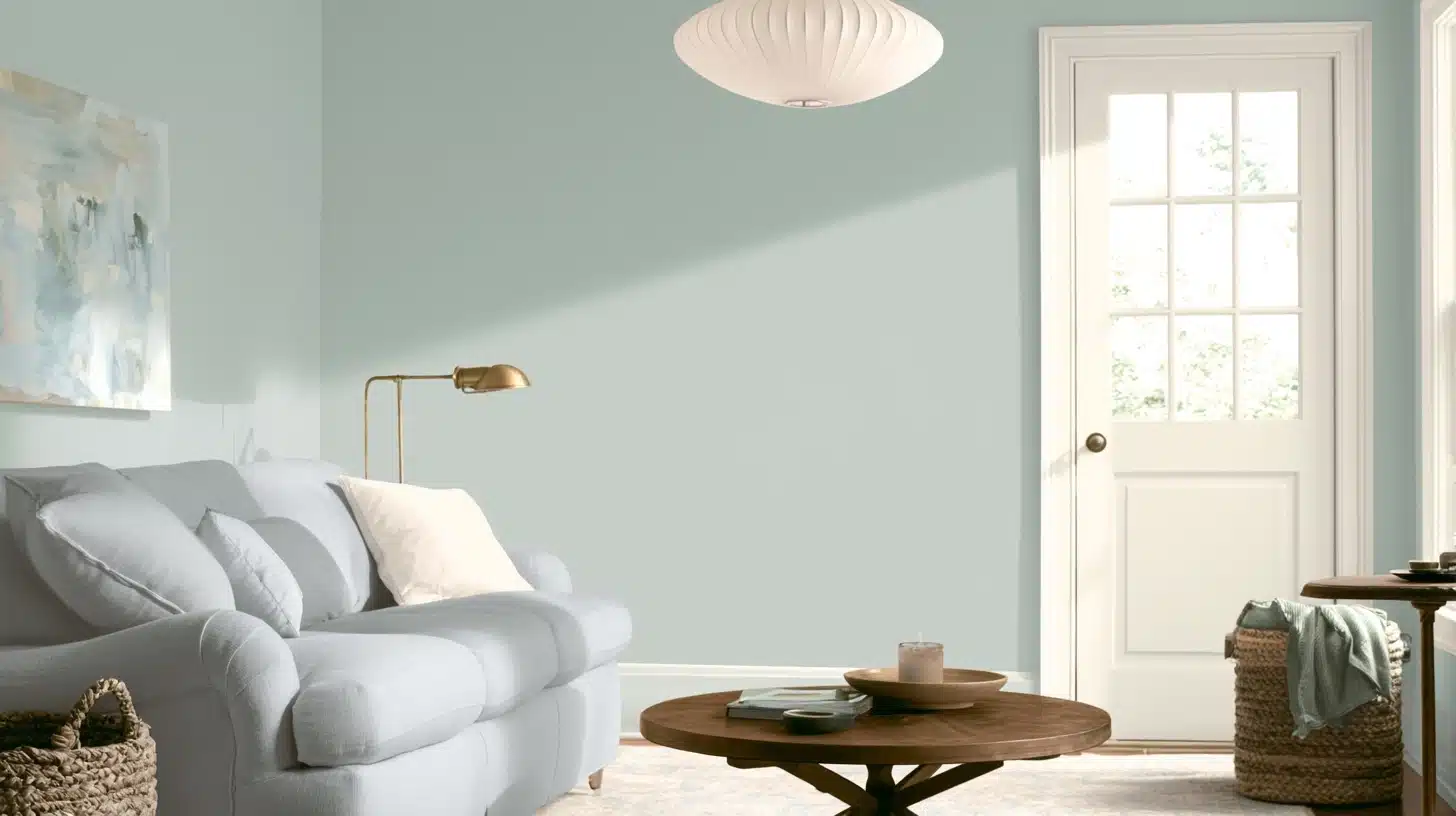
Beach Glass transforms a living room into a laid- back space for socializing. It complements soft grey sofas, wooden coffee tables, and woven baskets effectively.
Consider combining it with brass lamps or linen drapes. These elements showcase the warm aspect of the color while complementing its calm foundation.
Bedroom
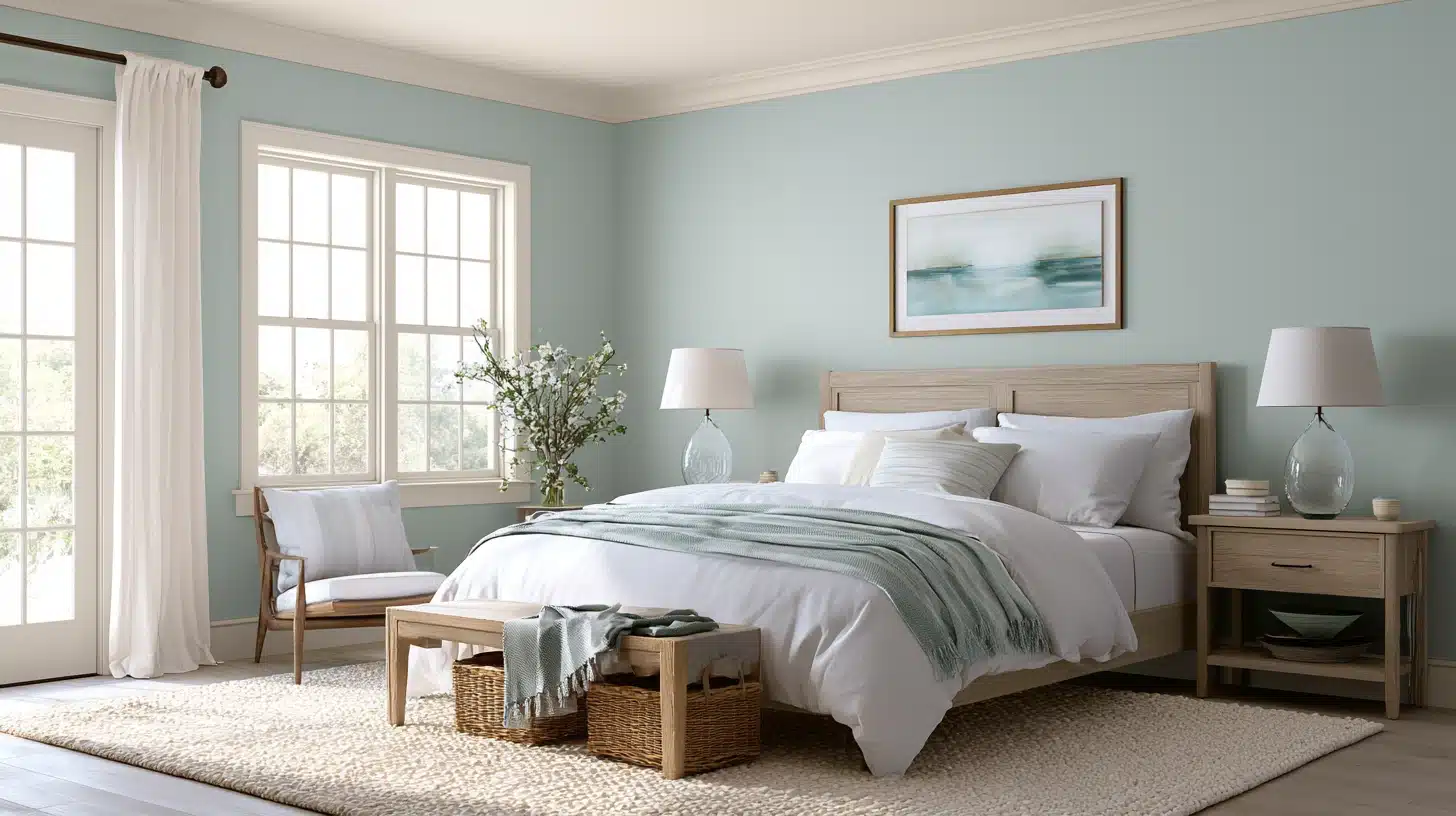
In a bedroom, Beach Glass fosters a gentle, spa- like ambiance. It complements white or cream bedding well.
Add linen textures or a jute rug for an organic feel. A couple of dusty pink or sage highlights can add warmth.
Bathroom
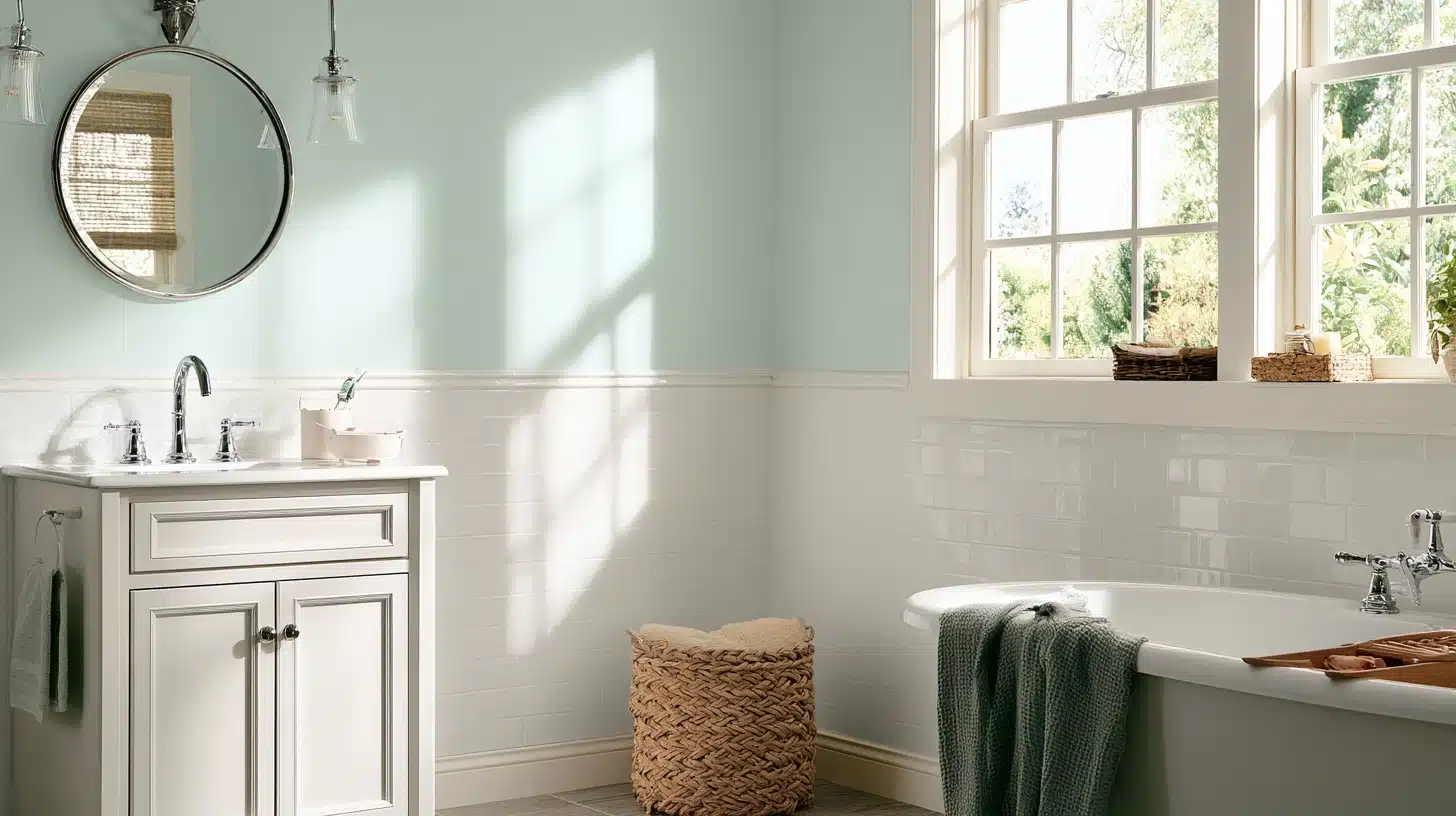
This hue gives bathrooms a breezy, coastal look. It complements white subway tiles and chrome fittings beautifully. A white vanity maintains a luminous atmosphere.
Natural stone surfaces or braided baskets introduce texture while maintaining a serene atmosphere.
One thing worth knowing before you paint a bathroom this color: skip the flat finish.

It dulls the blue-green and flattens out exactly the depth that makes this color work. Satin or eggshell holds up to bathroom moisture and keeps the color looking the way it does on the chip. Our guide to paint finishes and sheens breaks down which one fits which room.
Kitchen
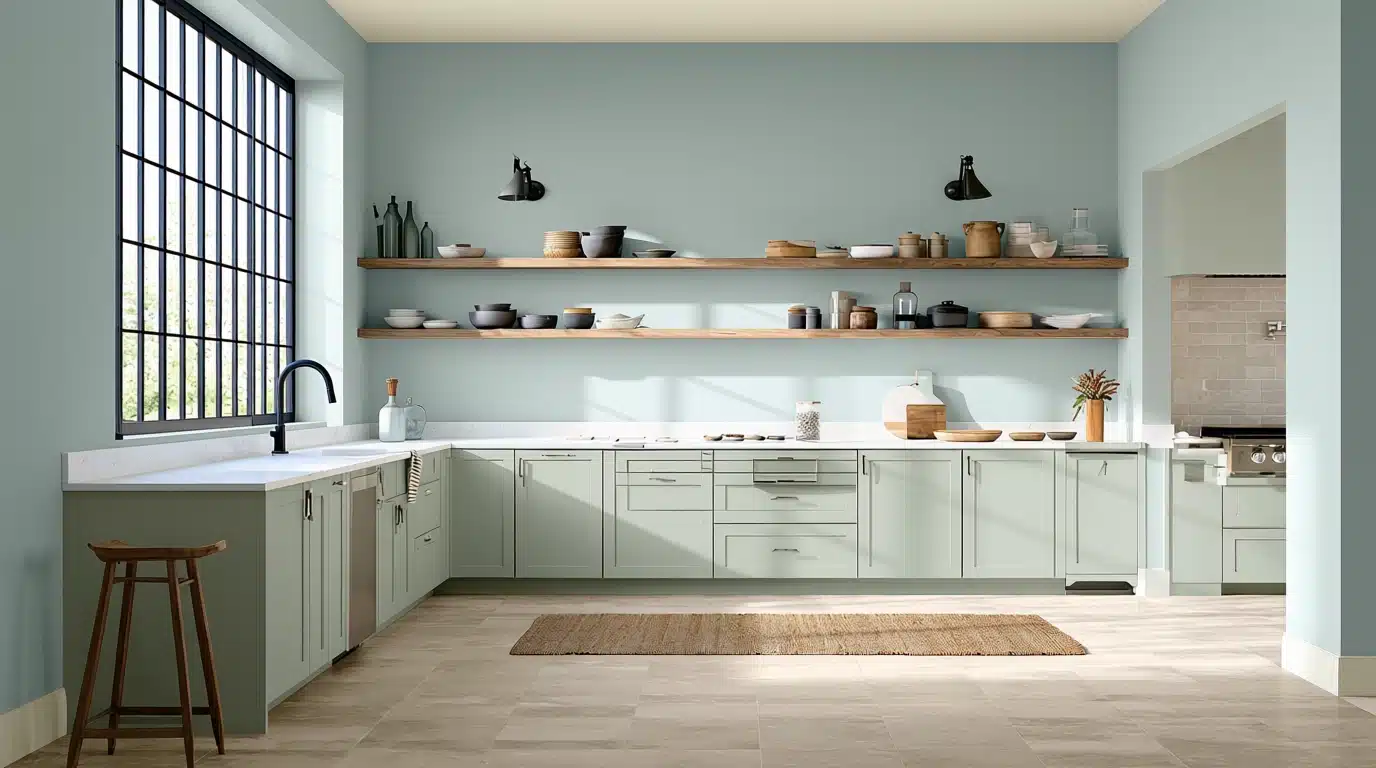
Beach Glass creates a gentle, inviting atmosphere. It stands out more on cabinets and enhances their character.
White countertops and open wood shelving both work well here, and if your cabinets are already white, this color gets to do all the talking on the walls.
Dining Room
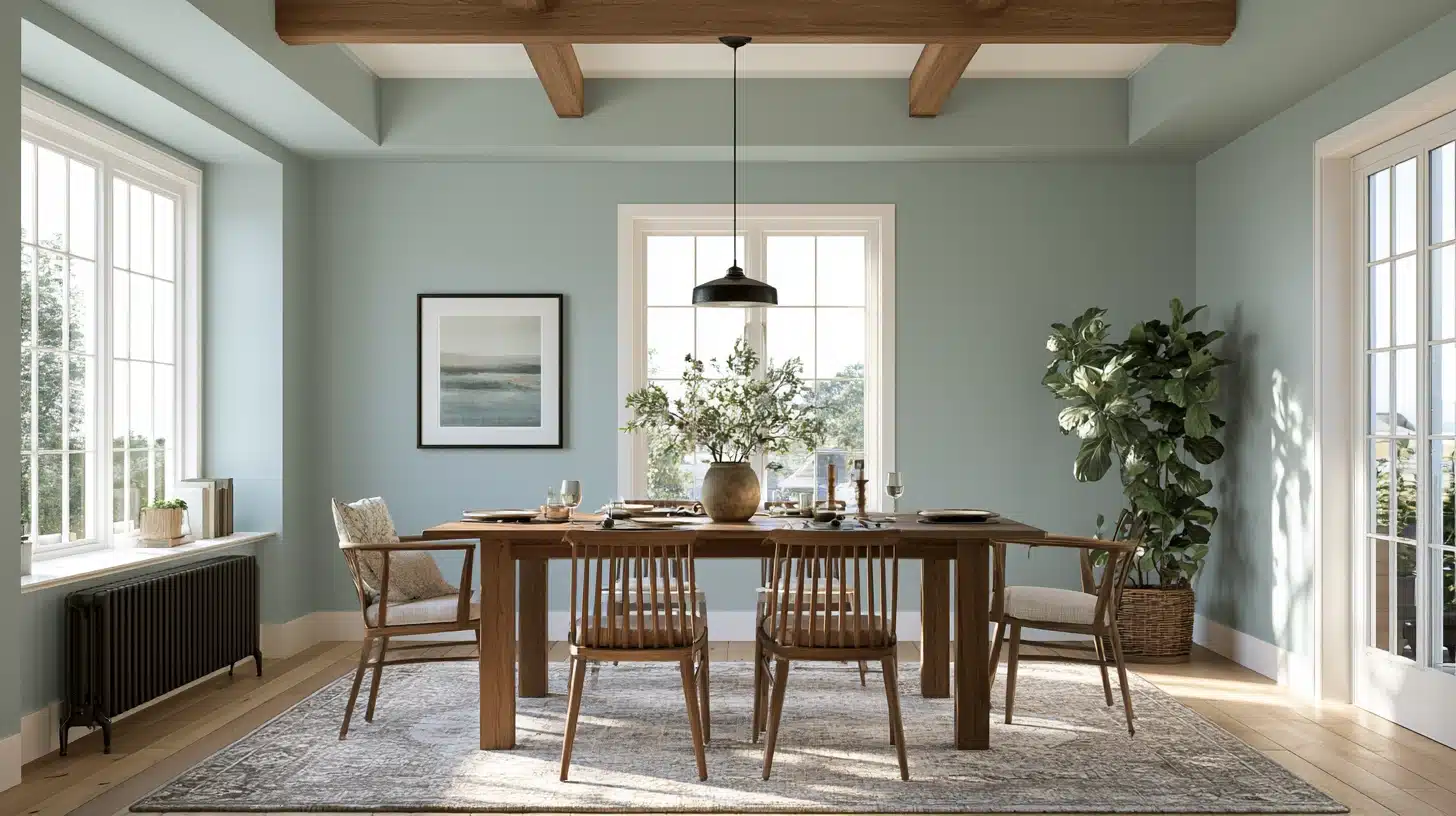
Beach Glass lends a dining room an elegant yet relaxed vibe. It suits both intimate family meals and formal events.
Pair it with a wooden table and brass accents for a space that feels cohesive yet relaxed.
Colors That Pair Beautifully with Beach Glass
Beach Glass rarely stands alone. From bright whites to deep, moody shades, this color adjusts to whatever sits next to it.
Crisp Whites
White trim keeps a Beach Glass room feeling clean and fresh. A soft white, like White Dove, gives a gentle, low-contrast look.
For more punch, a pure white, like Chantilly Lace, makes Beach Glass pop and feel more polished. Either way, white ceilings help the color stay light and airy overhead.
One caution here: a very stark, cold white can make Beach Glass look muddier by comparison, so if you’re not sure, lean toward the softer white first.
Warm Neutrals
Beige, greige, and taupe soften the cool side of Beach Glass. These warm neutrals balance out its blue-gray base.
This pairing works well in living rooms and hallways, where a cozy, grounded feel matters most.
Deep Accent Colors
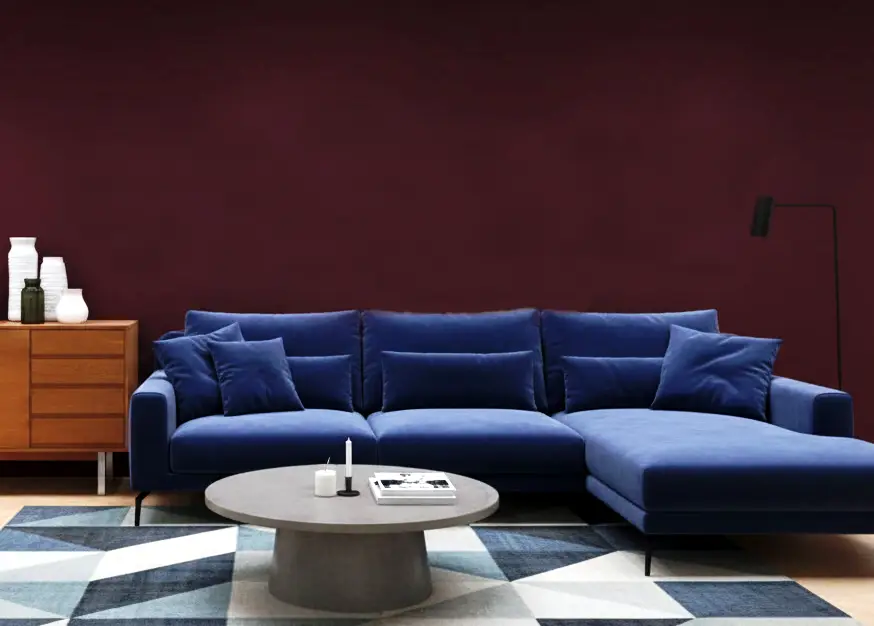
Navy is a natural match for Beach Glass. It adds depth without clashing. Charcoal brings a bold, modern edge. Forest green leans into the natural, coastal side of the color.
All three work well as accent walls or furniture pieces.
Natural Wood Tones
Wood brings out the best in Beach Glass. Light oak keeps a room feeling bright and casual. Walnut adds warmth and contrast.
Weathered wood plays up the coastal, relaxed feel this color is known for.
Metallic Finishes
Brushed brass adds a warm, classic touch next to Beach Glass. Matte black brings a modern edge. Chrome and nickel keep things cool and clean.
Any of these metals works well on light fixtures, cabinet hardware, or faucets.
Benjamin Moore Beach Glass vs Similar Paint Colors
Beach Glass isn’t the only blue-green in town. A few other shades look close to it on a paint chip, but each behaves a little differently.
Beach Glass vs Sea Salt
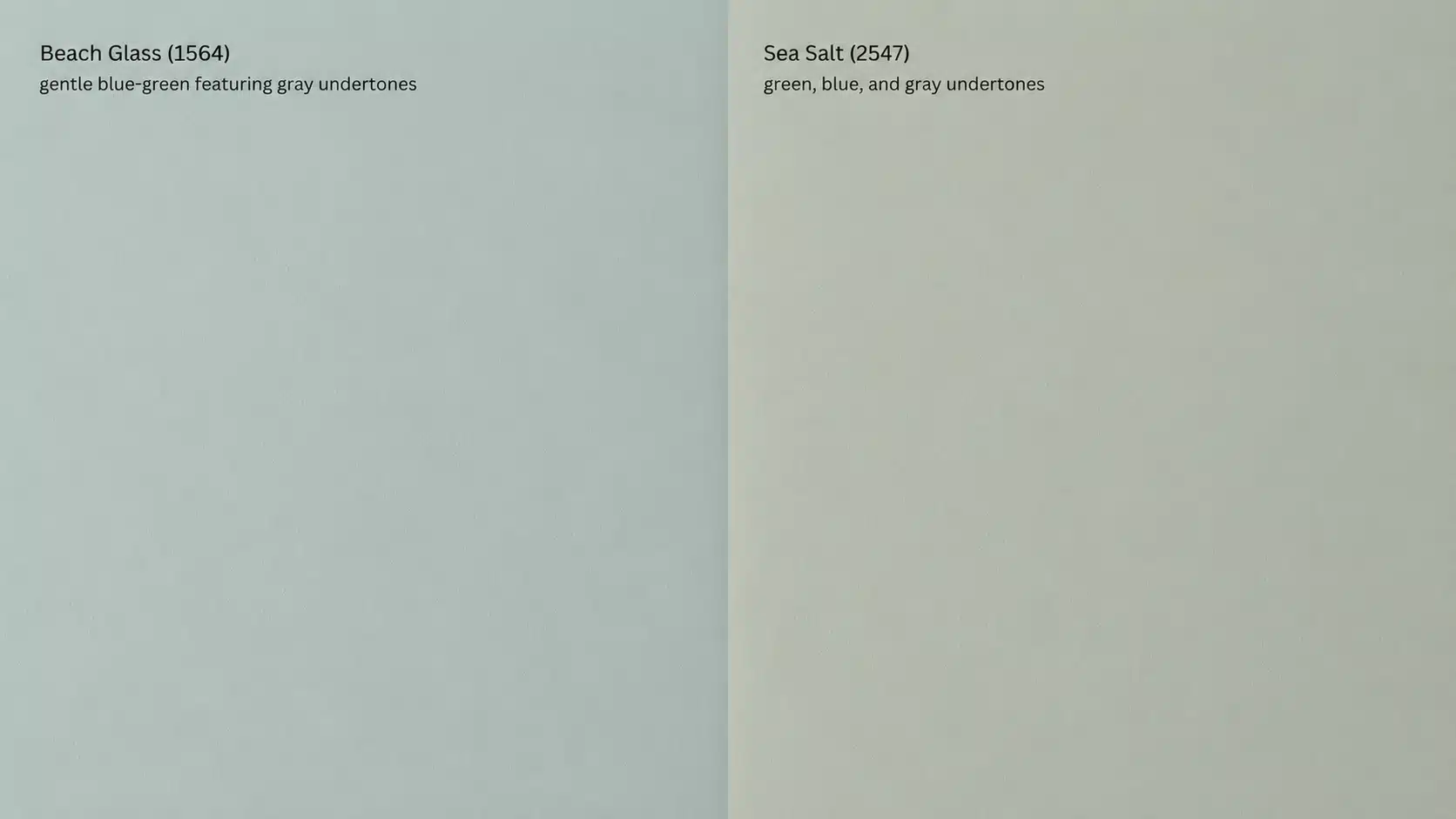
Beach Glass and Sea Salt both bring a calm, coastal mood. But Sea Salt leans more green, with less blue than Beach Glass. Sea Salt also has a higher LRV of 63, compared to Beach Glass at 49.7.
That makes Sea Salt noticeably lighter on the wall. Choose Beach Glass for a deeper, more grounded look. Choose Sea Salt for a brighter, airier feel.
Beach Glass vs Palladian Blue
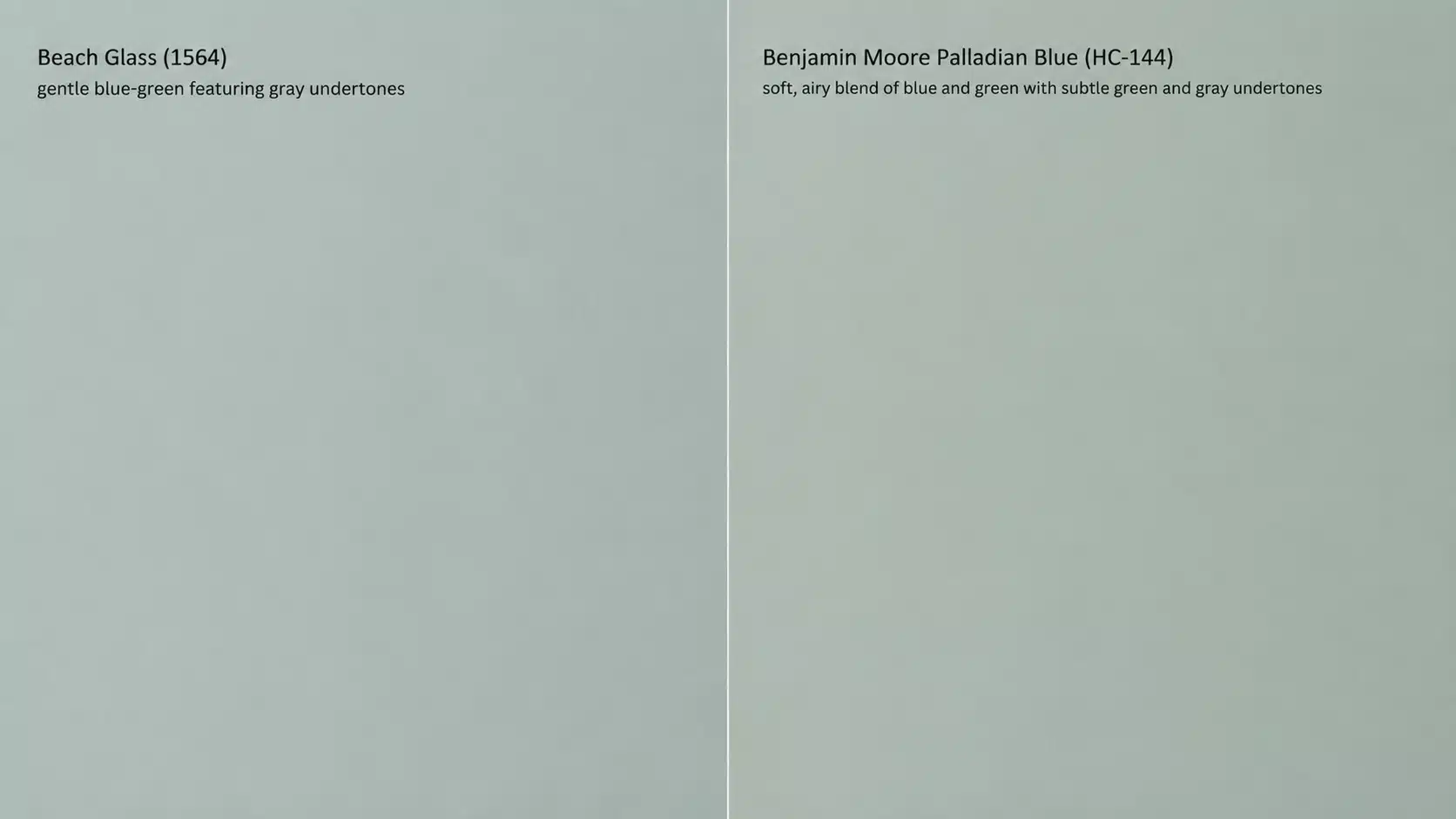
Palladian Blue has less gray than Beach Glass, giving it a brighter, more cheerful edge. Its LRV sits around 61, well above Beach Glass.
If Beach Glass feels too muted for a space, Palladian Blue offers a similar mood with more light bounce.
Beach Glass vs Healing Aloe
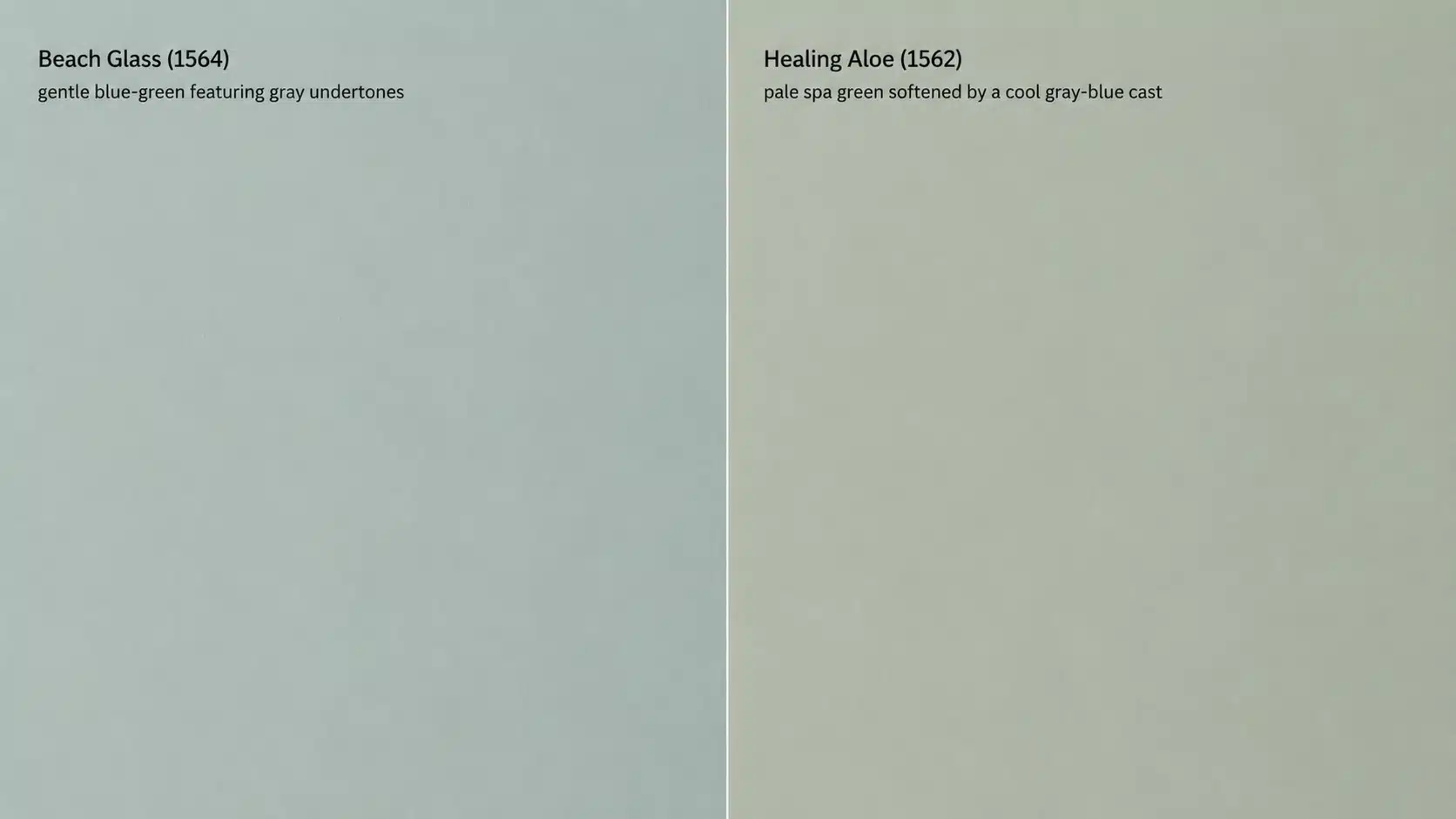
Healing Aloe shifts the balance toward green, with a lighter overall feel. Its LRV runs higher than Beach Glass, often in the mid-to-upper 60s.
This makes Healing Aloe a good pick for rooms that need more brightness, while Beach Glass suits spaces that call for a deeper, moodier tone.
Beach Glass vs Quiet Moments
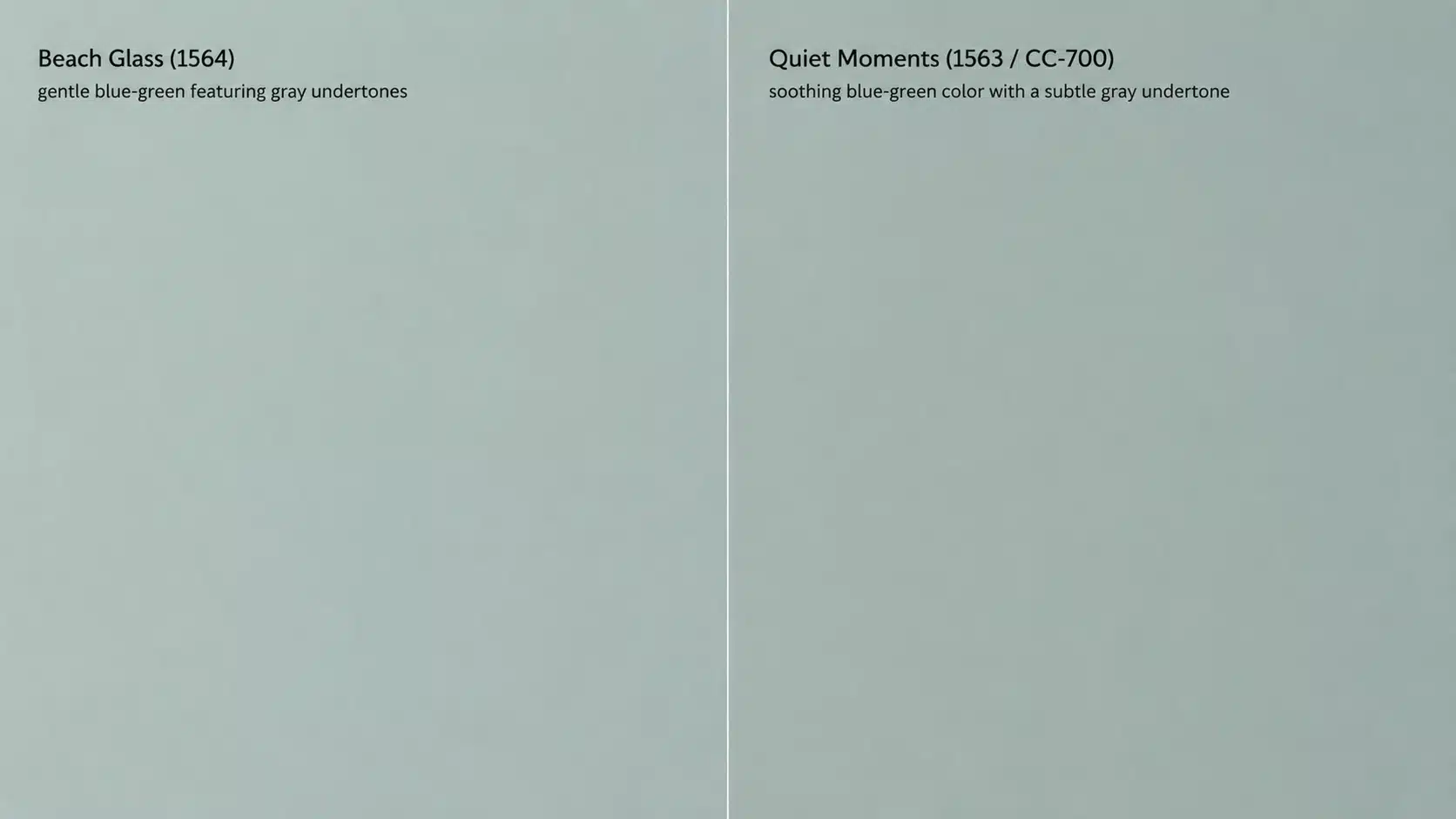
Quiet Moments is a close kin to Beach Glass. It’s a less saturated version, with an LRV around 61.87. Beach Glass carries a touch more blue and gray, and reads as a shade darker on the wall.
Quiet Moments works well when a softer, lighter version of the same mood is needed.
Beach Glass vs Silver Marlin
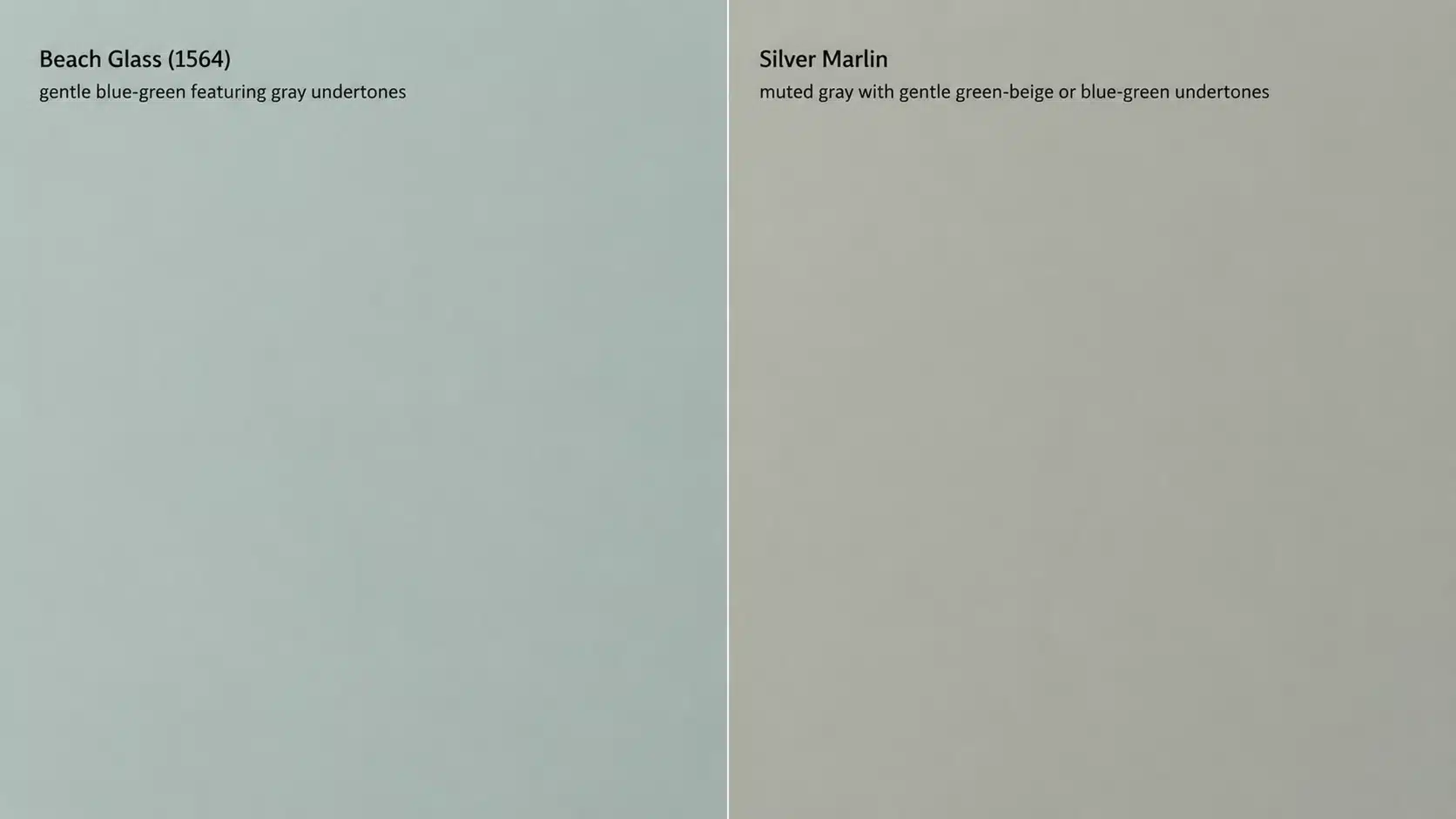
Silver Marlin sits closest to Beach Glass in overall depth, with an LRV of 55.99. It leans more gray, with subtle blue-green undertones underneath.
Beach Glass carries more color and warmth by comparison, while Silver Marlin reads as a quieter, more neutral gray.
Final Thoughts
Benjamin Moore Beach Glass earns its popularity for good reason. It shifts gently with the light, works with warm and cool pairings alike, and fits almost any room in a home.
Before picking up a brush, you should do testing. Paint a sample on the wall and watch it through the day. Notice how it looks in the morning, at noon, and in the evening light.
If a calm, versatile blue-green sounds right for a space, Beach Glass deserves a real look.
Grab a sample, try it in the room that needs it most, and see how it settles in.
Frequently Asked Questions (FAQs)
1. Can Beach Glass Be Used on Exterior Walls?
Yes, but it depends on the home. Beach Glass works well on coastal or cottage-style exteriors.
2. Does Beach Glass Work Well in Open-Concept Spaces?
Not always. In large, open floor plans, Beach Glass can feel like too much color spread across one space. It tends to work better in rooms with doors or clear boundaries.
3. What Flooring Pairs Best with Beach Glass?
Light oak floors bring out its soft, seafoam quality. Whitewashed wood works well too. Floors with a strong orange or yellow tone can clash with it, making the paint look washed out.