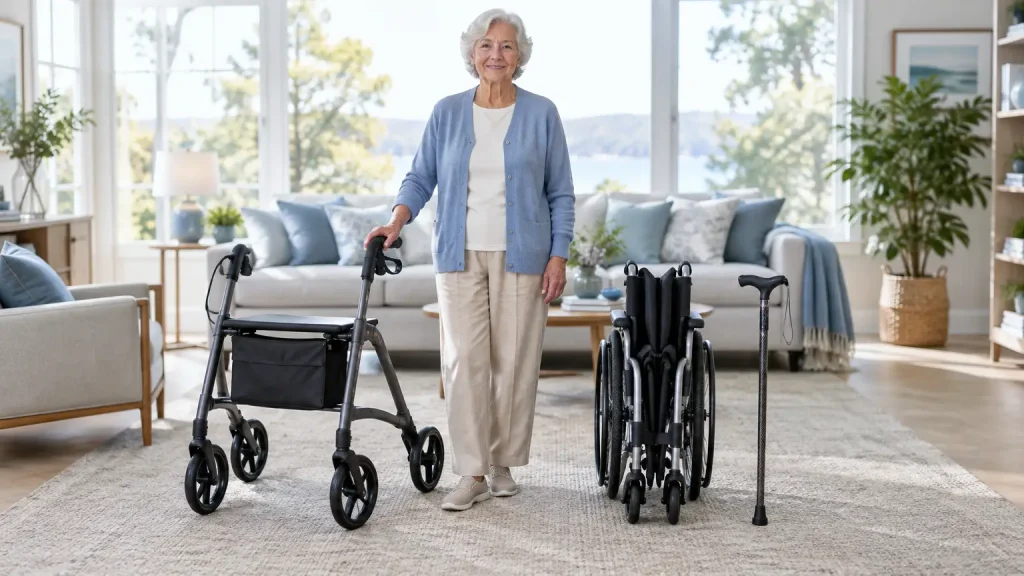
The World Health Organization states more than 2.5 million people worldwide use assistive devices. Most of them are elderly. They are facing challenges with their changing health conditions. Mobility is hindered by different factors, such as decreased strength and low vision. Assistive devices help older people perform the usual daily tasks at home independently.
WHO highlighted that trusted mobility aids for elderly customers increase access to education and employment. Healthcare costs are reduced. They do not have to bring their elderly into a healthcare facility. They can live at home as long as they like.
Thousands of mobility aid products are available. They aim to increase elderly independence. Some of the best and most affordable mobility devices to consider are useful in different areas of the home.
Walking Stick
A walking stick provides extra support for an elderly person with problems with:
- balance
- walking
The walking device is available in different sizes and designs. This helps them easily find one suitable to their needs. The elderly will benefit from a weight-bearing stick made from carbon fiber or aluminum. It offers the highest level of support, especially models with additional support through a tripod base.
A foldable walking stick is ideal for older people who like to get out of the house. They can easily keep this portable walking stick when not in use. You can buy these mobility aids from shops for the elderly.
How to Choose the Right Walking Stick?
A walking stick with the wrong height can cause more harm than good. Some steps help you choose the correct height:
- Consider the footwear. Choose a walking stick by considering the footwear usually worn.
- Stand in a natural position. Look at the position of how your elderly person stands. It helps if you bring them when buying one.
- Put the stick flat on the floor. Ensure it is around 15cm from the side of the foot.
- Relax your arms at your sides. Relax the arms of your elderly by slightly bending the elbow.
- Level on the wrist. A walking stick with a top at wrist level is the right height.
Walking Frames and Trolleys
Walking Frames
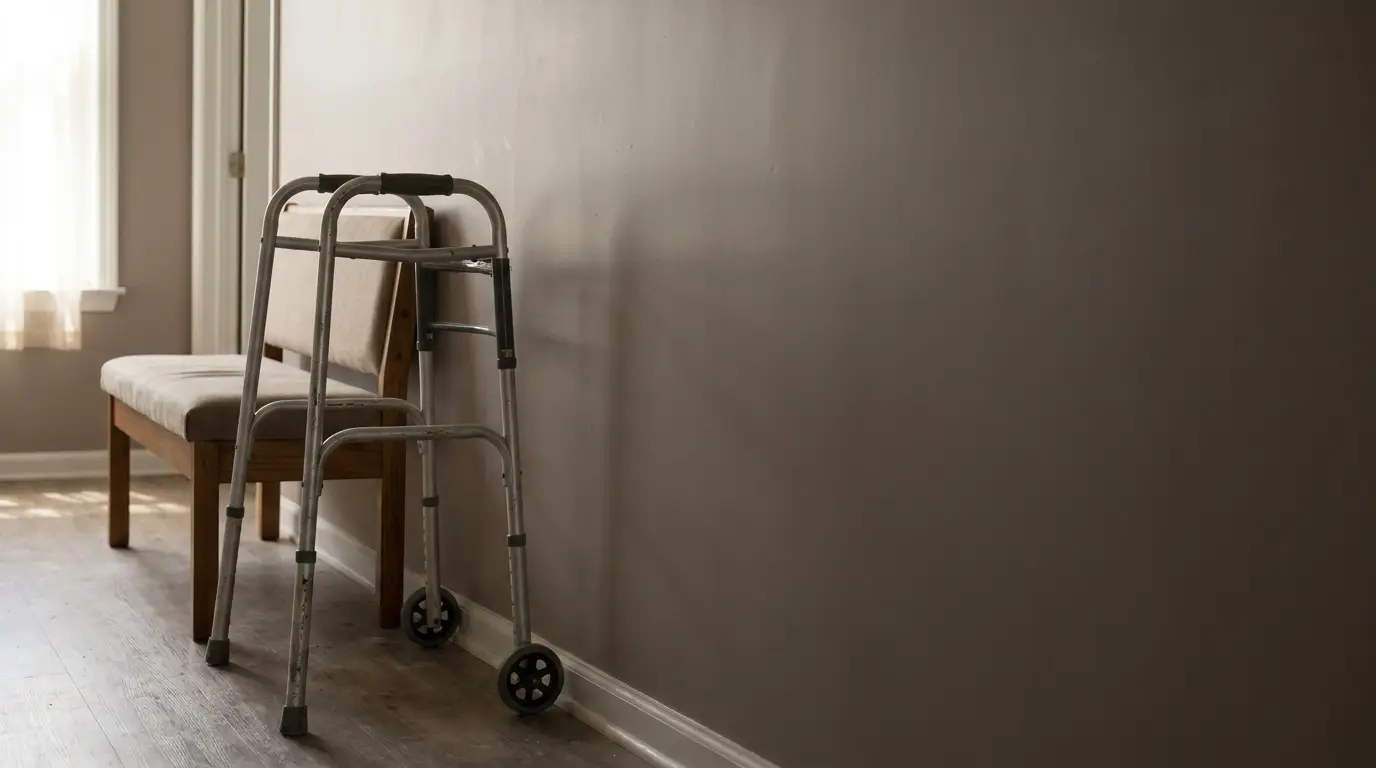
Walking frames are:
- Lightweight
- Sturdy
They provide a more reliable balance. These are available in various designs. Some models are height adjustable. So, ensure your loved one tries different models to find one suitable to their needs.
Walking frames are known as Zimmer frames with different features, such as:
- four rubber feet
- two rubber feet
- two wheels
These are intended for more natural movement.
Some frames have wheels but are not intended for users leaning their full weight on them. These are best for outdoor use to easily manoeuvre. The user does not need to lift their frame with every step. Some have a built-in seat that offers additional stability for the elderly who need to take a break while out.
4-Wheel Rollator Walker
A 4-wheel rollator walker has:
- wheels
- brake
These features are designed for greater control. They offer a range of accessories, such as:
- caddies
- padded seat
Trolley Walkers
It is similar to a 4-wheel walker. But these are made for home use. It features removable trays for carrying things.
Tri-Walkers
Tri-walkers are three-wheeled versions. They are more compact, which makes them easier to store.
Wheelchairs
A wheelchair might be free from your local healthcare providers when suggested by your doctor. However, some families want to organize their own wheelchair. Wheelchairs come in different versions:
- manual wheelchairs
- electric wheelchairs
You must study the differences between the two types of wheelchairs. It helps you decide the most appropriate solution.
Mobility Scooters
Mobility scooters are suitable for independent living. They suit best for people who are comfortable managing on their own.
Class 2 Mobility Scooters
Class 2 mobility scooters cannot be used on:
- footpaths
- pavements
- crossing roads
The maximum speed is 4mph.
Class 3 Mobility Scooters
Class 3 mobility scooters are used on roads and pavements. The speed of this scooter is:
- 4mph on pavements
- 8mph on roads
Features of Class 3 Scooters
Some features of class 3 scooters are:
- for outdoor use
- sturdy and long-lasting
- rear-view mirror
- reflectors
- additional controls for driving on roads, such as:
- indicators
- headlights
- horn
- hazard lights
FAQs
What Factors Are Considered When Choosing the Best Walking Aid for the Elderly?
The important factors to consider when choosing the best walking aid for the elderly, such as:
- correct height
- where to use
- with or without wheels
- strength to lift a frame
- foldable or not
How to Choose the Right Wheelchair?
There are things to consider when choosing the right wheelchair. You must think of the different types of wheelchairs that suit your elderly, such as:
- manual wheelchair
- attendant-propelled chair
- electric wheelchair
Some forget to think of the wheelchair’s weight when buying one. Think if you often bring it in a car. So, the weight should be considered.
Why Is a Class 2 Mobility Scooter Mostly Chosen?
Class 2 mobility scooter is chosen because of its characteristics:
- use it indoors
- lightweight and compact
- with basic driving controls
- foldable