The thrift-store dresser or those old cabinets have a slick, shiny surface, and paint just does not want to stick to it.
You brush it on, it looks great for a bit, then it starts chipping off in the corners.
And the only solution to this is a layer of good primer before painting. The best primer for laminate grabs onto that slippery surface, so your paint has something to hold.
Below are the options you can actually buy, roughly what they cost, and which one makes sense for your project.
Why Laminate Needs a Specialized Primer
Standard primer is built to soak into porous surfaces like drywall and bare wood.
Laminate is a thin printed layer, usually melamine or vinyl, sealed over particleboard.
The surface is plastic-smooth and non-absorbent, so ordinary primer sits on top and flakes away. Bonding primers solve this with resins that chemically bond to slick, non-porous surfaces rather than by absorption.
That resin chemistry is the whole difference.
Skip it; even a carefully painted surface or piece of furniture lifts off within weeks.
What Makes a Primer Good for Laminate?
Selecting the best primer for laminate furniture can make or break a refinishing project.
Before looking into this year’s top contenders, understanding what separates an excellent primer from a mediocre one is essential.
A quality primer creates that critical foundation, ensuring paint adheres properly to tricky laminate surfaces.
- Grips slick, non-porous laminate surfaces without peeling or flaking, providing a reliable base for topcoats.
- Fast formulas speed the project along and leave less time for dust to settle on wet primer.
- Stops old discoloration from bleeding through, which matters most on dark or stained pieces.
- Flows evenly with no brush marks or roller stipple, so the surface stays uniform for paint.
- Improves the finished piece’s longevity, helping it withstand daily wear and tear.
- Fewer volatile compounds mean safer indoor use and less harsh odor.
- Sand easily once dry for an ultra-smooth finish before you paint.
Best Primer for Laminate at a Glance: Quick Comparison Table
Here’s a quick comparison of all the best choices before you dig into the full list.
| Primer | Base | Sanding needed? | Recoat time | Cleanup | Best for |
|---|---|---|---|---|---|
| Zinsser B-I-N | Shellac | No | ~45 min | Denatured alcohol | Strongest grip overall |
| INSL-X STIX | Water-based | No | ~1 hr+ | Soap and water | Low-odor indoor jobs |
| Zinsser BONDZ | Water-based | No | Fast | Soap and water | Glass, tile, tough surfaces |
| KILZ Adhesion | Water-based | No | ~1 hr | Soap and water | Indoor and outdoor pieces |
| Bulls Eye 1-2-3 | Water-based | Light | ~1 hr | Soap and water | Damp-room furniture |
| Glidden Gripper | Water-based | Minimal | ~2 hr | Soap and water | Dark topcoat colors |
| KILZ Original | Oil-based | Yes | ~1 hr | Mineral spirits | High stain blocking |
Top Picks for Your Projects: Best Primer for Laminate

Changing laminate furniture starts with the right foundation, and that means choosing the best primer.
Below are the best primer choices for laminate, perfect for prepping laminate furniture.
1. INSL-X STIX Waterborne Bonding Primer
INSL-X STIX is a premium-quality bonding primer known for its exceptional adhesion to glossy surfaces. Ideal for laminate furniture, it sticks without sanding and resists cracking and peeling.
The low-VOC, water-based formula makes it safe to use indoors.
It levels out beautifully and dries to a hard finish, ready for topcoats within hours.
Best Bonding Primer for High-Gloss Laminate, about $20 to $30 per quart.
2. KILZ Adhesion High-Bonding Interior/Exterior Primer
KILZ Adhesion is engineered for surfaces that are typically tough to paint.
It sticks to glossy finishes like laminate without sanding, saving time and effort.
It’s a water-based formula, but it performs like an oil-based primer. This product delivers a strong grip and is suitable for indoor and outdoor use, providing a reliable base for paint.
Best Primer for Laminate Cabinets, about $20 to $25 per quart.
3. Zinsser BONDZ Maximum Adhesion Primer
Zinsset Bondz Primer is specifically designed for difficult surfaces such as laminate, glass, and tile.
It forms a strong bond that prevents peeling or flaking and creates an ideal base for paint. It’s low-odor, dries fast, and is perfect for both professional and DIY use.
A favorite among upcyclers, it ensures long-lasting durability and superior adhesion.
Best Primer for Laminate Countertops, about $25 to $30 per quart
4. Rust-Oleum Zinsser Bulls Eye 1-2-3 Primer
Rust-Oleum all-purpose primer works well on laminate and blocks stains, seals surfaces, and improves paint adhesion. It dries quickly and is compatible with both latex and oil-based paints.
Its mold- and mildew-resistant properties make it a great pick for bathroom or kitchen furniture.
It’s a reliable, versatile option that’s easy to apply and clean up.
Best Budget Primer for Laminate, about $16 to $20 per quart.
5. B-I-N Shellac-Based Primer by Zinsser
For the toughest surfaces, Zinsser’s B-I-N Primer excels with its shellac base, bonding well to laminate.
It offers excellent stain blocking and dries in just 15 minutes.
Perfect for sealing odors and preventing bleed-through, it’s ideal for both touch-ups and full refinishing jobs. Although it requires alcohol cleanup, its performance makes it worth the effort.
Best Overall Primer for Laminate, about $22 to $35 per quart.
6. KILZ Original Multi-Surface Stain Blocking Primer
KILZ Original is an oil-based primer that provides excellent adhesion and stain-blocking power.
While it’s traditionally used on wood, it adheres well to laminate with light sanding.
It seals porous surfaces and prepares them for topcoats, making it a solid option for furniture refinishing projects. Best suited for indoor use due to its strong odor.
Best Primer for Heavy Stain Blocking, about $16 to $20 per quart.
7. Valspar Bonding Primer-Sealer
Valspar’s Bonding Primer-Sealer is designed to tackle slick surfaces like laminate.
It delivers superior adhesion, allowing paint to grip without sliding or peeling.
Its low-VOC formula makes it safe for indoor use. This primer applies smoothly with minimal prep and dries to a durable finish, making it great for both novice DIYers and pros.
Best Primer for Laminate Furniture, about $22 to $28 per quart.
8. Rust-Oleum Painter’s Touch Ultra Cover Primer
Perfect for small furniture projects, Painter’s Touch primer provides excellent coverage and bonding on laminate. It’s fast-drying, low-odor, and compatible with a wide range of paints.
Its oil-based formula penetrates slick surfaces to ensure long-lasting results. Ideal for spray applications, this primer is available in aerosol cans, offering convenience and even application.
Best Spray Primer for Small Laminate Projects, about $6 to $9 per can.
9. Benjamin Moore Fresh Start High-Hiding All-Purpose Primer
Known for its exceptional hiding power, Fresh Start Primer conceals surface flaws while gripping to laminate. It works with a wide range of topcoats and can be used on interior or exterior furniture.
It dries fast and offers mildew resistance, making it ideal for high-moisture areas.
The result is a smooth, paint-ready surface that lasts.
Best Primer for Hiding Surface Flaws, about $30 to $45 per quart.
10. Glidden Gripper Grey Primer & Sealer
Glidden Gripper Bonding Primer grips laminate surfaces with ease, even on surfaces with minimal sanding.
Its grey tone is perfect for the deep or dark colors; it reduces the number of coats required.
It’s mildew-resistant and easy to apply with a brush or roller.
Glidden Gripper offers a smooth base that enhances paint color and durability.
Best Primer Under Dark Topcoats, about $22 to $28 per quart.
11. Behr Premium Plus Multi-Surface Primer & Sealer
Behr’s primer offers strong adhesion and stain-blocking qualities, perfect for laminate refinishing.
The low-odor, water-based formula is easy to work with and cleans up effortlessly.
It provides a solid foundation for a variety of paint types and resists mildew and stains. With consistent performance, it’s a trusted choice for changing laminate into stylish furniture.
Best Low-VOC Primer for Indoor Projects, about $20 to $25 per quart.
Prices are approximate figures and vary by retailer, region, and sale. Check current prices before buying.
One More Primer Worth Knowing – Dixie Belle Bonding Boss
If the eleven above don’t cover what you already have on hand, Bonding Boss by Dixie Belle Paint Company is another bonding primer that comes up often among furniture painters working specifically on laminate.
It is positioned similarly to STIX and Zinsser BONDZ: water-based, no-sanding-required, built for slick factory finishes.
Worth a look if you’re already using Dixie Belle chalk paints and want the primer to match the rest of your supply line.
Oil-Based vs Water-Based Primer for Laminate
Two formulas dominate laminate work, and the right one depends on your room and your topcoat.
| Factor | Oil-Based | Water-Based |
|---|---|---|
| Odor | Strong, needs ventilation | Mild |
| Dry speed | Slower | Faster |
| Stain blocking | Excellent | Good to very good |
| Cleanup | Mineral spirits | Soap and water |
| Topcoat pairing | Best under oil paints | Works under most acrylics |
| Yellowing risk | Can amber over time | Stays clear |
| Prep | Usually wants a scuff-sand | Many bond without sanding |
Shellac primers sit slightly apart from both. They behave like the fast-drying, hard-gripping cousin, with alcohol cleanup instead of either one.
Do You Need to Sand Laminate Before Priming?
Sand laminating depends on the type of primer you use.
Bonding formulas are built to skip it, so a quick wipe with a degreaser is often all you need.
Run 220-grit over the surface for two minutes, and you knock down the factory sheen, giving the primer more to hold onto. On glossy or slippery pieces, that small step is cheap insurance.
Always clean off the dust before you prime. Skip cleaning, and the grit itself ruins your bond.
How to Prepare Laminate Before Applying Primer
Start by removing the hardware and drawers.
Wipe every surface with a degreasing cleaner to lift oils, polish, and grime that block adhesion. Rinse and let it dry fully. Fill chips or gouges with wood filler, then level them once the filler is cured.
Tape off edges and areas you want paint-free. Set the piece on a drop cloth in a ventilated spot.
Give it one last dust with a tack cloth. Clean, dry, and repaired is the whole goal here.
How to Apply Primer for Maximum Adhesion
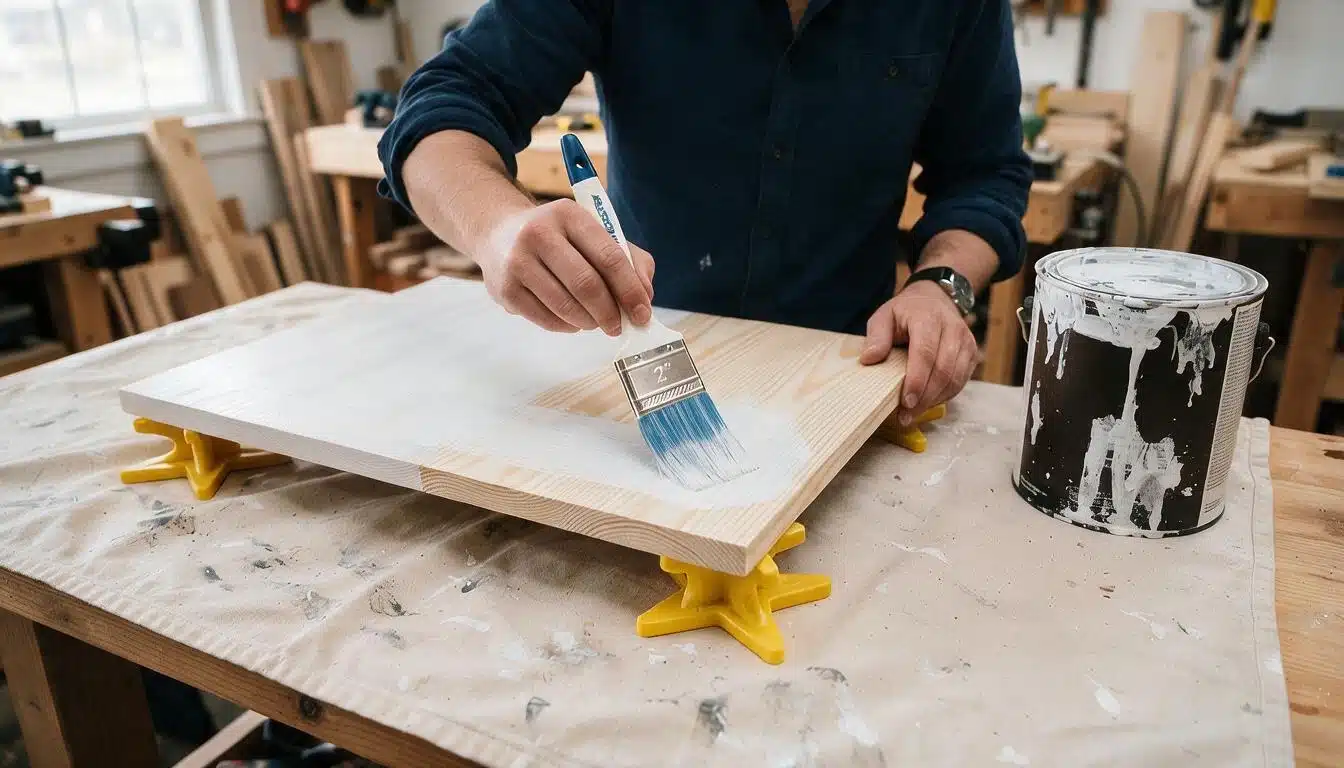
Follow these steps in order for a base coat that grips and lasts longer.
Step 1: Stir, Don’t Shake the Primer Can
Mix the primer slowly with a stir stick until the color and consistency are even throughout.
Shaking whips in air bubbles that dry into pinholes, leaving a rough base. Give it a quick re-stir whenever you work.
Step 2: Use the Right Tool
Use a foam roller for flat panels and a quality synthetic brush for edges and detail. A sprayer suits thin shellac primers best. Whatever you pick, don’t overload it, since a dripping tool lays down too much at once.
Step 3: Apply in Thin Coats
Spread a light, even layer and resist the urge to build full coverage in one pass.
Thick primer sags, traps solvent underneath, and weakens the very grip you’re after.
Step 4: Keep a Wet Edge
Move steadily across the piece, overlapping each pass before the last one sets. Stopping mid-panel leaves lap marks and ridges that telegraph straight through your topcoat.
Plan your route so you finish a whole surface without pausing.
Step 5: Recoat It the Right Way
Let the first coat dry for the exact time on the can before touching it again.
Rushing a second coat over tacky primer lifts the first layer and ruins adhesion. Cool or humid rooms stretch that wait, so check before you recoat.
Step 6: Sand, Then Recoat
Scuff the dried primer lightly with fine-grit sandpaper, then wipe away the dust with a tack cloth.
Apply one more thin, even layer for full opacity. Two light coats beat one heavy coat in durability and smoothness.
Step 7: Cure Before Painting
Give the primer its full cure time. A fully hardened base is what makes your topcoat bond and stay put for years.
Rushing this last step can cause everything above it to go to waste.
Which Paint Works Best Over Laminate Primer?
Once a bonding primer is down, laminate takes almost any furniture paint. The trick is matching the paint to how the piece gets used. High-touch surfaces need something tougher than a decorative finish.
- Acrylic-alkyd enamel: Levels like oil, cleans up like water, and cures rock-hard for tables and dressers.
- Chalk paint: Great matte look and easy to distress, but seal it with wax or poly.
- Cabinet and trim enamel: Built for abuse, ideal on doors and drawer fronts.
For anything handled daily, lean toward enamel. Save chalk paint for decorative pieces that won’t take a loss.
Note: Chalk paint grips laminate on its own better than plain latex does, even before primer goes down. That doesn't mean skip primer entirely if durability matters, but it's why so many laminate makeovers you see online use chalk paint with a lighter prep step than this guide recommends for enamel or latex.
How Durable is Painted Laminate?
If the prep is done right, the painted laminate is very durable.
A properly primed and enameled piece holds up for years of daily use. The bond is the deciding factor, not the paint sheen. Expect a full hardness cure in two to three weeks, so treat it gently at first.
After that, it resists scuffs, cleaning, and normal wear well.
Drawer fronts and tabletops take the most abuse, so a tough topcoat is especially important there.
Neglected prep, not thin paint, is what shortens a finish’s life.
What Causes Primer Failure?
Most failures trace back to prep, not product.
Painting over a glossy, uncleaned surface guarantees peeling later.
Piling on thick coats traps solvent and weakens the grip. Ignoring the recoat window lifts the layers you already laid down. Priming in a cold or damp room slows curing and softens the bond.
Rushing to topcoat before the primer cures is another big one.
Get the surface clean and dry, and most of these vanish.
How to Choose the Right Primer for Laminate
The perfect primer varies depending on the condition of the furniture, intended use, and desired finish – which obviously varies person to person.
- Examine the laminate surface for scratches and stains to determine if heavy-duty adhesion is needed.
- For dark paint colors, choose a tintable primer that can be colored to improve topcoat coverage.
- Select primers formulated for exterior exposure if the furniture will be used on a porch or patio.
- Balance quality and cost: premium primers typically deliver better results but at higher price points.
- Choose spray, brush-on, or roll-on primers based on your preferred application technique and furniture design.
- Fast-drying formulas allow for quicker project completion when time is limited.
- Water-based primers offer easier cleanup and fewer fumes compared to solvent-based alternatives.
- Some primers require less sanding and preparation, saving time on extensive prep work.
End Note!
Get the primer right, and everything after it gets easier.
Zinsser B-I-N sticks the best if you can put up with the smell, and STIX or Behr are nicer to use indoors.
The best primer for laminate really just depends on what you are painting, where you are working, and how much the piece gets used day to day. Pick the one that fits, and let it dry all the way before you paint over it.
Trust me on this, you will not be back here fixing chips next year.
Drop a comment below which one you are thinking of trying!
Frequently Asked Questions (FAQ’s)
1. Do I Need to Prime Laminate Before Painting?
Yes. Laminate is too slick for paint to grip, so primer is essential.
2. How Do I Avoid Brush Strokes on Laminate?
Use a foam roller or a fine synthetic brush, apply in thin coats, and sand lightly between coats.
3. Can Rustoleum Be Used on Laminate?
Yes, especially their bonding and shellac primers, which grip slick laminate well.
4. What is the Best Tool for Painting Straight Lines?
A quality angled sash brush, or painter’s tape paired with a steady hand.
5. Is There a Trick to Using Painters Tape?
Press the edge down firmly, then peel slowly while the paint is still slightly wet.