Spinach is one of the best green vegetables out there. Its rich taste, numerous health benefits, and nutritional value really make it special.
And to top that, think of organic, homegrown spinach. Free of pesticides. Sounds nice, right?
But most home gardeners give up on spinach too soon because it requires a clear roadmap to succeed.
Or else the leaves turn yellow, the plant bolts. You’ll be left wondering where it all went wrong.
Things to Consider Before Growing Spinach
Before you start growing, there are a few things worth knowing. Spinach is a cool-season crop. It grows best in spring and fall.
Summer heat is its biggest enemy, as it causes the plant to bolt quickly.
For sunlight, spinach does well with 3 to 6 hours of direct sun each day. Too much afternoon sun can stress the plant.
Another important consideration is the ideal temperature range, which should be 50°F to 70°F.
And for the soil, the pH is between 6.5 and 7.0. Rich, fertile soil gives the best results.
Always pick high-quality seeds from a trusted source. Look for bolt-resistant varieties like Bloomsdale or Tyee. These tend to perform better across different growing conditions.
Let’s Talk More About the Soil Prep
Getting your soil right is the first real step to a good spinach crop.
Spinach likes loose, well-drained soil that holds some moisture. And it does best when the soil is slightly acidic to neutral; a pH between 6.5 and 7.0 works well.
The following is what you need to do before planting:
- Loosen the soil at least 6 to 8 inches deep. This helps roots spread out easily.
- Mix in compost or aged manure to add nutrients and improve drainage.
- Check the pH using a simple soil test kit. If it’s too acidic, add a little lime.
- Remove rocks and clumps to keep the surface smooth and even.
Once the soil starts to feel soft and crumbly, you’re good to go.
The Easiest Way to Plant and Grow Spinach
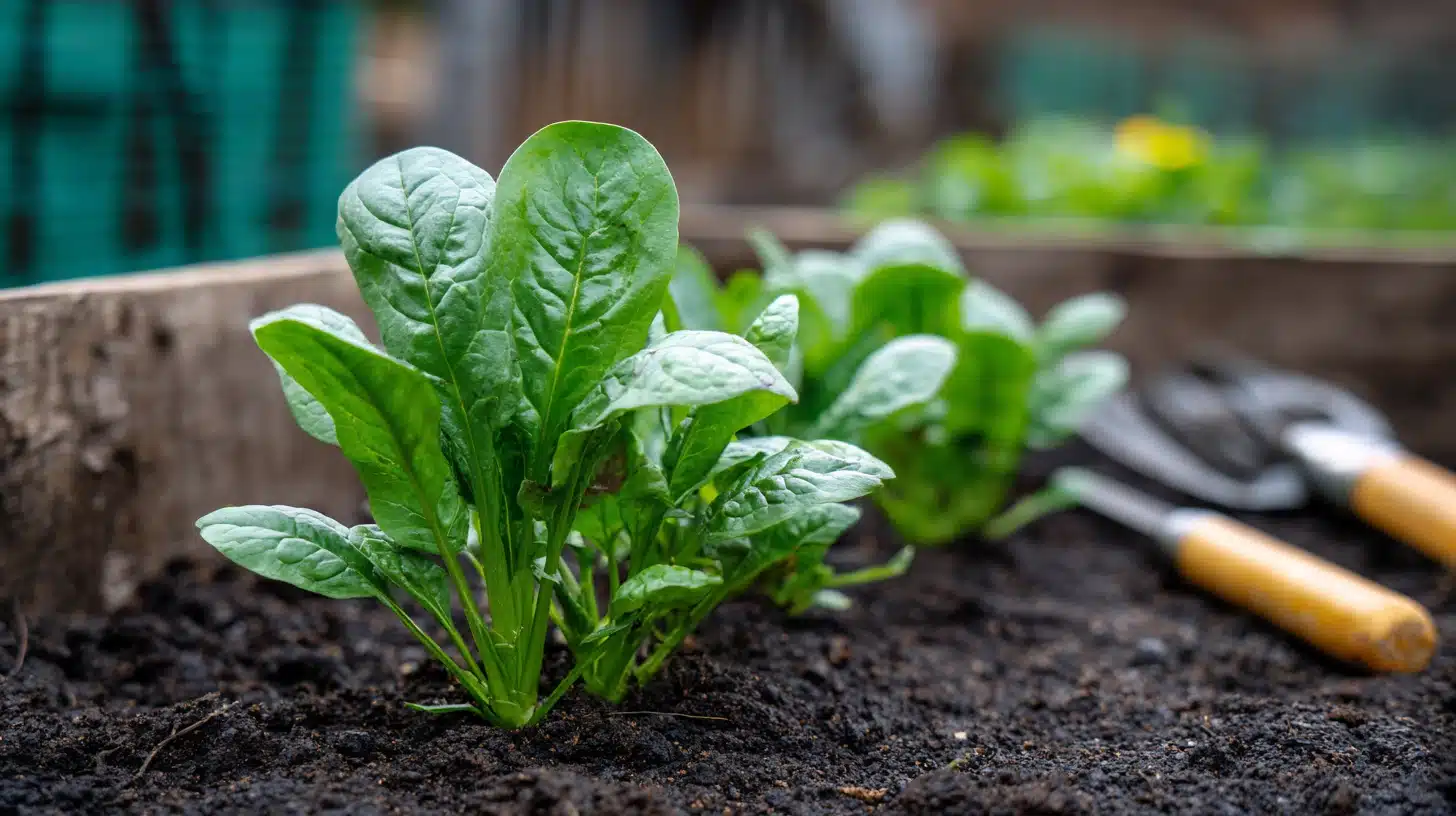
Now that you have the soil and temperature figured out, it’s time to learn how to plant and grow spinach.
And it really doesn’t have to feel complicated.
The key is to start simple and stay consistent. Once you get the basics right, the rest falls into place naturally.
Planting Spinach
Getting your spinach in the ground the right way sets you up for a healthy growing vegetable. The process is simple and takes very little time.
- Sow seeds directly into the ground.
- Plant seeds about ½ inch deep into the soil; going further than that will limit the growth.
- Choose a spot that gets partial to full sun.
- Prepare your soil well before planting. Mix in compost for added nutrients.
- Water the soil gently right after planting.
- For the seeds to sprout, it usually takes 7 to 14 days.
Space your spinach seeds about 2 to 3 inches apart in rows. Keep rows at least 12 inches apart. Spacing is important because it means better airflow and fewer disease problems later on.
Growing Spinach
Once your seeds sprout, the growing comes down to a few simple things.
Start by thinning out seedlings once they reach 2 inches tall, and keep only the strongest ones.
Always keep the soil moist but never soggy.
Feed your plants with a nitrogen-rich fertilizer every 3 to 4 weeks. Make sure to look out for yellowing leaves; it means your plant needs more nutrients.
Finally, at last keep the area around your spinach free of weeds.
Water your spinach early in the morning. This gives leaves time to dry out before evening. Wet leaves overnight can lead to fungal issues and slow growth.
Is Growing Spinach in a Pot a Good Idea?
If you don’t have a garden or backyard where you can grow spinach, a pot or container is definitely the smartest choice.
All it needs is for you to take note of a few things first.
Start with a pot that is at least 6 to 8 inches deep. Spinach roots don’t go too deep, but they need room to spread comfortably.
And never ignore the drainage.
Always pick a pot with holes at the bottom. Without proper drainage, roots sit in water and rot quickly.
For the best potting mix, combine regular potting soil with compost. This keeps the soil light, fertile, and moist without becoming waterlogged.
Harvesting Tips for Spinach
After planting and growing spinach, the most important step is the one that makes the whole process a success.
Pick too early, and you lose yield. Wait too long, and the leaves turn bitter. But the right balance is what separates a good crop from a great one.
Baby Spinach vs Mature Leaves
Baby spinach leaves are ready in about 25 to 30 days after planting. They are soft, mild, and perfect for salads.
Mature leaves take around 40 to 50 days.
They have a stronger flavor and hold up well in cooked dishes. Both are equally nutritious. It all comes down to what you plan to use them for in the kitchen.
Cut-and-Come-Again Harvesting
This is one of the best ways to get more from your spinach plant. Instead of pulling the whole plant out, just cut the outer leaves.
Leave the inner ones to keep growing.
This method works especially well during cooler months when growth is steady and consistent.
Always use clean, sharp scissors or garden shears when harvesting. Torn or jagged cuts can damage the stem and slow down new leaf growth. A clean cut helps the plant recover faster and produce more leaves.
Prevent Bitterness
Bitter spinach is usually a sign of stress, but heat is the most common cause.
Harvest your spinach before temperatures rise above 75°F. Pick leaves in the morning when they are at their freshest.
Avoid letting leaves stay on the plant too long. Older leaves tend to develop a more bitter taste.
How to Keep Spinach Fresh for a Long Time?
If you leave the spinach sitting out, it wilts fast; sometimes within hours. Keeping it fresh is simple if you act quickly after plucking.
The following is what you should do:
- Don’t wash it yet; moisture speeds up rotting. Wash only when you’re ready to use it.
- Pat the leaves dry with a clean cloth if they feel damp.
- Wrap the leaves loosely in a dry paper towel and place them in a zip-lock bag.
- Store in the fridge at around 35–40°F. This keeps spinach fresh for up to 10 days.
- Check regularly and remove any leaves that look yellow or slimy.
Pests and Diseases to Watch For
Even the healthiest spinach plants can run into trouble.
Pests and diseases are a normal part of gardening. But most problems are easy to fix if you catch them early.
1. Aphids
These are tiny green or black bugs that sit on your leaves. They cause leaves to curl or turn yellow. If you spot them, spray the plant with Neem oil or insecticidal soap.
2. Leaf miners
These leave winding white trails inside the leaves. Affected leaves look papery and thin. Remove those leaves, and use row covers to stop adult flies from laying eggs.
3. Downy mildew
It appears as yellow patches on leaves, with grey, fuzzy growth underneath. A copper-based fungicide helps control the spread.
4. Bolting
This happens when your plant grows too tall, too fast. Leaves turn small and bitter, and flowers appear early. Harvest whatever you can right away.
Final Thoughts
Now that you fully understand how to plant, grow, and harvest, growing spinach will be one of the easiest things you can do in your garden.
It won’t take much space, time, or effort.
You just need the right conditions and a little patience. Start with good soil, pick the right season, and keep a close eye on your plants.
Keep all that in mind, and growing fresh spinach will definitely be worth it.
Frequently Asked Questions (FAQs)
1. Is September Too Late to Plant Spinach?
No, September is actually a great time. Spinach loves cool weather. Plant early in the month to give it enough time before the first frost hits.
2. What Not to Plant Next to Spinach?
Avoid planting spinach near fennel or sunflowers. Both can stunt spinach’s growth and reduce your harvest.
3. Is Spinach Easy to Grow for Beginners?
Yes. Spinach is one of the easiest crops to start with. It needs minimal care, grows fast, and does well in both pots and garden beds.