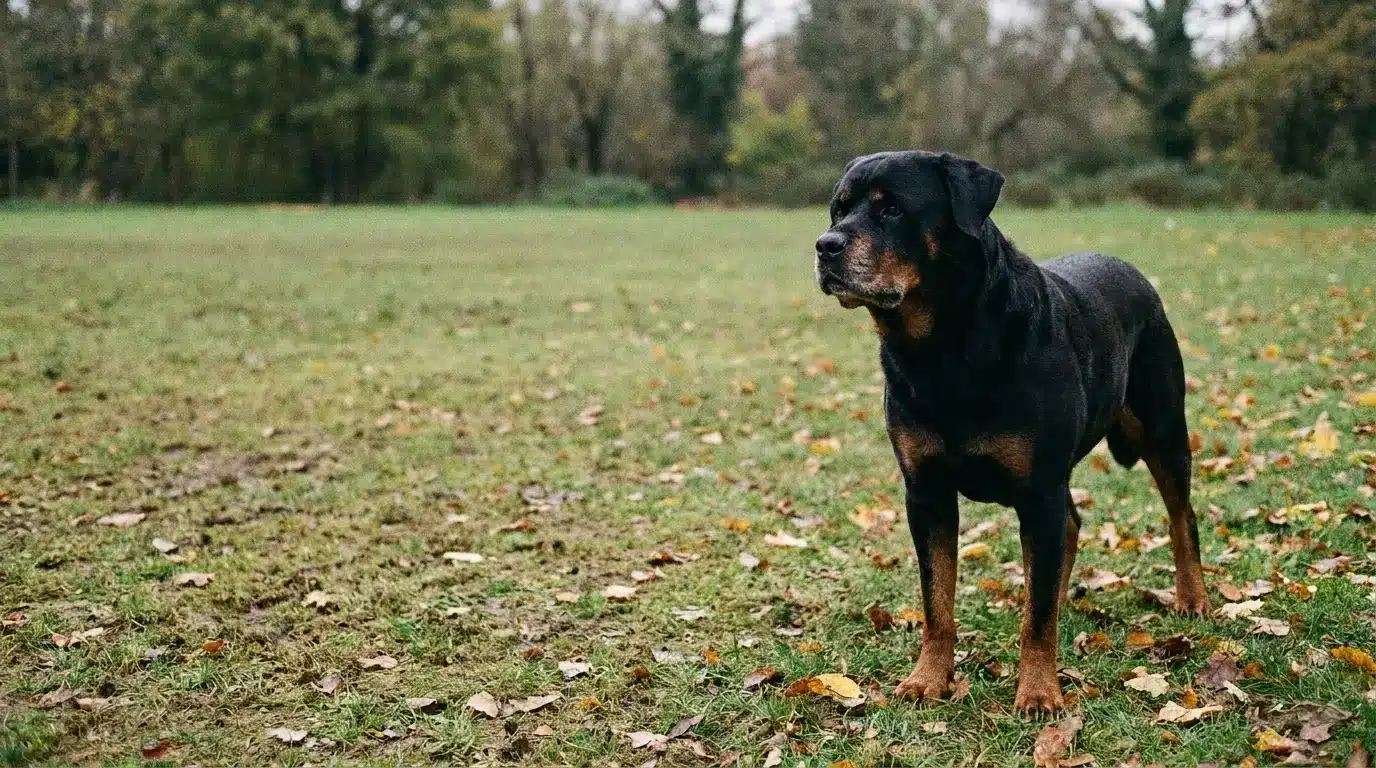
Bold, brave, and composed, the Rottweiler is a breed that conveys strength and alertness. Long valued for endurance and reliability, these dogs make excellent family guardians.
As is the case with any breed, prospective owners often assess the practicality and suitability of getting a Rottweiler. Of the many questions that arise, one that is bound to pop up is, how long does a Rottweiler live?
The answer to that is deep-rooted in the history, biology, care, and the series of decisions made over the course of the dog’s life. On average, a Rottweiler lives anywhere between 8 and 10 years, with some exceeding this range. The latter is less common and attributed to exceptional care and genetics.
How Long Does a Rottweiler Live on Average?
Most veterinary data suggests that the average lifespan of a Rottweiler is around 9 years. Compared to smaller breeds, which live well into their teens, this can seem a bit short. However, within the category of large and working dogs, this is relatively typical.
Large breeds tend to develop rapidly during puppyhood, placing increased strain on joints, bones, and internal systems. This accelerated growth affects breeds such as the Rottweiler that have dense musculature and heavy frames.
That said, averages do not tell the whole story. Two dogs of the same breed can have very different lifespans depending on how they are raised and cared for.
What Affects How Long a Rottweiler Lives?
Genetics is the single most important factor that influences how long a Rottweiler lives. Dogs bred responsibly, through health-tested lineage, tend to live longer and experience fewer serious medical issues.
Rottweilers are predisposed to several conditions, including:
- Hip and elbow dysplasia
- Cardiac conditions such as subaortic stenosis
- Osteosarcoma (bone cancer)
- Hypothyroidism
Cancer, in particular, is a leading cause of death in the breed. Studies consistently show that large dogs develop certain cancers earlier and more frequently than smaller breeds.
This makes breeder selection more than a matter of pedigree; it becomes a foundational decision that can influence lifespan by years. For those considering an alternative, adopting through a reputable rescue can also be a responsible path.
Diet and Weight: A Hidden Determinant
One of the most overlooked factors in a Rottweiler’s lifespan is body weight.
Because the breed is naturally muscular, excess weight can go unnoticed. But even moderate obesity can shorten a dog’s life by placing additional stress on joints and increasing the risk of metabolic and cardiovascular issues.
A well-managed diet should include:
- Measured portions based on activity level
- High-quality protein
- Nutrients that support joint health
Veterinarians often emphasize that keeping a large dog lean can meaningfully extend its life. In some cases, maintaining an optimal weight has been linked to lifespan increases of up to a year or more.
Exercise and Daily Routine
Rottweilers are not passive animals. They require regular physical activity and mental engagement to remain healthy.
Daily walks, structured play, and training exercises contribute to:
- Strong cardiovascular health
- Stable joint function
- Balanced behavior
However, moderation matters. Excessive exercise during early development, particularly high-impact activity, can increase the risk of joint issues later in life.
A consistent, balanced routine tends to produce the best long-term outcomes.
Veterinary Care and Prevention
Routine veterinary care is one of the most controllable factors in determining how long a Rottweiler lives.
Regular checkups allow for early detection of issues that might otherwise go unnoticed. Preventive care, including vaccinations, parasite control, and dental hygiene, plays a significant role in maintaining overall health.
As Rottweilers age, additional screening becomes important. Bloodwork, cardiac monitoring, and joint assessments can identify problems early, often making them easier and less costly to manage.
Dogs that receive consistent veterinary attention tend to live longer, healthier lives.
The Senior Years: What to Expect
A Rottweiler is generally considered a senior around 7 years of age. At this stage, subtle changes begin to appear, such as reduced energy, stiffness in movement, and longer recovery times after activity.
These shifts are not necessarily signs of decline, but signals to adjust care. Joint supplements, modified exercise routines, and dietary adjustments can help maintain quality of life well into the later years.
Many Rottweilers remain active and engaged long after entering their senior phase.
Final Answer: How Long Does a Rottweiler Live?
In practical terms, the answer is: A Rottweiler typically lives 8 to 10 years, with some reaching 11 or 12 under optimal conditions.
The more complete answer is this: lifespan is not fixed. It is shaped gradually, through diet, healthcare, environment, and daily routines.
For a breed defined by strength and loyalty, longevity is less about chance and more about the consistency of care.