The most common way to kill a Christmas cactus isn’t neglect; it’s overwatering, too much sun, and fussing with it when it wants to be left alone.
If your plant refuses to bloom, then you are probably doing one of these things.
Once you understand what this plant actually is, and where it comes from, most of the care decisions make themselves.
Ready to turn things around? Let’s get started.
What is a Christmas Cactus?
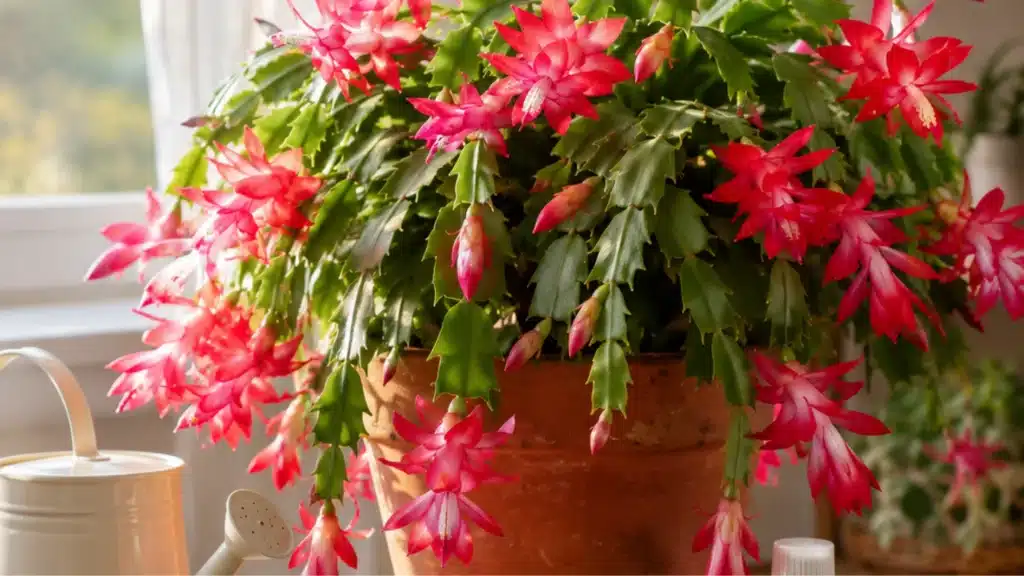
A Christmas cactus is not your typical desert plant.
It is actually an epiphytic cactus that grows on tree branches in rainforests, soaking up humidity, warmth, and dappled sunlight.
Its scientific name is Schlumbergera × buckleyi. It blooms indoors around Christmas time in the Northern Hemisphere with bright, striking flowers.
With proper care, these plants can live 40 to 50 years. Plenty of gardeners have a Christmas cactus that originally belonged to a grandparent.
So, that’s not just a plant, that’s a keepsake.
How to Care for a Christmas Cactus?
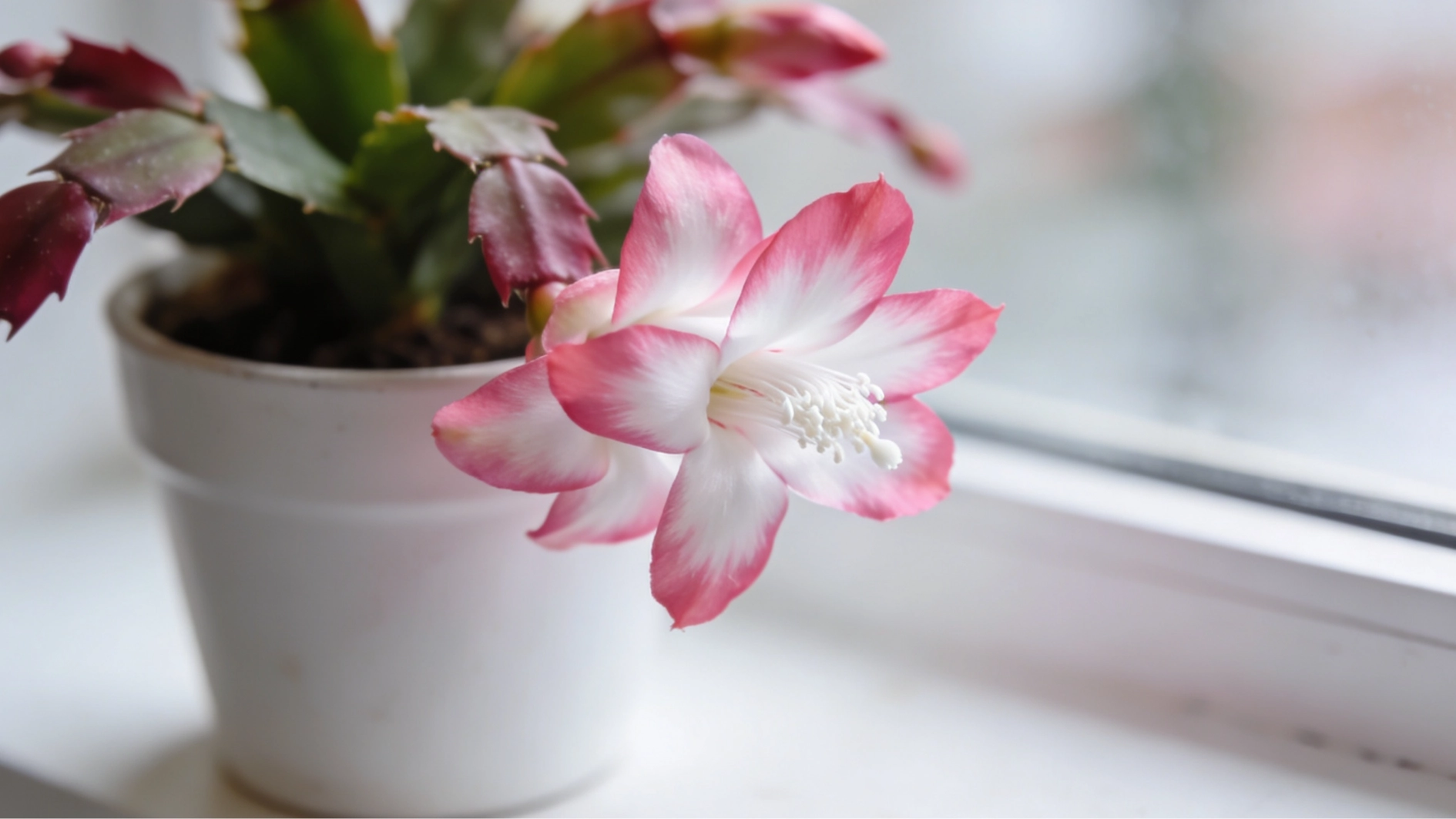
There are five things that actually matter: light, water, temperature, soil, and humidity. Get those right, and the plant mostly takes care of itself.
1. Light
Keep your plant in bright, indirect light. An east-facing window or a bright room works really well. Too much direct sunlight scorches and bleaches the sensitive leaves.
If you notice the stems turning red, that’s a sign it’s getting too much sun. Move it to a shadier spot right away.
2. Watering
Water your Christmas cactus thoroughly. But let the top inch of soil dry out between waterings.
Overwatering leads to bud drop and root rot. Never leave excess water sitting in the saucer.
Before you water, stick your finger about an inch into the soil. If it feels dry, go ahead and water. If it still feels damp, leave it for a few more days.
3. Temperature
A daytime temperature of 70°F and an evening temperature of 60°–65°F works best.
Keep the plant away from direct heat sources, such as a fireplace or heating vent. Sudden temperature changes can cause buds to drop before they even open.
4. Soil
Christmas cactus soil should be a well-draining, loamy mix with a slightly acidic pH of 5.5-6.2.
A simple mix is three parts potting soil to one part sand. This keeps roots healthy and stops water from sitting too long.
At pH above 6.5, the plant starts struggling to absorb iron, which shows up as yellowing between the veins of new growth.
5. Humidity
Fill the pot saucer with pebbles and add water just below the tops of the pebbles. As the water evaporates, it adds humidity around the plant.
This is one of the easiest tricks to keep your Christmas cactus happy indoors.
Seasonal Care Tips for Your Christmas Cactus
The care routine shifts with the seasons. The following is what to do and when:
Spring
After blooming ends, start fertilizing your plant monthly.
This is also a great time to prune and shape your plant. Water every one to two weeks and watch for new growth at the tips of the stems.
If you want to propagate your plant, spring is the best time to do that, too.
Summer
You can move your plant outside to a shady spot during summer.
Keep it away from intense heat and direct sunlight, as prolonged exposure can burn the leaves or turn them red.
Keep watering every one to two weeks and continue fertilizing to support healthy growth.
Fall
Move your plant indoors before the first frost. Keep the soil on the drier side.
Start the darkness treatment in September or early October to prepare it for blooming. Stop fertilizing at this point and let your plant rest.
Winter
Place your plant where it gets four to six hours of indirect sunlight. Keep the soil moist and make sure the air around it is not too dry.
During fall and winter, water less to promote blooming. Watch for buds dropping off; this is usually a sign of too much water.
How to Get a Christmas Cactus to Bloom?
Blooming comes down to two triggers: darkness and cool temperatures. Most plants fail to bloom because one of those two is missing.
Give your plant 13 to 16 hours of total darkness each day for at least 6 weeks in the fall.
Move it to a cool room with temperatures between 60°F and 70°F. Keep the lights off and stop feeding during this time. Start the darkness treatment in late September or October.
If the dark period is interrupted by even brief light, your plant may drop its buds.
Once you see flower buds forming at the tips of the stems, move your plant back to its regular bright spot.
The dark treatment fails indoors because of the ambient light from blubs or lamps, which is enough to interrupt the cycle. A closet or cardboard box works better than a ‘dark room’ that isn’t fully dark.
How to Fertilize a Christmas Cactus?
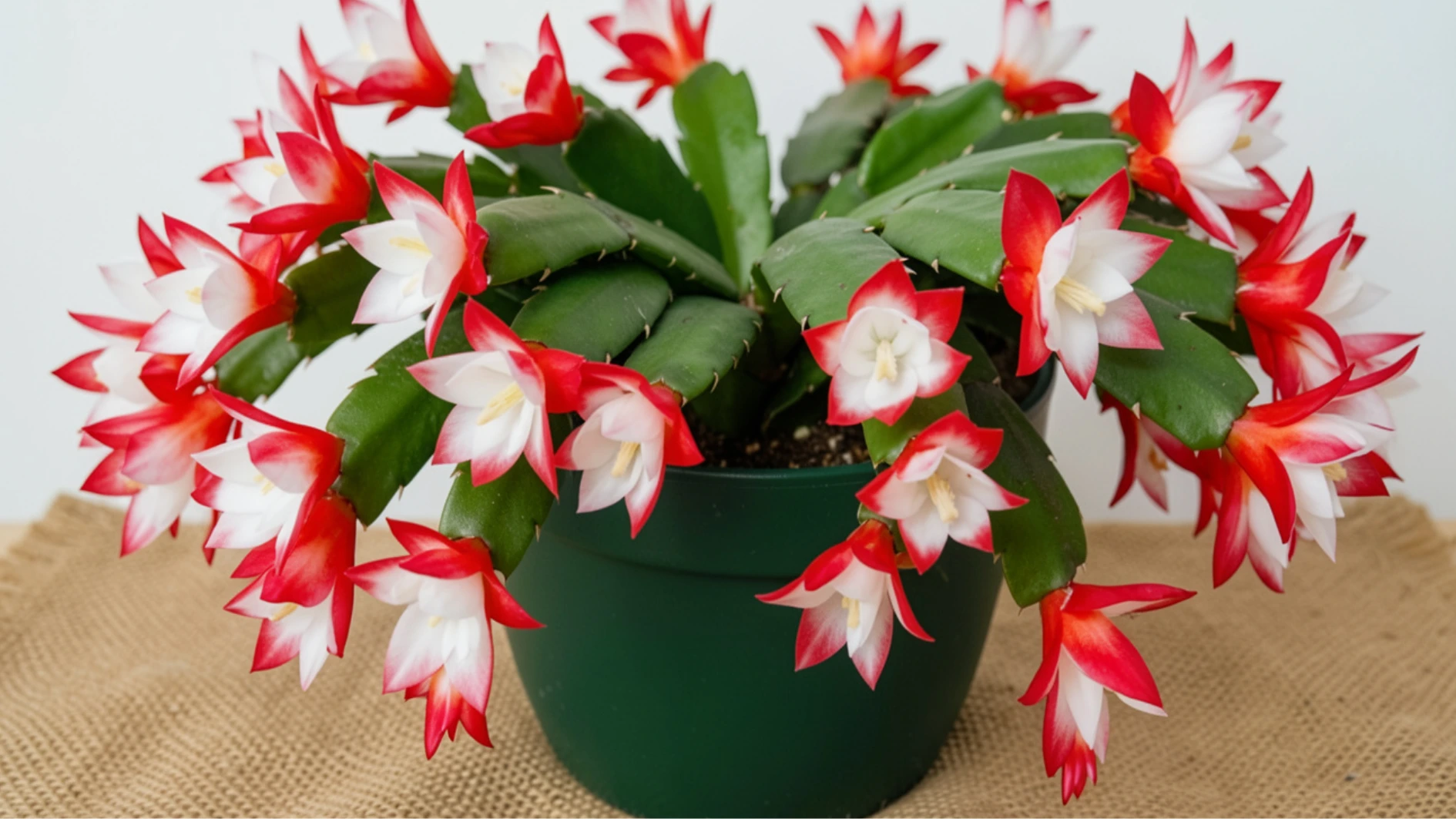
Christmas cacti are light feeders that benefit from a balanced fertilizer applied during their active growing season, which runs from spring early fall.
Use a water-soluble, balanced fertilizer such as a 10-10-10 or 20-20-20 formula, diluted to half the recommended strength.
Apply it every two to four weeks from April through September.
Avoid fertilizing in late fall and winter, as the plant enters its blooming and rest cycle during this period.
Feeding at this stage can push vegetative growth at exactly the wrong time, delaying or preventing flowering.
Always water your Christmas cactus before fertilizing to prevent root burn.
Once buds begin to form, stop feeding entirely and simply let the plant focus its energy on producing those beautiful blooms.
How to Prune and Maintain the Shape of Your Cactus?
Pruning takes five minutes and makes a real difference; a pruned plant tends to come back bushier with more bloom sites the following year.
The best time to prune is in late spring or early summer, after the blooming season has ended. To prune, simply pinch or gently twist the segments off at the narrow joint between them.
For thicker stems, just use clean scissors to cut them. Always clean your tools before and after each cut. Dirty tools can spread disease fast
You can remove up to one-third of the plant each year.
Once blooming ends, deadhead your plant, too. Remove the dried, shriveled flowers to encourage new growth going into the next season.
Things that Can Go Wrong With Your Christmas Cactus
Most problems with Christmas cacti have an obvious cause once you know what to look for:
1. Limping or wilting stems
The soil may be too wet or too dry, or the plant may be too rootbound. Feel the soil about an inch deep to figure out the cause.
2. Yellow leaves
This usually points to too much sunlight or poor watering. Direct sunlight scorches the leaves. Overwatering suffocates the roots.
3. Buds falling off
This happens when the plant gets too dry, stays too wet, or gets moved to a new spot. Keep watering consistently when the plant is in bud.
4. Stems falling off at the base
Root rot starts quietly.
Press the base of the stem; if it feels soft or slightly mushy, rot is already there. By the time the plant visibly droops, you’ve usually lost most of the root system.
By the time it’s drooping, you’ve usually lost more roots than you think.
5. No blooms
Too much light, high night temperatures, or overwatering during rest can stop blooming. Move the plant to a cool, dark spot in October and water sparingly.
Conclusion
Get the light, water, temperature, and feeding right, and this plant will bloom for you reliably, year after year, for decades.
The care routine is more forgiving than most houseplant guides suggest.
The plants that struggle are almost always overwatered or sitting in too much light; fix those two things first.
Frequently Asked Questions (FAQs)
1. What Two Things Trigger a Christmas Cactus to Bloom?
Two things that trigger blooming are cool temperatures and short days. When nights get longer and temperatures drop, your Christmas cactus starts setting flower buds naturally.
2. Should I Mist my Christmas Cactus?
Houseplant experts say don’t bother with misting. It only raises humidity by a very small amount and is an inconsistent method. Too much misting can also lead to fungal growth.
3. How Often Should I Water My Christmas Cactus?
Water thoroughly, but let the top inch of soil dry out between waterings.