Store-bought onions rot faster than they should. You pull one out of the bag, and half the others have already gone soft.
Growing your own fixes that, and it’s genuinely one of the easier vegetables to manage once you get the basics right.
Read This Before You Start
There are two decisions to make before you plant anything: what you’re starting from, and which onion type suits your climate.
Not all onions start the same way. To plant, you can choose from three options:
- Seeds are budget-friendly but take the longest to grow.
- Sets are small, dried bulbs, and the fastest and easiest option for beginners.
- Transplants are young plants that give you a head start, but cost a little more.
Then there’s the climate question. Onions are split into two types based on how much daylight they need to form bulbs:
- Short-day onions grow best in warm southern regions.
- Long-day onions do well in cooler northern areas. Pick one according to your regional weather.
Seeds, sets, and transplants all work for both short-day and long-day onions. Your climate determines the type; your budget and timeline determine the starting method.
Choose the Right Onion Varieties
Pick the wrong variety for your climate and the bulbs just won’t size up properly, no matter how well you water or fertilize.
| Variety | Best Climate | Best Type For |
|---|---|---|
| Red Onions | Cool to mild climates | Short-day & long-day growing |
| White Onions | Warm, dry climates | Short-day growing in southern regions |
| Yellow Onions | Most climates are very adaptable | Both short-day & long-day growing |
| Green Onions | Almost any climate | Container growing & small gardens |
If you’re unsure, start with yellow. They tolerate the widest range of conditions and produce reliably in most home gardens.
How to Grow Onions?
Now that you’re aware of what you need to do before planting, let’s move on to planting.
Learning how to plant onions starts with your soil.
- Onions need loose, well-drained soil with a pH between 6.0 and 6.8.
- Pick a spot that gets at least 6 to 8 hours of sunlight daily.
- Push each set 1 inch deep into the soil.
- Place the pointed end facing up and space the sets 4 to 6 inches apart.
- Keep rows 12 inches apart for good bulb growth.
- Water your onions right after planting.
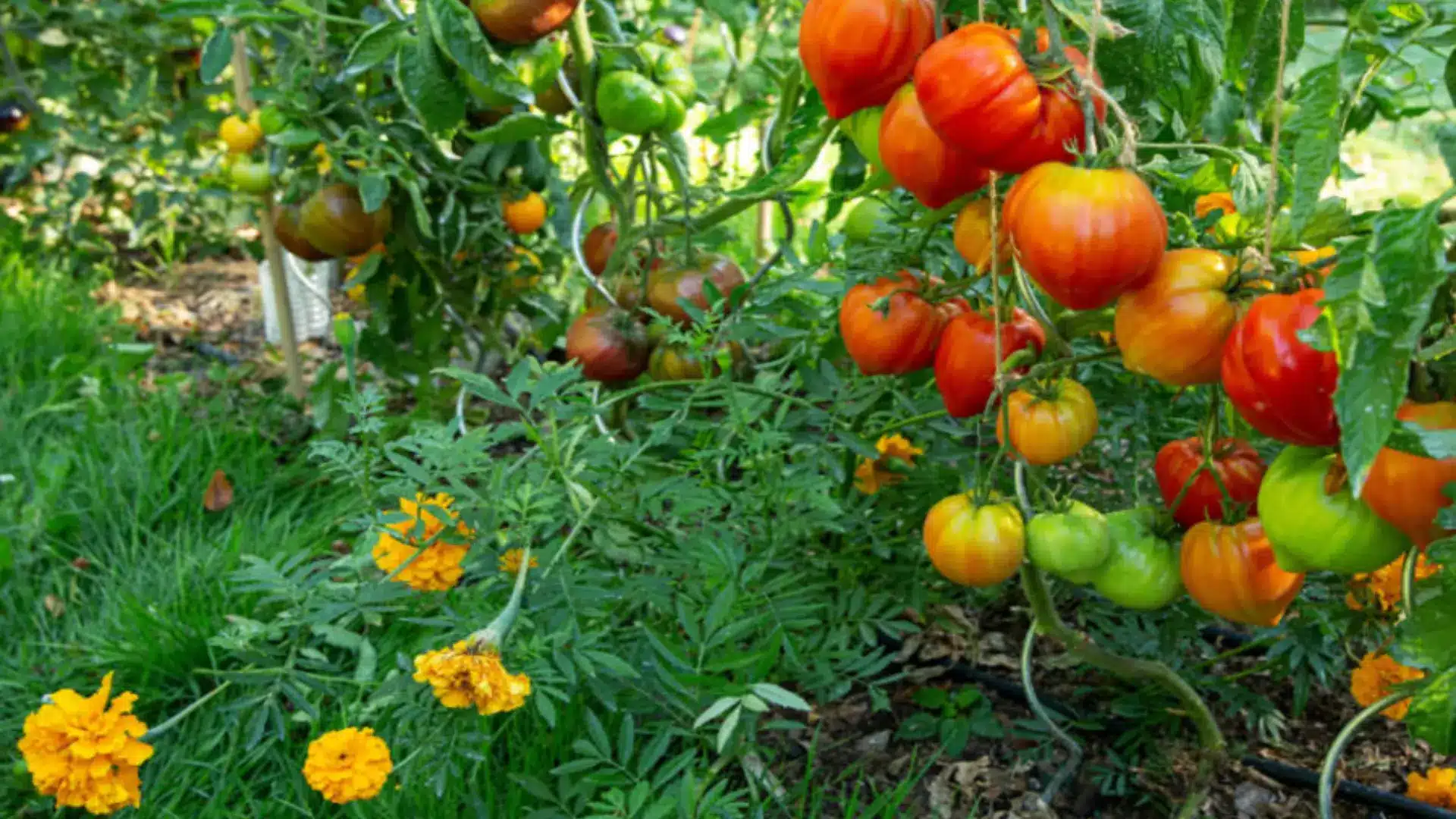
Avoid planting onions near beans, peas, or sage. These plants compete with onions for nutrients and can slow their growth. Onions grow best next to carrots, tomatoes, and lettuce instead.
Take Care of Your Onions After Planting
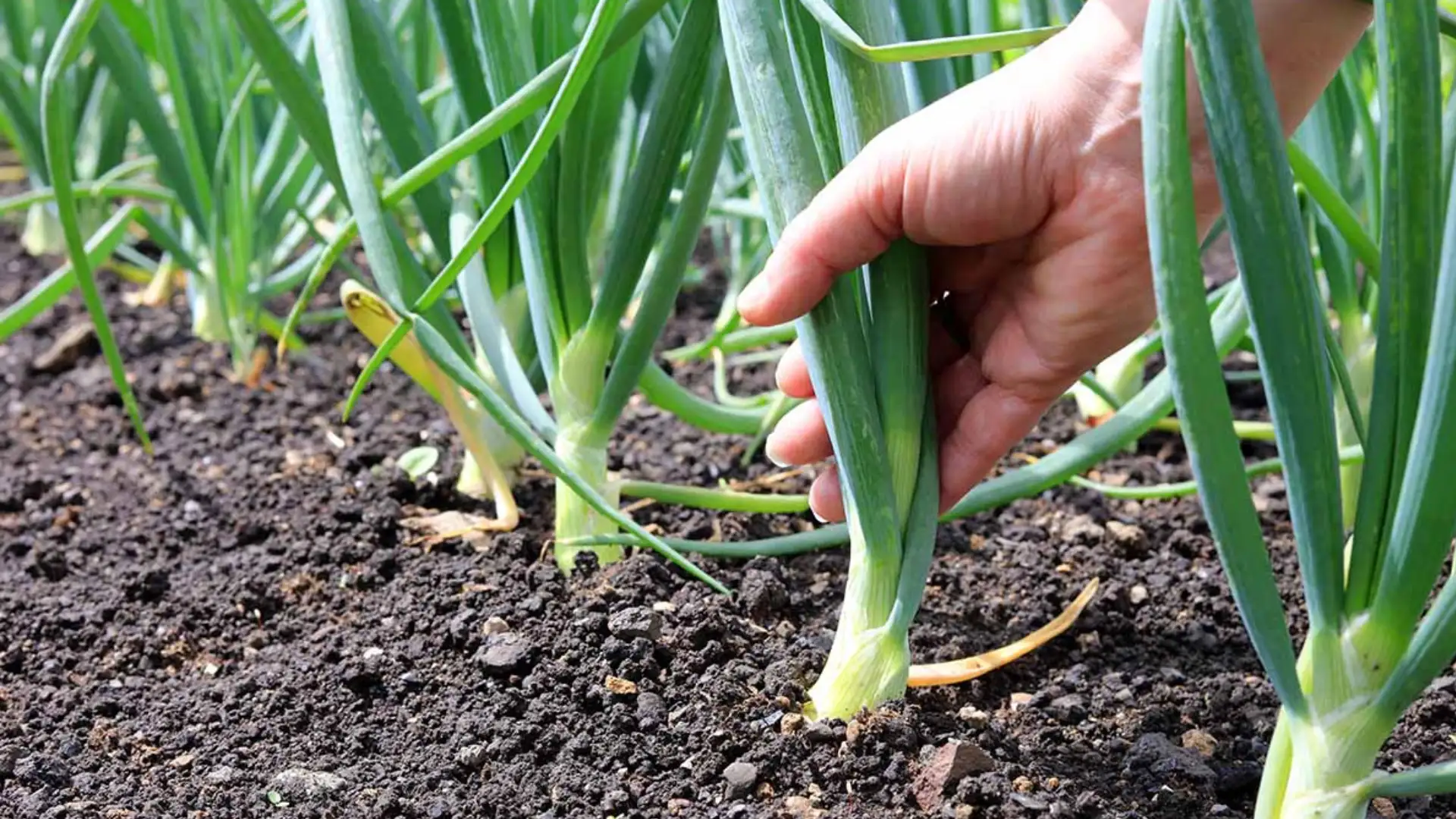
After planting, three things keep your crop on track: watering, feeding, and weeding. Get these wrong, and healthy plants go sideways fast.
Onions need about 1 inch of water per week. But don’t overwater, as it causes bulbs to rot.
Water deeply but less frequently. As the bulbs start to form, cut back on watering slightly. This helps the outer skin dry out and harden properly.
For fertilizing, use a nitrogen-rich fertilizer every 2–3 weeks through the growing season.
Nitrogen helps grow strong, tall green tops. And once you see the tops start to fall over, stop feeding because your onions are ready.
Weeding is the part people neglect most. Keep the area around your onions weed-free.
Weeds steal water and nutrients fast. Since onions have shallow roots, even small weeds can significantly slow their growth.
Can You Grow Onions in a Pot?
Growing onions in a pot is actually a very smart option if you have limited garden space.
For this, pick a pot that is at least 10 inches deep and 12 inches wide. Green onions work best in containers, as they need less space than bulbing onions.
Use a light, well-draining potting mix instead of regular garden soil.
Garden soil in pots can become too compact, slowing root growth. Place your container in a spot that gets full sun daily, and water it 1 inch per week.
Go with an unglazed terracotta pot or a fabric grow bag. Both allow excess moisture to escape, keeping roots healthy and preventing rot. Plastic pots hold too much moisture and don’t breathe, skip them.
Signs That Onions Are Healthy and Ready To Harvest
Harvesting gets easier when you know the signs to watch out for.
Look for tall, dark green tops standing straight and firm. The bulbs will slowly push up above the soil surface, and the leaves will look full and strong, not yellow or drooping.
If the tops are falling over and the neck feels soft, your onions are close to ready.
And once you see tops falling over, all that’s left is harvesting them with care.
- Wait until at least 50% of the tops have fallen over before pulling onions out.
- Gently loosen the soil around each bulb before pulling to avoid damage.
- Cure harvested onions in a dry, airy spot for 2 to 4 weeks before storing.
- Store fully cured onions in a cool, dark place in mesh bags for up to 6 months.
More Storage Options for Your Onions
How you store them matters as much as how you grew them. A good harvest stored badly is still a wasted harvest.
Bad storage leads to rot, sprouting, and wasted harvests. But the right method can make your onions last for months.
1. Mesh Bags
Mesh bags allow constant air flow around each onion. Simply place cured onions inside and hang them in a cool, dark spot.
2. Wooden Crates
Wooden crates breathe well and keep onions dry. Line the bottom with newspaper, then spread the onions in a single layer. Store them away from direct sunlight.
3. Braiding
Braiding onion tops together keeps them hanging and well-ventilated. Braid the dry tops tightly together and hang in a cool, airy spot.
4. Paper Bags
Paper bags absorb excess moisture and prevent early sprouting. Poke small holes in the bag for air flow, and store in a cool pantry or cellar.
Final Thoughts
Growing onions isn’t complicated; but the details do matter.
Get the variety right for your climate, don’t skip curing before storage, and watch your watering. Do those three things, and you’ll pull better onions than anything from a grocery bag.
Good soil, full sun, correct spacing, and regular watering go a long way.
Check those boxes, and the rest mostly takes care of itself.
Frequently Asked Questions (FAQs)
1. Can I Grow Onions in October?
Yes, but only in warm regions. October planting works well in the South and similar climates. In cold areas, wait until early spring.
2. Will Onions Regrow Every Year?
Onions are biennial but grown as annuals. They won’t regrow on their own, so replant sets or seeds each season.
3. How Many Onions do You Get if You Plant One Onion?
One set produces one onion. However, if you let it divide naturally, you may get 2 to 3 smaller bulbs from a single plant.