Landlords are generally responsible for maintaining their properties and keeping them in safe living condition. Tenants have responsibilities as well, as allocated by local laws and lease terms. When a tenant or guest falls on a staircase – or elsewhere on the property – can a landlord be responsible? And under what conditions does a lawsuit make sense?
Not Every Fall Leads to Liability
A common misconception is that if someone falls on a rental property, the landlord is automatically responsible. That is not how premises liability law generally works. Landlords are not insurers of everyone’s safety. They are not expected to prevent every possible accident, nor are they automatically liable whenever an injury occurs on their property. Instead, the law typically asks whether the landlord acted reasonably under the circumstances.
If the property was maintained appropriately and the accident resulted from something the landlord could not reasonably have anticipated or prevented, liability may not exist. On the other hand, if a dangerous condition was ignored or allowed to persist, the legal analysis may look very different. The existence of an injury alone is only the beginning of the inquiry.
Common Areas Usually Receive the Greatest Attention
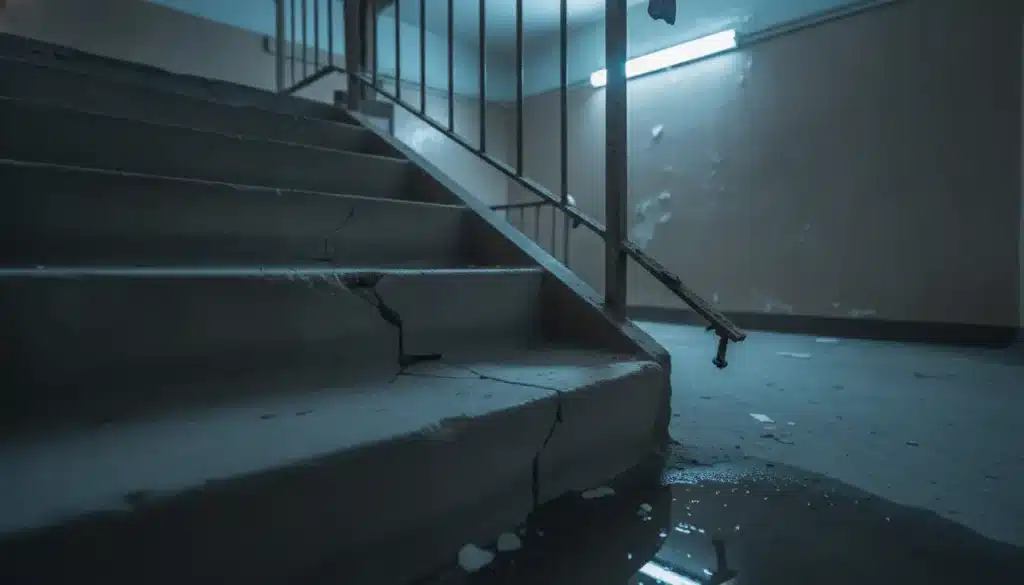
One of the most important distinctions involves where the fall occurred. Landlords are generally responsible for maintaining common areas under their control. Hallways, stairwells, sidewalks, parking lots, shared entrances, laundry rooms, and similar spaces are frequently the landlord’s responsibility because tenants do not have exclusive control over them. These areas require ongoing attention, so loose handrails, broken stairs, uneven pavement, poor lighting, accumulated snow or ice, damaged flooring, or other hazardous conditions may create an unreasonable risk of injury if not addressed within a reasonable time. Because landlords typically retain control over these areas, courts often examine whether reasonable inspection and maintenance practices were followed.
Knowledge of the Hazard Matters
One of the most significant issues in many slip and fall cases is whether the landlord knew (or reasonably should have known) about the dangerous condition. Consider two different scenarios here. In the first, a pipe bursts moments before someone slips on the newly formed puddle. In the second, water has been leaking into the same hallway for several weeks despite repeated complaints from tenants. The legal analysis may differ substantially. Courts often distinguish between hazards that arise suddenly and conditions that existed long enough for a reasonable property owner to discover and correct them. Evidence such as maintenance records, repair requests, photographs, inspection logs, and witness testimony frequently becomes important in determining what the landlord knew and when they knew it.
Maintenance Is an Ongoing Responsibility

Rental properties naturally experience wear and tear. Concrete cracks. Steps loosen. Flooring deteriorates. Exterior lighting burns out. Drainage systems clog. Tree roots shift sidewalks over time. And none of these conditions necessarily indicate negligence by themselves.
What matters is how the landlord responds. Routine inspections and timely maintenance are often central to reducing both accidents and potential liability. Addressing known hazards promptly, documenting repairs, and responding appropriately to tenant complaints can help demonstrate that reasonable care was exercised. Deferred maintenance, in contrast, may increase both safety risks and legal exposure.
Weather Creates Unique Challenges
Snow, ice, and rain frequently contribute to slip and fall claims, particularly in regions that experience significant seasonal weather. Landlords are generally not expected to eliminate hazardous weather instantly. During an active snowstorm, for example, conditions may continue changing faster than they can reasonably be addressed. However, property owners are often expected to respond within a reasonable period after weather conditions allow.
This may include clearing walkways, applying salt or other de-icing materials where appropriate, addressing drainage problems, or removing accumulations that create unreasonable hazards. Exactly what constitutes a reasonable response depends on the circumstances, local conditions, lease obligations, and applicable state law. There is rarely a single rule that applies in every situation.
Tenants Also Have Responsibilities
Keep in mind that landlord liability does not mean tenants bear no responsibility for their own safety. Individuals are generally expected to exercise reasonable care while using the property. For example, running through an icy parking lot, ignoring clearly visible hazards, wearing unsafe footwear in hazardous conditions, or failing to use available handrails may become relevant factors in some cases. Many states apply comparative negligence principles, meaning responsibility for an accident may be allocated among multiple parties depending on their respective conduct.
Reasonableness Is the Central Question
Most landlord liability cases ultimately revolve around one fundamental issue: did the landlord act reasonably under the circumstances? That question requires examining numerous factors, including the nature of the hazard, how long it existed, whether the landlord knew or should have known about it, what steps were taken to address it, and whether the injured person’s own conduct contributed to the accident.
Although landlords have important responsibilities to maintain reasonably safe properties, they are not automatically liable every time someone falls. Likewise, tenants and visitors are generally expected to exercise reasonable care for their own safety. The law seeks to balance these responsibilities by evaluating the specific facts surrounding each incident.