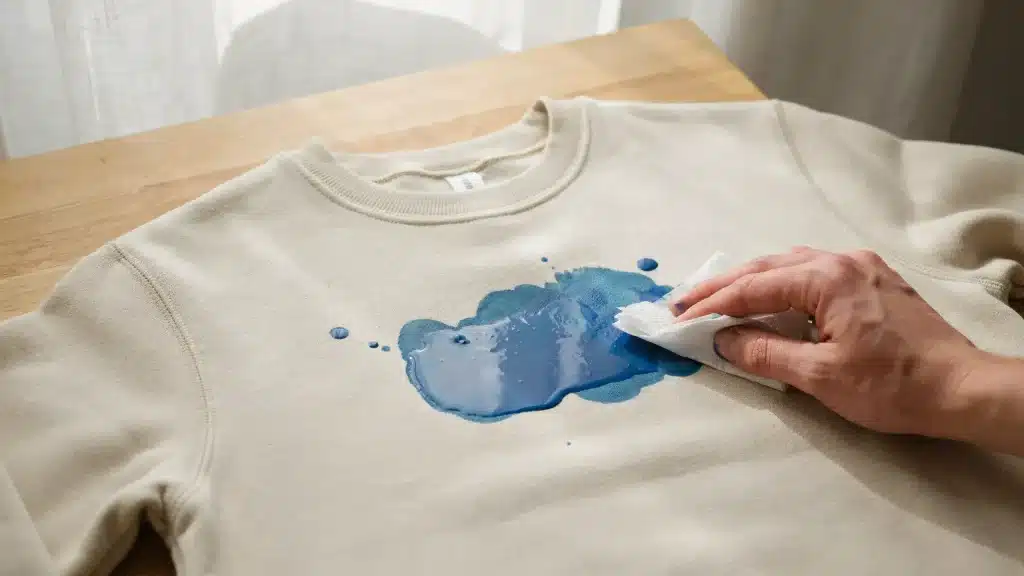
Did you splatter paint on yourself and are now wondering how to get paint out of clothes?
Well, you’d be happy to know that you are not alone.
These little mishaps happen to almost everyone, but most paint stains can easily come out if treated with the right items and method. This right method depends on a few things.
Acting quickly and using the correct cleaner can save many garments that might otherwise seem ruined.
This blog explains it all, step by step and paint by paint.
Before Removing Paint from Your Clothes, Check These
Before you touch any cleaner, take a minute to look at the stain and choose the safest method to remove it without causing permanent damage.
Firstly, check whether the paint is wet or completely dry. In the case of Wet paint, it will lift more readily, since it hasn’t completely adhered to the fabric fibers.
Next, identify the type of paint that you’re dealing with. Different cleaners will be required to remove the stain depending on whether the paint is Water-based, such as latex and many acrylic craft paints, or Oil-based.
Lastly, read the care label on the garment. Delicate fabrics and dry-clean-only clothing may not tolerate strong solvents.
If you’re unsure, test any product on an inside seam before treating the stain.
What Do You Need to Get Paint Out of Your Clothes?
Here is a list of all the tools and materials needed for the stain removal process. Chances are you already own most of this. And even if you don’t, keep reading to find alternatives.
Tools Needed
- Spoon or dull knife
- Soft brush or old toothbrush
- Clean cloths
- Sink or bowl
Materials Needed
- Mild dish soap
- Rubbing alcohol (for some water-based paints)
- Mineral spirits (for oil-based paint only)
- Laundry detergent
- Warm or cool water
How to Get Paint Out of Clothes: Step-By-Step
Paint stains are common, but they do not have to be permanent. Follow these steps for a smooth and efficient stain removal process.
Step 1: Remove Excess Paint without Rubbing it in
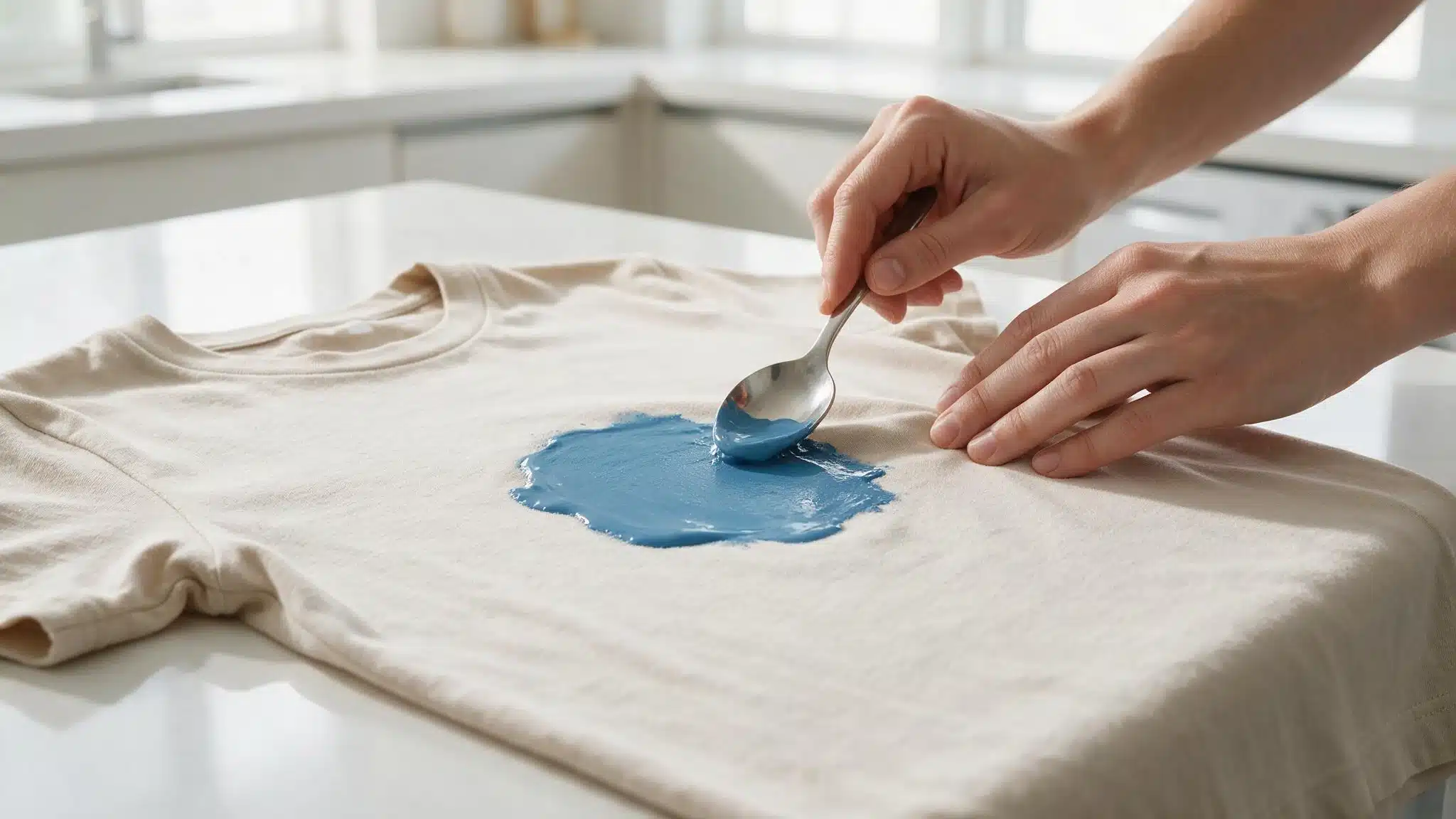
If the paint is still wet, you need to be really careful.
Use a spoon, a butter knife, or even the edge of a paper to try to lift off as much of the paint as you can. Do this gently.
To avoid making the stain worse, start from the outside of the stain. Work your way to the center.
Do not rub the paint stain, as this can make it worse. Rubbing can push the paint deeper into the fabric. This will make it very hard to remove the stain later.
Step 2: Rinse the Stain from the Back of the Fabric
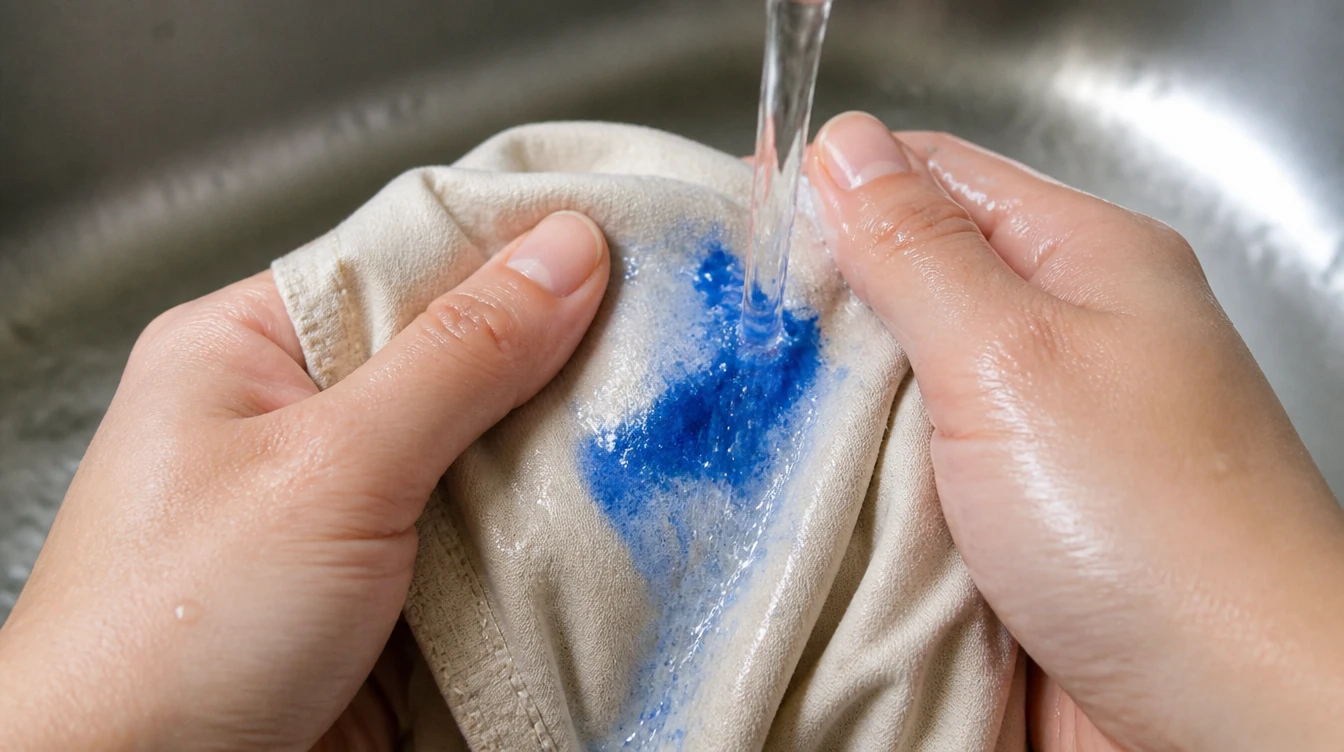
Turn the garment inside out. Rinse the stained area under cool running water when the paint manufacturer says it is okay to use water to clean it.
Running water through the back of the stain helps to get the paint out of the garment by pushing the paint out of the fibers.
Keep rinsing the garment until the water’s mostly clear. You can also stop rinsing once no more paint comes out of the garment.
If the paint is oil-based, do not do this step.
Step 3: Choose the Right Cleaner
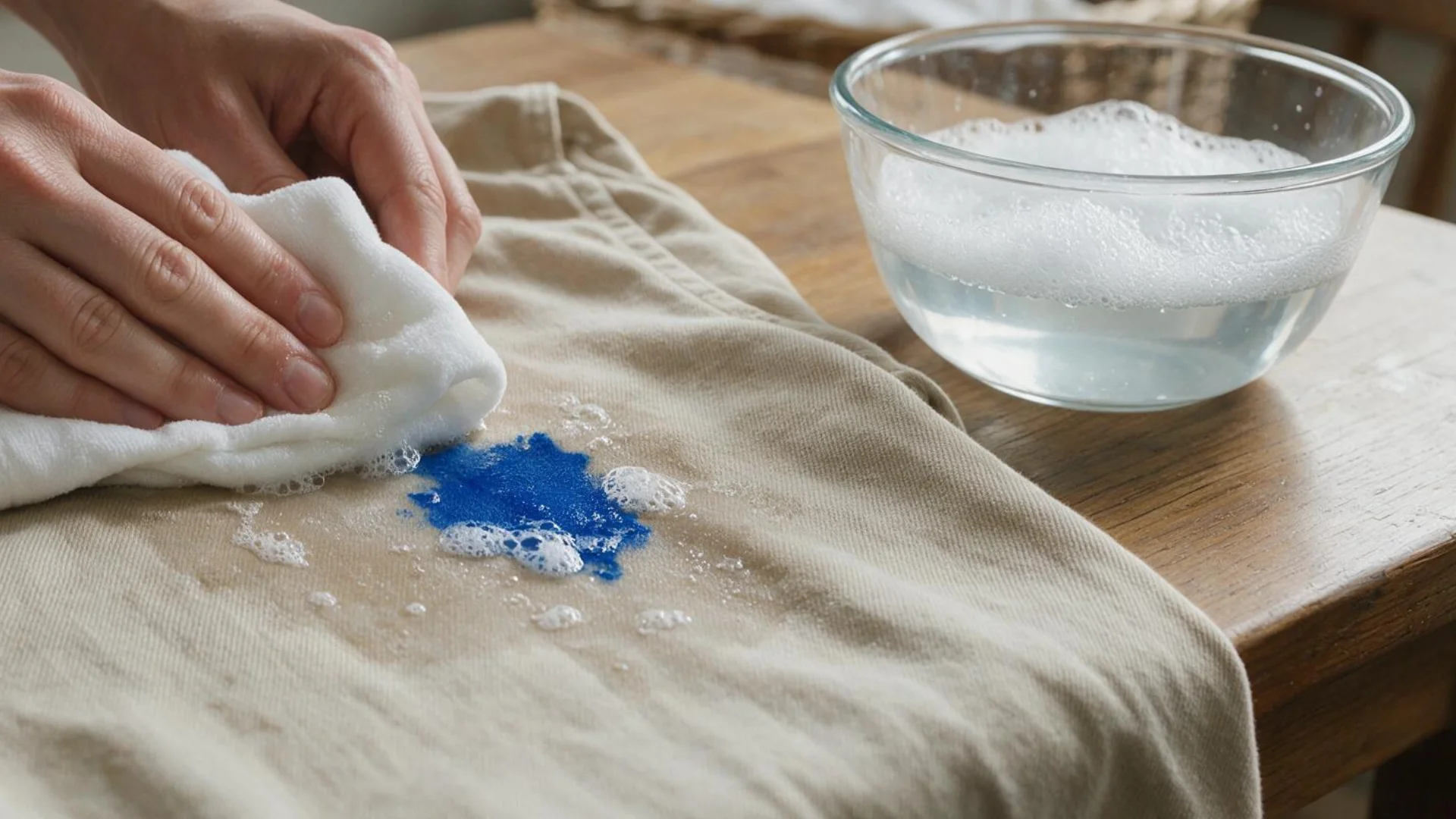
The best cleaner for paint really depends on what kind of paint you’re dealing with.
For latex paint, you can make a cleaner by mixing a little dish soap with warm water. Then you gently rub the stain with your fingers or a soft brush.
If you are working with paint, you might be able to get the stain out with some laundry detergent or rubbing alcohol. This can help loosen the paint that is left after you rinse it.
For oil-based paint, you should only use the thinner that comes with the paint.
Please let the cleaner sit on the stain for a few minutes. This gives it time to start breaking down the paint stain.
Step 4: Gently Lift the Paint from the Fabric
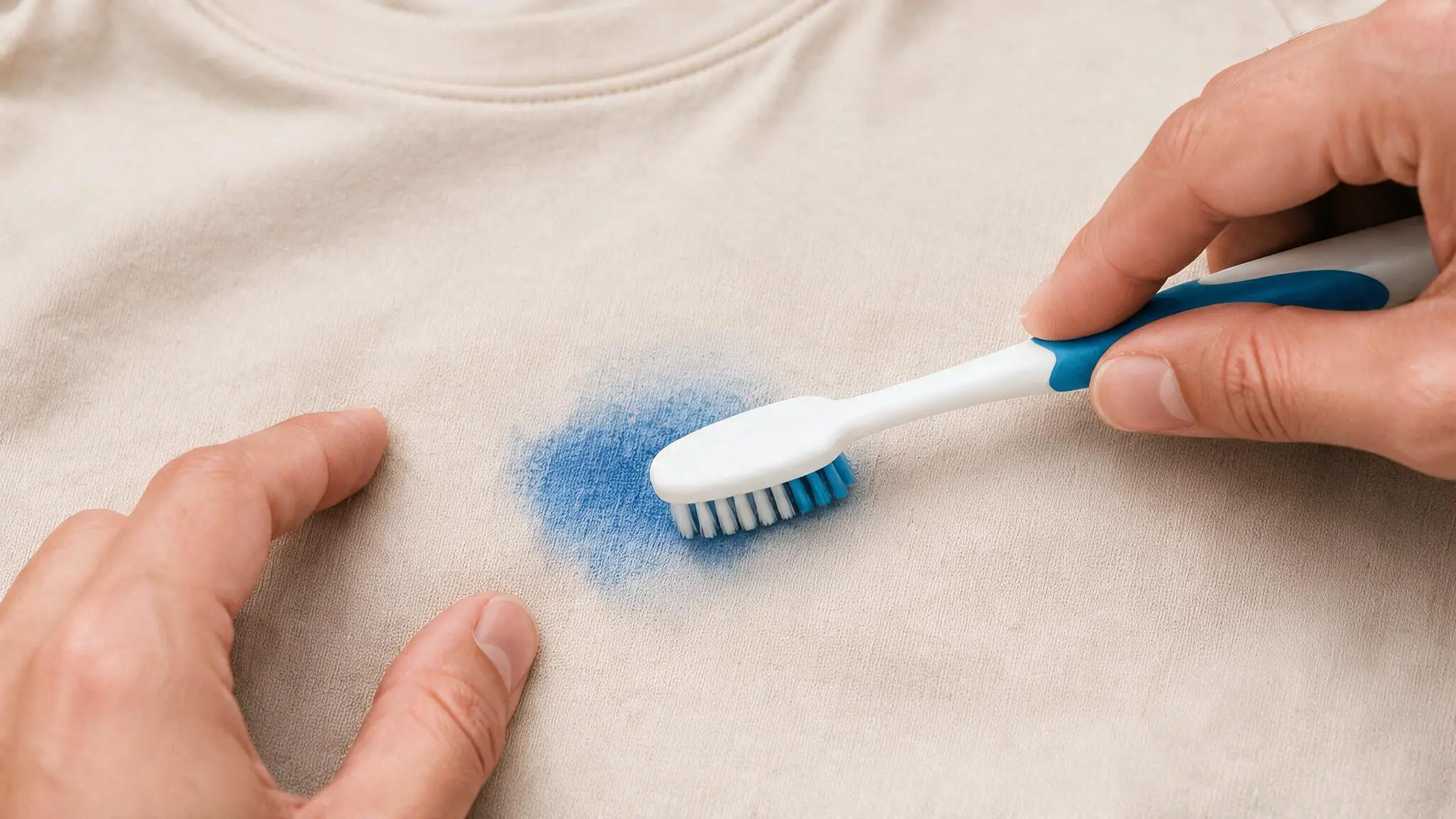
Gently apply the cleaner to the stained region with a soft toothbrush or a clean cloth.
Many people make the mistake of scrubbing too hard. The secret is to apply gentle pressure with small circular movements. This will help the paint loosen more effectively.
As the stain starts to diminish, dab it with a fresh cloth. Continue the procedure until the stain is removed.
Step 5: Wash the Garment According to The Care Label
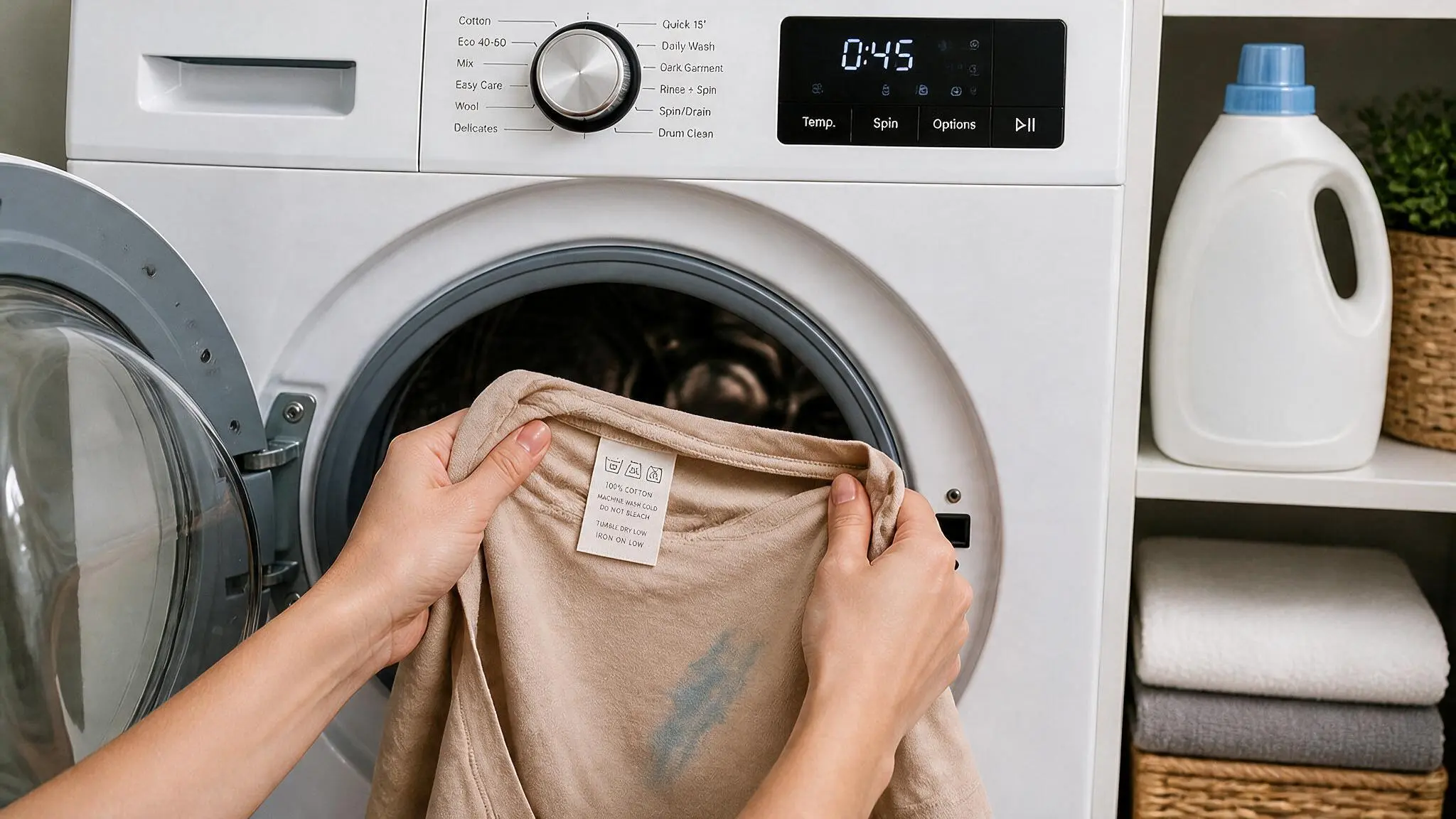
Once you can see that the stain has mostly lifted, use the hottest water that the care label allows and gently wash the garment.
You can use your regular laundry detergent. Make sure to inspect the stain immediately after washing.
If paint remains, please repeat the stain-removal process before the garment dries.
Step 6: Let the Clothing Air-Dry Before Using a Dryer

Do not place the garment in a dryer until you’re certain the stain has disappeared.
Dryer heat can permanently set remaining paint into the fibers, making later removal much more difficult.
Instead, let the clothing air-dry naturally and inspect it in bright daylight.
If any paint remains visible, repeat the cleaning process while the fabric is free of heat damage. And that is how you get paint out of your clothes!
How Does Stain Removal Vary by Paint Type?
The paint on the cloth decides your whole game plan. Grab the wrong cleaner, and you can set the stain instead of lifting it. So a quick check of the paint type saves a lot of trouble.
Removing Latex Paint from Clothes
Latex paint is the easiest of the bunch to deal with. Since it is water-based, warm water and a little dish soap usually do the trick.
Catch it while it is still wet, and it often rinses right out. For dried spots, rubbing alcohol helps loosen what remains.
Dab it on, wait a minute, then work it free with a soft brush.
Removing Acrylic Paint from Clothes
Acrylic paint is water-based too, but it dries into a tough little film.
Once that film hardens, soap alone often struggles to lift it. That is where rubbing alcohol steps in and works better.
Blot it onto the stain, let it soak, then scrub gently with a toothbrush. Test a hidden spot first, since some dyes react to the alcohol.
Removing Oil-Based Paint from Clothes
Oil-based paint is the trickiest one to remove. Water does almost nothing here, so you need a solvent instead.
Mineral spirits are a common pick.
Work somewhere with plenty of fresh air and follow the safety notes on the label. Then wash the garment as usual once the stain lifts.
Can You Remove Dried Paint? How Do You Remove it?
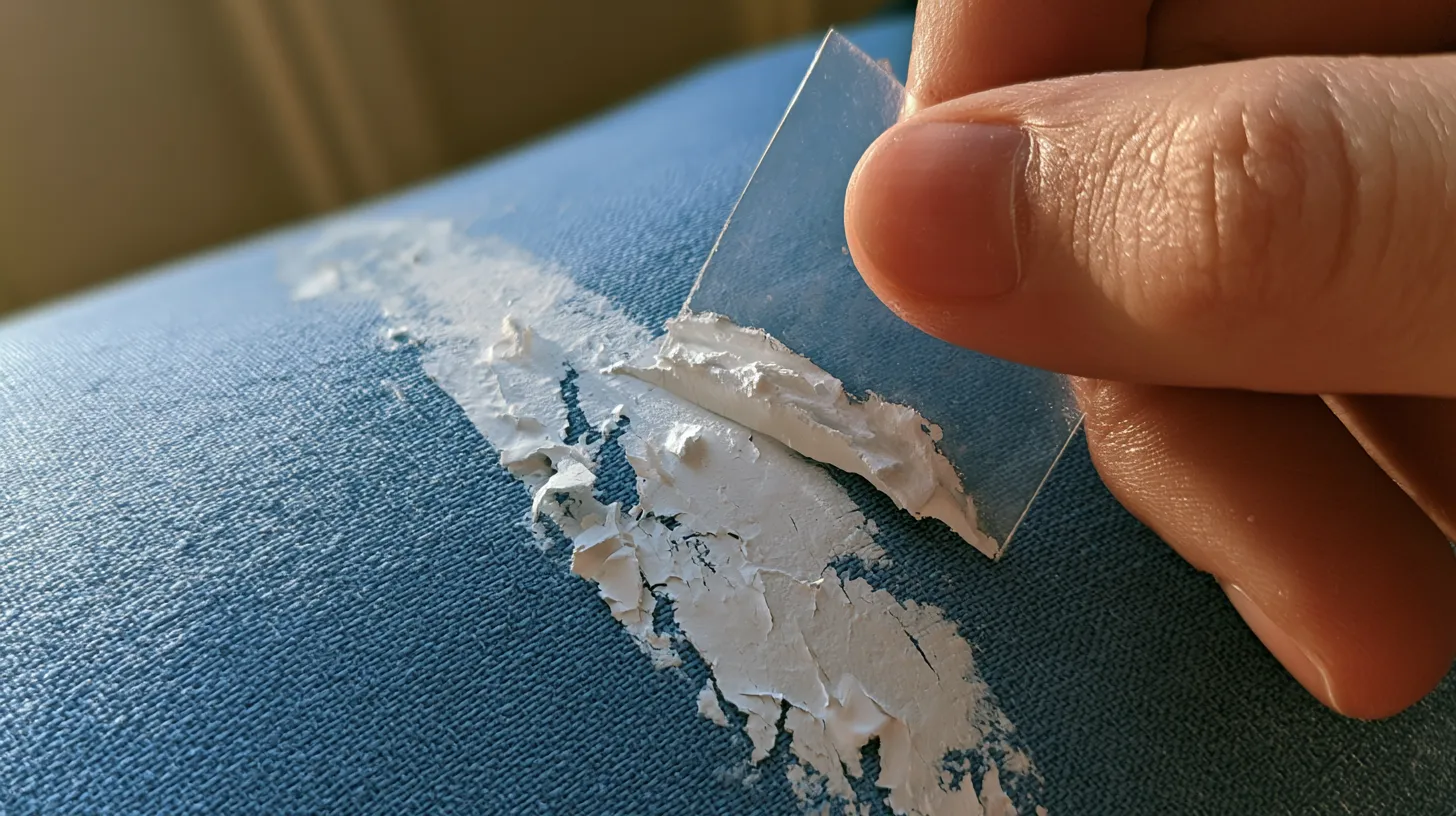
Learning how to get paint out of clothes after it dries takes a little patience, but a set-in stain is not always permanent.
Older stains may need a few rounds before they fade completely, but following the right procedure guarantees success.
Step 1: Lift Off the Crusty Top Layer
A dull knife, a spoon, or an old credit card works well for scraping away the loose flakes.
Only remove what comes off easily, or it can fray the fabric.
The cleaner will be used to clean off What stays behind.
Step 2: Match the Cleaner to The Paint Type
As mentioned earlier, the right treatment depends on what kind of paint dried into the fabric.
Dried latex or acrylic responds well to rubbing alcohol.
Oil-based paint usually calls for a solvent like mineral spirits, and the paint can specify the right one.
Step 3: Dab, Wait, Then Work it in
The cleaner goes onto the spot first, then sits for about a minute. Use a soft toothbrush to work it into the fibers so the softened paint lifts away.
Since some dyes react strongly to alcohol or solvents, a hidden seam is the best place for a quick test before using it on the whole fabric.
Step 4: Repeat Before Scrubbing Harder
If the stain is older and has set in, it often needs more than one round.
Avoid aggressive scrubbing, as it can damage the clothing. Several gentle treatments beat one harsh scrub every time.
Step 5: Keep it Away from Dryer Heat
Heat locks dried paint into fabric for good. The clothing stays out of any dryer until the stain is completely gone
How to Get Paint Out of Clothes Using Household Hacks
Multiple options can be utilized to get the stain out. In fact, most of them are lying around your household.
Dish Soap
You can also use dish soap for water-based paint. It cuts through latex and fresh acrylic without much fuss.
Just work it into the stain with your fingers after mixing a few drops of the dish soap into warm water. The paint will loosen once you let it sit for a minute.
Rubbing Alcohol
Rubbing alcohol is also a widely used alternative for when the paint has already dried.
It softens hardened latex and acrylic so the color lifts from the fibers.
Dab it onto the spot, then scrub gently with a toothbrush. But only after waiting for a moment. As the stain starts to fade, blot with a clean cloth.
Vinegar
Vinegar is a good option when you do not want to use strong cleaners. You can clean the coffee maker with vinegar if you you know how.
Just warm the vinegar a little. Then put it on the dried latex or acrylic paint spots.
Let the vinegar stay on the paint for a few minutes so it can soften the paint. Then you can scrub the paint.
Vinegar does not work as quickly as alcohol, but it is better for items that can be easily damaged, like delicate fabrics.
Paint Thinner
Water barely touches oil paint, so you need something stronger. This is where the paint thinner comes in.
Check the paint can first, since it names the right thinner to use. Once the paint lifts, wash the garment as usual to remove any lingering odor.
Conclusion
A paint stain looks like the end of a good shirt, but it rarely is.
So, if you were wondering how to get paint out of clothes, know that once you know what kind of paint you’re dealing with and you treat it quickly before it dries, the rest gets pretty simple.
Match the cleaner to the paint, and you’d be surprised how easily most stains come up. From there, it’s truly just about taking it easy.
Your clothes have way more life left in them than you’d think.
Frequently Asked Questions (FAQs)
1. Are Paint Stains Permanent?
Not usually. Most paint stains come out if you treat them before they set. Fresh paint lifts easily, and even dried paint responds to the right cleaner.
2. Will Rubbing Alcohol Damage My Clothes?
Certain dyes and textiles may be affected by it. Always perform a patch test on a concealed area first. If the color remains, it is okay to apply it to the stain.
3. Is it Possible to Remove Dried Paint from Clothes After Washing and Drying?
It becomes challenging when the heat sets in, but it isn’t impossible. Diluting the paint with rubbing alcohol or a solvent still offers you a genuine opportunity.