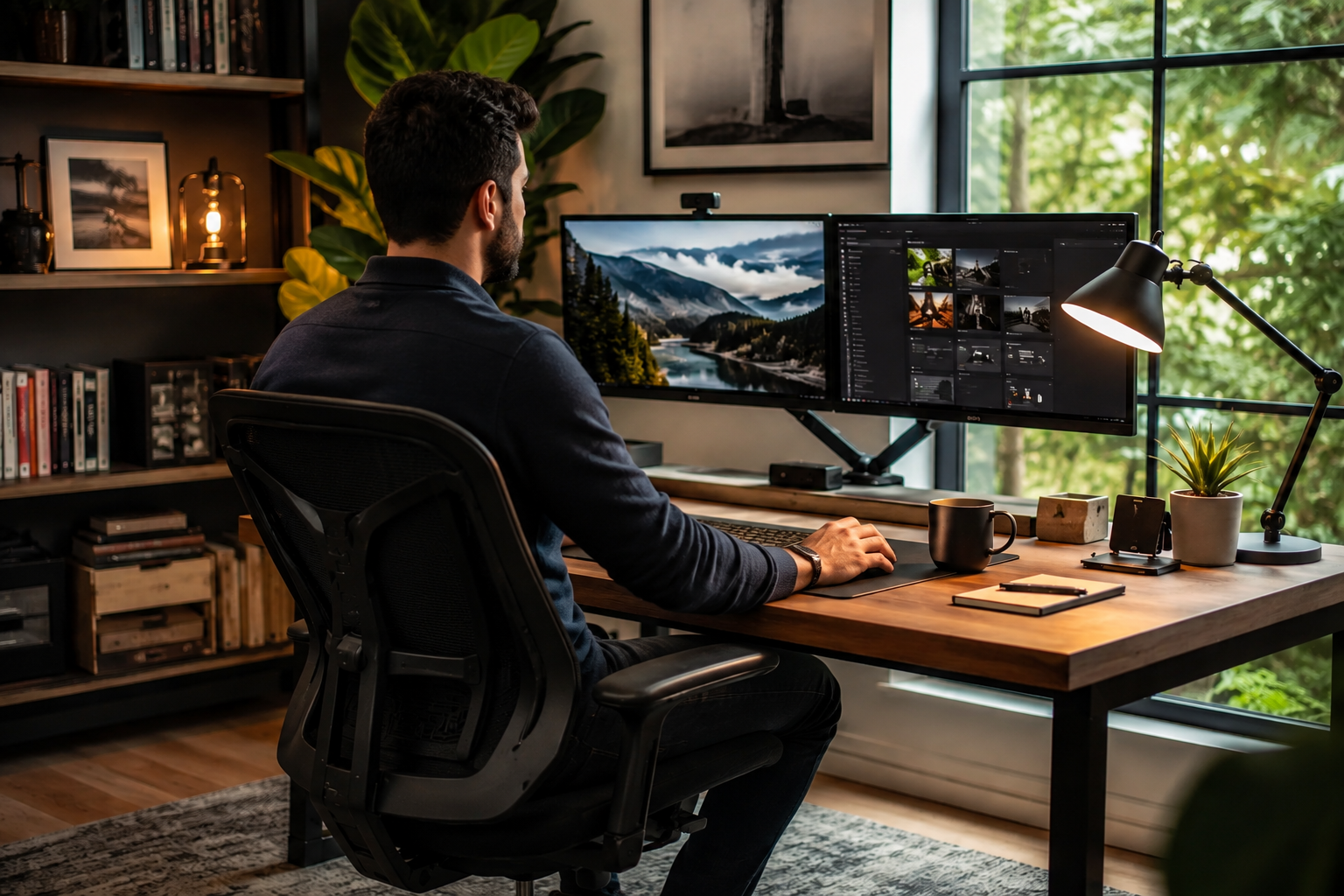
A room can look perfect in your head and still feel wrong once the furniture arrives. Scale may be off, colors can shift under real lighting, and a piece that looked subtle online may dominate the entire space.
Testing room design ideas before buying helps avoid expensive returns and mismatched purchases. The goal is to validate layout, proportions, color, texture, and function before committing money to permanent changes or large pieces of furniture.
Start With Accurate Room Measurements
Before testing styles or shopping for furniture, document the room itself.
Measure wall lengths, ceiling height, windows, doorways, built-ins, fireplaces, and major architectural features. Note where doors swing and where electrical outlets, vents, and radiators are located.
Do not rely only on square footage. Furniture placement depends on usable wall space and circulation.
Record the Measurements That Matter
Keep track of:
- Wall-to-wall dimensions
- Ceiling height
- Door and window openings
- Walkway widths
- Existing furniture dimensions
- Outlet and lighting locations
- Built-in features
- Areas that must remain accessible
Accurate measurements give every later design decision a realistic boundary.
Test the Room With AI Before Shopping
Once measurements and room photos are organized, use digital visualization to experiment with different directions.
A room design tool such as Onton can help visualize furniture arrangements, styles, colors, and decor before physical products enter the room. Its Canvas feature also allows users to combine room concepts, product images, inspiration, and AI-generated designs in one workspace.
Generate several versions rather than accepting the first attractive result.
Try changing one variable at a time. Keep the sofa and layout consistent while testing wall colors, for example. Then keep the palette fixed while comparing rugs or coffee tables.
This makes it easier to understand what is actually improving the design.
Mark Furniture Dimensions on the Floor
AI visualization is useful for judging appearance, but physical measurements should still decide whether furniture fits.
Use painter’s tape to mark the footprint of major pieces directly on the floor.
Outline the sofa, dining table, bed, island, or storage unit at its actual dimensions. Then walk around the room as you normally would.
A piece can technically fit while still making movement awkward.
Keep enough clearance for doors, drawers, chairs, and normal walking paths.
Build a Simple Digital Mood Board
Create one board containing the products and finishes you are seriously considering.
Do not fill it with dozens of loosely related inspiration images. Use actual paint colors, flooring samples, furniture, lighting, rugs, artwork, and hardware whenever possible.
The purpose is comparison, not inspiration collecting.
When every potential purchase appears together, mismatches become easier to notice. You may discover that three wood tones compete with each other or that every piece has the same visual weight.
Test Colors in the Actual Room
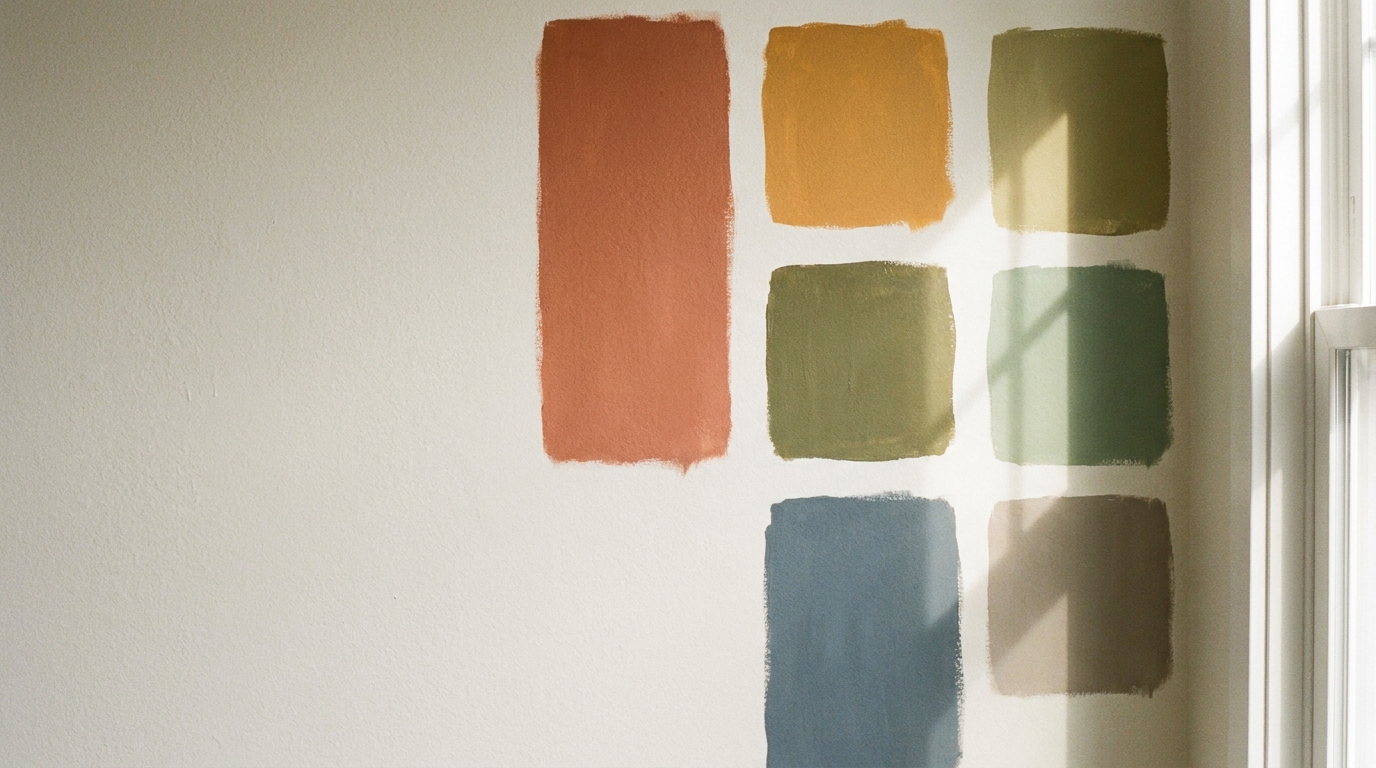
Digital screens cannot accurately reproduce every paint or fabric color.
Order samples before purchasing large quantities.
Paint test areas on different walls because daylight changes throughout the room. A warm white near a south-facing window may look completely different in a darker hallway.
Review samples during:
- Morning daylight
- Afternoon light
- Evening conditions
- Artificial lighting
Leave them in place for several days before deciding.
The same rule applies to fabric, tile, flooring, and wood finishes.
Check Furniture Scale Against Visual Weight
Dimensions tell you whether something fits. Visual weight tells you whether it feels right.
A large glass coffee table can feel lighter than a smaller solid wood table. A sofa with narrow legs may appear less bulky than another sofa with identical dimensions but a floor-level base.
Compare height, depth, leg style, upholstery color, and material density.
For rooms with lower ceilings or limited floor area, visually lighter furniture can prevent the space from feeling crowded.
Test Rugs Before Ordering
Rug sizing is one of the easiest room design decisions to get wrong.
Use painter’s tape to mark the proposed rug dimensions. For additional accuracy, spread sheets or kraft paper over the approximate area.
Check how the rug relates to furniture legs and circulation paths.
In a living room, a rug that is too small can make individual furniture pieces look disconnected. In a dining room, it should usually extend far enough that chairs remain on the rug when pulled away from the table.
Experiment With Small Decorative Details
Not every design decision needs to start with expensive furniture.
Smaller decor can be used to test colors, patterns, textures, or a more personalized style before repeating those ideas throughout the room.
For example, custom patches can be incorporated into framed textile art, fabric-covered display boards, memory displays, or other small decorative projects. Because the design, colors, and patch style can be customized, they provide a simple way to test a graphic or textile accent without committing to wallpaper or large-scale fabric treatments.
If the detail feels too busy, it is easy to change before carrying the idea into larger elements.
Use Material Samples Together
Never approve flooring, countertops, cabinetry, and paint separately if they will appear in the same room.
Place samples next to each other under the room’s actual lighting.
Compare Materials For
- Undertones
- Surface texture
- Reflectivity
- Pattern scale
- Wood grain
- Warm versus cool finishes
- Contrast levels
Two materials may look neutral independently but clash when placed side by side.
Testing them together is especially important with stone and natural wood because both contain considerable variation.
Photograph the Room From Eye Level
Take photos from the places where you actually experience the room.
That could include the doorway, sofa, dining table, kitchen entrance, or hallway.
Then review how major objects line up within those views.
This helps identify awkward sightlines that are easy to miss on a floor plan. A tall cabinet might block a window from one angle, while a pendant fixture could visually collide with artwork behind it.
Good design should work from several viewpoints.
Test Lighting Before Finalizing the Design
Lighting changes how every other material appears.
Before committing to a full lighting plan, test lamp placement and bulb color temperatures using fixtures you already own.
Pay attention to dark corners, glare, shadows, and reflective surfaces.
Layering usually works better than relying on one ceiling fixture. Consider ambient lighting, task lighting, and accent lighting separately.
Also check whether fixtures compete visually with furniture or architectural features.
Create a Final Purchase Plan
Once the room design has been tested, convert the concept into a purchasing sequence.
Buy the pieces that control layout first.
Large furniture, rugs, and major lighting should generally come before decorative accessories because their size and color influence everything around them.
Record exact dimensions, finishes, prices, lead times, and return policies before ordering.
Testing room design ideas takes more effort than buying from a single inspiration image, but it is far cheaper than correcting a room full of expensive mistakes.
Measure first, visualize digitally, test real materials, and verify scale physically. Once those checks agree, you can buy with much more confidence.