Heatwaves in Michigan can reach highs of 90 degrees, according to data from Yahoo News. On Michigan’s hottest days, staying in can prevent heat stroke, fatigue, and dehydration. But is your home as cool and comfortable as it could be?
This article explores actions you can take right now to cool down your home, including AC maintenance tips, swapping out heavy fabrics for lighter alternatives, window shade solutions, landscaping changes, and even layouts that allow for maximum airflow.
Create an AC Maintenance Checklist
Think about how often you leave your AC running during Michigan’s peak summer months. Immediate cooling is a welcome reprieve from the oppressive heat, but there are even more ways to keep your home cool without driving up your energy bills.
To get started, this AC maintenance checklist offers useful guidance for Michigan homes. The first point is an important reminder: keep up with routine maintenance!
Booking a tune-up or replacing an old AC by spring can prevent any strange noises, smells, and malfunctions from disrupting your summer. You can also combine DIY solutions, like 30-day filter changes, with professional services to prevent the evaporator coils from freezing up.
Don’t forget about your outdoor HVAC unit. Check for any dirt, grass, leaves, and other debris obstructing airflow. Your outdoor unit should have at least two feet of clear space surrounding it.
Living by the Great Lakes means dealing with high humidity. Rising levels can cause your HVAC system to generate gallons of runoff. Remember to inspect and clean your condensate line as needed to clear sludge and enable free drain flow.
Home Layouts for Maximum Airflow
How you arrange your furniture can either restrict or enable cool airflow during summer.
Make sure large furniture pieces, area rugs, or low-hanging drapes aren’t blocking the supply vents and return air grilles. Blocking these components disrupts airflow balance in your home and limits your AC’s ability to pull moisture out of the house. Sofas and beds with headboards should also be positioned 3 to 4 feet away from hot exterior walls to prevent heat pockets.
Next, maintain a clear path between opposing windows in your home to improve cross-ventilation. On cool summer evenings, you can open up these windows to enable a natural breeze that flushes out the daytime heat stored in the walls.
Position your chairs and beds directly beneath ceiling fans spinning counterclockwise at high speeds. This layout trick pushes the air downward, producing a cooling wind-chill effect.
Leverage Light Fabrics for Passive Cooling
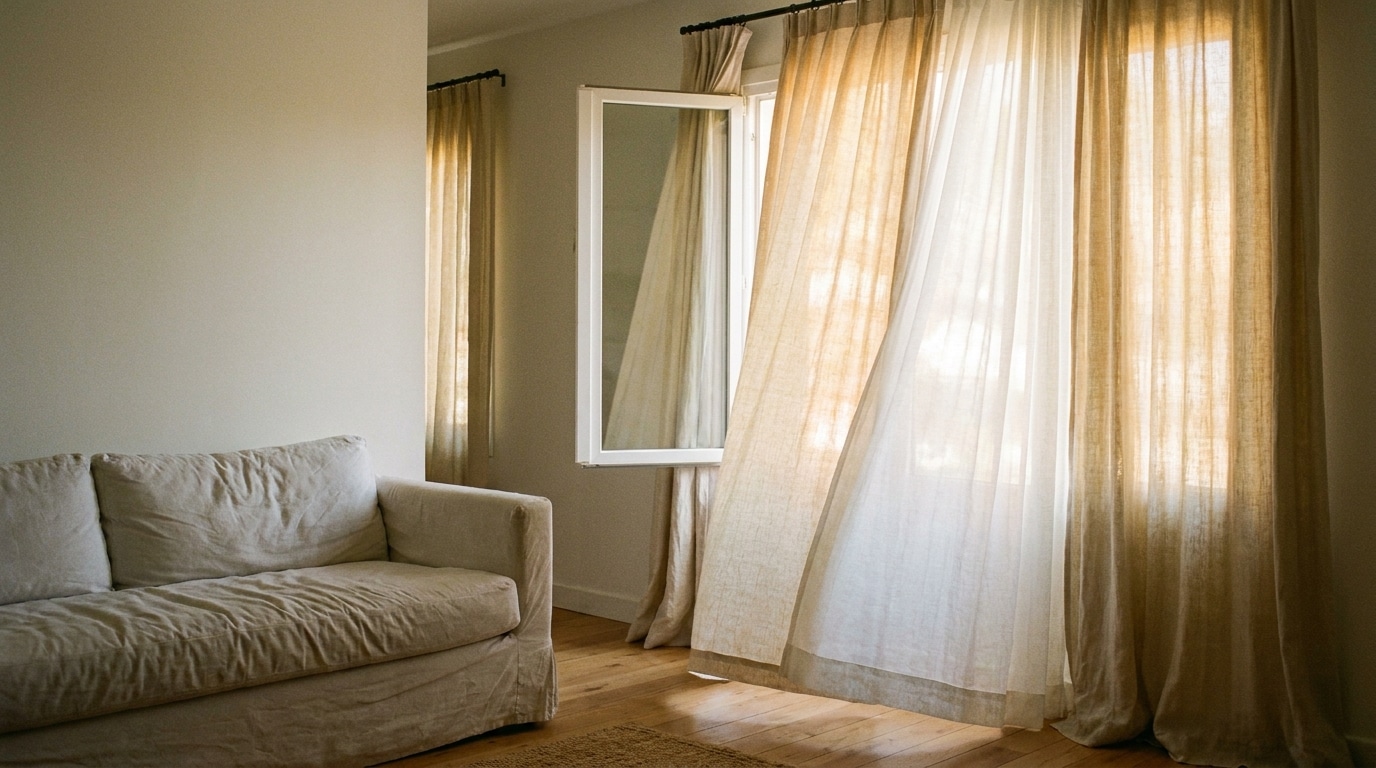
Heavy drapes trap and insulate heat, which is great for winter but not so great in the summertime. An easy cooling trick is to swap out these fabrics for lightweight alternatives, like light-colored linen or cotton voile. You could also add white or light-cream backings to reflect sunlight back out the window.
Switch out heavy bed comforters for breathable sheets. Look for cooling materials made from natural fibers that can wick away sweat on humid nights by the Great Lakes.
Leather furniture can quickly feel hot to the touch when exposed to sunlight. Simply covering these pieces with lightweight cotton slipcovers can cool down their surfaces.
Landscaping and Shading Tricks
Even new landscaping can make a difference. For example, you could plant maples and oaks along the south and west sides of your home to create a thick canopy that naturally blocks sunlight.
Consider installing awnings or shade sails on your south and west-facing windows as a spring project. These smart exterior upgrades can prevent the greenhouse effect from warming your interior walls and floors.
Keep Your Cool
Turn these hacks into the ultimate home-cooling checklist for Michigan, covering everything from HVAC tune-ups and airflow layouts to light fabrics and landscaping upgrades. Make sure to follow us for more seasonal home improvement projects!