A small living room is arguably the hardest space to furnish and decorate simply because it doesn’t give you much room (no pun intended) for error. That’s why picking the right sofa is key – it takes up the most space, and it’s the centerpiece of the room.
Pick the wrong size, and you’ll end up blocking the (already tight) circulation in the room. Pick the wrong style, and it will clash with other furniture and décor. Really, the sofa sets the rules: traffic flow, sightline, and style.
Here’s how to get it right.
Start with A Floor Plan
Since you’re working with a small space, skip the guesswork and actually measure everything. You need concrete numbers.
So, measure wall lengths, window widths, radiator depth, and any built-ins. Then add fixed obstacles like door swings, outlets, and vents because they limit your layout just as much as square footage.
And draw a quick floor plan (rough graph paper is fine). Don’t worry if you think you have no drawing skills, because it doesn’t need to look polished. You just need something you can reference when comparing sofa dimensions later.
Map the Sofa Footprint With Painter’s Tape
Mark out the exact footprint of the sofa on the floor using painter’s tape to avoid second-guessing later. Make sure you include the full depth, not just width.
Then walk around it like you normally would: coming in from the door, heading to another room, sitting down, reaching forward, etc. You’ll feel right away if something’s off.
Aim for about 36 inches (90 cm) for main walkways if you can. In tighter layouts, you can compress to 30 inches in secondary paths (but you’re likely to notice it).
Test the Layout So It Doesn’t Block Movement
A small room can still support multiple layouts, but you have to be selective.
- Against the wall: The safest. It opens the center and keeps traffic predictable.
- Floating: Pull the sofa a few inches (or more) off the wall to improve sightlines and balance. This works best when you can maintain that 30–36 inch clearance behind it.
- Perpendicular zoning: Use the sofa to divide space in a studio or open plan. Just confirm you’re not creating a choke point near entries.
Then check your coffee table distance. You want about 14–18 inches between the seat edge and the table as that’s the most comfortable.
Pick a Sofa Type That Fits the Room
“Small-space sofa” doesn’t mean much on its own. You need to look at actual dimensions and proportions.
- Loveseats save space but can feel limiting if it’s your main seating.
- Apartment sofas usually land in a better middle ground; enough room to sit properly without taking over the space.
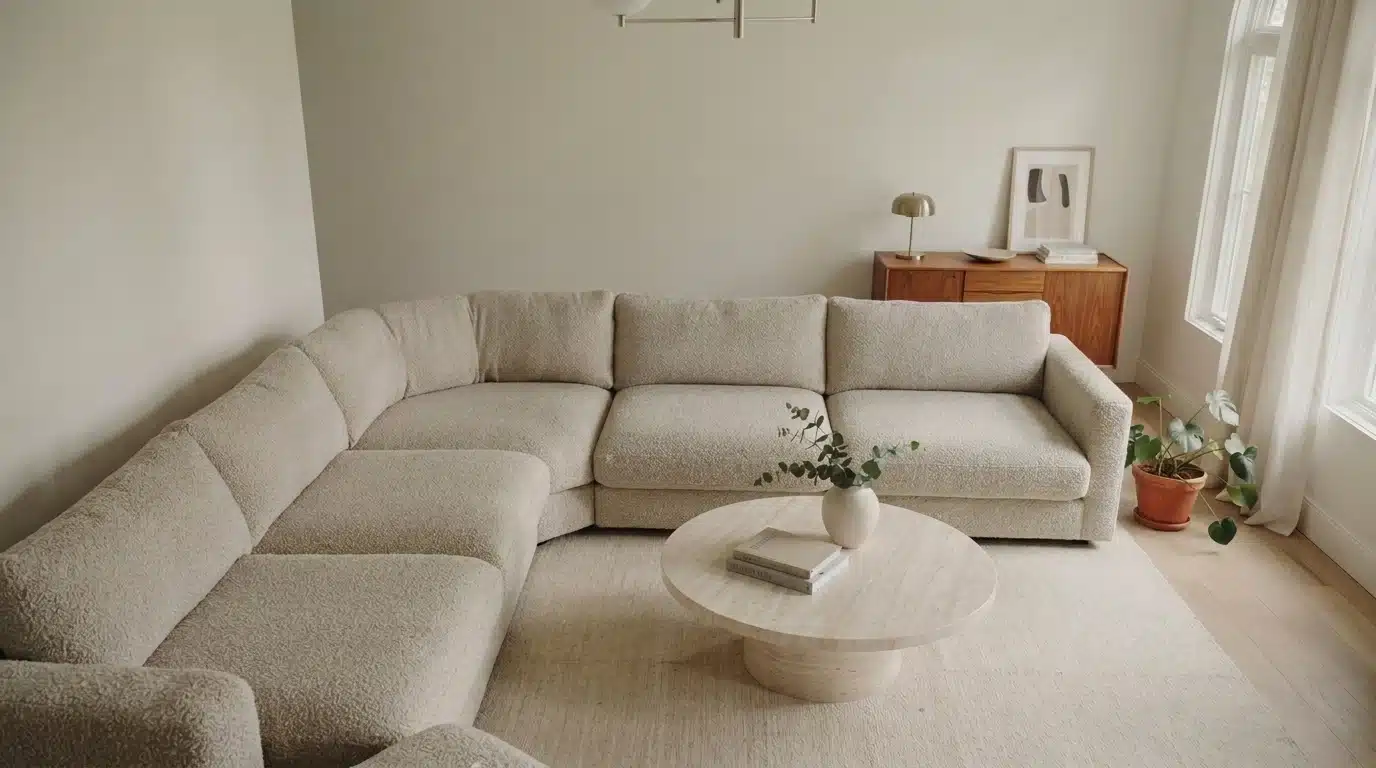
- Compact sectionals can work well in corners, but only if the chaise doesn’t block movement.
Depth is easy to underestimate. A deep sofa in a narrow room feels bigger than it looks on paper.
What to Look for When You Actually Buy the Sofa
Once you’ve figured out size and layout, focus on the build quality. Because that’s what decides how long it stays in your living room.
Start with the frame. Solid hardwood or well-built engineered wood tends to last longer than cheaper alternatives. Check how the cushions are made, too. High-density foam holds its shape better over time, while softer fills feel nice at first but may need more upkeep.
Upholstery depends on how you use the room. If it’s a high-traffic space, performance fabrics or tightly woven materials hold up better.
If you want a more detailed breakdown of pricing and construction trade-offs, Living Cozu has a great guide on what to look out for when buying a new sofa. It explains where the differences actually come from and how they affect long-term use.
Let the Furniture Breathe a Bit
If your space allows, let the furniture “breathe” a little. It may be tempting to push everything against the walls to “create space,” but that can actually feel suffocating.
Leaving a small gap (a two-inch gap where no one walks) behind the sofa can make the room feel a bit more airy and therefore slightly bigger. It also helps with flow, especially if you’re trying to move between zones without squeezing through.
A Few Small Tweaks That Help
Here are a few more tips to make the room more functional.
For one, keep side tables narrow or use nesting ones you can move around. Bulky pieces next to a compact sofa can throw off the balance.
Two, think about vertical space: floor lamps free up surfaces and keep things less cluttered. Same with bookshelves.
Finally, use a rug that’s big enough to anchor the sofa (at least the front legs should sit on it). Smaller rugs can actually make the space “feel” smaller by making it look more fragmented.