You did everything right. You picked a good pot, used decent soil, and found a spot with soft light. Now you’re waiting.
But after a while, your prayer plant starts to look sad. The leaves dry out, and colors fade.
There’s nothing more frustrating than seeing your plant die like that right in front of your eyes, only because you didn’t know the right tips to care for it properly.
And you’re not alone in this. Most people don’t realize that caring isn’t about doing more. It’s about doing the right things.
But don’t worry, stick till the end, and you’ll have a proper manual on prayer plant care.
What is a Prayer Plant? Benefits and Types
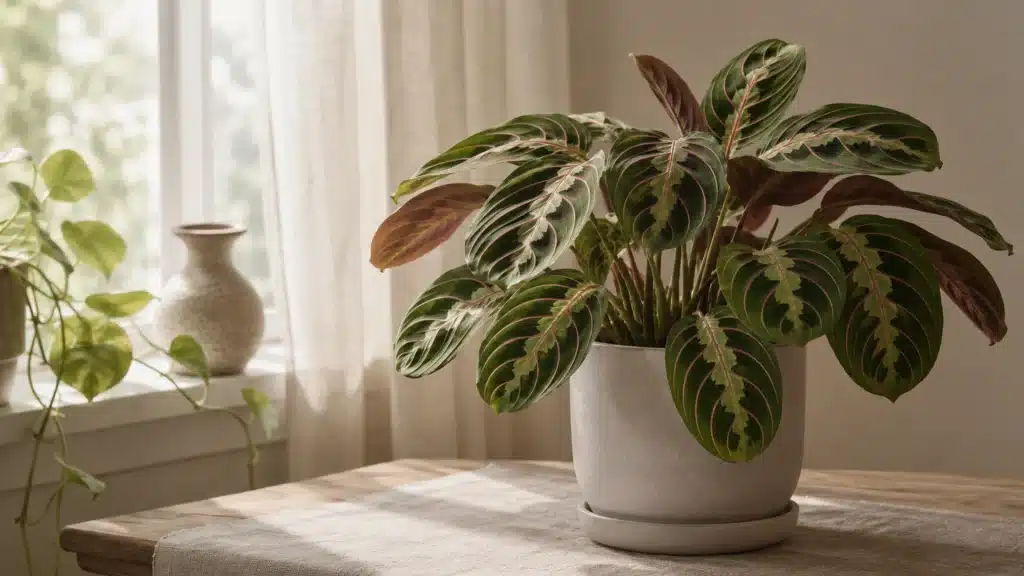
The prayer plant comes from the tropical forests of Brazil. Its scientific name is Maranta leuconeura.
What’s most interesting about it is the fascinating habit that gave it its name.
The prayer plant got this name because its leaves fold upward at night, just like hands folded in prayer.
But it does more than just have an interesting name.
It has a decorative benefit as well. Indoors, it adds a pop of color to any room. It also helps make your living space feel eye-catching and welcoming.
It also comes in a few distinct varieties, each with its own look.
Now, let’s have a look at these types.
1. Maranta Leuconeura Kerchoveana
Features grey-green leaves with dark brown spots between the veins.
It is one of the most common varieties you’ll find indoors, featuring a spotted pattern that gives it a unique look.
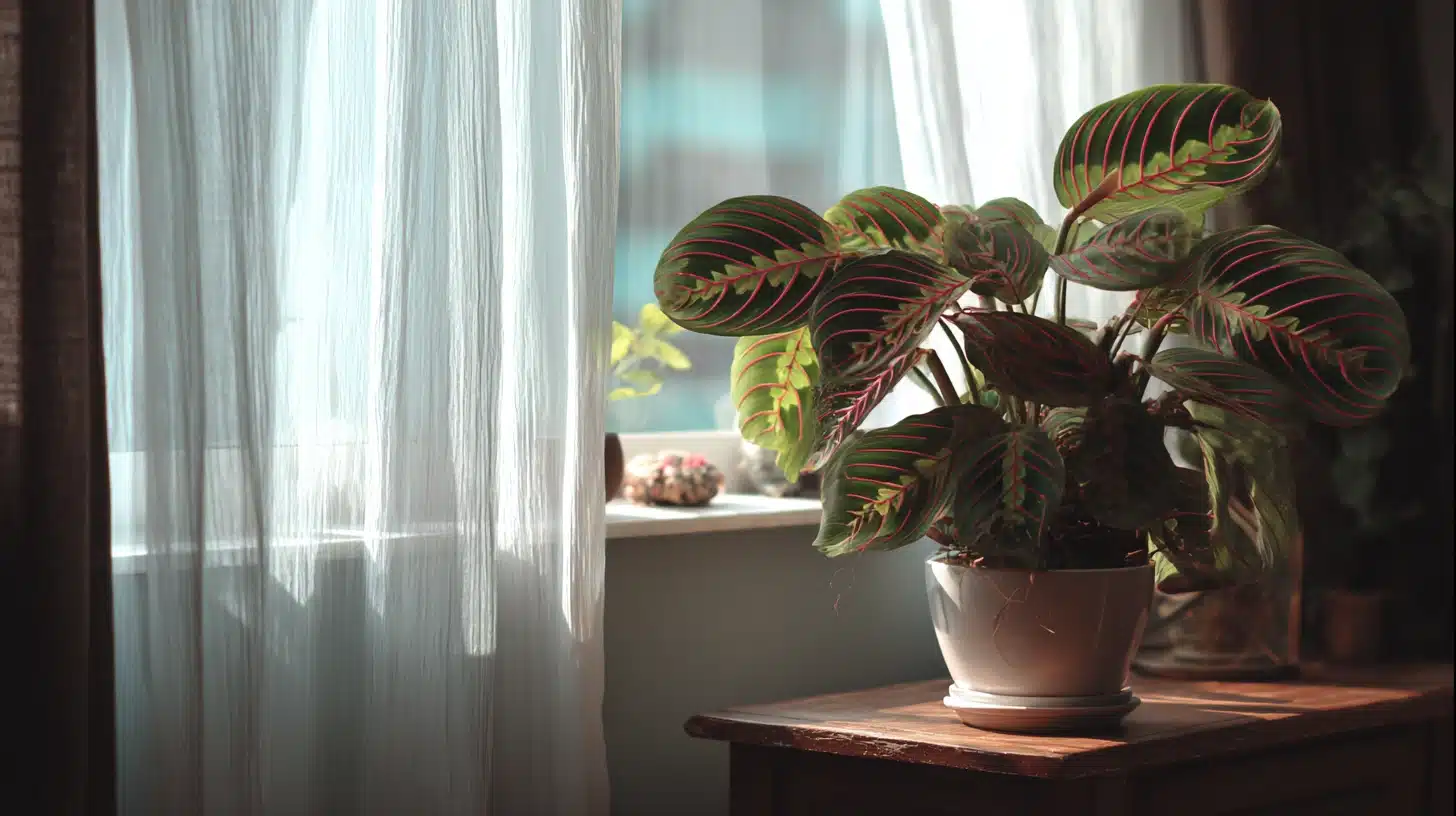
2. Maranta Leuconeura Erythroneura
Known for its striking red veins on deep green leaves.
The bright red lines run across the entire leaf surface. This variety is a favorite among plant lovers who want vivid color in their home.
It’s also one of the more forgiving varieties indoors, as long as you keep the humidity up.
3. Maranta Leuconeura Massangeana
Stands out for its silvery blue feathering along the midrib.
The soft, metallic sheen makes it stand out from the other two varieties, making it the most unique of the three.
How to Create the Perfect Environment for Prayer Plant Care?
Now comes the part that is really essential in saving your prayer plant from dying.
And getting the environment right is the first step in good prayer plant care. These plants come from hot and humid tropical forests.
So, they need conditions that match their natural home.
Light
Prayer plants love bright, indirect light.
Place them near a window with filtered sunlight. Direct sun burns their leaves and fades their colors. A spot a few feet away from an east or west-facing window works best.
Without the bright indirect light, the leaves lose their pattern, and the plant grows slowly.
If your room gets low light, a grow light works great as a substitute.
Humidity Needs
Prayer plants grow best in high humidity, ideally between 50% and 60%.
Since they come from tropical forests, dry air is like poison for them. You can mist the leaves lightly, place a tray of water nearby, or use a small humidifier.
High humidity is important, as low humidity causes leaf edges to turn brown and crispy over time.
Ideal Temperature
Prayer plants grow best in temperatures between 60°F and 80°F (15°C to 27°C).
They like hot, stable conditions with no sudden changes. Keep them away from cold drafts, air vents, and open windows in winter.
If temperatures drop below 55°F, the leaves may curl, turn brown, or fall off completely.
Never place your prayer plant near a heater or AC vent, as the sudden temperature shifts stress the plant fast.
Water
Watering is the most important factor to consider; do it only when the top inch of soil feels dry.
Pour water slowly and evenly until it drains from the bottom of the pot, and always use room-temperature filtered water.
Avoid cold or fluoride-heavy tap water, as it can cause brown leaf tips.
Never water your prayer plant on a fixed schedule. Always check the soil first, because watering too often without checking leads to root rot faster than anything else.
Soil
These plants need well-draining soil that still holds some moisture. A mix of regular potting soil, perlite, and peat works really well.
This combination keeps the roots moist but never waterlogged.
Avoid heavy soils that clump together. Good soil gives the roots room to breathe and helps the plant absorb nutrients without sitting in excess water.
Fertilizer
Feed your prayer plant once every two weeks during spring and summer. Use a balanced liquid fertilizer diluted to half strength.
This gives the plant the nutrients it needs without overwhelming the roots. Stick to half strength. Full-strength fertilizer burns the roots and sets the plant back.
Never use full-strength fertilizer directly on your prayer plant. Always dilute it to half strength, because strong fertilizer burns the roots and causes long-term damage.
How Often Should You Water a Prayer Plant?
Watering is one of the most important parts of prayer plant care.
Too much water can rot the roots, and too little can dry the plant out. The key is to find a balance, which makes the plant thrive.
Keep an eye on signs of overwatering and underwatering. Leaves turn yellow, and the roots smell bad or look brown and mushy when overwatered.
When underwatered, leaves curl inward, and the leaf tips turn brown and crispy.
Pests and Diseases to Watch For
Even with the best prayer plant care, problems can still show up.
But there’s nothing to worry about because catching them early is all that matters. Knowing what to look for saves your plant before things get worse.
1. Curling Leaves
The first signs of curling leaves are that they curl inward and look stressed. This usually happens when the air is too dry or the plant is too cold.
To avoid this, just move the plant to a warmer spot.
Increase humidity by misting the leaves or placing a water tray nearby. Check that temperatures stay above 60°F at all times.
2. Brown Edges
In this, the leaf edges turn brown and dry. This points to low humidity, excess fluoride in the water, or too much direct sunlight on the leaves.
Switching to filtered or distilled water is recommended to avoid the brown edges.
Move the plant away from direct sun. Raise the humidity level around the plant to keep the edges soft and green.
3. Spider Mites and Mealybugs
You may see tiny webs on leaves or small white cotton-like clusters near the stems, and the leaves may look dull, spotted, or start to drop off.
If you spot it, wipe it with a damp cloth.
Spray the plant with neem oil or a mild soap solution. Repeat every few days until all signs of pests are completely gone.
4. Root Rot
In this, the roots turn brown and mushy. The soil stays too wet, the leaves turn yellow, and the stem feels soft near the base.
After spotting root rot, take the plant out of its pot.
Cut off all the damaged roots. Let the roots dry out. Repot in fresh, well-draining soil and reduce watering going forward.
The Secret that I Learned to Keep the Prayer Plant Healthy
To check whether your prayer plant is doing well, always check the leaves.
Healthy leaves are the true sign of good prayer plant care. Start by cleaning the leaves regularly. Use a soft, damp cloth to gently wipe dust off. This helps the plant absorb light better.
If you see brown tips, it usually means the air is too dry or the water has high levels of fluoride. Switch to filtered water and keep humidity levels steady.
Curling leaves are another cry for help. They signal low humidity, cold air, or underwatering.
This is why humidity consistency matters so much. Sudden drops in moisture level stress the plant fast.
It’s always good to keep the humidity between 50% and 60% at all times.
Read next: Monstera Plant Care Cheatsheet
Final Thoughts
So, now when you grow a prayer plant, you know exactly what to do and the signs to look for.
Good prayer plant care comes down to a few simple things. Give it bright indirect light, water it the right way, and keep the air warm and humid.
Most importantly, keep the leaves clean and watch for early warning signs.
Just pay attention to these few small and simple things, and your plant will always thrive, all green and beautiful.
Frequently Asked Questions (FAQ’s)
1. What is the Best Place to Put a Prayer Plant?
Place it near an east or west-facing window. It needs bright, indirect light. Keep it away from direct sun and cold drafts.
2. Do Prayer Plants Like Big Pots?
No. Prayer plants prefer snug pots. A pot just one inch larger than the root ball works best. Too much space leads to root rot.
3. What is the Lifespan of A Prayer Plant?
With good care, a prayer plant can live for several years indoors. Some plants thrive for over 20 to 30 years when kept in the right conditions.