A 2,000-square-foot house sounds like it should come with a predictable cleaning price. After all, the size isn’t changing. But anyone who’s walked through two homes with the same floor plan knows they can require completely different amounts of work.
One might have two adults who are rarely home, while another has kids, pets, busy bathrooms, and a kitchen that’s used three times a day. Square footage measures the space, but it doesn’t show how much cleaning that space actually needs.
That’s why the exact price for cleaning a house can’t be pinned down by size alone. The home’s condition, cleaning frequency, number of rooms, and services requested can all affect how much time and effort the job requires.
Same Size Doesn’t Mean the Same Job
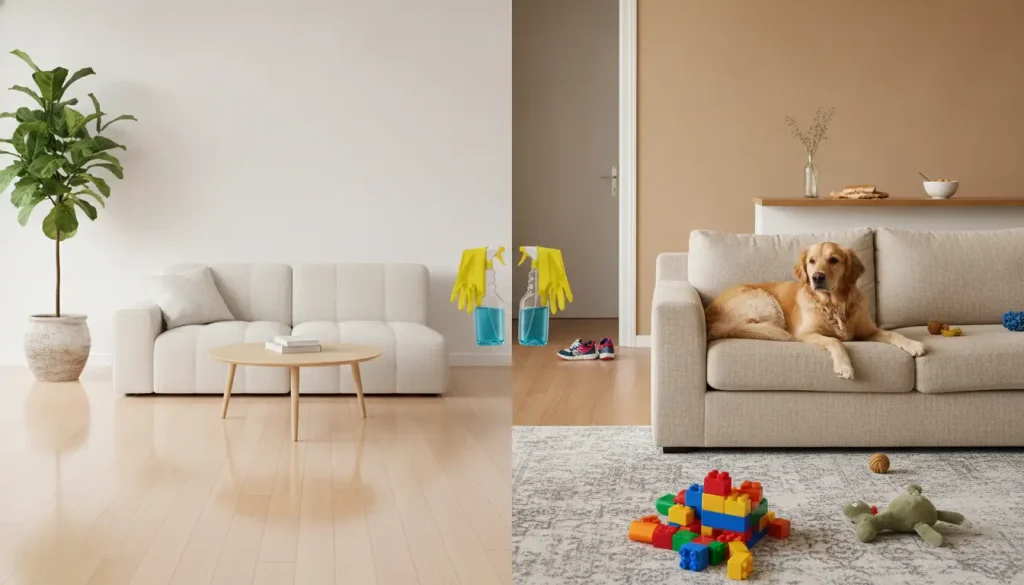
Imagine two neighboring homes with identical square footage. One has a couple, one bathroom, and no pets. The other has a family of five, three bathrooms, two dogs, and a steady collection of toys, shoes, and everyday clutter moving through the rooms.
Those homes may cover the same amount of floor, but cleaning them isn’t the same job. Pet hair can require extra attention on floors and furniture, while heavily used bathrooms and kitchens naturally collect more buildup. More people usually means more surfaces being touched and more areas being used regularly.
Overall condition matters too. A home that’s been consistently maintained may need straightforward cleaning, while one that hasn’t received much attention recently can take considerably longer. Square footage gives cleaners an idea of scale. It doesn’t tell them what they’ll find once they walk through the door.
A Deep Clean Is a Different Kind of Visit
Routine cleaning is designed to keep an already maintained home in good shape. It generally focuses on the areas that collect everyday dust, dirt, fingerprints, crumbs, and bathroom buildup. Because those tasks are handled regularly, they don’t always require intensive attention.
Deep cleaning tackles more accumulated grime and often reaches details that aren’t part of every routine visit. That extra work takes time. Move-in and move-out cleaning can be more involved as well, especially when empty cabinets, appliances, or other areas need attention before someone arrives or hands over the keys.
The name of the service matters because “cleaning a house” can describe very different workloads. Comparing prices without comparing what’s actually included can make one estimate look unusually high or low. The better question is what work the quoted service covers.
Regular Cleaning Can Keep Buildup in Check
A home cleaned every week or two generally doesn’t have as much time to accumulate dust, soap residue, grease, and other everyday mess between visits. Once a cleaner becomes familiar with the home, maintaining that baseline can also become more predictable.
A one-time appointment may be different. If it’s been months since a thorough cleaning, the first visit could involve more scrubbing and detail work before the home reaches the condition expected from recurring service. That initial workload can influence the price.
Frequency doesn’t mean a regularly cleaned home never gets messy. Life still happens between appointments. The difference is that buildup gets addressed before it has months to settle in. When comparing cleaning options, it makes sense to consider not only what one visit costs, but also how often the service will happen and what condition the home typically stays in.
A Floor Plan Can’t Show the Whole Picture
Even a detailed floor plan leaves out plenty of information a cleaner may need. Different surfaces require different care, and a home filled with delicate finishes or specialty materials may call for more specific products or methods than a straightforward space.
Special requests can change the workload too. Cleaning inside an oven or refrigerator, addressing interior windows, or focusing on another area beyond standard service adds tasks that square footage doesn’t capture. Accessibility can matter when areas are difficult to reach or require extra preparation.
This is why estimates often depend on details rather than a single number pulled from the home’s size. Sharing accurate information about bathrooms, pets, condition, desired frequency, and requested add-ons helps create a more realistic quote. The goal isn’t to complicate pricing. It’s to price the work that’s actually going to happen.
Conclusion
Square footage is useful because it gives a quick sense of how much space needs attention. A 2,000-square-foot home will generally involve more ground to cover than a small apartment, so size naturally belongs in the pricing conversation.
It just shouldn’t be the entire conversation. Household size, pets, bathrooms, buildup, service type, frequency, surfaces, and special requests can all change the amount of work involved. Two houses that look identical on paper may require very different cleaning visits.
A useful estimate reflects the home people actually live in, not simply the number attached to its floor plan. Providing a few extra details upfront can make pricing more accurate and expectations clearer. Square footage tells a cleaning company how big the house is. The rest of the story tells them what it will take to clean it.