A calm reading corner needs four things: comfortable seating, useful light, reachable books, and enough empty space to breathe.
Start with a quiet color palette, adapt a secondhand piece rather than buying a matching set, and add handmade details that mean something to you. A personal collection feels more inviting when the surrounding arrangement stays simple.
Choose a Quiet Paint Palette That Still Feels Personal
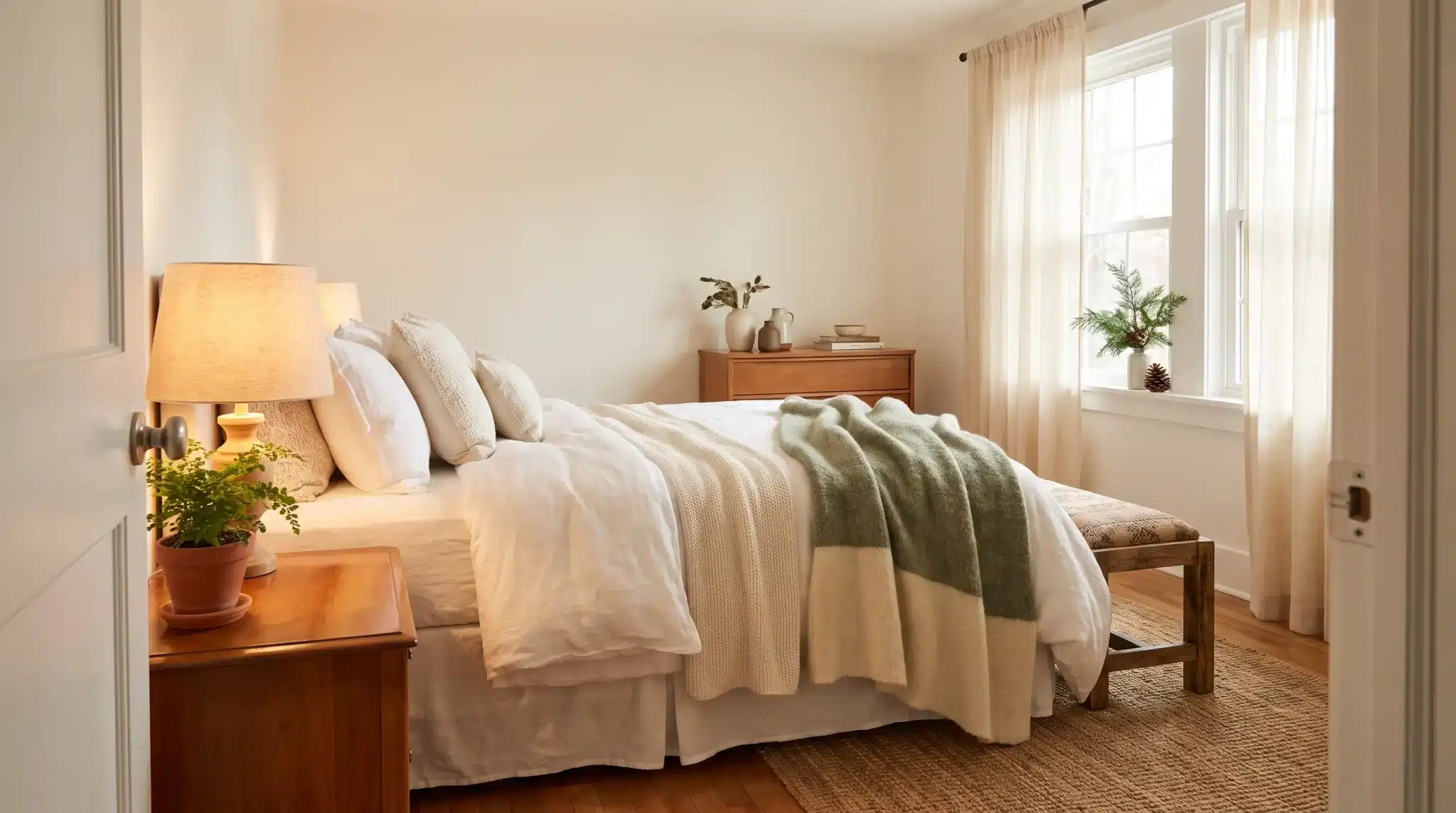
Muted warm neutrals, soft greens, dusty blues, and earthy clay tones are reliable starting points for a calm reading corner. They create a gentle backdrop without forcing the space into a particular style.
The right choice depends on the room’s light: a gray-green can look fresh near a north-facing window and much warmer under an evening lamp.
Test the color in place. Paint sample boards and move them around the corner, checking them in morning, afternoon, and artificial light. A shade that looks restful at noon may appear muddy after sunset.
If painting a full wall feels too bold, use color on a niche, arch, ceiling panel, or the inside of a bookcase. Renters can try peel-and-stick finishes or removable wall treatments instead. Keep the scheme to a dominant shade, a supporting tone, and one small accent color.
Give Repurposed Furniture a Comfortable Second Life
Measure the corner before choosing furniture. A repaired armchair suits a room with space for a full seat; in a tighter spot, a compact chair or bench may fit better.
Choose a seat that feels comfortable and stable, then add a small table for a drink or a narrow cabinet if you need book storage. Leave a clear path to enter and exit, and check that the table is within easy reach.
Inspect secondhand pieces for damaged frames, rocking legs, strong odors, or badly flaking finishes. Before painting, clean the surface and follow product instructions for preparation, sanding, and ventilation. Use suitable materials, keep dust and fumes away from children and pets, and check that fabric and finishes are sound before use.
Paint can bring mismatched furniture together. New knobs, a washable cushion, or a loose cover can change its character without permanent upholstery work. These are renter-friendly options, too.
Arrange Books and Lighting for Easy, Unhurried Reading
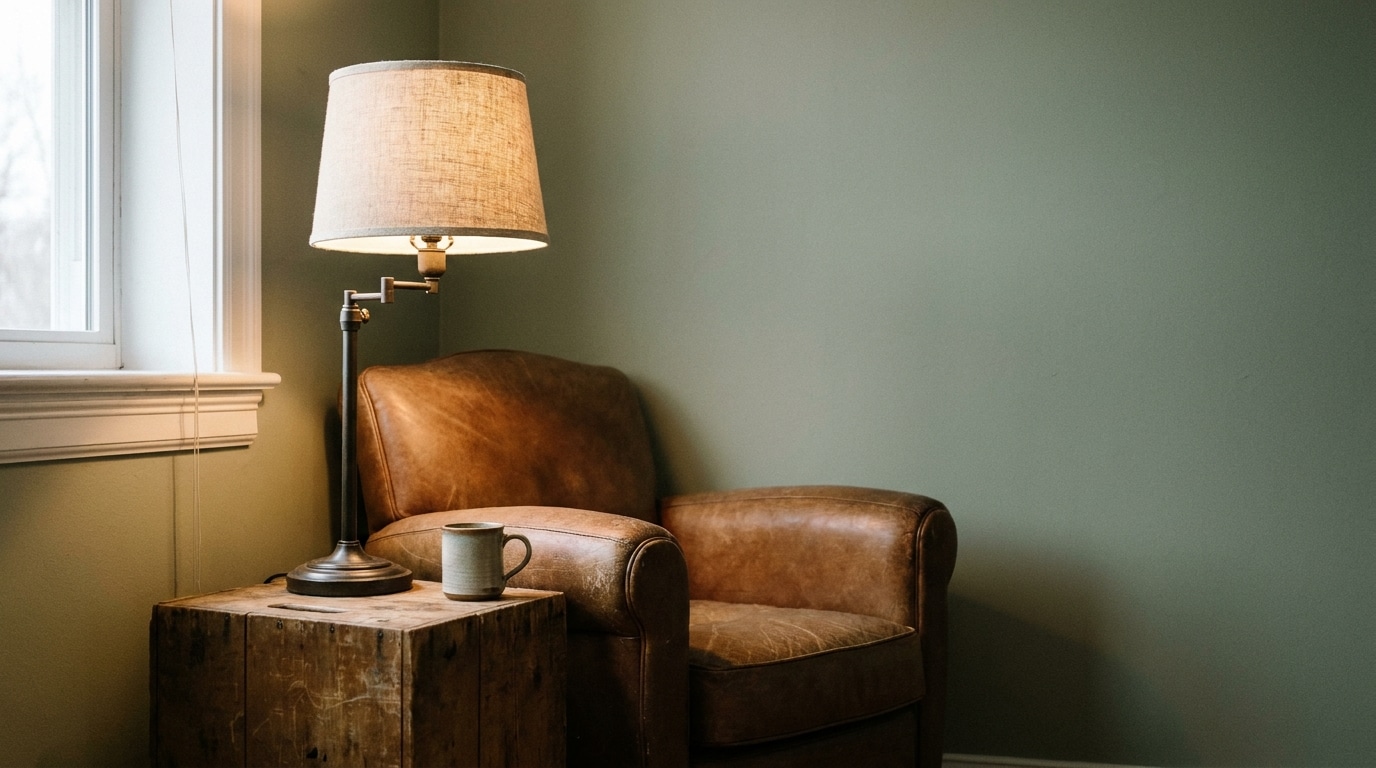
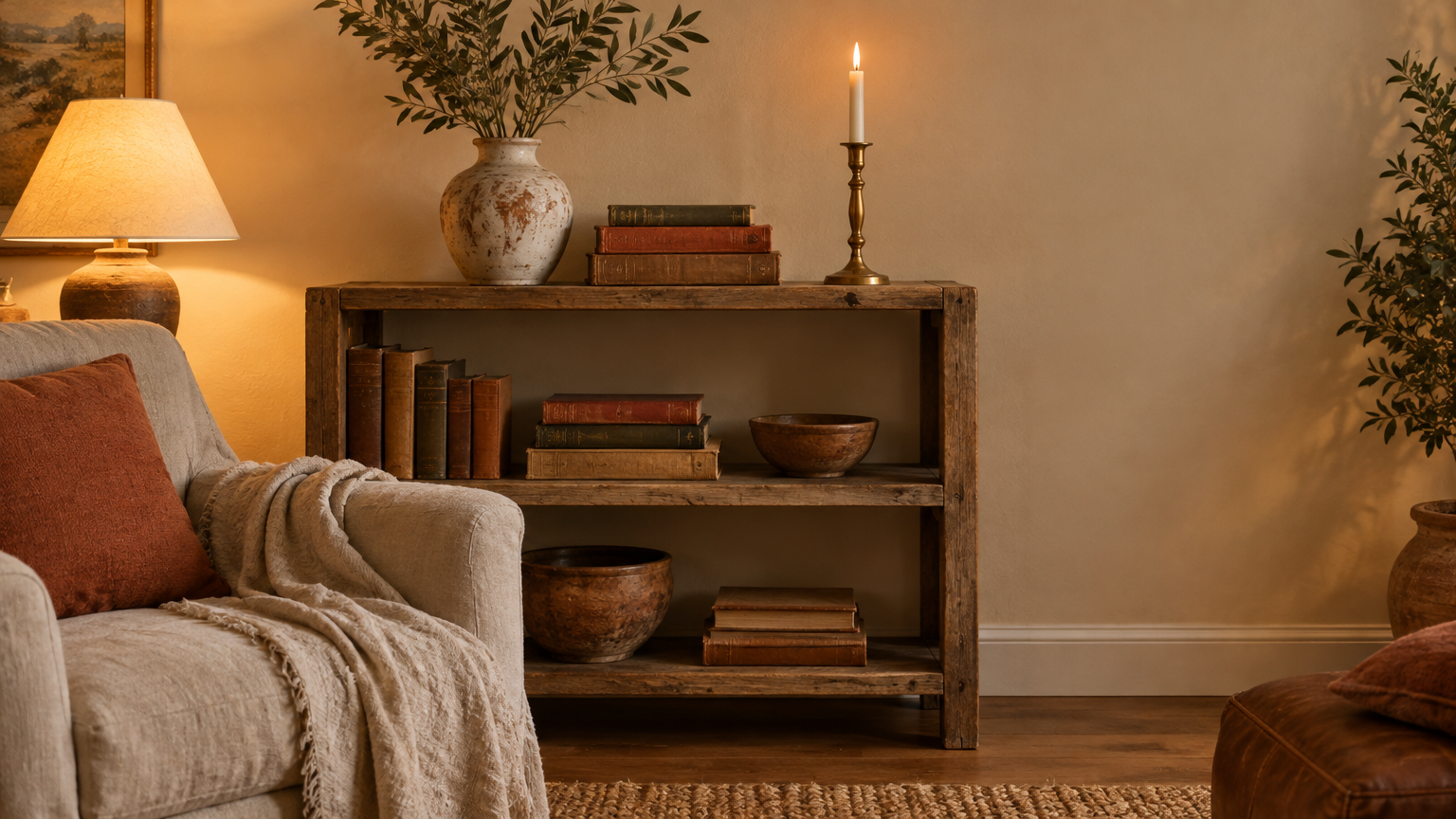
Keep current reads within arm’s reach on a small table, shelf, or repurposed wooden crate. A few vertical books beside one short horizontal stack look composed; covering every surface with books quickly becomes visual noise. Leave enough room for a lamp and a drink.
For online book sources, check licensing and use authorized alternatives when a title’s status is unclear. For example, Z library and Z-library are online sources, not proof that a book is legally available.
Public libraries, licensed digital collections, and authorized retailers are other options.
Task lighting matters more than decorative glow. Choose an adjustable lamp with a shade or diffuser, and direct it toward the page to control glare.
Position it opposite your writing or dominant hand where practical, so your hand is less likely to cast a shadow. A decorative lamp can add atmosphere, but it may not provide enough light for reading.
Add Handmade Details That Tell Your Story
Choose one or two projects, not a craft display in every corner. A sewn cushion cover, knitted throw, painted frame, handmade bookmark, small collage, or paper garland can make a personal reading nook feel lived-in. Repeating one material or accent color helps varied pieces look related.
Frame a postcard from a memorable trip, display a child’s drawing, or use fabric left from another project. Keep the rest of the surface clear so the chosen object remains visible.
Before adding another object, check the clear path, lamp reach, and space for a drink.