Most people never think about their water heater until the morning the shower runs cold. In North Texas, that morning tends to arrive in winter. Incoming water is colder, the tank works harder to bring it up to temperature, and a unit that limped through the summer can give out right when the house is full of holiday guests.
The good news is that a water heater rarely fails without warning. If you know what to look and listen for, you can usually catch a problem while it is still a repair instead of an emergency.
1. Rumbling, Popping or Knocking From the Tank
North Texas water is hard. Calcium and magnesium settle to the bottom of a tank water heater and build a layer of sediment over the years. When the burner or lower element heats water trapped under that layer, it boils in small pockets and makes a popping or rumbling sound.
Sediment also acts like insulation, so the unit burns more energy to heat the same amount of water and the bottom of the tank runs hotter than it should. Flushing the tank once a year slows this down. If the noise is already loud, the buildup may be past what a simple flush will clear.
2. Hot Water That Runs out Faster Than It Used To
If a household that used to get through three showers now gets through two, something has changed.
Sediment takes up space inside the tank, a dip tube can crack and mix cold water into the hot supply, and an electric element can burn out so only half of the unit is working. Each has a different fix, so find the cause before anyone recommends a new unit.
3. Rusty or Cloudy Hot Water
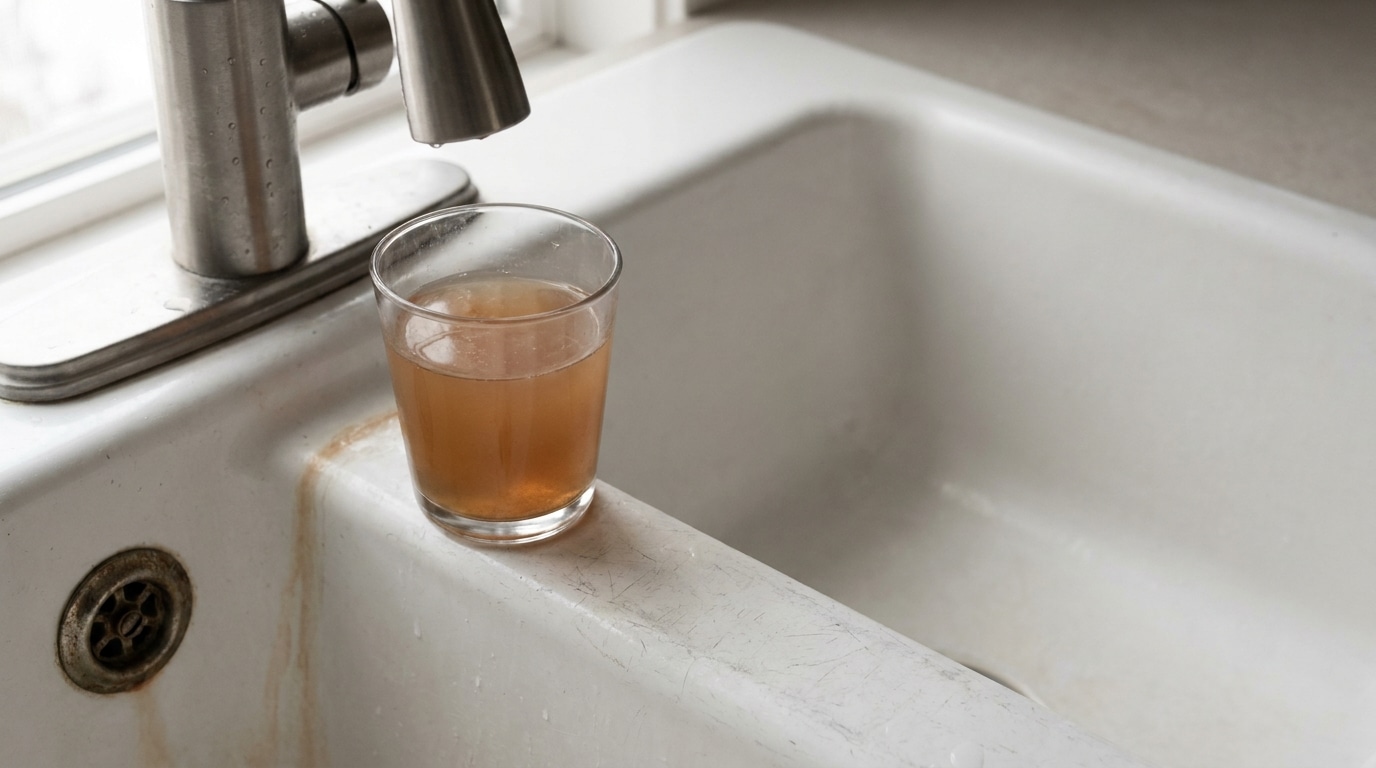
Run only the hot tap into a white cup. Brown or reddish water from the hot side, but not the cold, usually points to corrosion inside the tank.
Every tank has an anode rod, a metal rod that corrodes on purpose so the steel tank does not. Once that rod is used up, the tank itself starts to rust. Replacing the rod in time can add years of life. Waiting too long means the tank is next.
4. Moisture, Drips or Puddles Around the Base
A small amount of water near the unit is worth checking right away. Sometimes it is a loose fitting on the supply line or a temperature and pressure relief valve that is doing its job because pressure inside the tank is too high.
Those are fixable. Water seeping from the tank body itself is different: a leaking tank cannot be patched, and in a garage or attic it can turn into drywall, flooring and ceiling damage quickly.
5. Age
A standard tank water heater in this area often lasts somewhere around eight to twelve years, and hard water tends to push that toward the lower end. The manufacture date is usually printed on the label or coded into the serial number.
If your unit is in that range and showing any of the signs above, it is a good time to start planning rather than waiting for a failure.
Simple Maintenance That Helps
- Flush the tank once a year to clear sediment, more often if your water is especially hard.
- Test the relief valve by lifting the lever briefly and letting it snap back. It should release water and then stop.
- Keep the thermostat around 120 degrees. Hotter settings speed up sediment buildup and raise the risk of scalding.
- Clear the space around the unit so you can spot leaks early, and keep a gas unit’s air supply open.
- Have the anode rod checked every few years.
Repair, Replace or Switch to Tankless?
Not every warning sign means a new water heater. A bad element, a worn valve or a spent anode rod are routine repairs.
A rusting or leaking tank is not. Many homeowners also use a replacement as the moment to compare a new tank with a tankless unit, which heats water on demand and frees up floor space but costs more up front and may need gas line or electrical changes.
Whatever you decide, have someone look at the whole picture before you buy. In the Dallas-Frisco area, Custom Cooling & Contracting handles water heater repair and replacement, along with the HVAC and roofing work many older homes need at the same time. If your water heater is showing any of the signs above, you can learn more here about how the team in Frisco approaches water heater service.