For years, many hosts default to whatever cloth is already in the linen closet, usually still creased from last year’s fold. The food is good, the company is better, and it’s easy to tell yourself the tablecloth doesn’t matter. But putting a little thought into it, a proper cloth, a runner, napkins that match something, make a noticeable difference to the whole feel of the meal.
That feeling isn’t new, either. HISTORY.com’s overview of Christmas traditions traces family feasting back through centuries of midwinter celebrations, long before anyone was worrying about centerpieces, people have been gathering around a dressed table to mark this time of year for a very long time. Modern hosts are just carrying on their own small version of the same thing.
Why the Linens Matter More Than You’d Think
A table setting is one of the few decorating decisions that changes how a whole meal feels without changing anything about the food. The right base cloth sets a mood before anyone’s even sat down, and it’s one of the cheapest ways to make a regular Tuesday night dining table look like it’s hosting something special.
It’s also one of the easiest categories to get wrong by overthinking it, you don’t need a coordinated theme with matching crackers and place cards. You mostly just need a few pieces that work together and a little bit of intention.
Xmas Table Linen Ideas for Your Christmas Dinner
Here’s a good place to start when looking for Xmas table linen ideas for your Christmas dinner this year, these are the picks that get used, not just the ones that look good in a photo:
- Start with a real base cloth, not a runner alone. A runner on bare wood looks intentional in a magazine and bare everywhere else. Premier Table Linens’ Christmas print collection has options sized for standard six and eight foot tables, which solves the single most common problem: a cloth that’s too small and rides up the second someone leans on the table.
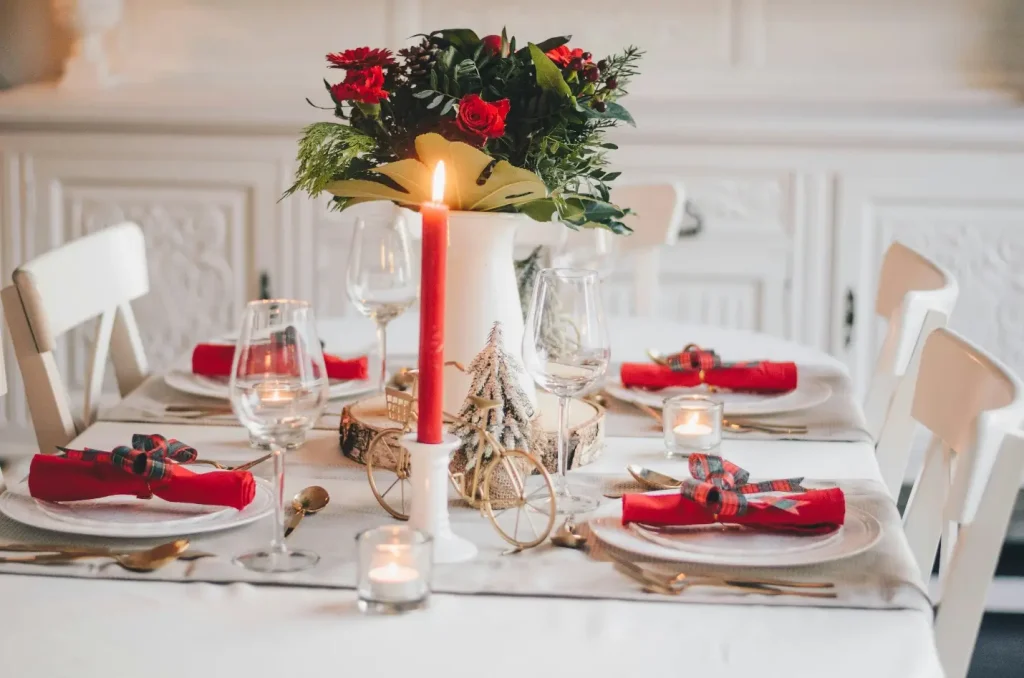
- Layer a runner over the base cloth for texture. A woven or metallic runner down the center adds dimension without you having to commit to a busier pattern across the whole table.
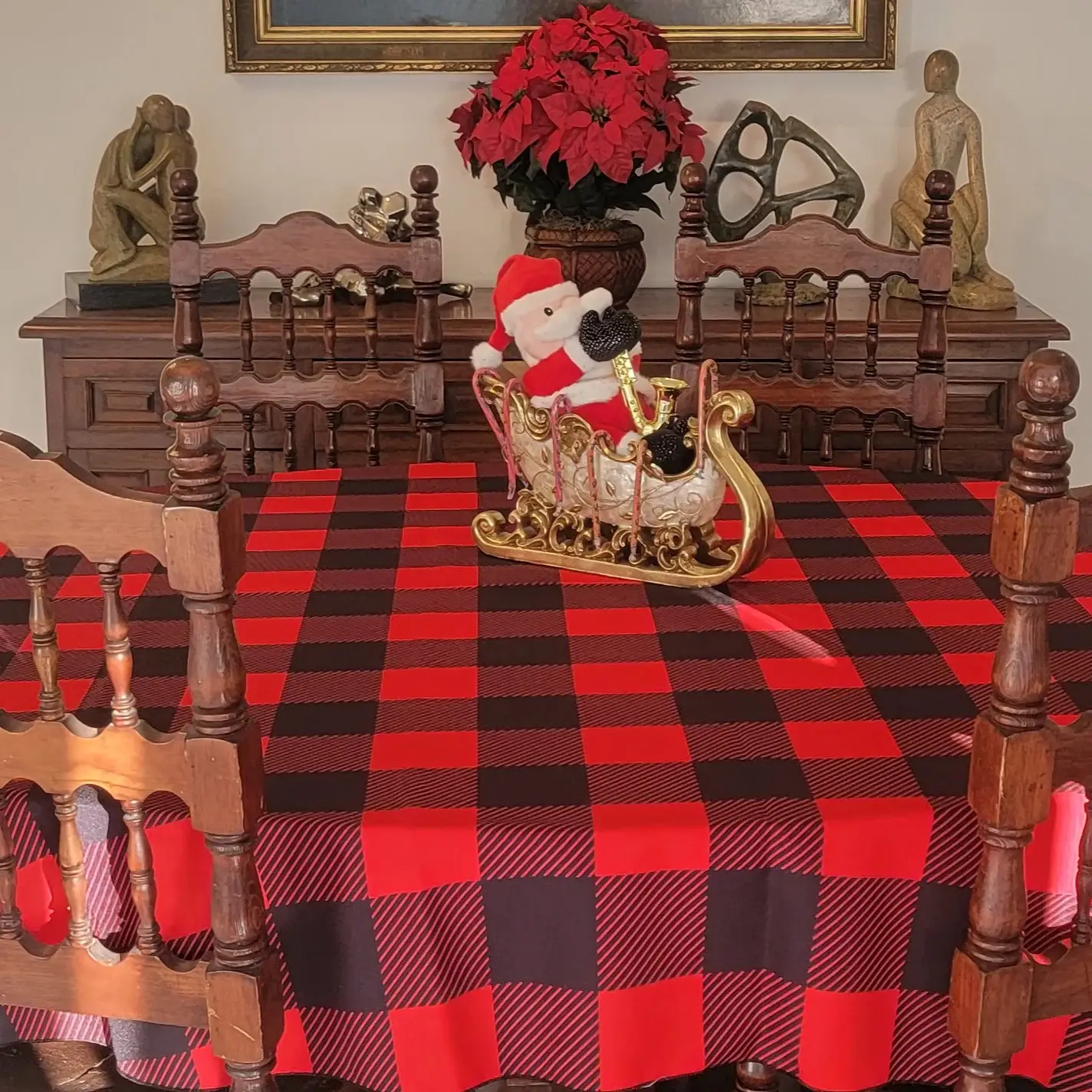
- Go beyond red and green. Deep plaid, cream and gold, or a soft sage all read as “Christmas” without looking like a craft store aisle. It also means the cloth photographs well in whatever your dining room’s actual wall color happens to be.
- Mix in cloth napkins, even mismatched ones. A cloth napkin from Premier Table Linens instantly reads as more considered than a paper one, and you don’t need a full matching set. Two coordinating colors in a stack look more intentional than one flat color.
- Pick a fabric that can survive a spilled glass of cider. Poly-blend prints hold up better across a long holiday meal than delicate cotton, and they don’t need to be dry cleaned before they go back in the closet.
- Consider a reversible option if you host more than once a season. Some seasonal tablecloths work for both a casual Thanksgiving table and a dressier Christmas one with just a runner or napkin swap, which saves both storage space and money.
- Store it properly so it’s ready to go next year. Rolling instead of folding keeps a crease from setting into the fabric permanently, which matters more with a print you want to keep using for more than one season.
Small Touches That Make It Feel Finished
Once the linens are sorted, the rest is genuinely small stuff: a few sprigs of greenery down the center, candles at varying heights, place cards if you’re hosting a crowd that needs a little seating diplomacy. None of them requires a big budget, and most of it is stuff you can pull together in the afternoon or if you’ve already got the table itself handled.
Many experienced hosts treat the tablecloth as the one purchase worth planning for each season, then layer in everything else with whatever’s already around the house. It’s a lot less stressful than trying to pull together a whole coordinated look from scratch every December.
Planning Ahead Instead of Scrambling
Many hosts buy holiday linens the week of, which means settling for whatever’s still on the shelf. A better approach treats it more like planning a paint color for a room: pick the base cloth first, in a shade that will still look good in a few years, then build everything else, napkins, runner, centerpiece, around that one decision instead of trying to match a dozen pieces at once.
That single change is what breaks the last minute linen closet cloth cycle. It also means that by the time guests sit down, the table is one less thing to scramble over, freeing up energy for the food and the company, which, historically, is what this time of year was always supposed to be about in the first place.
None of this needs to be complicated, and it doesn’t need to be expensive. Start with a base cloth that actually fits your table, build in a little texture and color, and let the small details fall into place around it. That’s the whole trick, and once you’ve got a set of linens from Premier Table Linens that you like, most of the work is already done for next year, too.