Commercial architecture does not always benefit from an industrial appearance. Warehouses and distribution centers often suit flat or low-slope roofs that remain largely out of view. Churches, schools, medical offices, apartment communities, professional buildings, and neighborhood retail properties serve a different purpose. Their design often needs to feel familiar, approachable, and compatible with the surrounding area.
On these buildings, the roof can occupy a large portion of the visible exterior. A pitched roof introduces shape, texture, and proportion that can make a large structure feel less imposing. For properties where the roof forms part of the architectural identity, a residential-style roofline can provide the right balance between visual character and practical performance.
Why Certain Commercial Buildings Use Residential Design Cues
Some commercial and institutional properties deliberately borrow elements from residential architecture. Gables, dormers, covered entrances, brick facades, siding, and pitched roofs can make a building feel more welcoming and reduce the visual weight of a large structure.
A medical office located near a residential neighborhood may benefit from a softer appearance than a highly industrial building form. Churches often use steep rooflines to reinforce traditional architectural proportions. Apartment complexes may divide long structures into smaller visual sections with multiple gables and roof planes. Schools and senior living facilities can use similar features to create a more comfortable, human-scaled environment.
Shingles work well with these forms because they add texture to prominent roof surfaces while following complex slopes, hips, and gables. This helps explain why commercial shingle roofing is used on churches, apartment buildings, educational facilities, medical properties, retail spaces, and other commercial structures with pitched roofs.
Suitability still depends on the building. Roof pitch, drainage, exposure, structural condition, and the design of the roofing assembly all need to support the use of shingles.
What Shingles Contribute to a Large Roof
Shingles have a stronger visual presence on a large commercial roof than they do on a smaller house. Because the material is repeated across a much broader surface, color, texture, and pattern can influence the character of the entire building.
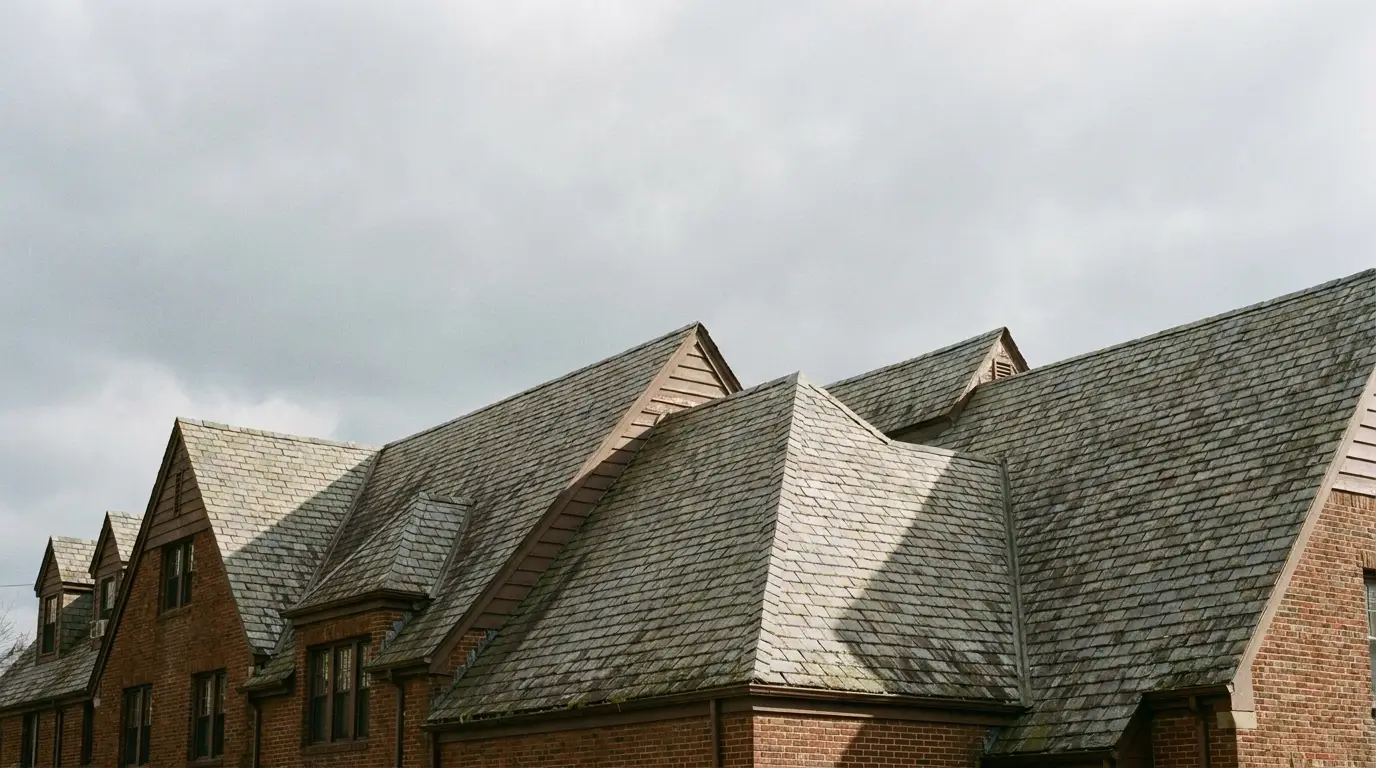
Architectural shingles create depth through variations in shape and thickness. On a broad pitched roof, those changes produce shadow lines that break up a large surface and give it more definition. This can be especially useful on buildings where the roof is visible from the street or parking area.
Color selection also carries more weight at commercial scale. A very dark roof can dominate the facade, while blended tones may create a smoother relationship with masonry, siding, trim, and surrounding landscaping. Traditional brick buildings often pair well with restrained roof colors, while simpler stucco or siding exteriors may accommodate more variation.
The most reliable way to judge the effect is from realistic viewing distances. A small sample can communicate color, but it cannot fully show how that color or pattern will look across several thousand square feet of roofing.
A Familiar Appearance Still Requires Commercial-Level Performance
A roof may be selected partly for architectural reasons, but its long-term value depends on how the complete system performs.
A pitched shingle roof includes much more than the visible surface. Underlayment, decking, flashing, fastening, ventilation, valleys, edges, and penetrations all affect water management and durability. Weakness in any of these areas can create problems even when the shingles themselves remain in good condition.
Asphalt shingles typically include a reinforcing mat, asphalt, and mineral granules. Products can differ in weight, profile, impact characteristics, algae resistance, and other performance features. Relevant asphalt shingle performance standards provide technical benchmarks for materials used in roofing applications.
Commercial properties can add complexity because their roofs may span larger areas or include multiple sections, wall intersections, vents, chimneys, mechanical penetrations, and changes in elevation. These transitions require careful flashing and drainage details because they are common points of vulnerability.
Environmental exposure matters as well. Wind, moisture, temperature changes, falling branches, and storm debris can affect a roof differently depending on its height, location, slope, and surrounding conditions. Product selection should reflect those demands.
Scale Changes How Shingles Should Be Selected
A roof that covers a large commercial property needs to be evaluated differently from a small residential roof.
Highly varied shingle patterns can become visually busy when repeated across an expansive school, church, or apartment building. At the opposite extreme, a very uniform product may make a broad roof plane appear flat. The goal is to find enough variation to create depth without overwhelming the rest of the architecture.
Facade materials should influence the decision. Brick often contains natural color variation, so a heavily blended roof may compete with the wall surface. Simpler exteriors can support a stronger roof pattern because there are fewer surrounding elements competing for attention.
Pitch also changes how much of the roof people see. A steeply sloped church, clubhouse, office, or multifamily property may present a large section of roofing directly to street-level views. In those cases, the roof becomes one of the building’s primary visual surfaces.
Comparing completed properties with similar roof shapes is often more useful than relying on samples alone. It shows how shingle color, texture, and scale interact under real lighting conditions and at realistic distances.
The Condition Beneath the Shingles Matters
Roof replacement creates an opportunity to inspect areas that normally remain hidden.
Once the existing material is removed, contractors may find deteriorated decking, moisture damage, weakened sections, old repairs, or flashing problems. These issues can be difficult to assess accurately while the previous roofing remains in place.
New shingles need a sound substrate. Damaged decking can affect fastening and create an unstable base, while unresolved moisture problems may continue beneath the replacement system. Valleys, penetrations, roof edges, and transitions also need proper preparation before new materials are installed.
This is particularly important on older churches, schools, apartment properties, and converted commercial buildings. These structures may have undergone several rounds of repairs or partial renovations, sometimes with incomplete records. Different roof sections may therefore have different conditions beneath the surface.
Addressing those conditions during replacement gives the new roof a more reliable foundation and reduces the chance that concealed defects will undermine the work.
Maintenance Matters on Active Commercial Properties
Commercial buildings often remain occupied while their roofs age. Tenants continue using apartments, patients visit medical offices, students attend classes, customers enter stores, and congregations use their facilities.
Routine inspections can identify deterioration before it disrupts those activities. Missing shingles, curling edges, granule loss, staining, damaged flashing, and signs of moisture can indicate problems that deserve closer attention, especially after severe weather.
Understanding the common signs that a shingle roof is wearing out can help property managers determine whether damage appears isolated or reflects broader deterioration.
Large, multi-slope roofs make consistent inspection particularly useful. A damaged section may be difficult to notice from the ground, and one part of the building can age differently from another because of shade, drainage patterns, wind exposure, or previous repairs.
Regular maintenance also helps preserve appearance. Staining, patchy repairs, missing shingles, and uneven aging are highly visible on pitched roofs, especially when the roof forms a major part of the facade.
Roof Replacement Requires Planning Around Building Operations
Working on an occupied commercial property introduces practical considerations that are less significant on a typical home.
Removing old shingles creates noise, debris, equipment movement, and temporary restrictions around parts of the building. The impact varies by property type. A school may need work coordinated around student arrival and dismissal. A medical office may need uninterrupted access for patients. A church may plan around services and community events.
Entrances, walkways, parking areas, and landscaped zones require careful planning. Work areas should allow occupants to move safely while keeping people and vehicles away from active tear-off zones and falling debris.
Material staging also affects the site. Shingle bundles, waste containers, equipment, and removed roofing all need designated areas that do not interfere with normal operations. Cleanup is especially important because nails and small pieces of roofing material can spread beyond the immediate work area.
Scheduling sections of the roof during lower-traffic periods can reduce disruption. The objective is to complete the work efficiently while allowing the property to continue functioning as safely and normally as possible.
A Roof Should Suit Both the Building and Its Use
Residential-style rooflines can work especially well on commercial properties that benefit from a familiar, traditional, or neighborhood-oriented appearance. Churches, schools, apartment communities, medical offices, professional buildings, and small retail properties often fall into this category.
Shingles can support that architecture through texture, color, shadow, and proportion, but their suitability depends on more than appearance. Roof pitch, decking, flashing, drainage, exposure, installation quality, maintenance needs, and building operations all influence the final result.
A well-planned pitched shingle roof should feel visually appropriate for the structure while meeting the practical demands of a commercial property. When those considerations are handled carefully, the roof becomes a coherent part of the building rather than a surface chosen in isolation.