Accommodations for students in Australia are designed to be small intentionally, but it does not have to be a negative aspect. Special-purpose accommodation located near campuses usually ranges from about 18 to 30 square metres, which makes you think harder on how space will be utilised. With smaller and well-organised accommodation, the room will be easy to keep clean and organised and thus more productive for studying than a bigger place with accumulated chaos.
Below there are listed eight of the most popular concerns related to layout, organisation, and comfortable living that are relevant to student accommodation and based on practical experience.
1. Utilise Space by Putting Items Under Your Bed
Floor space underneath your bed is one area which you will always find being put to no use. In most cases, it only collects dust and some forgotten socks. Using rollable containers or vacuum seal bags can solve that problem without you having to make additional purchases. Clothes and items which you need very rarely can easily fit under your bed. The advantage is obvious: you get to free up valuable space which can be used for other purposes, and the room looks more organised.
2. Opt for Vertical Storage for Tight Spaces
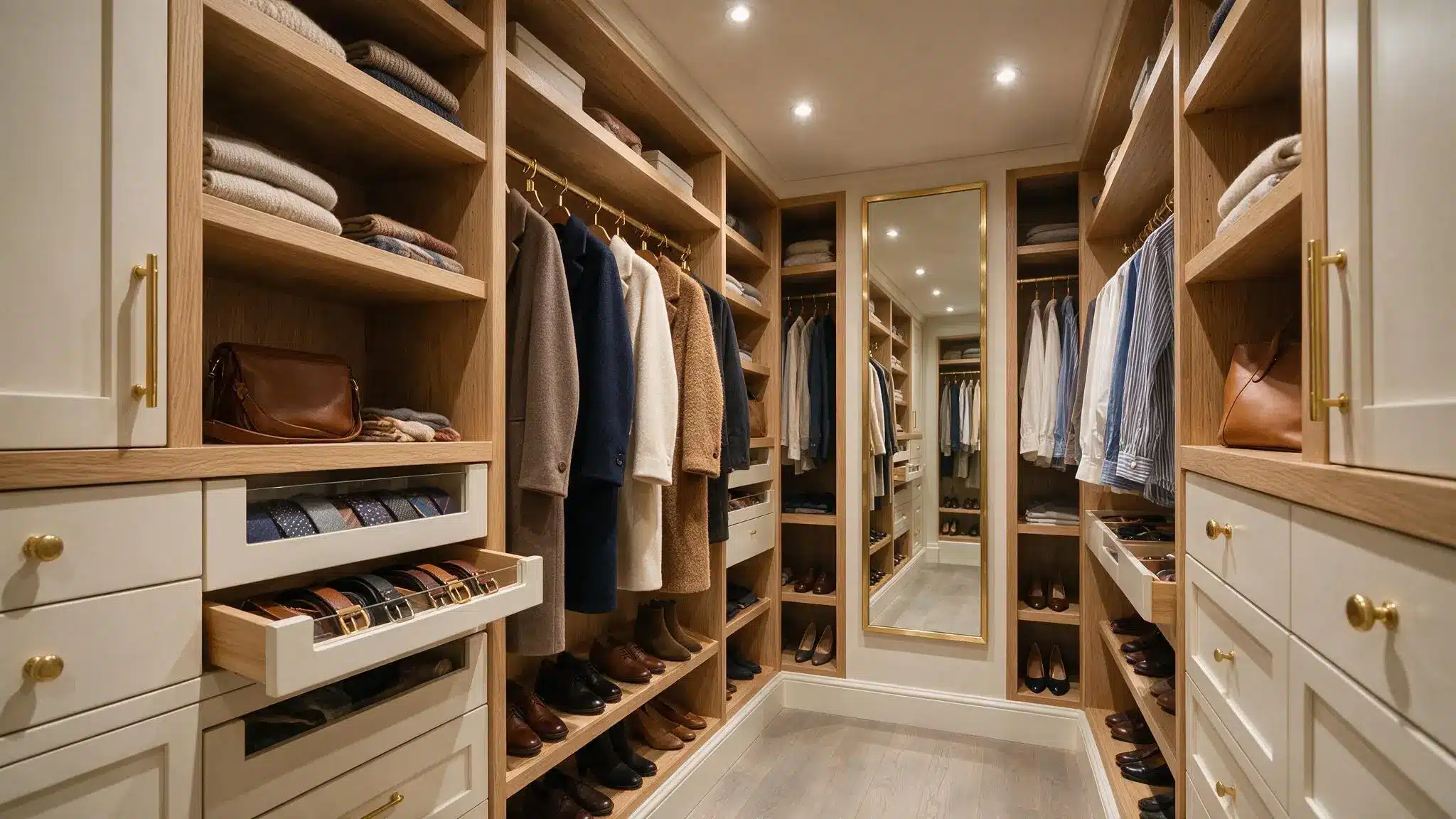
Where there is not enough room on the floor, it only makes sense to move upwards. Wall-mounted shelving, pegboards, and over-the-door cabinets provide for storage without occupying any more space. If the shelving unit is located right above the desk, all the necessary things like books, notes, and writing materials will be stored there without using any extra floor space. Another benefit of this type of storage is its ability to establish order. Once everything has its own designated spot, it will simply be an automatism to return it after use.
3. Establish Distinct Areas for Studying and Relaxing
Student studio living spaces are unique in that the same areas are used for studying, resting, eating, and relaxing all within the space of just a few hours of time. The issue arises that without any sort of distinct area or boundary established, it may prove difficult to shift from one mode to another. No additional room is necessary to make these distinctions. All that is required could be something as simple as using a carpet as the study area, dedicating an overhead light only to working or simply having the right furniture set-up in place.

4. Select Adaptive Items to Accommodate Multiple Uses
It is perfectly acceptable to choose items that serve one particular function very well. It would be even more practical to choose those that have two or three functions. An example of such an item would be the storage ottoman, where you can sit and store your belongings all from one place. Another good item to consider is the foldable desk, since you get to reclaim some precious floor space once the item is folded up. They do not belong in the category of novelties but are genuine products for efficient use in tight spaces. If you are looking around for inspiration, then going through ranges under the category of modern furniture will give you items that work in smaller areas.
5. Simplify the Room Through Minimalist Style
A messy room makes you want to leave because there’s something tiring about being there, and the reason for that isn’t merely an opinion. Environmental psychologists have found out for a while now that mess creates a subtle but clear drain on cognitive resources, increasing distraction and leaving people feeling uncomfortable and uneasy. Minimalist style in the student’s room doesn’t necessarily mean bare rooms with no personal touch to them at all. Rather, it implies selective choices: neutral colours to increase spaciousness, matching storage boxes to minimise visual noise, and keeping surface clutter to only things actually used. Such changes don’t involve remodelling; they require consistency in choosing and organising belongings.
6. Give Preference to Student Housing Tailored to the Needs of Students
The design of buildings is one of the important factors affecting the day-to-day living conditions which cannot be covered by separate organisational methods. Student housing was created to address these issues from the very beginning, offering such features as study rooms, inbuilt storage space, and communal facilities not found in many rental apartments. The city of Adelaide offers a lot of universities distributed throughout the inner suburbs and the city centre, and students residing there prefer to look for places close to their universities, paying attention to the layout. If students are going to compare student accommodation in Adelaide, it is quite reasonable to start with purpose-built student housing.
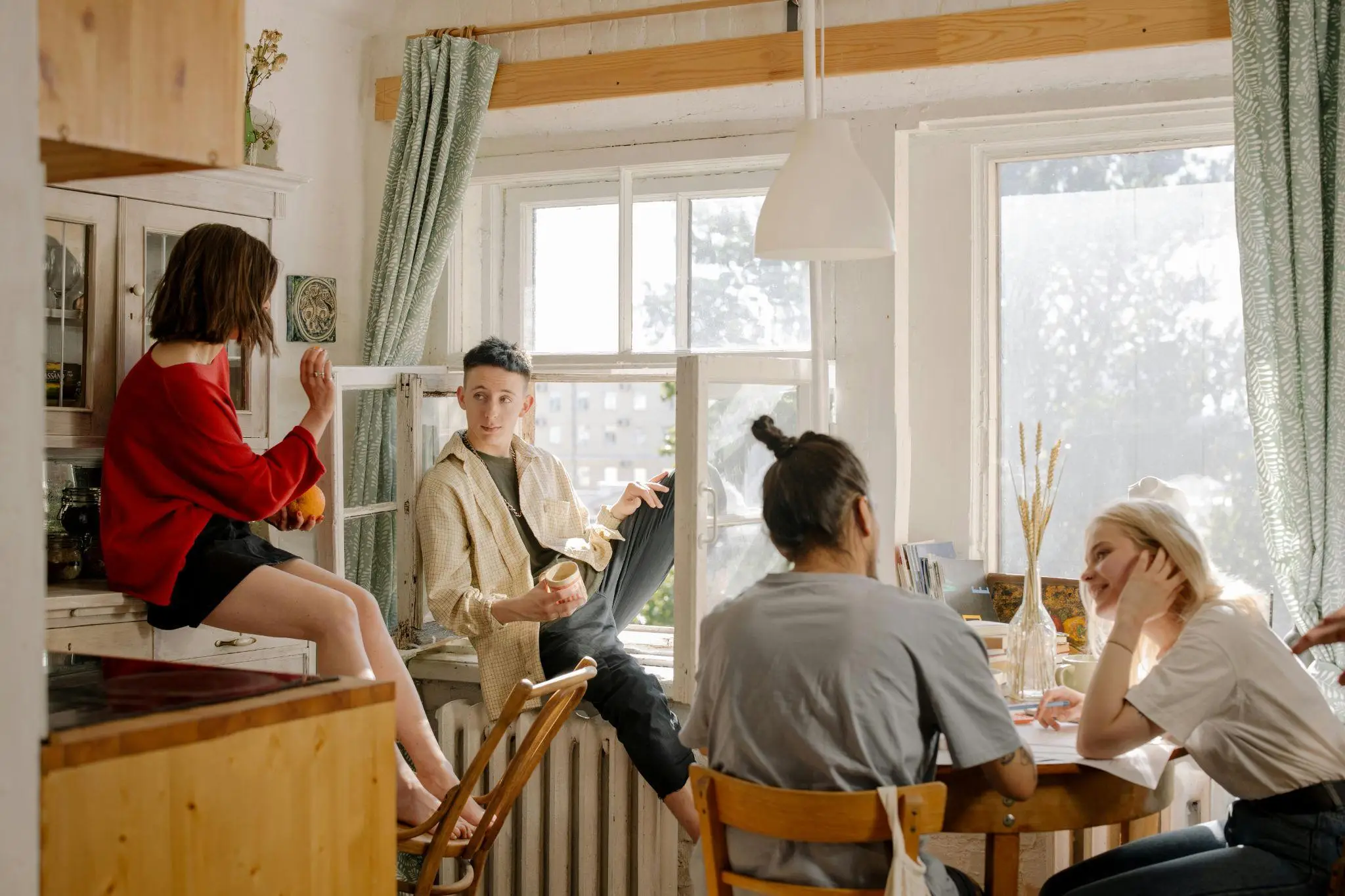
7. Maintaining Common Areas Functionally for All People
Common kitchens, bathrooms, and living rooms tend to function more smoothly if all people who use them have their own well-defined place where they can keep all their stuff. If there is no such place, then everything will float around and become the object of irritation, which is way too much given what it actually means. The labels in the cupboard, a special shelf in the bathroom, and a portable basket that moves with you but does not stay in common spaces are all very simple ways to keep everything clear. It does not need a formal agreement with your cohabitants, although it helps a lot.
8. Get Some Help From Lighting and Room Layout
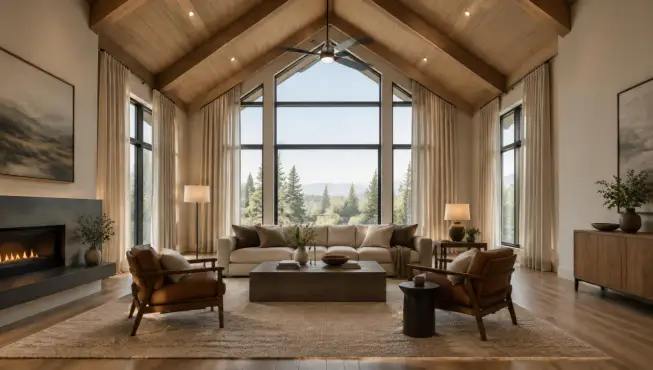
Among the many different variables, light plays a vital role in determining the size of a room. Ensuring that windows are not obstructed by any furniture and placing a mirror to help reflect natural light and selecting pieces of furniture that have legs instead of bases help create an impression of spaciousness. This can be helped by the use of lighter-coloured walls and soft furnishings in neutral tones, which also helps to reflect rather than absorb light. None of these measures affect the physical space of the room but change its perception instead. This can go a long way in helping students cope better within a confined space.
Small Design Details That Make Studying Life Better for Students
Having a student’s room function well is not about needing to have extra space. It is about paying attention to the available space. Storage below the bed, a shelf over the study desk, a rug defining your study area from the rest of the room – these are all little details that may seem insignificant at first glance but, taken together, create an impression of a room that has been planned instead of assembled, and that is what makes all the difference when you are going to use this room both to live and to study for long stretches of time.