Store-bought basil fades within days, but a home-grown plant gives you fresh leaves whenever you need them.
It is one of the easiest to grow and one of the most loved herbs in kitchens all over the world.
But growing it at home can be a bit of a headache if done without proper guidance or knowledge of the dos and don’ts.
Don’t worry, stick till the end, and you’ll know exactly how to grow basil easily at home.
Different Types of Basil You Can Grow at Home
People only know sweet basil, but there are actually several varieties worth growing at home.
Each variety grows just as easily as the next. So why stick to just one?
1. Sweet Basil: This is the easiest variety to grow and great for beginners. Its large, glossy green leaves have a fresh, sweet flavor, and perfect for tomatoes and classic Italian pasta dishes.
2. Thai Basil: This one is just as easy to grow and holds up well in heat without wilting. Its gives a spicy flavor and it goes so well with stir-fries and curries.
3. Lemon Basil: This variety is fairly easy to grow but needs a little more water than others. It’s gives a fresh, citrusy scent which pairs really well with grilled fish, seafood, and salads.
4. Purple Basil: This one can be slightly trickier to grow since it needs plenty of direct sun. Well known for its striking dark purple leaves, it pairs well with fresh salads, pasta, and mild cheese.
How to Grow Basil: Step-by-Step
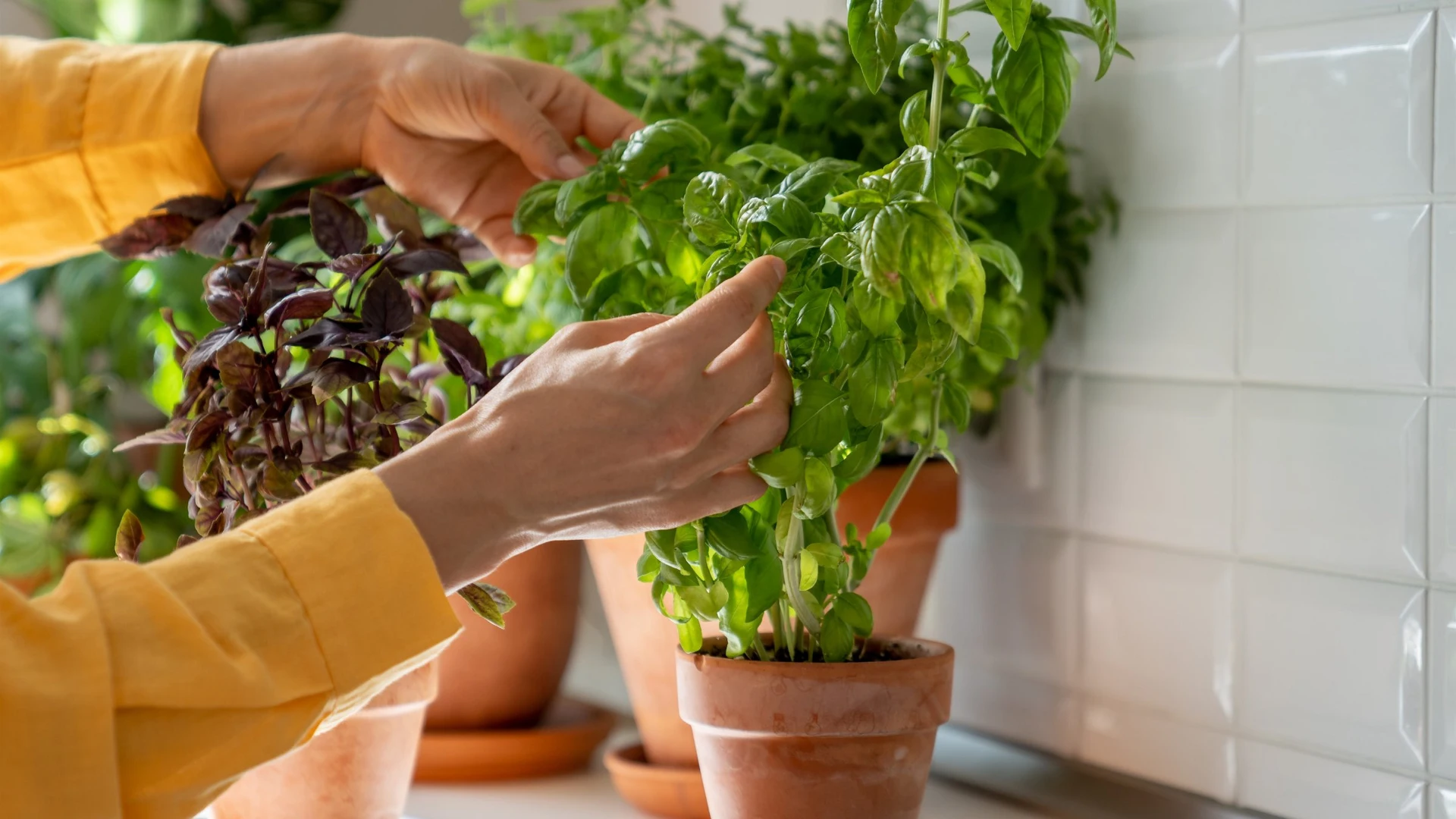
Growing and propagating basil at home does not require a lot. Follow the steps below to grow fresh basil at home.
Step 1: Pick Your Starting Point
Decide between seeds or a nursery plant. Seeds are budget-friendly, and nursery plants save time.
Seeds give you more variety choices and cost very little.
Nursery plants skip the germination stage entirely, making them a great option for first-time growers wanting quicker results.
Never repot them into a much larger pot immediately after buying. This stresses the roots. Move up only one pot size at a time.
Step 2: Choose the Right Pot
Go for a pot at least 6 to 8 inches deep. Drainage holes are non-negotiable, because no holes means waterlogged roots.
Terracotta pots are perfect for basil.
They absorb excess moisture and allow the soil to breathe properly, reducing the risk of root rot as compared to plastic containers.
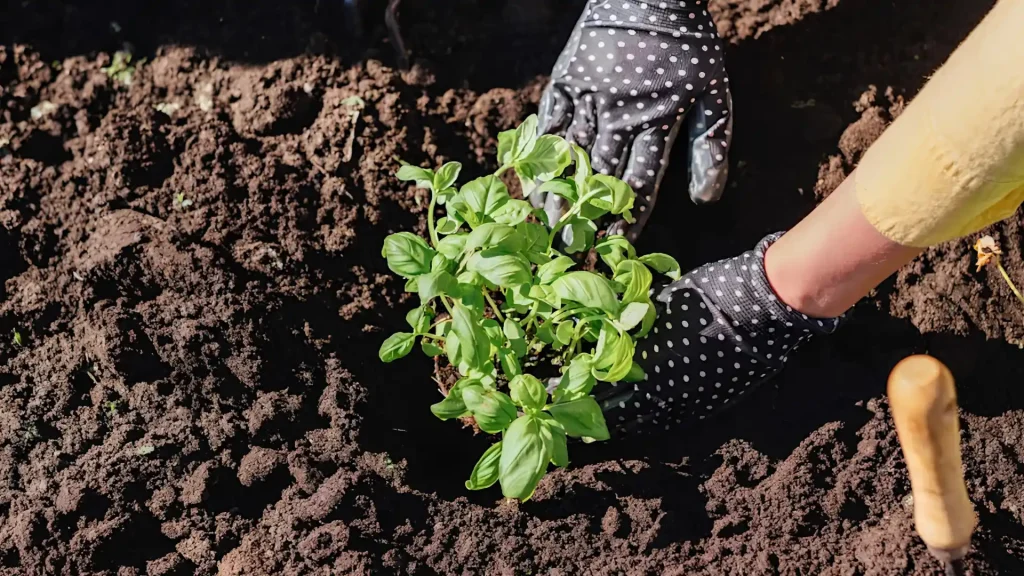
Step 3: Plant it Correctly
For seeds, press them lightly into the soil surface. Do not bury them deep.
And for seedlings, place them in a small hole and gently firm the soil around the base. Space multiple seedlings at least 10 inches apart.
Spacing matters as crowded plants compete for nutrients and airflow, increasing the risk of disease and slow leaf production.
Never plant too many seedlings in one pot. It looks full and healthy at first, but within weeks, the plants die.
Step 4: Water the Right Way
Stick your finger an inch into the soil. If it feels dry, water it. If it still feels damp, wait. Overwatering kills your basil faster than anything else.
Water slowly and directly at the base of the plant.
Avoid splashing water on the leaves, as wet foliage invites fungal problems that can spread quickly.
Step 5: Watch it Grow
Seeds usually sprout within 5 to 10 days.
Keep an eye out for the first leaves appearing after the initial sprout. Those are the real basil leaves, a clear sign that your plant is growing itself well.
How to Make Sure Your Basil Stays Healthy?
Basil grows fast and does not need much space. Give it at least 6 to 8 hours of direct sunlight daily.
Pick a south-facing windowsill, as it works best indoors.
Keep temperatures between 70 and 90 degrees Fahrenheit, as anything below 50 degrees can quickly damage the plant.
For soil, use a well-draining, loose mix with a pH between 6.0 and 7.0.
Mix in a little compost for a natural nutrient boost. Avoid heavy clay soils, as they hold too much water and cause root rot.
Basil does not need much feeding.
Never let your basil sit in a cold draft or near an air conditioner. Even one cold night near a chilly window can set the plant back by weeks.
How to Prune Basil?
Pruning is the one thing people skip, and but what it is?
It is the process of removing unnecessary or redundant parts from something to improve its efficiency, health, or performance.
So, once your plant is about 6 inches tall, pinch off the top set of leaves. Yes, and do this regularly.
It prevents the plant from flowering too early and encourages it to grow outward rather than upward.
Always prune just above a leaf node.
New stems will sprout from that point, so more stems mean more leaves and more leaves mean more leaves for you.
Harvesting Basil
Harvesting basil the right way is as important as growing it correctly to ensure a satisfactory end result.
It’s usually ready to harvest once it has 6 to 8 healthy leaves, which usually occurs 3 to 4 weeks after planting.
Do not wait too long as once it starts to flower, the leaves lose their flavor quickly.
- Always cut just above a leaf node.
- Use clean scissors or pinch with your fingers.
- Never remove more than one-third of the plant at once.
- Harvest in the morning when leaves are at their freshest.
If small flower buds start appearing at the top, pinch them off straight away.
Is it Better to Dry or Freeze Basil Leaves?
Freezing basil is a much better option, and this has its reasons.
Drying it causes the leaves to lose most of their fresh flavor and bright color, but freezing basil keeps the taste much closer to fresh.
Simply wash the leaves, pat them dry, and freeze them flat on a tray before transferring it to a bag.
For short-term storage, trim the stems and place them in a glass of room-temperature water.
For the fridge, wrap leaves loosely in a damp paper towel. Always use basil within 3 months of harvest for the best flavor.
Never store fresh basil in a sealed plastic bag straight from the garden. The trapped moisture turns the leaves black within hours.
Creative Ways to Use Fresh Basil
Fresh basil is one of those herbs that never runs out of uses.
Once your plant starts growing well, you will find yourself reaching for it every single day. It works in the kitchen, around the house, and even on your skin.
1. In the kitchen: Do not limit basil to just pizza. You’d be surprised to know its a very creative plant, just blend it into homemade pesto with garlic and olive oil.
Or tear it over a tomato-and-mozzarella salad, and even muddle it into lemonade for a fresh, herby twist.
2. Beyond cooking: Basil does a lot more than flavor food. You can place a pot near your window to naturally keep flies away.
Steeping the leaves in hot water makes a simple herbal tea, and mixing crushed leaves with coconut oil makes for a natural skin remedy at home.
Final Thoughts
Growing basil at home is not as complicated as it seems.
Once you get the hang of it, the answer to how to grow basil at home becomes fairly easy, and you will wonder why you did not start sooner.
It is forgiving, fast-growing, and fun to look after.
So grab a pot, find your sunniest window, and get planting. Your kitchen will thank you for it. Got questions or tips of your own? Drop them in the comments below.
Frequently Asked Questions (FAQs)
1. Can Two Basil Plants Grow in The Same Pot?
It is possible, but not ideal. Crowded roots compete for nutrients and space, slowing growth for both plants.
2. Does Basil Grow Back After Cutting?
Yes, it regrows after being cut as long as you prune above a leaf node each time.
3. Why do Basil Leaves Turn Yellow?
Yellow leaves usually signal overwatering, poor drainage, or a lack of nutrients. Check your watering habits and soil condition first.