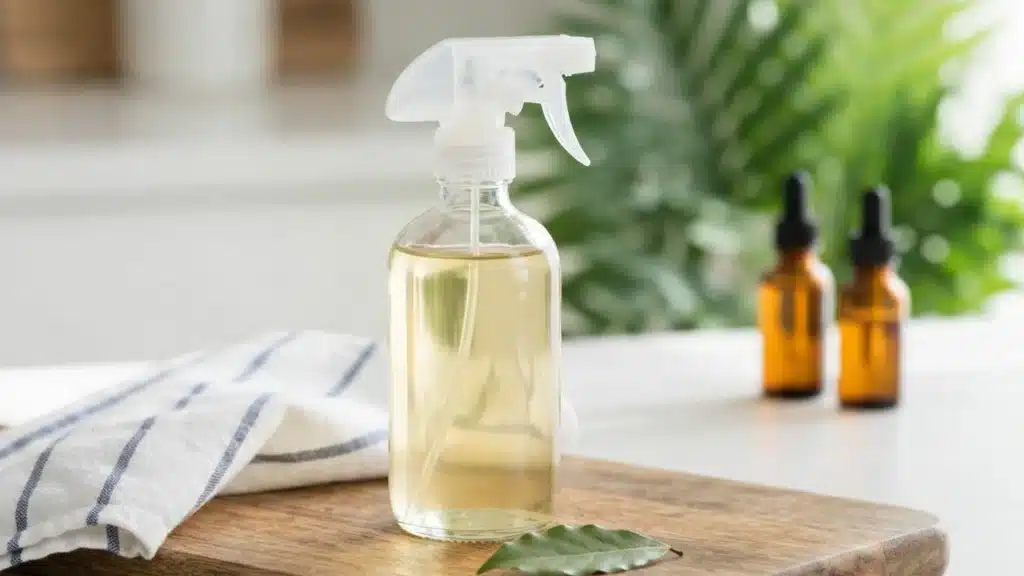
I checked the label on my disinfectant spray last year and stopped mid-spray. Half the words needed a chemistry degree to pronounce.
So I made my own diy disinfectant spray using stuff already sitting in my kitchen cabinet.
It took three tries to get a formula that actually smelled clean instead of like a lab. Some recipes worked well. One left a sticky film on my counter.
In this, I’ll show you what worked, what didn’t, and how to tell if your spray is doing its job right.
Why You Might Want to Switch to DIY Disinfectant Spray?
Store-bought disinfectant sprays work fast. That’s not the problem. The problem is what’s inside them.
Once you start reading labels, you might notice chemicals you can’t explain, especially with kids touching every surface right after you spray it.
Some bottles list ingredients that sound more like a lab report than a cleaning product.
So it’s worth looking at other options. Alcohol, vinegar, and hydrogen peroxide all kill germs in different ways. They’re cheap, easy to find, and you probably already trust them for other things around your house.
These homemade sprays won’t match every claim on a commercial bottle. They don’t. But for daily cleaning and light disinfecting, they get the job done without the guesswork.
Tools & Materials
- Spray bottles: Essential
- Isopropyl alcohol (91%): Essential (for the sanitizer and alcohol-based recipes)
- White vinegar: Essential (for the vinegar-based recipe)
- 3% hydrogen peroxide: Essential (for the peroxide-based recipe)
- Distilled water: Its substitute is tap water, boiled and cooled first
- Castile soap: A substitute is unscented dish soap
- Essential oils, Funnel, and Labels: Optional
Diy Disinfectant Spray Recipes that Will Not Give You Headaches
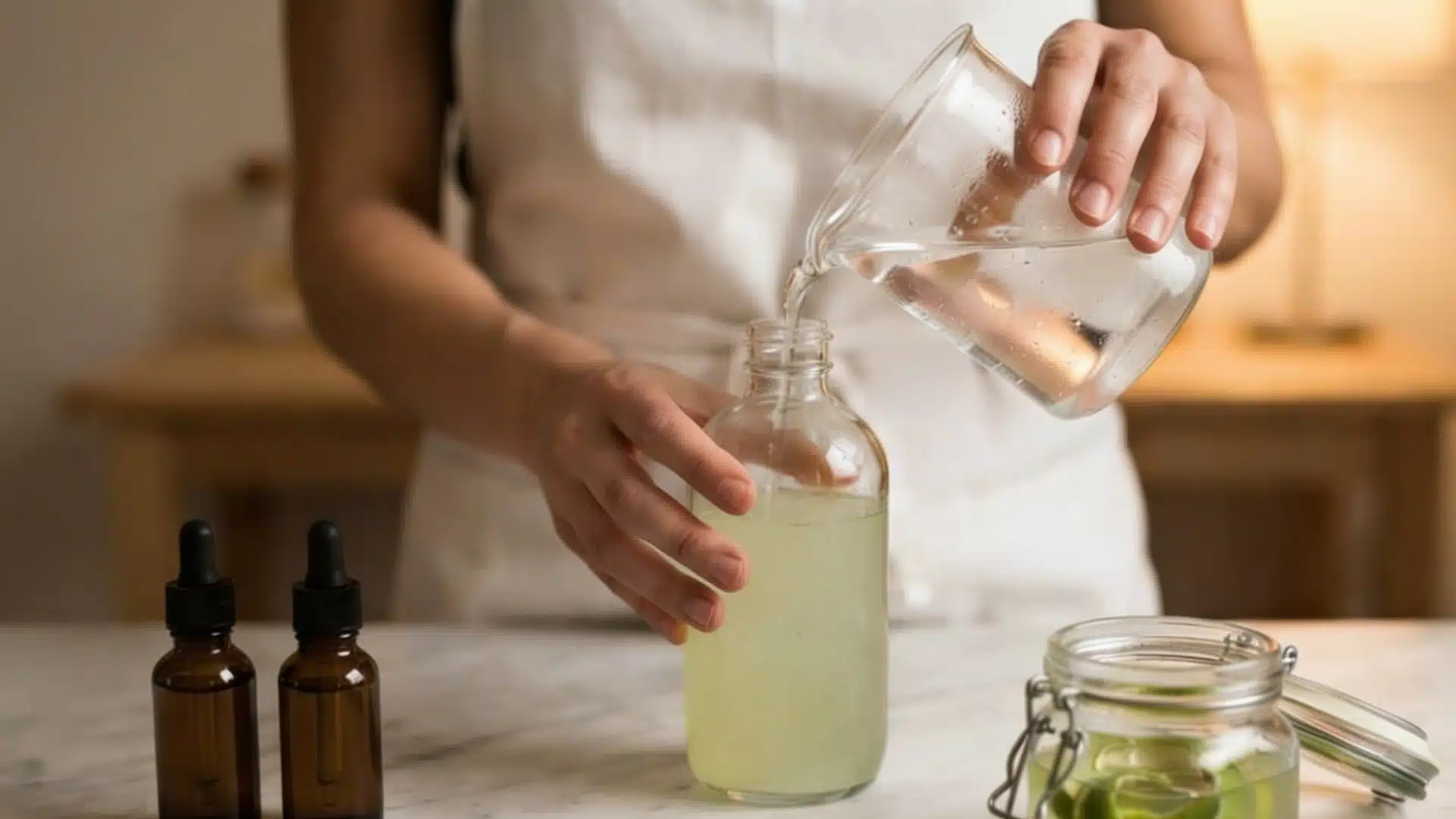
I’ve tested a handful of combinations over the past year, and these two hold up the best.
One’s for everyday cleaning, and the other gets closer to real disinfecting when you need it.
Vinegar and Castile Soap Cleaning Spray
This one’s for daily surface cleaning. It’s not a true disinfectant, but it cuts grease and grime well.
Step 1: Pour 1 cup of white vinegar into a spray bottle. Vinegar’s acidity breaks down grease and mineral buildup, which is why it works so well on countertops and glass.
Step 2: Add 1 cup of distilled water. This dilutes the vinegar enough to avoid a strong smell without weakening its cleaning power.
Step 3: Add 1 teaspoon of castile soap as the soap lifts dirt and grime that vinegar alone can’t fully remove.
Step 4: Screw the cap on and shake gently to mix. Shake gently, not hard; too much force with soap in the mix creates excess foam.
Step 5: Spray on the surface and wipe with a clean cloth. Wipe right away for glass and mirrors to avoid streaking.
Never mix this with hydrogen peroxide or bleach in the same bottle. The combination creates a corrosive acid that can burn your skin and lungs.
Make a Hydrogen Peroxide Disinfectant Spray
This is the closest homemade option to a real disinfectant, but it needs contact time to work.
Step 1: Pour 1 cup of 3% hydrogen peroxide into a dark or opaque spray bottle. The dark bottle matters here; clear plastic lets light in, and light breaks down peroxide quickly.
Step 2: Add 1 cup of distilled water. This dilutes the peroxide to a level that’s safe on most household surfaces.
Step 3: Shake gently to combine. A quick shake is enough. Peroxide and water mix easily.
Step 4: Spray directly on the surface. Cover the surface fully. Patchy spraying leaves gaps where germs survive.
Step 5: Let it sit for at least 5 minutes before wiping. This is the contact time the spray needs to actually work. Wiping too soon undoes the whole point.
Hydrogen peroxide breaks down fast in light. Store it in a dark bottle and mix small batches you’ll use within a few weeks.
DIY Sanitizer Spray Recipe
Sanitizing isn’t the same as disinfecting. This one’s for hands and everyday surfaces where you want quick germ reduction without a long wait time.
Step 1: Pour 3/4 cup of isopropyl alcohol (91%) into a spray bottle. Starting with the alcohol first makes it easier to measure the water accurately afterward.
Step 2: Add 1/4 cup of distilled water. This ratio keeps the alcohol concentration above 60%, the point at which it stops killing germs effectively.
Step 3: Add 5–10 drops of essential oil for scent (optional). Skip this if the spray will often touch skin; some oils can irritate sensitive skin.
Step 4: Screw the cap on and shake well. Alcohol and water combine fast, but a good shake keeps any added oil blended in.
Step 5: Spray on hands or surfaces and let it air dry. Don’t wipe it off. Air drying gives the alcohol time to work.
Don’t add more water than this ratio calls for. Diluting the alcohol below 60% drops its ability to kill germs effectively.
How Long Does DIY Disinfectant Spray Last?
Storage makes or breaks these recipes. Get it wrong, and your spray loses power long before the bottle’s empty.
Things that I’ve learned about keeping each one effective:
- Vinegar and castile soap spray: Lasts about 1 month at room temperature. Shake before each use since the ingredients can separate.
- Hydrogen peroxide spray: Lasts about 2 weeks once mixed. Keep it in a dark or opaque bottle, away from sunlight. Light breaks down peroxide fast, and a clear bottle left on a sunny counter can turn it useless in days.
- Alcohol-based sanitizer spray: Lasts up to 6 months if the cap stays tight. Alcohol evaporates slowly even through small gaps, so a loose cap shortens its life fast.
Label every bottle with the mix date. It takes ten seconds and saves you from guessing later.
My Take, After a Year of Testing
My kitchen counter smells like vinegar more often now, and I don’t mind it. That label-reading moment sent me down a path I didn’t expect, and it stuck.
A diy disinfectant spray sits next to my sink today, mixed an hour before, doing exactly what it needs to do. No mystery ingredients.
No guessing what I’m breathing in. Just alcohol, peroxide, vinegar, and a little patience for the timing to work right.
Simple swaps, real results, and one less thing to worry about on that label.
Frequently Asked Questions (FAQs)
1. What is a Good Natural Disinfectant Cleaner?
Vinegar, hydrogen peroxide, and isopropyl alcohol are the most effective natural options for home disinfecting.
2. Is Homemade Disinfectant Spray as Effective as Store-Bought?
Not always. Homemade sprays clean well but rarely match commercial products’ tested, EPA-registered disinfecting claims.
3. How Long Does Diy Hand Sanitizer Spray Last?
Up to 6 months if the cap stays tight. A loose cap lets alcohol evaporate faster.