A fresh coat of paint may look simple, but its making is way more complex. The color, texture, and finish all come from a carefully mixed formula.
The question of what elements are used in making paint does not have just one answer. Paint usually contains several materials that serve different purposes.
Some help create color, while others improve spreading, sticking, and drying.
This blog explains the main parts of paint, the common elements found in it, and how these ingredients work together.
What Elements are Used in Making Paint?
Most paints are made from several chemicals and compounds that work together to create color, texture, coverage, and durability.
Common elements found in paint include titanium, carbon, iron, and silicon. These elements usually appear as compounds, such as titanium dioxide, iron oxide, or calcium carbonate.
For a simple answer, titanium is one of the most widely used elements because titanium dioxide gives white paint its bright color and strong coverage.
However, the exact ingredients depend on the paint type, color, and intended surface.
Common Elements Found in Paint
Paint contains several elements in different chemical forms, and each one helps create its color, texture, coverage, or protective qualities.
| Element | Common Form in Paint | Main Purpose |
|---|---|---|
| Titanium | Titanium dioxide | Adds whiteness and strong coverage |
| Carbon | Carbon black | Creates black and dark shades |
| Iron | Iron oxide | Produces red, yellow, and brown colors |
| Zinc | Zinc oxide | Improves protection and controls mildew |
| Calcium | Calcium carbonate | Adds thickness and improves texture |
| Aluminium | Aluminum flakes or oxide | Creates metallic effects and surface protection |
| Silicon | Silica or silicates | Improves strength, texture, and durability |
What is Paint Made of (Exactly)
Paint is mainly made from pigments, binders, solvents, and additives. Each part affects its color, texture, drying time, and overall performance.
1. Pigments
Pigments give paint its color and covering power. White pigments, such as titanium dioxide, help create brightness and opacity.
Color pigments include iron oxides for red, yellow, and brown shades, while carbon black is used for deep black tones and darker finishes.
2. Binders
Binders hold pigment particles together and help paint stick firmly to a surface. They also form the solid film left after drying.
Common binder materials include acrylic for flexibility, alkyd for a smooth finish, epoxy for strength, and latex for easy application and cleanup.
3. Solvents
Solvents are liquids added to make paint easier to mix, spread, and apply. They control thickness and help create an even coat.
Water is used in water-based paint, while mineral spirits are common in oil-based paint.
The solvent evaporates as the paint dries and takes most of the smell with it, which is why how long the fumes linger after a coat depends far more on the solvent than the color.
4. Additives
Additives are used in small amounts to improve how paint works and lasts. Drying agents speed up drying, while preservatives prevent spoilage.
Thickeners control consistency, anti-foaming agents reduce bubbles, and mildew-resistant chemicals help protect painted surfaces in damp or humid areas.
Other Chemicals Used in Paint
Paint formulas contain several chemicals that support color, coverage, texture, drying, durability, and how smoothly the product spreads across a surface.
- Titanium dioxide: Adds whiteness, brightness, and strong covering power to white and light-coloured paints.
- Calcium carbonate: Improves thickness, controls texture, and helps reduce the overall cost of the paint formula.
- Silica: Adds strength, controls shine, and helps painted surfaces resist scratching and general wear.
- Zinc oxide: Supports mildew resistance and provides added protection in coatings used in damp areas.
- Iron oxide: Produces red, yellow, brown, and earthy shades while offering stable color over time.
- Glycol compounds: Help control drying speed, improve flow, and prevent paint from drying too quickly during application.
- Resin-based chemicals: Act as binders that hold pigments together and help the paint stick firmly to surfaces.
Water-Based Paint Vs Oil-Based Paint Ingredients
Water-based and oil-based paints use different liquids and binders, which affect their drying time, smell, finish, and cleanup method.
| Feature | Water-Based Paint | Oil-Based Paint |
|---|---|---|
| Main liquid | Water | Mineral spirits or similar solvents |
| Common binder | Acrylic or latex | Alkyd resin |
| Drying time | Usually faster | Usually slower |
| Odour | Lower | Stronger |
| Cleanup | Soap and water | Solvent-based cleaner |
Want to compare them side by side in detail? Click here to read our full guide.
Which Elements in Paint are Unsafe?
A handful of elements that once made paint work better are now restricted or gone:
- Lead (Pb): banned from US consumer paint in 1978. Houses built before then can still carry lead layers buried under decades of newer coats.
- Cadmium (Cd): produces brilliant yellows and reds, but it is toxic, so its use is now mostly limited to specialty artist colors.
- Hexavalent chromium (Cr VI): used in some anti-corrosion coatings and heavily restricted. Manufacturers increasingly swap in safer chromium(III) compounds.
- VOCs: not an element, but the solvent vapors released as paint dries. Low-VOC and zero-VOC water-based options are widely available now.
This section is general information, not an assessment of your home. Have suspect surfaces tested by a certified professional before sanding, stripping, or heat-gunning old paint.
Does Every Type of Paint Use the Same Ingredients?
Different paints use different pigments, binders, solvents, and additives based on the surface, finish, strength, and protection they need to provide.
Wall paint:
Usually contains water, acrylic or latex binders, pigments, and additives that support smooth coverage and easy cleaning.
Wood paint:
Often uses flexible binders, protective resins, and additives that help resist moisture, stains, and surface wear. Acrylics on bare wood behave differently again, since the grain pulls moisture straight out of the film.
Metal paint:
May include anti-rust pigments, strong resins, and protective chemicals that reduce corrosion and improve adhesion.
Automotive paint:
Uses specialized pigments, resins, solvents, and clear coatings to create color, shine, and weather resistance.
Artist paint:
Varies by type and may use oils, acrylic polymers, water, wax, or gums to carry concentrated pigments.
Industrial coatings:
Often contain heavy-duty resins and additives designed to resist chemicals, heat, impact, moisture, and long-term wear.
Final Thoughts
The materials inside paint shape how it looks, spreads, dries, and performs on different surfaces. That is why the formula for wall paint can differ greatly from one made for metal, wood, or artwork.
The question of what elements are used in making paint has no single fixed answer. Each formula is built for a specific use, finish, and level of protection.
Knowing these differences makes it easier to compare paint types and choose one that suits the surface and expected result.
Which paint ingredient surprised you the most? Share your thoughts in the comments below.
Frequently Asked Questions
Does Paint Have a Chemical Formula?
Paint does not have one fixed chemical formula because it is a mixture. Its formula changes based on the pigments, resins, liquids, and additives used.
How is Paint Made in a Factory?
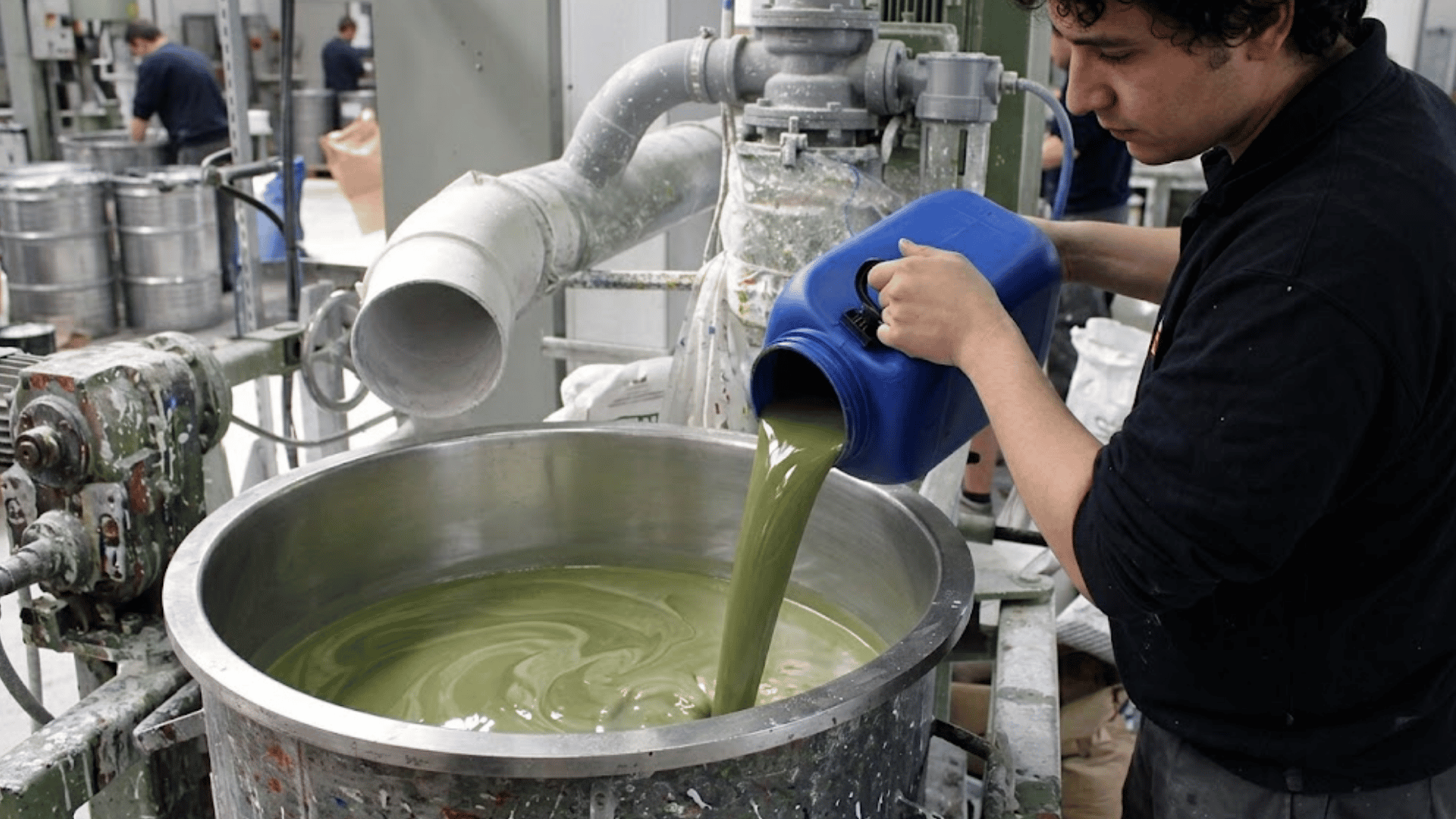
Factories grind pigments into fine particles, mix them with binders and liquids, add performance chemicals, test the mixture, filter it, and package it.
Is Paint Made from Oil?
Some paints use oil-based resins and petroleum-derived solvents, but not all paint contains oil. Many modern paints use water as their main liquid.