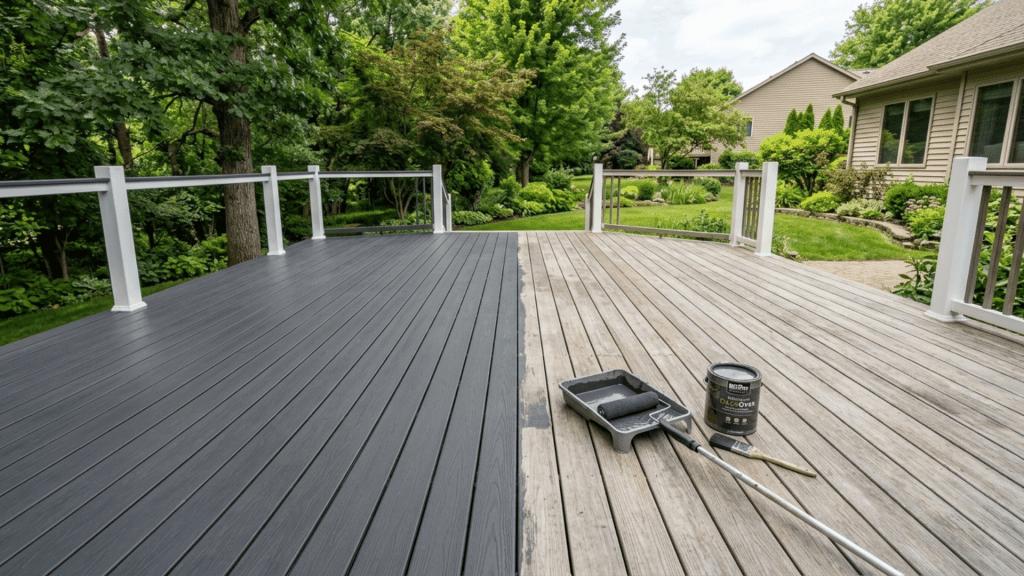
Composite decking is built to last, but years of sun exposure, changing weather, stains, and everyday use can leave it looking faded or dated.
When the structure is still sound, replacing the entire deck may feel unnecessary, which raises the question of painting composite decking for a fresh new finish.
Can you paint composite decking? Turns out, it depends on something most manufacturers won’t tell you upfront.
Can You Paint Composite Decking?
Yes, but only certain boards will actually hold a finish.
Composite decking varies by how it’s made, and that construction determines whether paint or stain bonds to the surface or peels within weeks.
Two decks from the same era, sitting side by side, can react in completely different ways once a brush touches them.
Cost is one reason people consider it in the first place: a gallon of exterior paint or stain runs $30 to $60, well under what new boards would cost.
Factors That Decide if Your Deck Can Be Painted or Stained
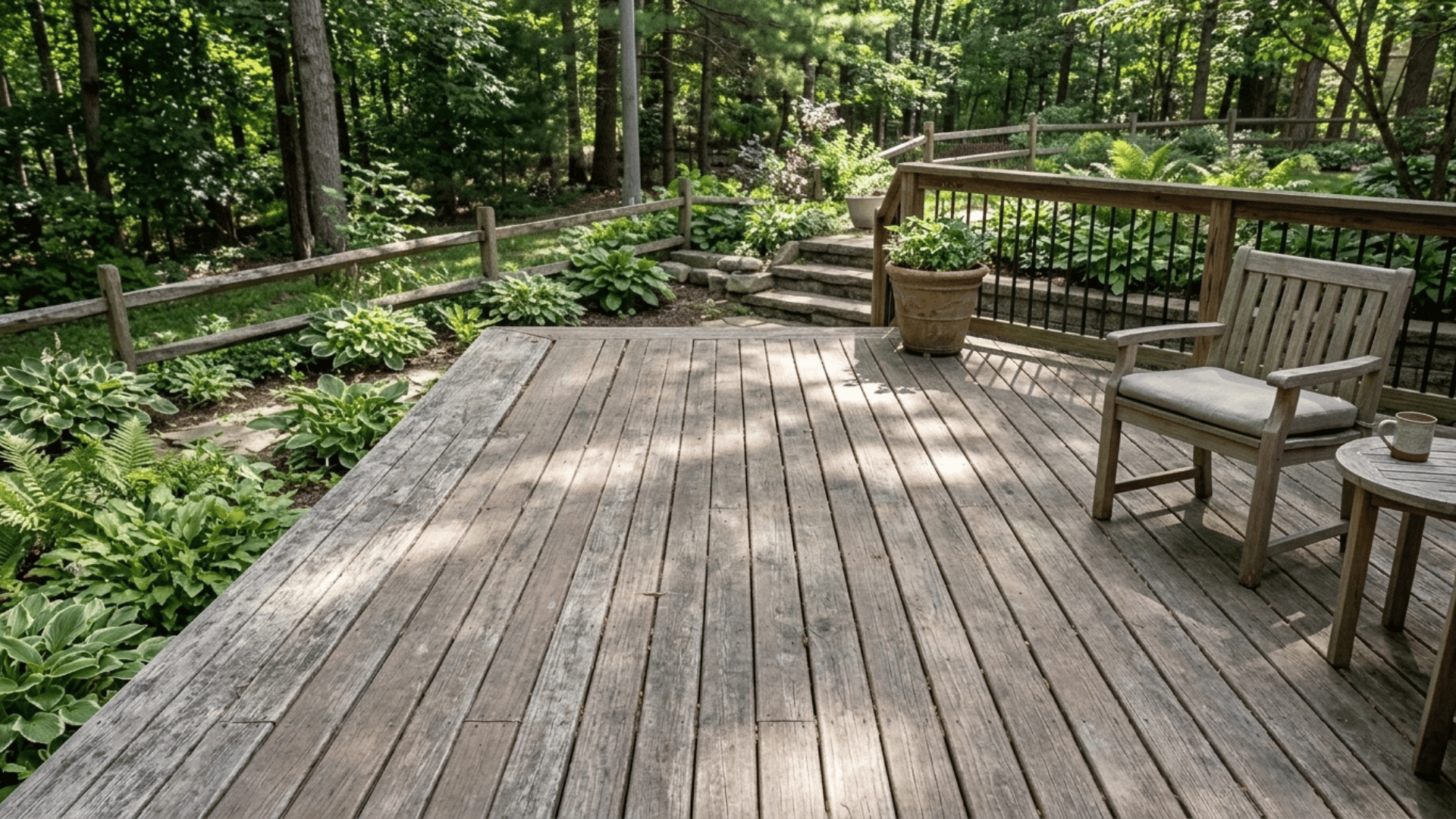
How long paint or stain holds on composite decking depends on construction type, board age, surface condition, and what the manufacturer allows under warranty.
1. Capped vs Uncapped Construction
Capped boards have a plastic shell wrapped around the core, sealing out moisture and preventing anything applied on top from seeping in.
Uncapped boards expose the raw wood-plastic blend, so paint and stain soak in the same way they would on a wood deck.
Stain suits uncapped boards best, since it needs that absorption to hold and show the grain underneath.
The same logic applies indoors; choosing the right topcoat for bare wood comes down to how porous the surface is, whether it’s a deck board or a tabletop.
2. Age of The Decking
Boards made before 2010 are almost always uncapped, since capping technology wasn’t standard at the time.
Anything installed in the last decade is more likely to be capped, which narrows your odds before you even check the surface.
Older, uncapped decks give you the choice of either finish, while newer capped decks limit you to paint, if anything holds at all.
3. Surface Wear and Porosity
Heavy sun exposure and years of foot traffic can wear down a capped layer just enough to expose the core underneath.
This creates rough patches that grip paint, even on boards that would otherwise completely reject it.
Paint works better on these worn patches than stain, since uneven wear leaves a blotchy, inconsistent result with stain.
4. Manufacturer Guidelines and Warranty Terms
Every composite brand publishes its own rules on finishing products, and some void coverage the moment you apply paint or stain.
Checking your specific product line first can save you from a costly mistake later. Once you’ve confirmed your deck can take a finish, the next decision is which one.
What are the Benefits of Painting or Staining Composite Decking?
Refinishing an aging composite deck adds real value beyond looks, since a fresh coat can extend the boards’ usable life and solve problems that cleaning alone can’t fix.
- Refreshed Look: Both options revive faded decking, though paint gives a solid new color while stain keeps some of the natural wood-plastic texture visible.
- Customizable Color: Paint offers the widest color range to match your home’s exterior; stain sticks to wood-tone shades that suit uncapped boards.
- UV Protection: A quality coat, painted or stained, helps shield the deck from sun damage and further fading.
- Moisture Resistance: Both add a barrier against water, cutting the risk of mold or mildew underneath.
- Covers Imperfections: Smooths over minor scratches, stains, or surface blemishes, with paint hiding more than stain since it doesn’t rely on absorption.
- Extended Lifespan: Properly applied, either option can help prolong the deck’s overall durability.
- Increased Curb Appeal: A freshly finished deck, in either case, adds to the property’s look and value.
Staining works a bit differently than paint since it soaks into uncapped boards and lets the original grain show through, while paint sits on top and fully covers the surface.
What are the Downsides and Risks?
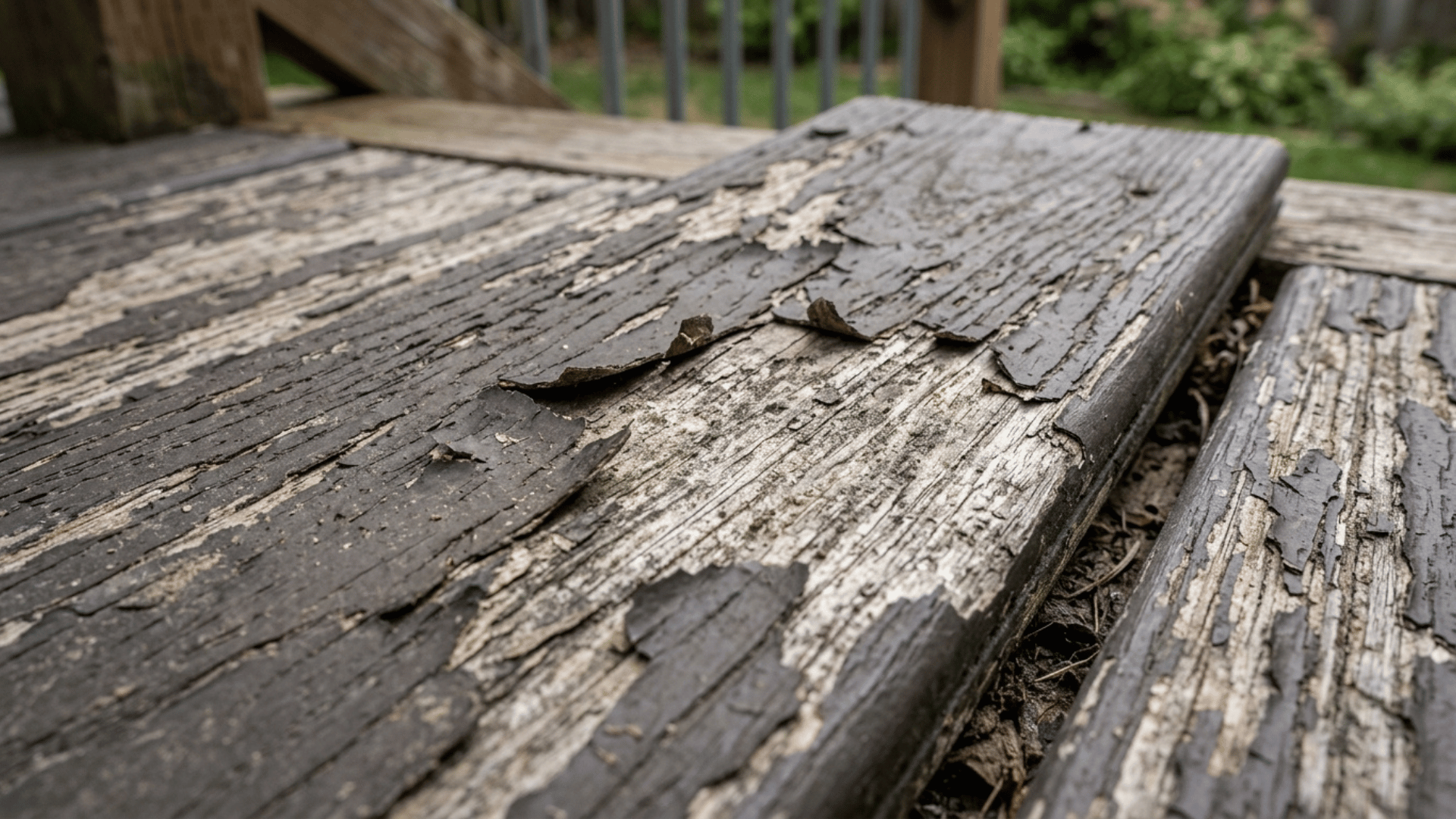
Applying a finish changes how the deck behaves over the long term, trading its low-maintenance reputation for upkeep, touch-ups, and removal work down the line.
- Refinishing ends the deck’s low-maintenance advantage, requiring the same upkeep as a wood deck
- Paint on capped boards rarely holds for more than a season
- Flaking and peeling show up first in high-traffic spots
- A failed finish leaves patchy, bare sections worse than the original fade
- Removing a failed finish is harder than applying it in the first place
- Stripping paint off composite usually requires sanding, which wears down the surface’s grip
Recommended: For a sense of what that stripping-and-recoating process actually involves, our walkthrough on refinishing an outdoor deck covers the sanding, staining, and drying steps in detail.
Is Painting Worth It, or Is Replacement Better?
The right call depends on your deck’s age, how far the damage has spread, and if the cost of upkeep still beats the cost of new boards.
| Deck Condition | Painting/Refinishing | Replacement |
|---|---|---|
| Uncapped and slightly faded | Refreshes appearance and adds color | Only if structural issues exist |
| Selling your home soon | Boosts curb appeal quickly | More expensive, not cost-effective |
| Capped boards | Not effective | Needed; surface won’t hold paint |
| Significant rot or warping | Won’t fix damage | Required for safety and repair |
| Want to avoid repeated maintenance | Requires periodic recoating | Durable materials reduce upkeep |
| Modern capped composite | Not necessary | Only for upgrades or style changes |
Key Takeaways
So can you paint composite decking? It works on some boards and ruins others; the deck’s construction determines the outcome, not the paint brand.
Check if your boards are capped before buying anything. That single check saves you a voided warranty and a coat of paint that peels within months.
If your deck qualifies, treat it as a multi-year commitment, not a one-time touch-up.
Confirm the details with your manufacturer, then decide if recoating every few years actually beats the cost of replacing the boards.
Frequently Asked Questions
Can You Paint Trex or Timber Tech Decking?
Both brands discourage painting or staining their capped composite lines and note that doing so voids the manufacturer’s warranty. Check your specific product page before applying anything.
What Temperature Is Best for Painting Composite Decking?
Aim for 50°F to 85°F, low humidity, and no direct sun. Extreme heat or cold affects how the paint cures and how well it bonds to the surface.
Can You Remove Paint from Composite Decking Later?
Yes, but it usually takes a chemical stripper or careful sanding. Both can wear down the surface, so removal works better on uncapped boards than capped ones.