For years our den was the room where furniture went to wait. It held an old loveseat, a bookcase of board games nobody opened, and a corner that quietly collected school forms, warranty booklets, and every loose paper that walked in the front door. Then my kids hit the age where movie night became a standing Friday appointment, and I got tired of a room that only worked one evening a week. So I gave it two jobs. One wall became a proper movie zone, the opposite corner became a small family command center, and the whole project cost less than a decent sofa.
Split the Room on Paper Before You Move Anything
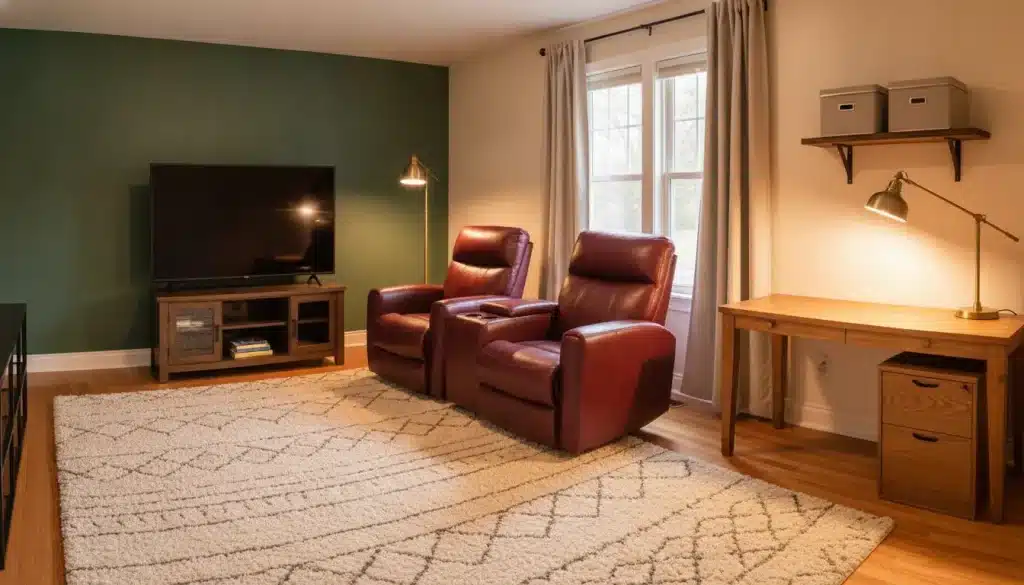
Grab a notepad and sketch the layout first, because the two zones only work if they stay out of each other’s way. The movie side wants the wall you can see from the most seats, away from window glare. The paperwork corner wants two humbler things: an outlet and daylight. In our den that put the screen on the long interior wall and the desk beside the window, and the arrangement has held up for two years.
A rug does most of the zoning for you. Lay the largest one you can afford under the seating, then keep the desk legs off it entirely. Your eye reads the rug’s edge as a boundary, so the space feels like two small rooms instead of one cluttered one. Leave a clear walking path from the door to both zones, even if it costs you a bigger coffee table.
Build the Movie Side Around the Seat
Paint is the cheapest way to make this half feel intentional. A deep color on the media wall alone, something like spruce green or a chocolate brown, swallows the black rectangle of the TV so it stops dominating the room in daylight. Keep the other walls light and the den still feels open when the curtains are pulled back.
Speaking of curtains, buy blackout panels even if the room only has one window. They kill the afternoon glare that washes out the picture, and the heavier fabric softens the room’s echo, which your ears will notice before your eyes do.
Then there’s the seat itself, the one place I’d spend real money. Recliner rows have moved on from the bulky black cubes you might remember; the theater seating made for homes now comes in rows of two to four, with loveseat sections for anyone who refuses to have an armrest in the middle, and leathers in shades like burgundy and steel blue that sit comfortably beside normal furniture. A row of two fit our long wall with space left over for a floor lamp. If a new row is out of reach this year, angle the sofa you already own to face the screen squarely and add a footstool, since a straight-on view forgives a lot of old upholstery.
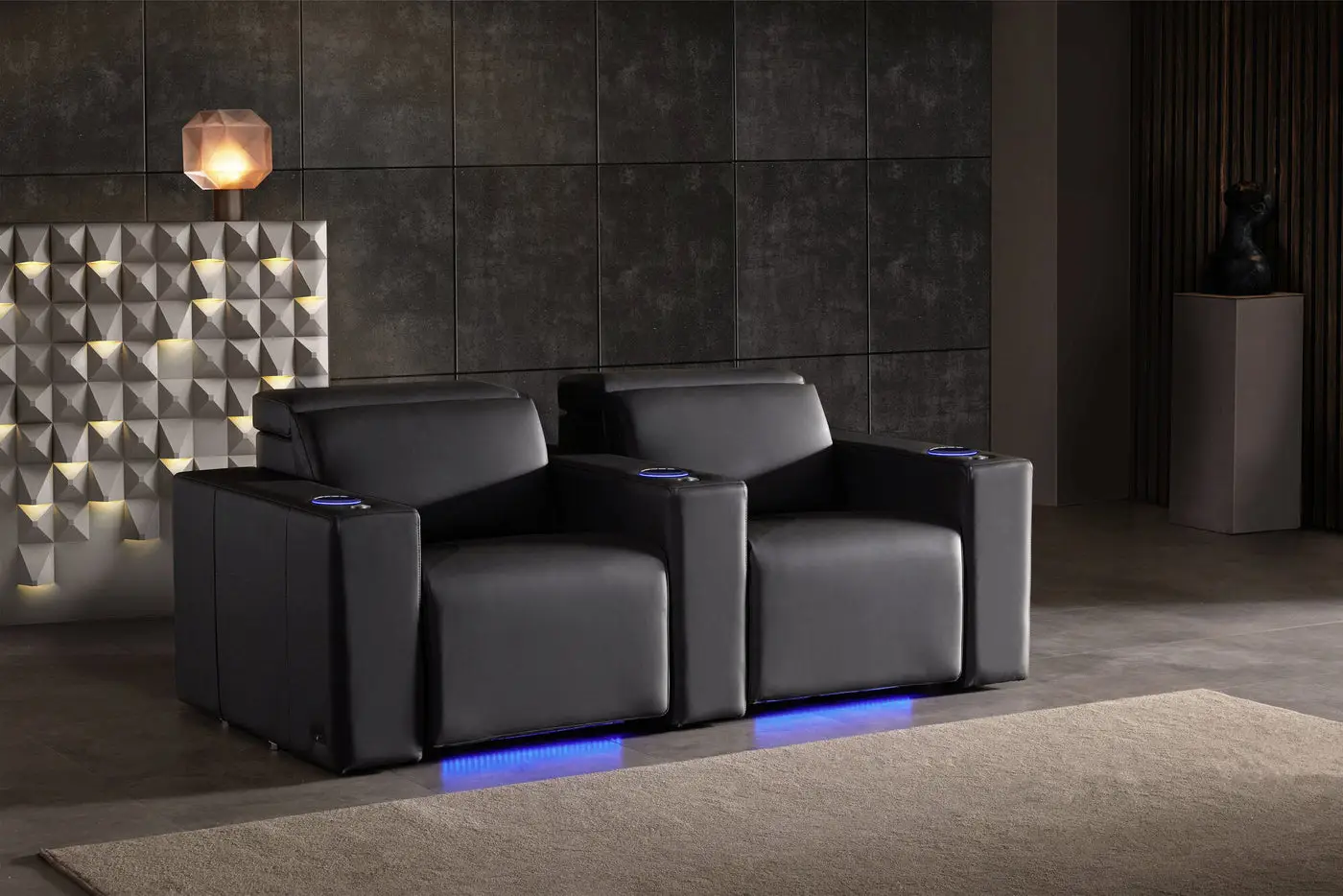
A row of two recliners with a console between them fills the movie half of a den without swallowing the whole room.
Light It in Layers
Overhead light ruins both jobs, so plan on three smaller sources. A dimmable floor lamp behind the seating handles movie nights; set low, it keeps the room from going pitch black and spares everyone’s eyes during a two-hour film. A small warm lamp behind the TV does the same for late viewing. The desk gets its own task light, bright and aimed down, so someone can finish homework while the opening credits roll across the room.
Warm bulbs everywhere, 2700K if you’re buying new. Cool white light makes a den feel like a waiting room.
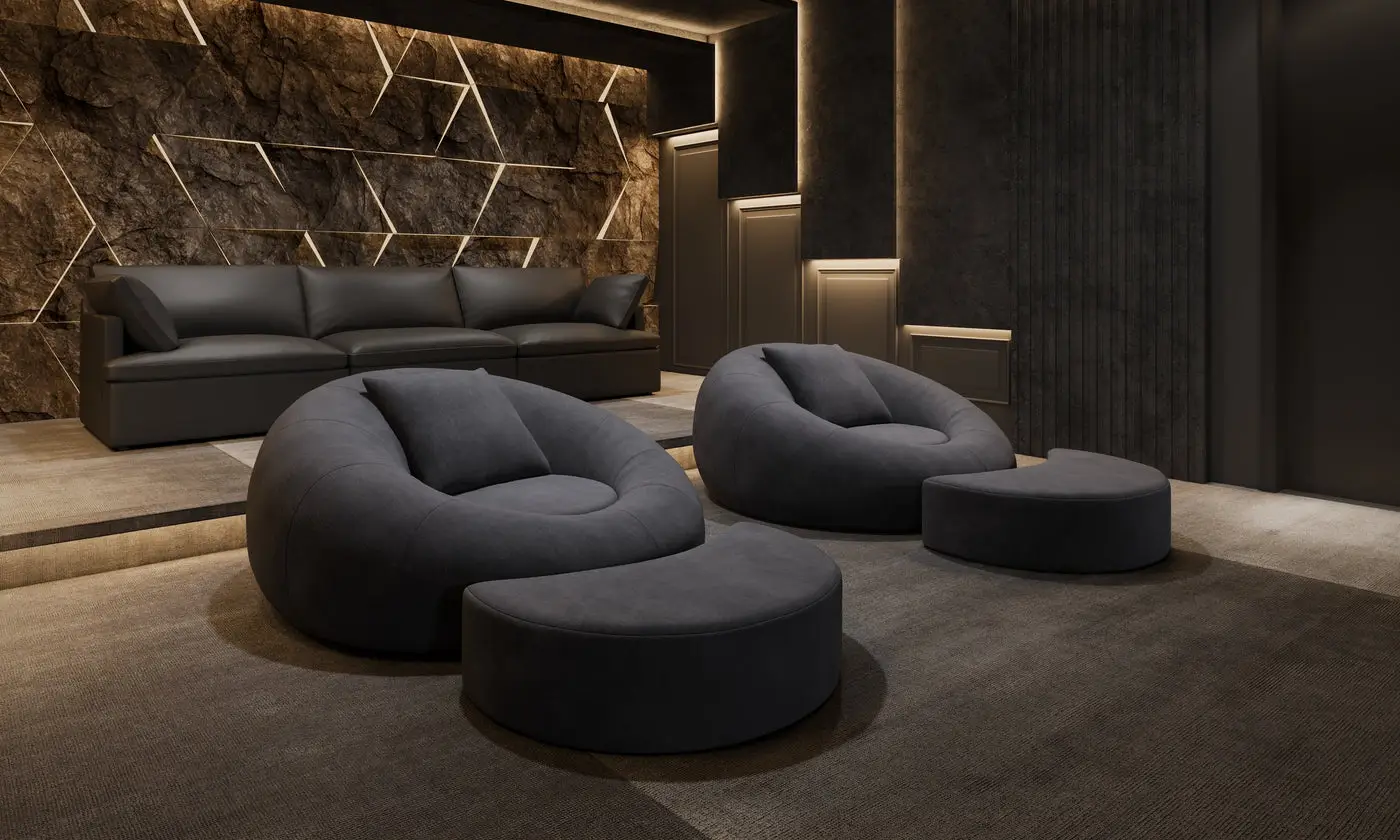
Lighting set low on the walls keeps the seating half of the room usable before and after the movie.
Set up the Paperwork Corner in One Afternoon
A command center needs less furniture than you think. Ours is a narrow console desk, thirty inches wide, with a wall-mounted file organizer above it and a two-drawer cabinet tucked underneath. Any small desk can do the job, and a repainted nightstand with a file box on top comes close. What matters is a single place where papers land, get sorted, and turn up again in March when the tax forms come due.
The sorting system is where most setups fall apart, usually because nobody has enough folders the week they start. Office suppliers sell folders in bulk, in boxes of 50 or 100 that cost about what a small pack runs at the drugstore, which sounds like overkill until you label one for each kid, each car, the house, insurance, medical visits, and school paperwork, and still have a stack waiting for whatever next year invents. We built the entire family filing system in one sitting and haven’t run out since.
Add a shallow tray for incoming mail and a small trash can within arm’s reach, since half of what enters a house should leave it the same day. Ten minutes on Sunday keeps the tray empty for the week.
Make the Two Halves Look Related
The fastest trick is repeating the media-wall color across the room in small doses. Our desk organizer, the throw draped on the recliner arm, and the spines of the storage boxes all pick up the same green, and that single echo makes the whole room hang together. Matching wood tones between the desk and the TV console do the same quiet work.
Closed storage matters most on the desk side. Papers in open piles will drift toward the movie zone, I promise you this from experience, so choose boxes with lids and a cabinet with doors. When the lights dim on Friday, the office half goes dark and disappears. One more cheap bridge: a yard of leftover curtain fabric wrapped over a pinboard above the desk ties the corner to the window treatment for almost nothing.
The Friday Test
Last Friday my daughter filed a signed permission slip in her folder at six, and by eight she was under a blanket in the second recliner lobbying for a movie she has seen nine times. The den covered both jobs inside two hours, which is more than I could say for the spare room it used to be, and on Saturday morning the kitchen counter was still clean.