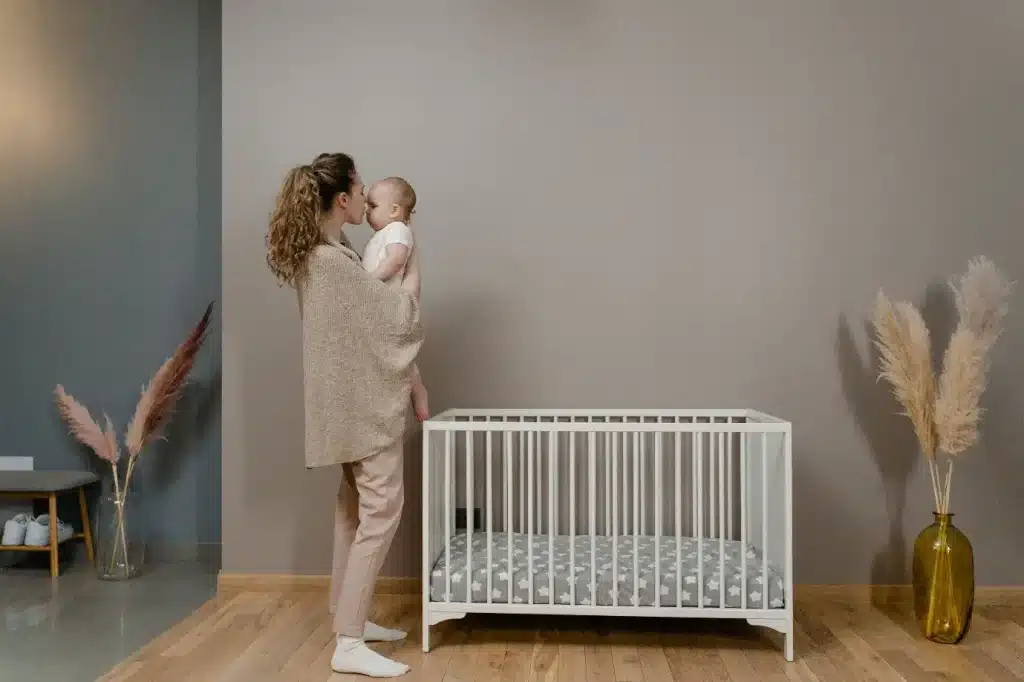
Preparing for a new baby often begins with the nursery. There are clothes to organise, furniture to arrange and countless little essentials to find homes for. Yet once a baby actually arrives, parents often discover that family life quickly spreads far beyond that carefully prepared room.
Feeds happen on the sofa. Nappies are changed wherever is most convenient. Toys gradually migrate into the living room, while muslins somehow end up in almost every room in the house.
Instead of trying to contain everything within one perfect nursery, it can be much more practical to create small, flexible spaces for different activities. The aim is not to turn every room into a baby zone, but to make everyday routines easier while creating a home that can adapt throughout the first year.
Think in Activities, Not Rooms
Rather than starting with the question, “What does a nursery need?”, think about what you will actually be doing during an ordinary day.
During the early months, much of family life revolves around feeding, changing, soothing, sleeping and spending time together. Later, play becomes more active and babies start reaching, rolling, sitting and exploring.
Creating useful spaces around these activities can make everyday life considerably easier.
A feeding corner, for example, could include a supportive chair with water, muslins and other frequently used items nearby. A changing basket stocked with everyday essentials can be moved between rooms instead of requiring repeated trips to one dedicated changing station.
None of these areas needs to be elaborate. Practicality often comes from having the right things in the right place rather than having more things.
Make Room for Floor Time
A newborn may initially seem remarkably stationary, but that changes quickly. As babies begin reaching, rolling and eventually sitting and crawling, accessible floor space becomes increasingly valuable.
You do not necessarily need a dedicated playroom. A clear section of the living room or another frequently used family space can provide somewhere for supervised play while allowing parents to remain nearby.
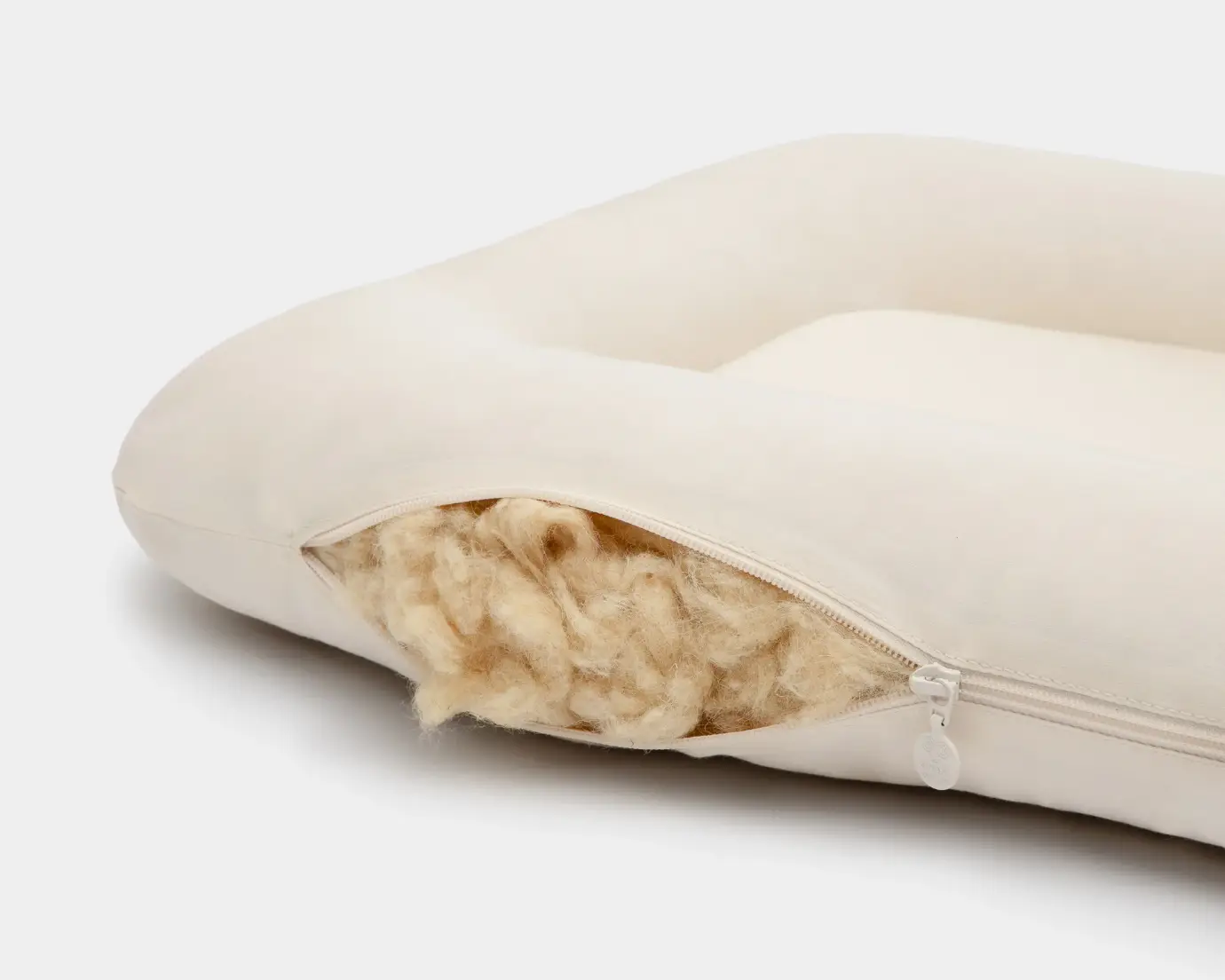
Different products can help define an area for awake, supervised time. Depending on the family’s preferences and the manufacturer’s instructions, an infant lounger could form part of a comfortable daytime setup where parents can keep their baby close and supervised.
As your baby becomes more active, expect this space to evolve. What begins as a small area may gradually need more room for reaching, rolling and exploring.
Keeping toys relatively contained can help too. A basket containing a small selection of age-appropriate toys can make them accessible without allowing baby equipment to dominate the entire room.
Keep Sleep and Play Spaces Separate
When creating different baby zones around the home, it is important to distinguish between spaces intended for awake, supervised use and those designed for sleep.
Products such as loungers and play equipment should be used for their intended purposes and according to the manufacturer’s guidance rather than automatically being treated as places for a baby to sleep.
A clear distinction can also make routines easier. Your baby may have one environment associated with active daytime interaction and another appropriate space for naps and overnight sleep.
Keeping those purposes separate means you can design comfortable daytime spaces without expecting every piece of baby equipment to perform several different jobs.
Create Spaces That Can Change
One of the biggest challenges when preparing for a baby is designing for someone you have not met yet.
A room arranged for a two-month-old may need to work very differently six months later. Once babies become more mobile, the home starts to look completely different from their perspective.
Low shelves, cables, plants and objects on coffee tables suddenly become far more interesting. Areas that previously seemed comfortably spacious may also feel much smaller once a baby begins exploring.
Rather than attempting to predict every stage before the birth, review your spaces regularly.
Furniture can move. Storage can change purpose. Floor space can expand. Items that are no longer useful can be packed away rather than continuing to occupy valuable room.
Flexibility allows the home to develop alongside your baby instead of constantly requiring major reorganisations.
Keep Your Home Feeling Like Your Home
Preparing for a baby does not mean every room needs to become a nursery.
Adults still need somewhere comfortable to relax. Kitchens still need to function. Dining tables are considerably more useful when they remain available for meals rather than becoming permanent storage for unopened baby products.
Try to find a balance between accessibility and clutter. A toy basket in the living room may be genuinely useful, while five large pieces of equipment that are rarely used may not be.
Choosing a few defined baby-friendly areas can help the rest of the home retain its original purpose. It can also make tidying much easier at the end of the day because everything has somewhere obvious to return to.
Ultimately, the most useful baby-friendly home is rarely the one that looks perfect in photographs. It is the one where everyday essentials are easy to find, there is room for supervised play and the layout can adapt as your baby develops.
You do not need to redesign the entire house. A handful of thoughtful, flexible spaces can make everyday family life simpler while allowing your home to continue feeling like yours.