Your floors are a warm oak. Your trim is bright white. Your north-facing living room never gets much afternoon sun.
Those three facts alone can settle the Balboa Mist vs Pale Oak question before you ever open a can.
That’s what makes these two Benjamin Moore greiges tricky.
They aren’t really competing on the chip; they’re competing inside your specific room, under your specific light.
One warms up. One cools off. This blog walks through undertones, how each shade reacts to different light, and which rooms suit which color, so you paint once and stop second-guessing.
What Each Color Really Offers and How They Differ?

Balboa Mist Benjamin Moore Color Overview
Balboa Mist (BM OC-27/1549) is a soft greige that sits in Benjamin Moore’s Off-White Collection. It carries a violet undertone over a warm-grey base, which is why it reads as the cooler, slightly more architectural of the two.
It has a HEX code and LRV of 67.37, placing it in the bright category popular for main floors. Although there is no direct SW equivalent, it complements whites and muted blues, creating a balanced appearance.
Pale Oak Benjamin Moore Color Overview
Pale Oak (BM OC-20) is a soft, light greige with a beige-taupe base and a whisper of pink.
This shade is the warmer, with an LRV of 69.89, making rooms appear more spacious.
Its subtle undertones are popular among many designers, although in low light, the pink-violet base might become noticeable. The nearest Sherwin-Williams equivalent is Accessible Beige.
| Category | Balboa Mist OC-27 | Pale Oak OC-20 |
|---|---|---|
| Undertone | Violet over warm grey | Beige-taupe, faint pink |
| Temperature | Cooler of the two | Warmer of the two |
| Best light | South/west; goes grey in north light | Bright, sunny rooms; can flatten in north light |
| Coverage | 2 coats; washable | 2 coats; washable |
| Pairs with | Crisp white trim, cool stone, black/nickel | White trim, warm woods, brass |
There’s another very similar color here too: Revere Pewter (HC-172).
It’s darker than both of these, with an LRV around 55, and a warmer olive-looking base. If Balboa Mist and Pale Oak both feel too pale for your room, Revere Pewter is another color option to look at – because it might be the one then.
What the LRV Difference Actually Means
Two and a half points separate these colors on the LRV scale.
Paint experts call anything under five points visually similar, so the gap barely matters on its own.
Undertone drives the real difference, not brightness. LRV only tracks how much light a surface reflects. It says nothing about color family, warmth, or how a shade shifts through the day.
Treat it as one small data point. The wall test still decides everything.
How Your Room’s Light Affects the Appearance
This aspect is often overlooked in comparisons, leading to confusion after painting.
1. North-facing rooms get gentle light. Balboa Mist has a grey base with a violet tint for a soothing look, but some find it too cool. Pale Oak may seem less warm, leaning pink, especially in low light. Test both colors on the wall first, as their appearance can vary from paint chips.
2. South- and west-facing rooms flood with warm light. Balboa Mist picks up its beige side and softens; Pale Oak glows creamy and inviting. Either works, so the choice comes down to how much grey you want in the mix.
3. East-facing rooms read cooler in the morning and warmer by afternoon, so both colors will drift over the day. Watch a sample from breakfast to dinner before you commit.
Cool LED vanity or ceiling bulbs tend to shift both colors toward violet, especially with Balboa Mist. When installing in a bathroom or north-facing room, test them under your actual bulbs.
Balboa Mist vs Pale Oak: How Each Color Looks at Home
Balboa Mist and Pale Oak are both beloved Benjamin Moore neutrals, but they create distinctly different moods at home.
Balboa Mist offers a cooler, modern vibe with subtle violet undertones, while Pale Oak feels warmer and cozier with soft beige and taupe notes.
Both adapt beautifully to changing light, making them versatile choices for any space.
1. Living Room
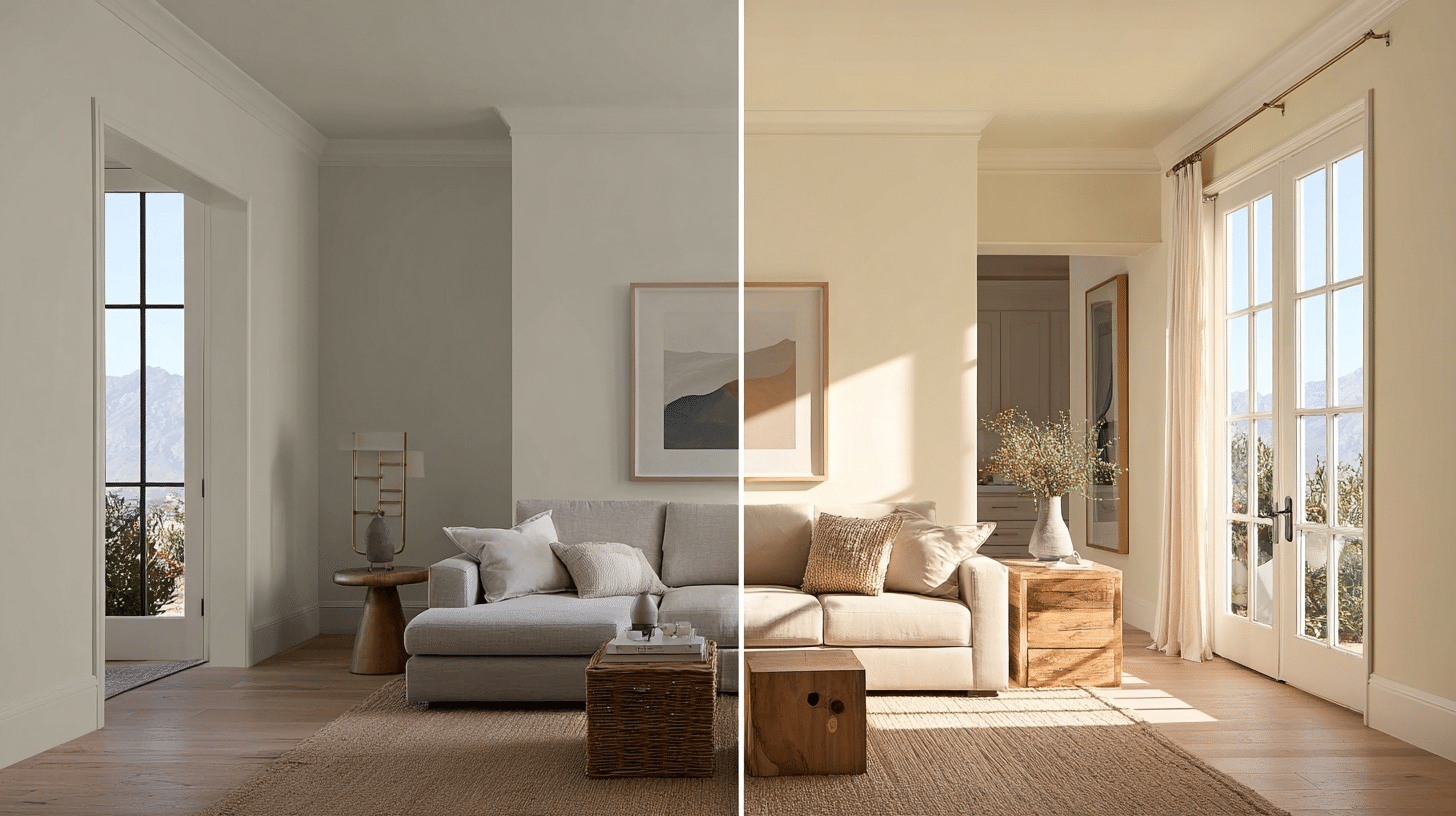
In an open living room, Balboa Mist gives a cooler-grey backdrop that suits modern and transitional spaces and balances shadow without going stark.
Pale Oak is the better call if your living room opens straight into a warm-toned kitchen or dining space, since it won’t create a visible seam where the two rooms meet.
2. Bathroom
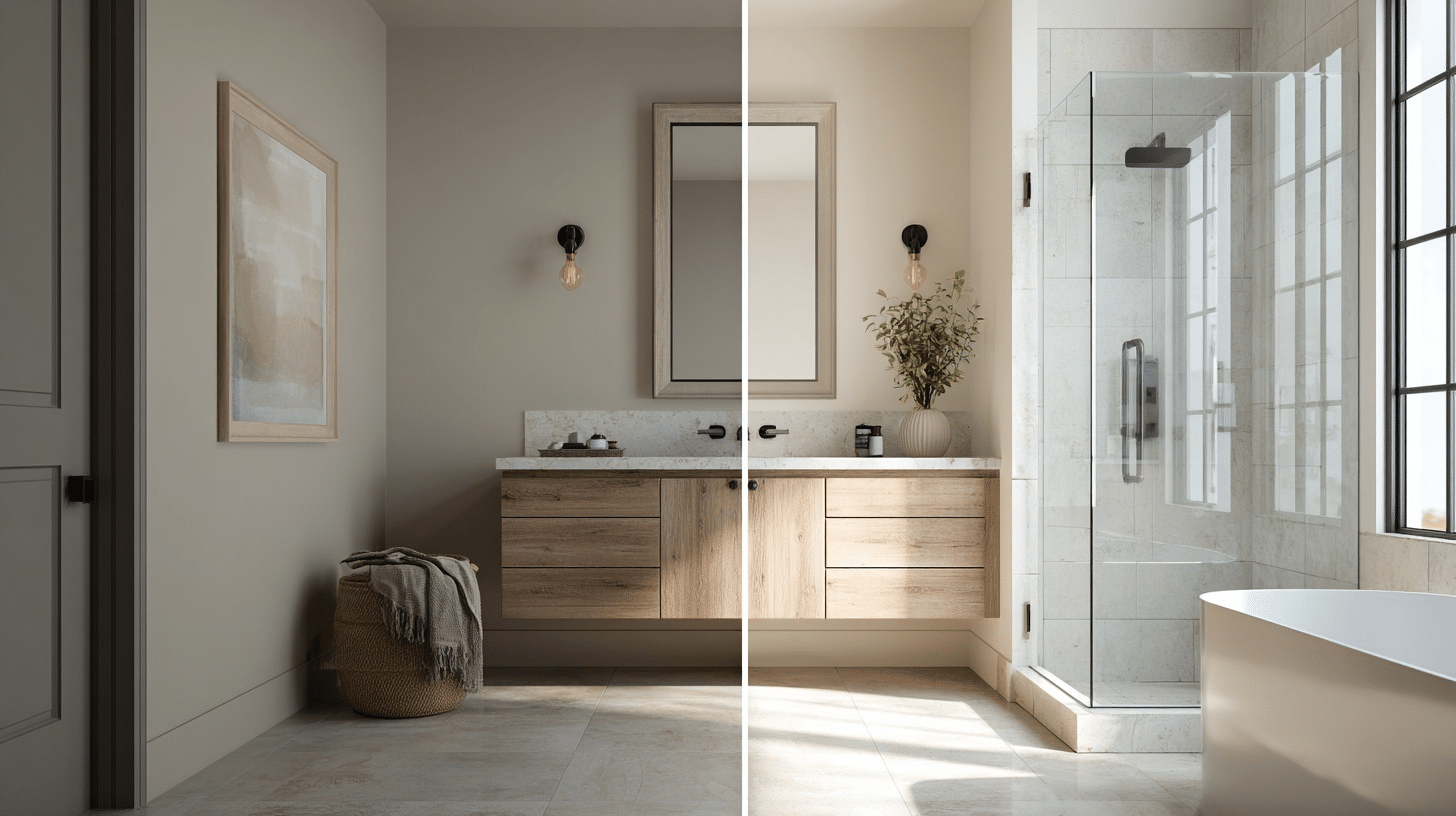
Balboa Mist’s cool undertone complements stone, marble, and dark or nickel hardware, making it a popular choice for spa-style designs.
Pale Oak, on the other hand, instantly warms the room, reflecting light and mellowing the wood cabinetry.
Watch the vanity bulbs here: cool LEDs can pull Balboa Mist’s violet forward, so test it under your own lighting first.
3. Bedroom
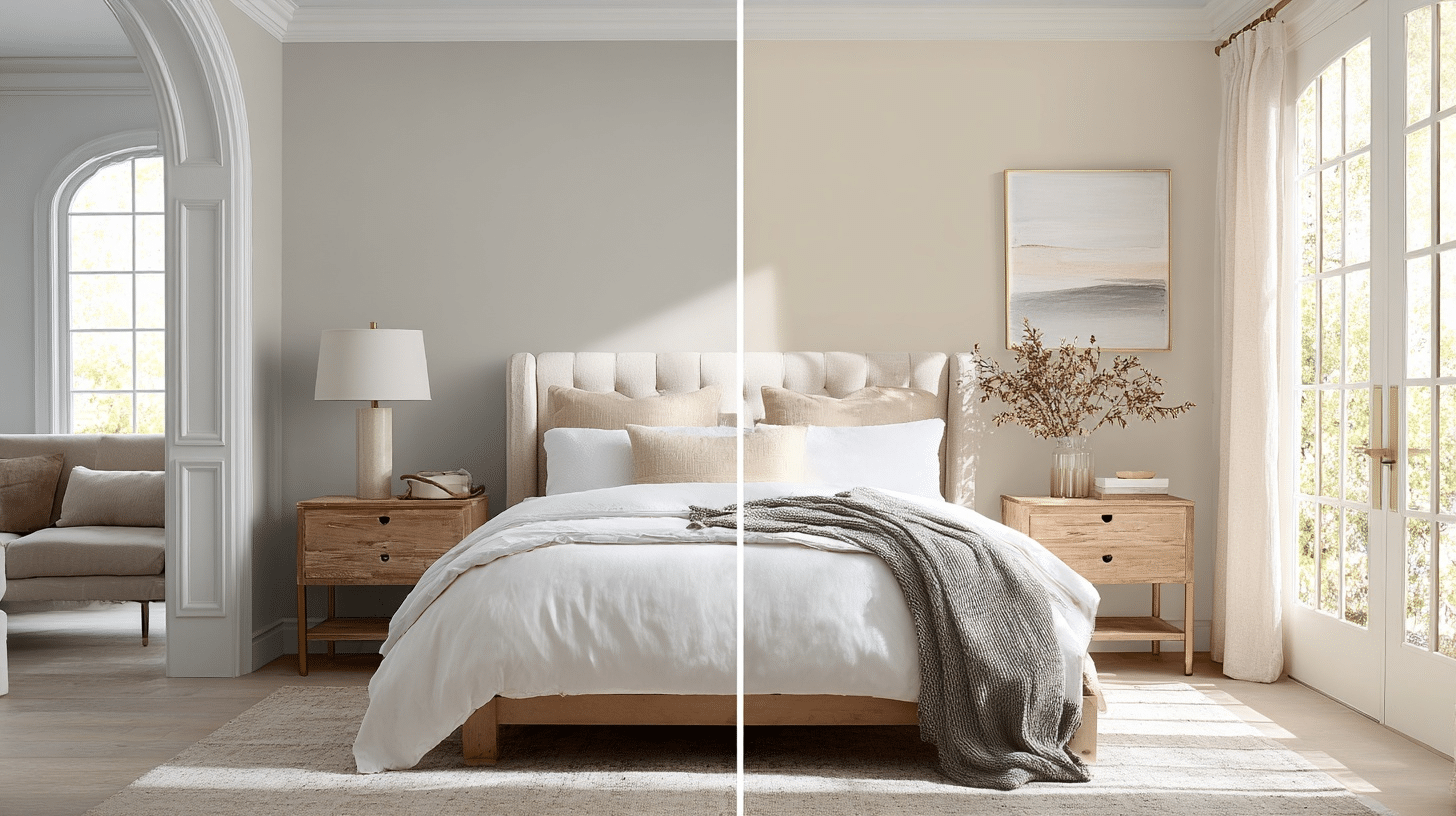
Bedrooms are where temperature difference matters most, as you live in light at both ends of the day.
Balboa Mist creates a calm and restful bedroom ambiance without a cold feel, making it popular among those preferring “quiet grey” over beige.
Pale Oak offers a soft, enveloping atmosphere, especially in afternoon sunlight.
For north-facing bedrooms where coziness is desired, Pale Oak is a more reliable choice.
Conversely, if your room has good light and you prefer a cooler, contemporary serenity, Balboa Mist is ideal.
4. Kitchen
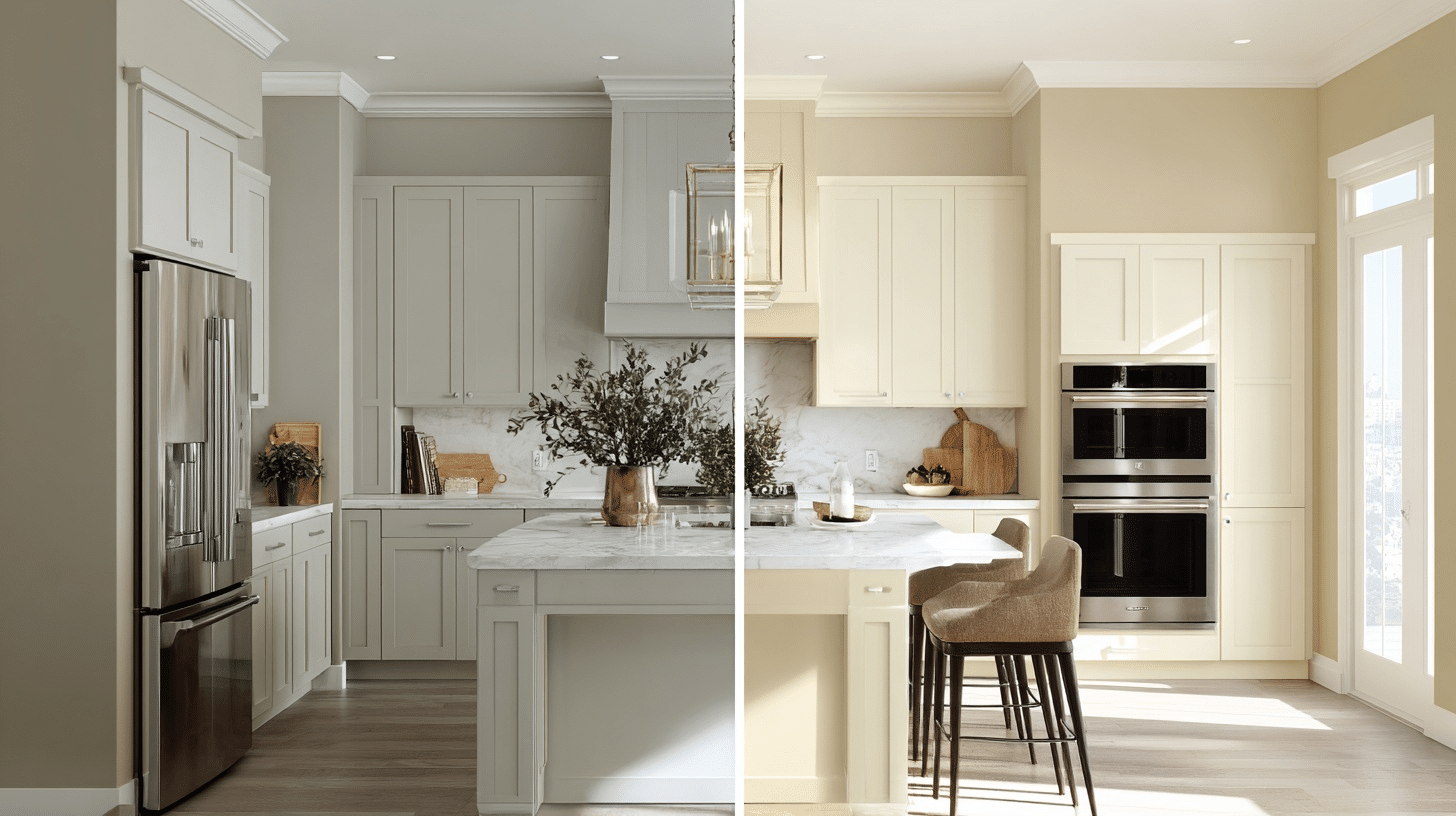
The kitchen shows the undertone gap clearly.
Balboa Mist reads muted and cool over its greige base, classy and calm. Pale Oak reads warmer, almost creamy, catching sunlight in a way that adds coziness.
Balboa Mist pairs well with stainless appliances and cool countertops, while Pale Oak flatters warm woods and gold accents for a soft, welcoming glow.
5. Mud Room and Laundry Rooms
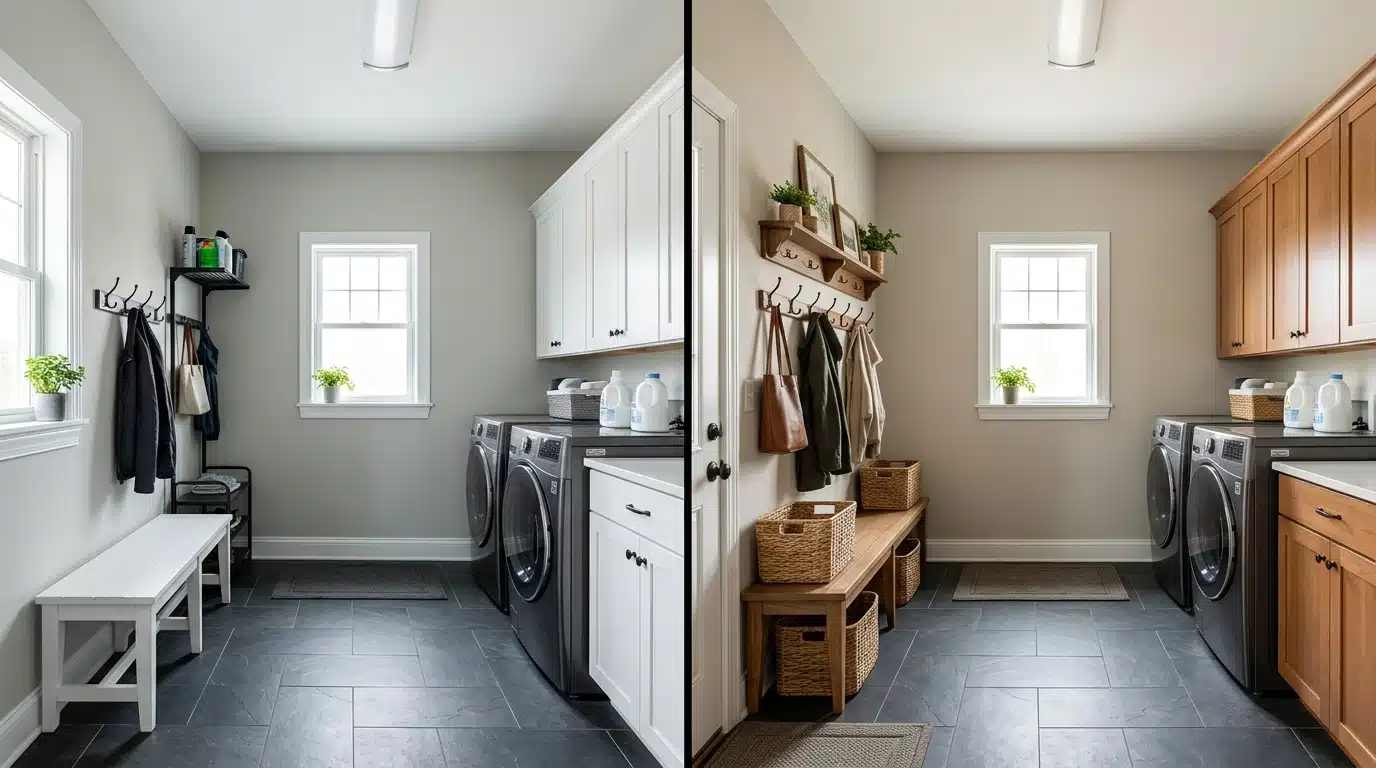
These rooms take a beating, and the paint has to hold up under harsh utility lighting.
Balboa Mist stays composed here, its cool grey base masking scuffs and grime better than most soft neutrals. Pale Oak softens the space instead, turning a purely functional room into something less clinical.
Balboa Mist pairs well with slate tile, black hooks, and metal shelving.
Pale Oak works better against wood benches, wicker baskets, and warm-toned cabinetry.
Getting the Trim Color Right
Trim sets the tone for any greige wall. Pick the wrong white, and the whole room looks muddy or mismatched.
The right one sharpens edges and lets the wall color read exactly as intended.
What Trim Color to Choose with Balboa Mist Benjamin Moore Walls
Cool trims keep Balboa Mist’s grey base looking crisp instead of flat.
- Chantilly Lace (OC-65): stark, clean white that sharpens Balboa Mist’s edges
- Decorator’s White (CC-20): true white with no yellow pull, keeps the cool tone intact
- Super White: brightest option, best for high-contrast trim and doors
What Trim Color to Choose with Pale Oak Benjamin Moore Walls
Softer whites echo Pale Oak’s warmth instead of fighting it.
- White Dove (OC-17): warm white with a soft edge, blends smoothly with Pale Oak.
- Simply White (OC-117): slight warmth without leaning cream, keeps trim looking fresh.
- Cloud White (OC-130): subtle warmth for trim that still reads bright.
Which One is the Better Fit for Exteriors?
Outdoor light and weather treat these two colors very differently than indoor lamps ever could.
| Factor | Balboa Mist | Pale Oak |
|---|---|---|
| Best exterior style | Modern, craftsman, farmhouse | Traditional, colonial, cottage |
| Weathering | Holds its cool tone in shade and light | Can fade slightly over time in direct sun |
| Roof pairing | Slate, black, or charcoal shingles | Brown, tan, or wood-shake roofing |
| Best door color | Black or navy | Dark green or brown |
| HOA-friendly rating | Reads as refined grey | Reads as classic, safe neutral |
Which One Should You Actually Choose?
Let your fixed elements decide. Cool hardware, stone, and shaded rooms call for Balboa Mist.
Sunlight, wood tones, and cozy spaces call for Pale Oak. Match the undertone already in your home instead of fighting it.
When to go for Balboa Mist Benjamin Moore
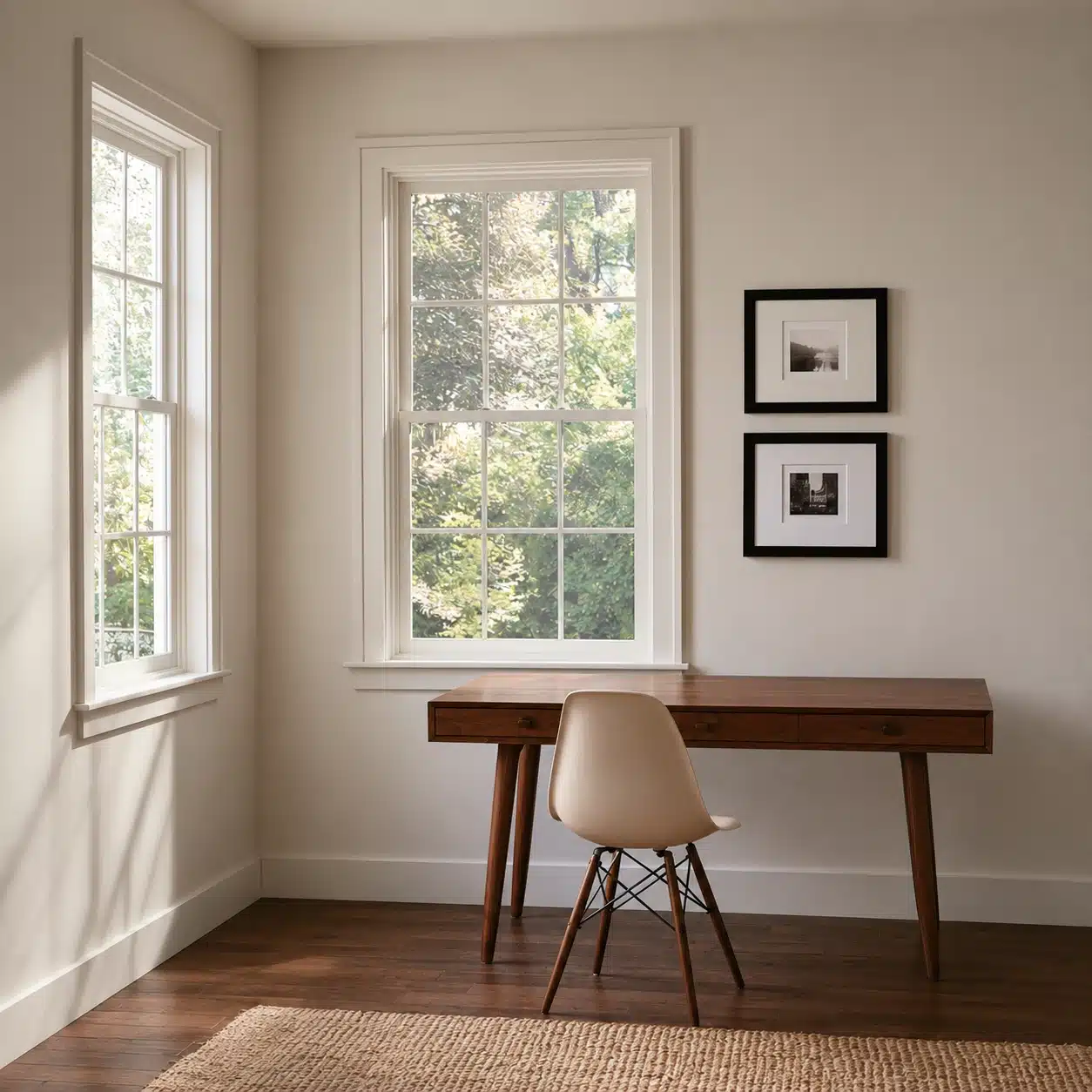
Choose Balboa Mist when your home already leans cool think chrome fixtures, grey-toned flooring, or existing stone accents.
It settles into rooms without a strong light source and won’t clash with silver or black finishes already in place.
- Homes with limited natural light
- Spaces with existing cool-toned furniture
When to go for Pale Oak Benjamin Moore
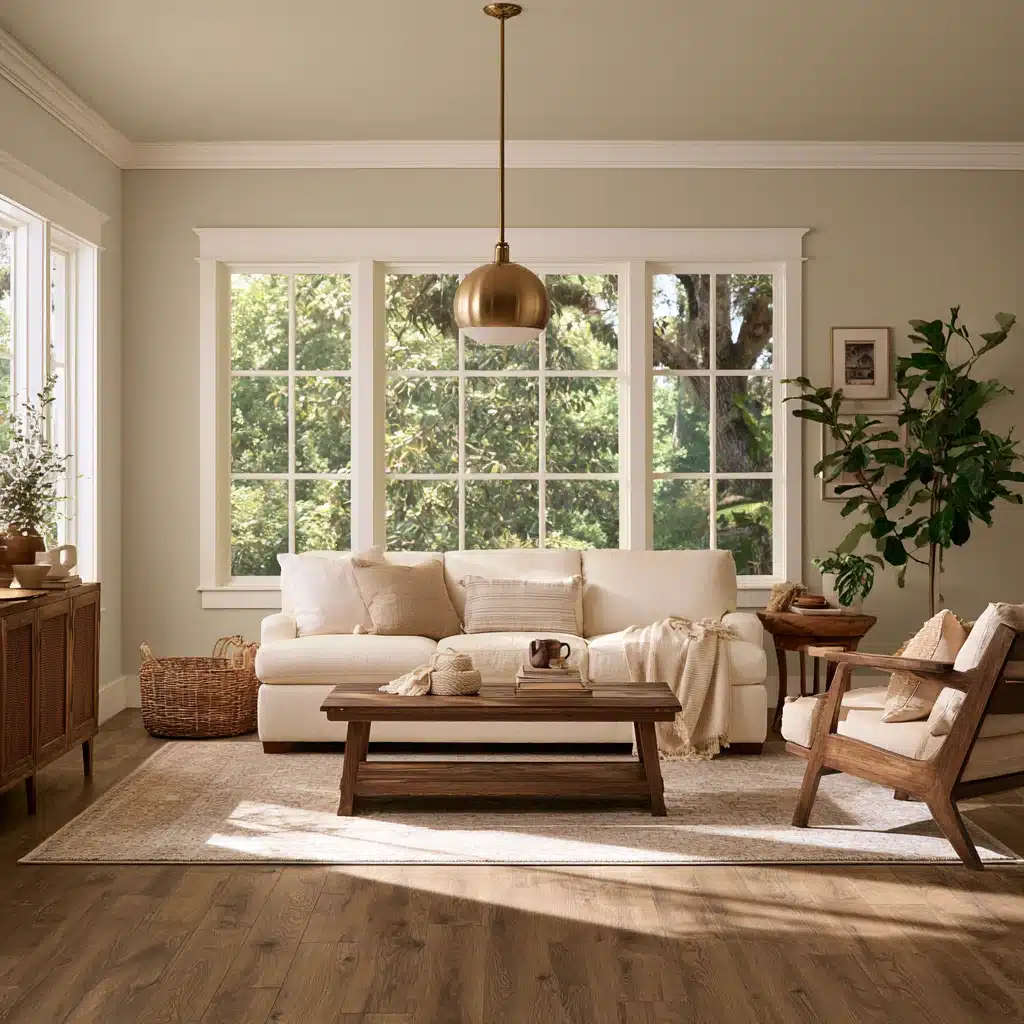
Choose Pale Oak when warmth is already built into the space, oak floors, brass fixtures, or wood furniture that leans golden.
It blends rather than competes, letting existing warm tones stay the focal point instead of the wall.
- Rooms with abundant natural light.
- Spaces with wood-heavy or brass-heavy decor.
Similar Benjamin Moore Neutrals Worth Sampling
If neither is quite right, these Benjamin Moore neutrals sit in the same family and are worth adding to your sample board:
| Color Name | Color Code | Hex Code | LRV | Undertone | Preview |
|---|---|---|---|---|---|
| Classic Gray | OC-23/1548 | #E8E6DF | 74 | Soft, warm gray, slight violet | 
|
| Collingwood | OC-28/859 | #D3CEC4 | 62 | Warm greige, subtle taupe | 
|
| Athena | 858 | #D5D0C5 | 63 | Warm gray, beige | 
|
| Light Pewter | 1464 | #D8D5CB | 67 | Warm gray, slight green | 
|
| Elmira White | OC-84/2140-50 | #E3DFD2 | 64 | Warm beige, soft taupe | 
|
| Abalone | 2108-60 | #D9D2C9 | 61 | Warm greige, pinkish taupe | 
|
| Edgecomb Gray | HC-173 | #DAD6CA | 63 | Warm greige, green-beige | 
|
Wrapping It Up
So where does Balboa Mist vs. Pale Oak actually land?
Pale Oak creates a warm, inviting, cozy, and laid-back atmosphere in rooms with a glow.
Balboa Mist offers a cooler, stable tone, leaning modern with stone and dark metal.
Both options are excellent; they simply create different atmospheres. Get samples of both, test them on your wall for several days, and select the one that best suits your light and furniture.
Eventually, the color you initially debated will become a subtle background you no longer notice.
Frequently Asked Questions (FAQ’s)
1. Is Balboa Mist Warmer or Cooler than Pale Oak?
Balboa Mist is cooler and greyer; Pale Oak is warmer with a creamier feel.
2. What Are the Lr vs Of Balboa Mist and Pale Oak?
Balboa Mist sits at 67.37; Pale Oak is slightly lighter at 69.89.
3. Does Pale Oak Look Pink or Purple?
It can lean pink in low or north light; otherwise, it’s a soft greige.
4. What White Trim Goes with Balboa Mist and Pale Oak?
Crisp whites like Chantilly Lace or White Dove work; skip cream trims.
5. Can Balboa Mist and Pale Oak Be Used Outside?
Yes, in an exterior-grade formula; both work on siding, trim, and stucco.