There is a particular kind of decorating decision that feels small until you make it: what to do with the wood around your doors, windows, and baseboards.
Keep the stained trim that gives the house its history, or paint it to make the rooms feel lighter? A coat of white can change the mood of an entire hallway. So can leaving beautifully grained oak exactly as it is.
The right answer is not automatically “paint everything white,” and it is not “never touch original wood.” It depends on the material, the condition, the architecture, and how the trim works with the rest of your home. Before you pick up a brush or order gallons of paint, use this room-by-room decision guide to see which direction will actually make your space feel better.
First, Find Out What You Are Working With
Not all brown trim is valuable hardwood. Some houses have solid oak or another attractive species with a finish that can be refreshed.
Others have paint-grade pine, finger-jointed stock, veneer, or composite trim that happens to be stained dark. Those materials call for different decisions.
Look for consistent grain along the exposed edges and inside corners. Check whether the surface has deep gouges, raised grain, chipped veneer, or an existing glossy coating. If you cannot identify it confidently, ask a carpenter or painting contractor before stripping or sanding. A hidden test area is much smarter than assuming every dark frame is solid oak.
Also consider whether the trim is original to the house. Well-preserved period millwork can be an architectural asset, especially when it connects to matching doors, stair rails, and built-ins. Preserving it may be the more thoughtful choice even if painted trim is what you see most often online.
When Keeping Natural Wood Trim Makes Sense
Natural wood deserves a second look when the grain is beautiful, the profiles are distinctive, and the existing finish is mostly sound.
In farmhouse, Craftsman, and older traditional interiors, wood can provide the warmth and contrast that a room needs. It frames windows like furniture and makes simple cream walls feel layered rather than empty.
It is especially worth preserving when the wood repeats throughout the home: door casings, window surrounds, baseboards, stair details, and ceiling beams can create a cohesive architectural rhythm. Painting only one of those features without a plan may make everything else look accidental.
A quick refresh may be enough. Gentle cleaning, a compatible touch-up product, or professional refinishing can revive tired trim without hiding the grain. Avoid aggressive chemical stripping unless the substrate and old finish have been properly assessed. The goal is not to make century-old wood look factory-new; it is to let its character support the room.
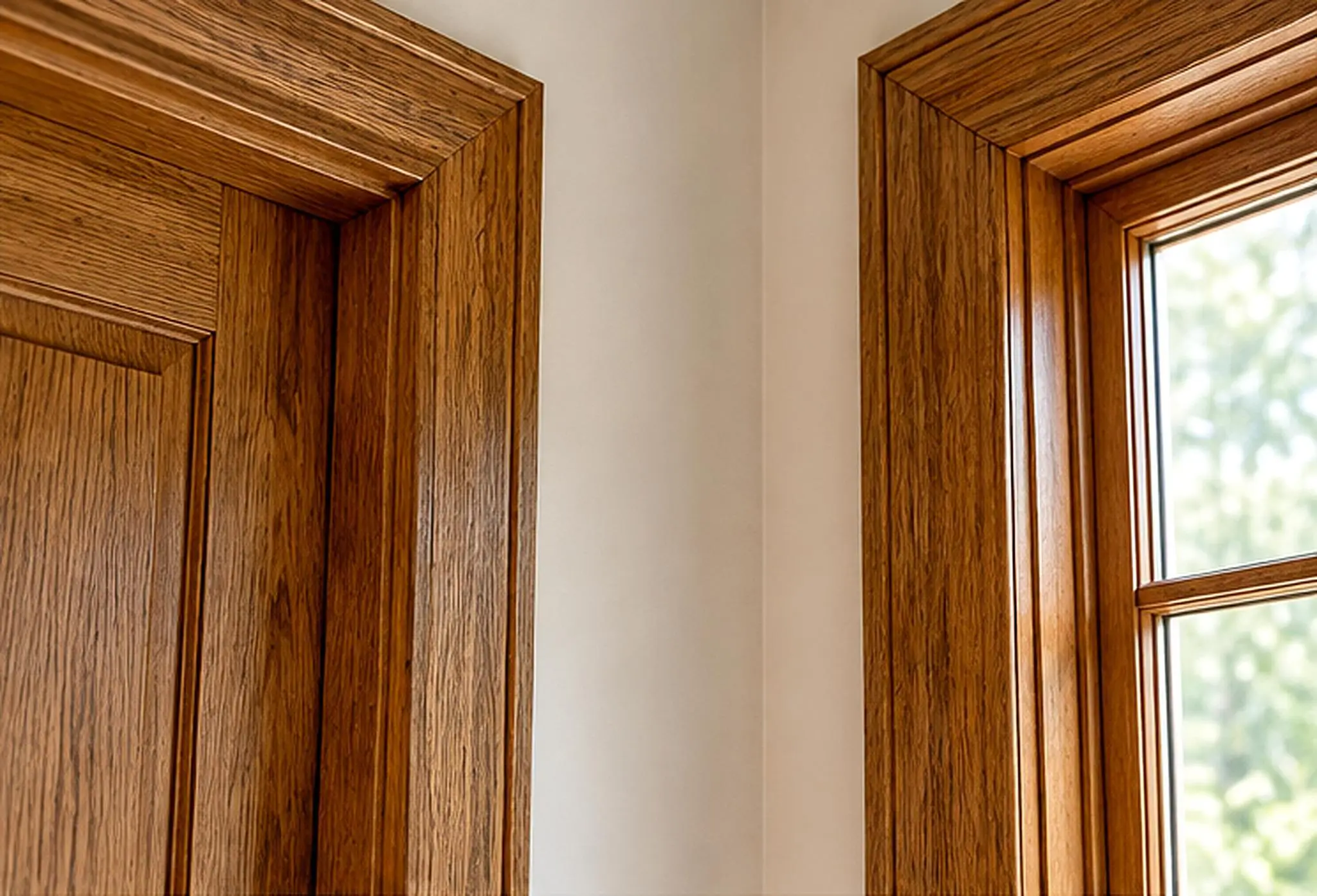
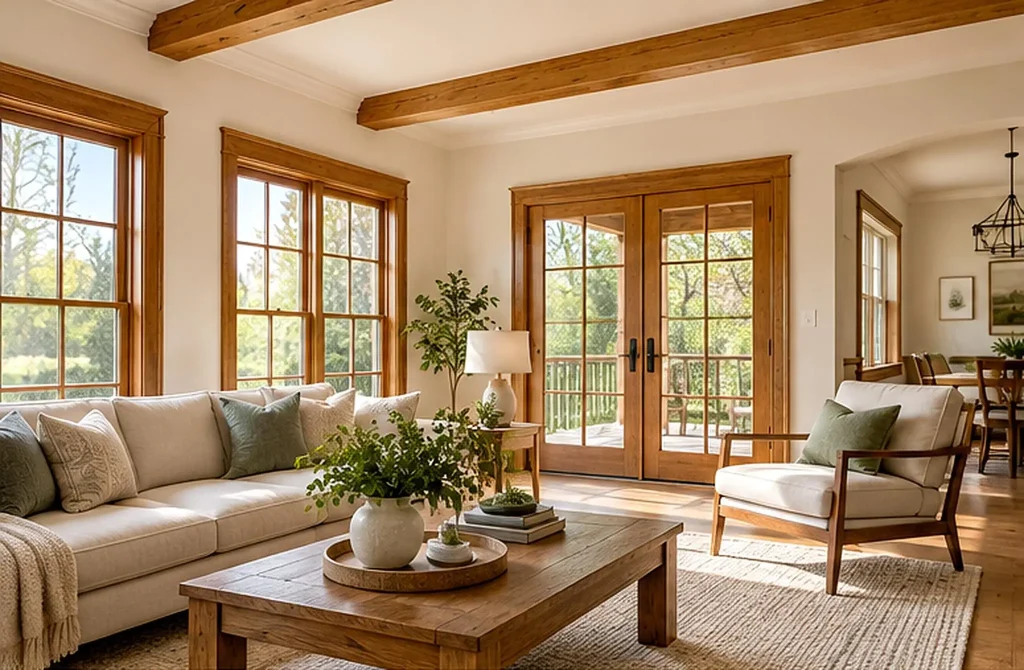
Original stained wood grain can be a feature worth retaining.
When Painted Trim Is the Better Design Choice
Painting makes sense when the wood has been heavily patched, different rooms contain mismatched trim, or an orange-toned finish competes with floors and cabinetry. One consistent painted trim color can visually connect additions and remodels completed in different decades.
It can also highlight lovely shapes that disappear beneath an uneven stain. White, soft ivory, mushroom, charcoal, or even a wall-matching color can make doorways and moldings feel deliberate.
There is no rule that painted trim must be bright white. A muted contrast often works better in a farmhouse-inspired home than stark white against every surface.
Consider what you want the eye to notice. If the view outdoors, wall art, or a statement fireplace should take center stage, painted trim can create a quieter frame. If the millwork itself is the room’s best feature, leaving it natural may be more rewarding.
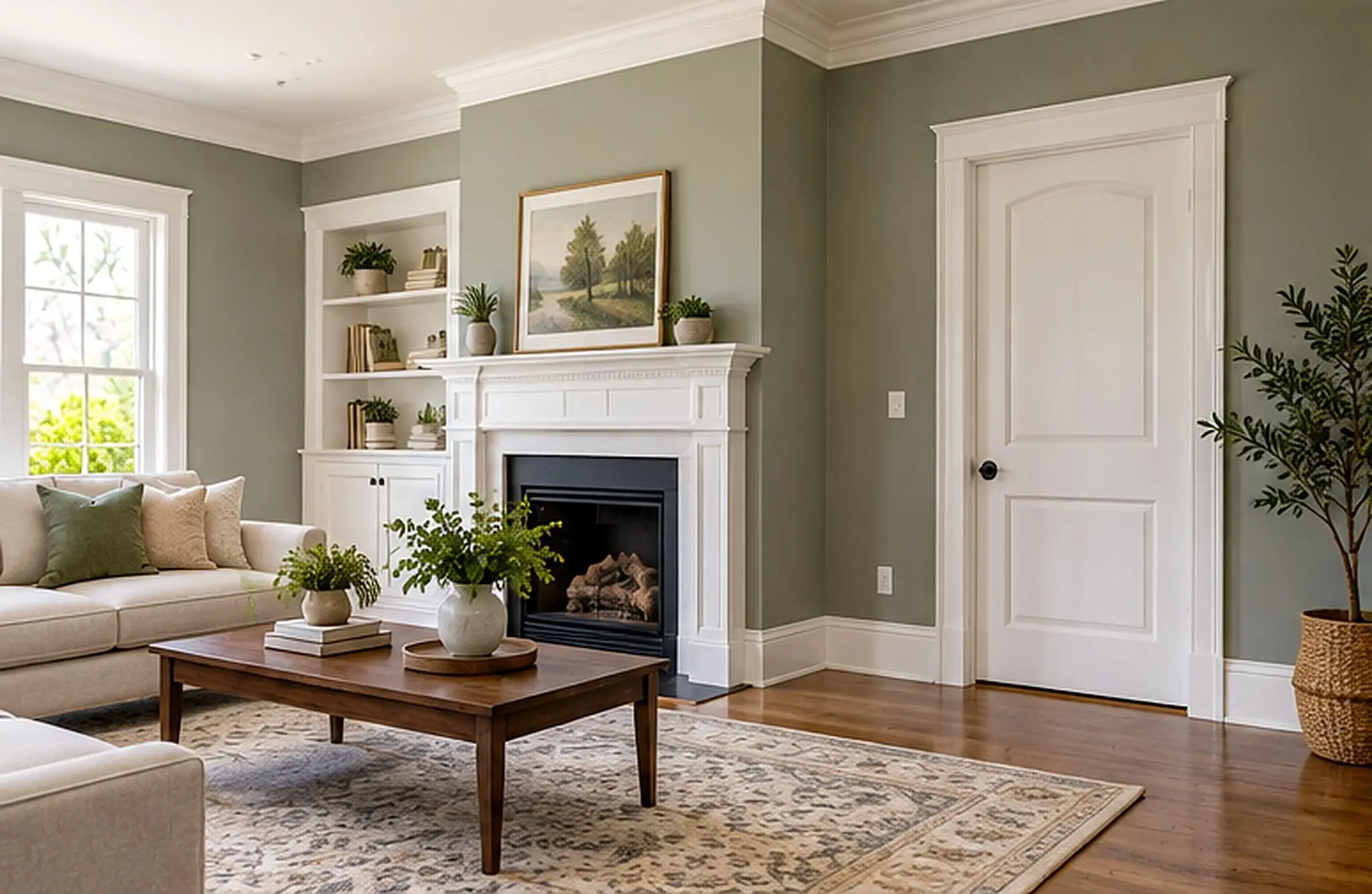
Muted green walls and white trim make architectural details feel crisp but relaxed.
Three Color Directions That Work With Real Homes
Keep the wood, soften the walls. Oak or walnut-toned trim often feels fresh beside creamy white, pale putty, warm greige, or a subdued green. Choose a wall shade by comparing real samples with the wood in both daylight and lamplight.
A cool blue-gray that looks lovely online can make warm wood appear unexpectedly orange.
Paint the trim, let texture do the work. With white or off-white casing and baseboards, bring warmth back through linen curtains, a wood coffee table, woven baskets, and a vintage rug. Sage, clay, smoky blue, and warm neutral walls can all work; the trim should support the palette, not dictate every other choice.
Blend painted and natural finishes. Keeping an original timber mantel, interior door, or staircase while painting simpler baseboards can feel intentional. Repeat the wood tone in furniture or lighting so it appears chosen, not forgotten. If you are still building your palette, The Painted Hinge’s guide to choosing paint colors for different rooms is a useful starting point.
Test the Decision in One Room Before Committing
Stand in the doorway and look through two or three connected rooms. Take photographs in morning and evening light. Notice the floor, door color, ceiling height, and the trim visible through every opening. A great choice in one bedroom may clash from the hallway when the doors are open.
Then make a proper sample. For painted trim, have a small concealed section prepared and coated using the proposed primer and finish. Hold a large wall-color sample beside it. Look at the combination from across the room and close up. If the paint feels too cold, try a softer white or a deeper neutral before changing the whole plan.
For natural trim, clean a small area and test a compatible finish-restoration approach. Sometimes removing years of grime answers the question without a single brushstroke of paint.
Painting Over Stained Wood? Preparation Is the Real Project
Stained wood trim is not the same surface as an unfinished wall. Paint can peel or scratch if it goes directly over glossy varnish, wax, grease, or an incompatible old coating. The exact products depend on the existing finish, so read the coating manufacturers’ instructions and test adhesion first.
A sound workflow generally includes the following steps:
- Clean thoroughly. Remove dust, hand oils, wax, and kitchen residue with a cleaner suitable for the substrate; rinse when directed and allow it to dry.
- Assess and repair. Secure loose pieces, fill damaged areas with a compatible filler, and address moving joints before painting. Do not fill historic details indiscriminately.
- Prepare the surface. Where safe and appropriate, degloss or abrade the old finish using the product system’s directions. Never assume ordinary wall primer will bond to slick varnish.
- Use a suitable bonding or stain-blocking primer. Knots and certain wood stains can discolor topcoats; the primer must match the substrate and finish system.
- Apply trim-rated paint. Use thin, controlled coats of a durable interior trim enamel, respecting the stated recoat and cure times. Paint that feels dry may still need time before doors and drawers are put back into heavy use.
A rushed paint job tends to show up first on frequently touched doors, window ledges, and baseboards. Those are the surfaces worth getting right.
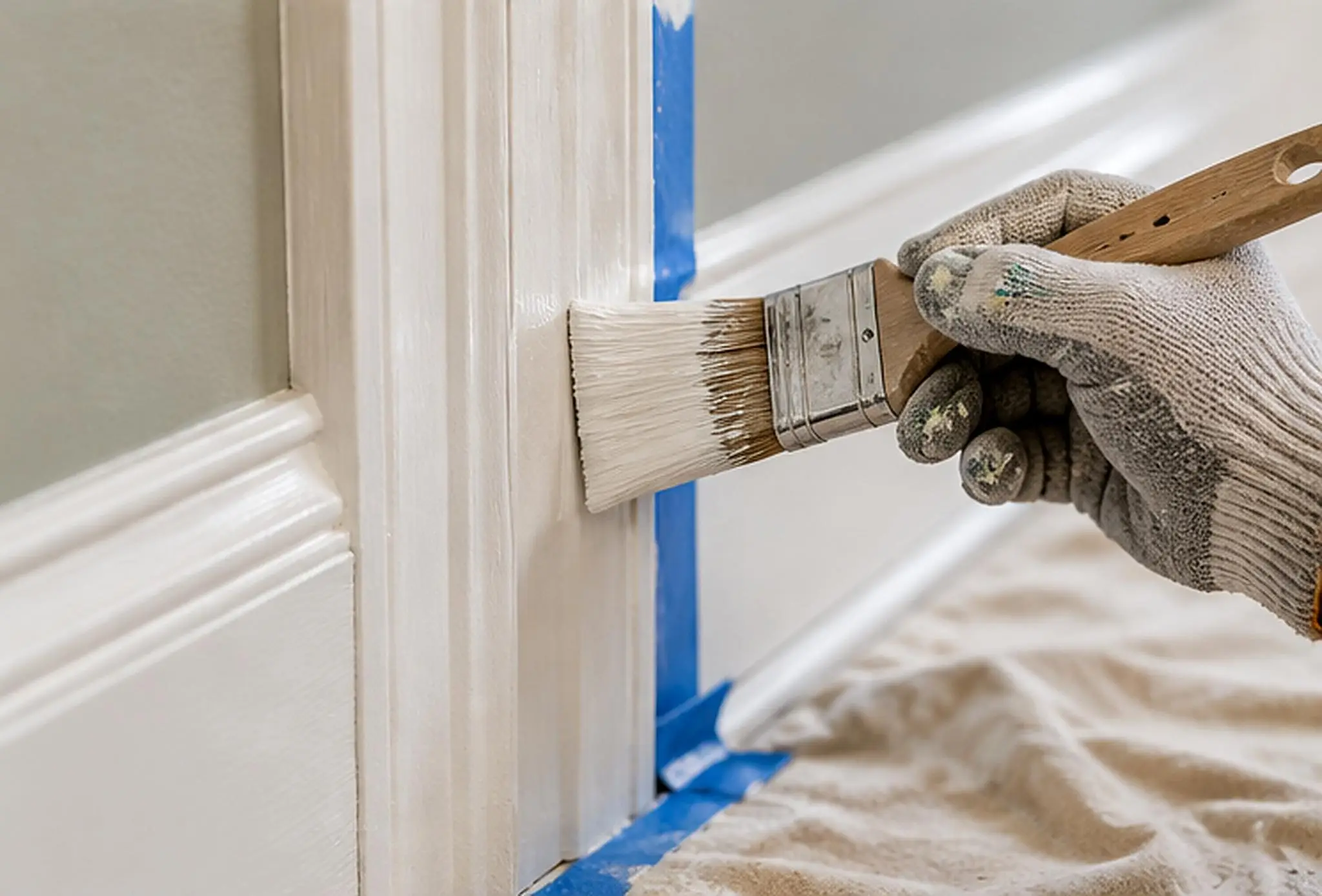
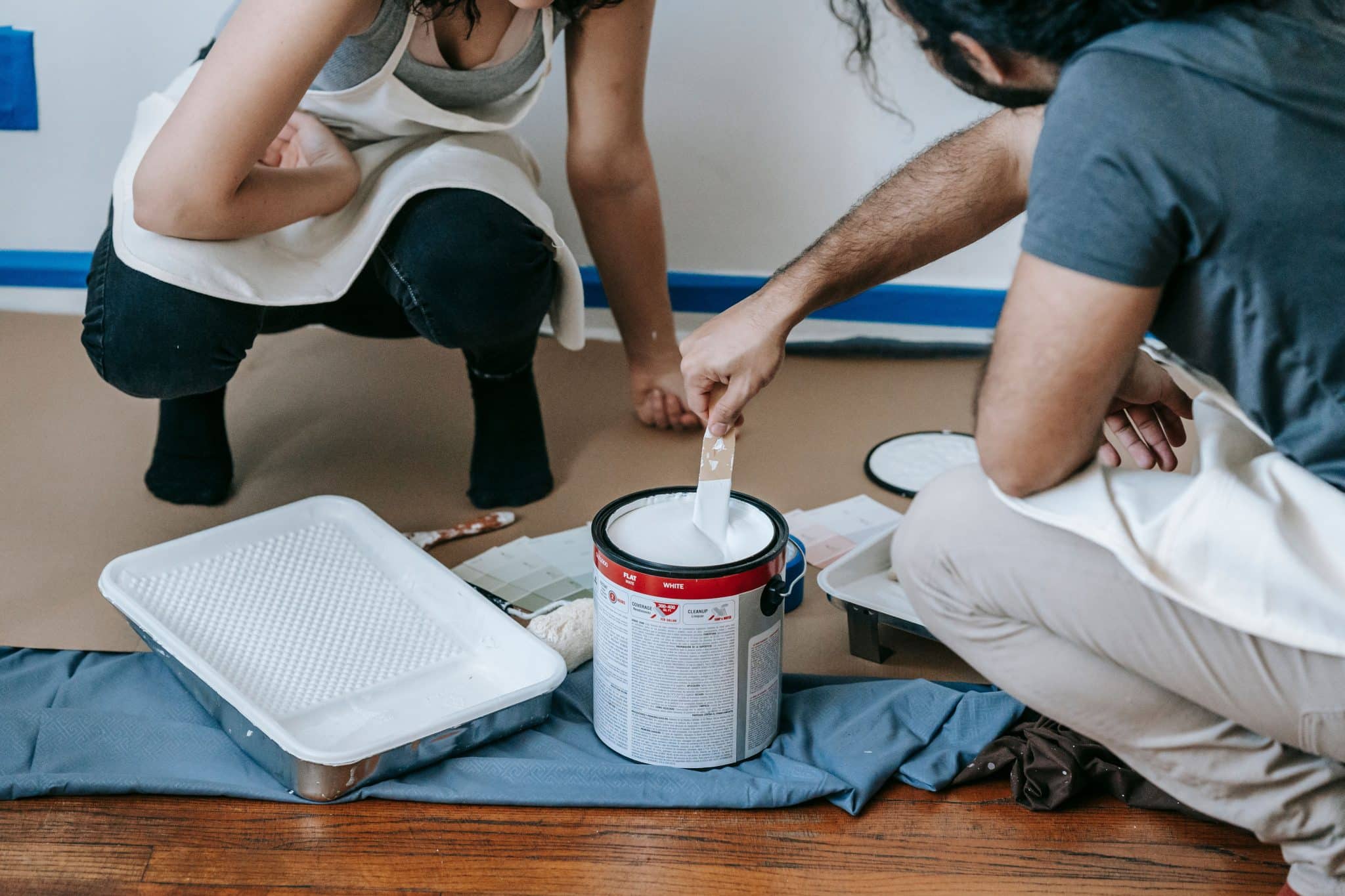
Careful preparation and compatible coatings are essential for painted trim.
Do Not Choose the Sheen by Habit
Paint sheen changes how visible the trim becomes. Satin offers a restrained glow and is a useful starting point for many homes. Semi-gloss gives more reflected light and can help emphasize detailed molding, but it can also call attention to dents, uneven caulk, and brush marks. Some modern trim enamels offer lower-sheen options with good durability, so compare actual products rather than judging by sheen labels alone.
For natural wood, the sheen of the clear finish matters just as much. A heavy gloss can make warm oak look darker and more formal; a lower-sheen finish may let the grain feel more relaxed. Always view the real material in the room before choosing.
Can You Mix Wood and Painted Trim in the Same House?
Absolutely, provided there is a clear transition. You might keep the staircase and original library woodwork but paint the trim in an updated kitchen. A door between the two spaces can serve as the boundary, allowing each room to have its own logic.
Consistency matters most within a sightline. Repeating the same painted white on door casings, baseboards, and window trim in one zone creates calm. In another zone, repeated natural wood details can feel equally coherent. What looks odd is usually not mixing materials; it is changing the rules from one frame to the next without a design reason.
A Safety Check for Older Homes
If your home was built before 1978, assume older painted surfaces may contain lead until properly assessed.
Sanding, scraping, and other preparation can create hazardous dust. The U.S. Environmental Protection Agency recommends lead-safe certified contractors for renovation work in pre-1978 homes and explains precautions for homeowners considering DIY work. Do not begin disturbing old painted trim until you have checked the relevant guidance and local requirements.
This precaution is especially important around windows, where friction and repeated opening can disturb old coatings. Even a visually small trim update should begin with a safety decision, not a paint-color decision.
When to Bring In a Professional Painter
If the job involves a whole-home color change, extensive patching, detailed crown molding, or tricky adhesion over previously stained surfaces, professional help can save substantial rework. Ask what preparation is included, which primers and coatings will be used, how the crew handles dust and occupied rooms, and how they check the finish before the job is complete.
For homeowners in North Texas planning a larger update, Dallas Paints offers residential interior painting services that include walls, trim, and doors. The useful question for any painter is the same: can they explain why a particular preparation and finish system is right for your actual trim?
Frequently Asked Questions
Is natural wood trim outdated?
No. Attractive woodwork can anchor traditional, Craftsman, farmhouse, and contemporary rooms. The condition, proportion, and surrounding color scheme matter more than the trend of the moment.
Can stained trim be painted without sanding?
Some coating systems allow an alternative preparation method, but a clean, sound, compatible surface and adequate adhesion are still essential. Follow the chosen primer’s instructions and avoid disturbing potentially lead-containing finishes.
Should trim be the same color as the walls?
It can be. Matching wall and trim colors creates a quieter, continuous look; a different sheen may add subtle definition. Contrasting trim helps emphasize architectural lines. Neither is universally better.
What if I regret painting original wood?
Returning painted, detailed trim to bare wood can be labor-intensive and may not fully restore its original appearance. That is why a trial area and an honest assessment of the wood are important before committing.
The Best Choice Is the One That Respects the House
There is no single paint color or wood finish that belongs in every home. Beautiful grain, solid craftsmanship, and architectural history are strong reasons to preserve trim. Mixed repairs, a mismatched stain, or a new design direction may be equally good reasons to paint it.
Give yourself time to compare samples, think about connected spaces, and assess the work behind the finish. Whether you keep the wood’s natural warmth or give the molding a thoughtful new color, the result should feel like an improvement to the home you have, not an imitation of someone else’s.