Your dishwasher washes your plates every day, but who washes the dishwasher?
Over time, grease, leftover food, and hard-water minerals can build up, leaving odors and cloudy spots on your dishes.
The good news? You don’t need any fancy cleaners or a plumber. A bottle of white vinegar and some baking soda from your kitchen can handle most of the work.
This blog shows exactly how to clean your dishwasher naturally, from the filter to the spray arms to the door gasket. Ready to give your dishwasher a fresh start?
Why Does Your Dishwasher Get Dirty in The First Place?
Most people assume a machine that runs hot water and detergent all day cleans itself.
It doesn’t. Every wash cycle leaves behind small amounts of grease, food particles, soap scum, and mineral deposits from hard water.
These collect in the filter, along the spray arm holes, inside the door gasket folds, and along the walls of the tub.
Over weeks, that buildup turns into a film that coats everything, including your dishes.
You might notice a stale smell when you open the door, white spots on glasses, or dishes that don’t come out as clean as they used to.
Those are all signs the machine needs attention. The good news is that natural ingredients handle this well.
What You Need Before You Start
No long shopping list; most of this is already in your kitchen.
- White Distilled Vinegar
- Baking Soda
- Old toothbrush
- Small bowl of warm water
- Soft cloth or sponge
- Dish soap
- Rubber gloves
Step-By-Step Natural Dishwasher Cleaning
Follow these simple steps to deep-clean your dishwasher with vinegar, baking soda, and basic tools.
Step 1: Remove the Filter and Bottom Tray
Pull out the bottom rack first. Twist the filter counterclockwise and lift it out, then remove the bottom basket tray.
Fill the sink with warm water, add a cup of white vinegar and a small squirt of dish soap, and drop both pieces in to soak.
This loosens grease, grime, and food particles while you work on the rest of the machine. Soaking for a few minutes makes them much easier to clean.
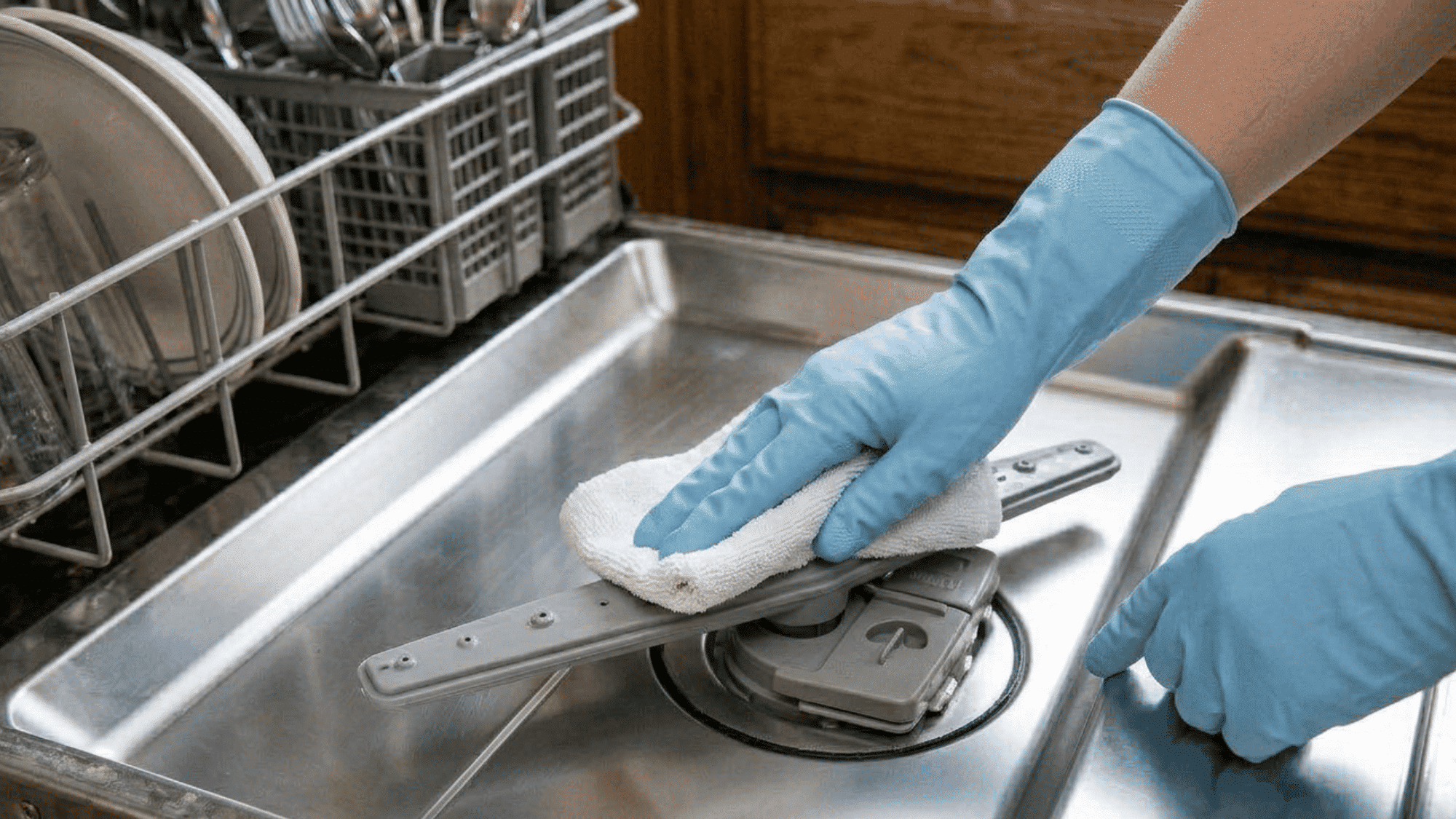
Step 2: Spray and Wipe the Seals and Edges
Mix one cup of white vinegar, one cup of water, and a teaspoon of dish soap in a spray bottle.
Spray along the inner edges of the door, especially in hidden strips where gunk accumulates. Wipe thoroughly with a microfiber cloth to remove buildup and odors.
These areas aren’t cleaned during normal cycles, so this step prevents mold, mildew, and sticky residue, keeping your dishwasher hygienic and extending its life.
Step 3: Check and Clean the Vent
Check for a vent port inside your dishwasher, if present. Use a flathead screwdriver to remove the vent cover, where dirt and debris often collect.
Place the vent cover in the soaking sink with the filter and tray. Wipe out the vent opening with a damp cloth before reassembling.
Skipping this step can leave hidden buildup that affects performance, so cleaning the vent ensures water circulates freely and the dishwasher remains odor-free.
Step 4: Rinse and Reinstall the Removable Parts
After soaking, drain the sink and rinse the filter, tray, and vent cover under running water. Place the filter back on the top rack, add the tray, and snap the vent cover into place.
Slide the bottom rack back in and reposition the utensil holder. At this stage, all removable parts should look clean, with any grime gone.
Proper reinstallation ensures the dishwasher runs efficiently during the cleaning cycle and prevents leaks.
Step 5: Run a Hot Cleaning Cycle
Run hot water at the kitchen sink for about 30 seconds to ensure the dishwasher pulls in hot water from the start.
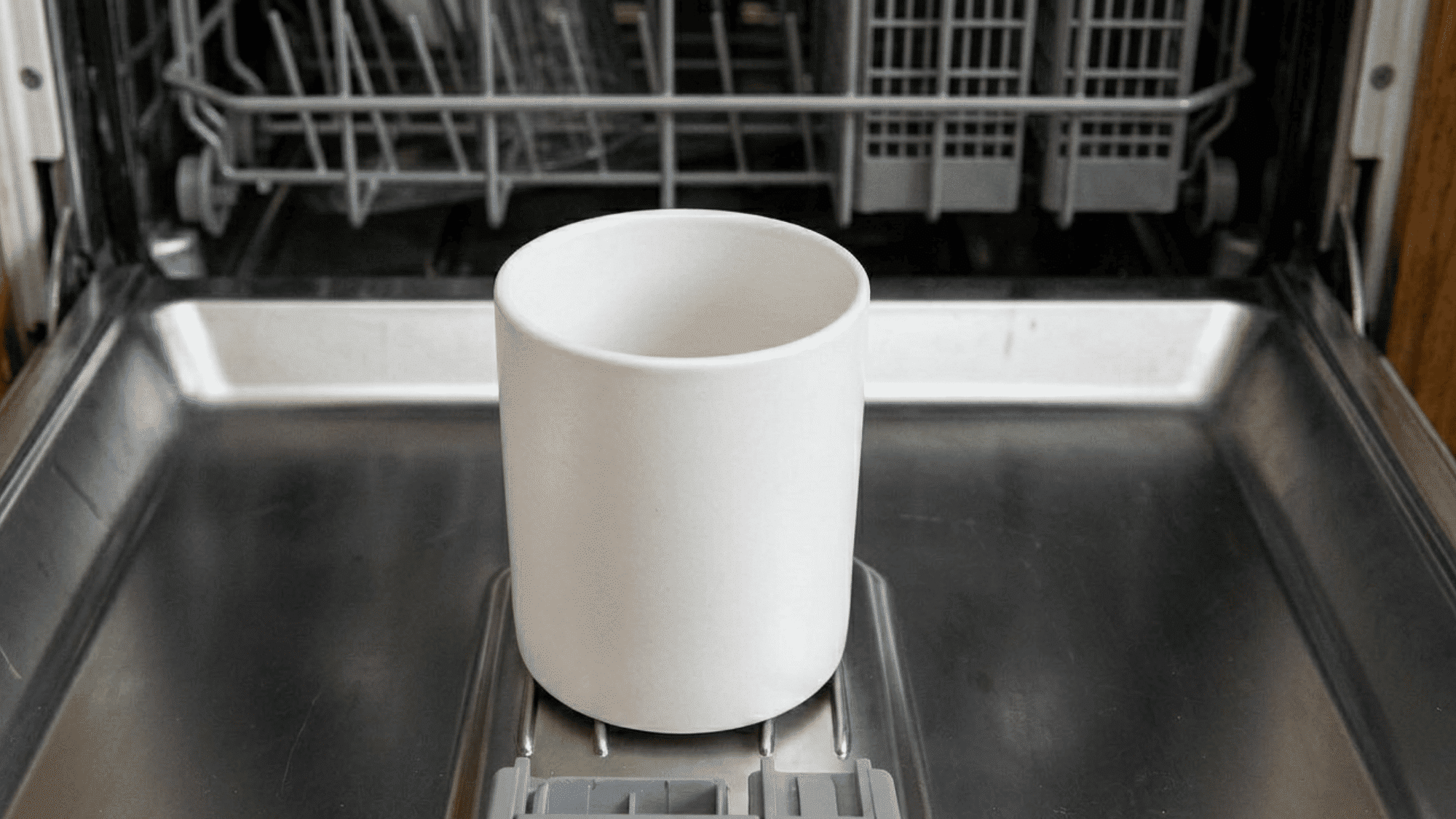
Place a cup of white vinegar upright on the top rack and skip detergent. Select a normal wash cycle with high-temperature wash and no heat dry.
This cycle flushes away leftover grime, kills bacteria, and neutralizes odors. Running the dishwasher empty with vinegar ensures the interior is fully cleaned before your next load.
Step 6: Do a Final Wipe-Down
Once the cleaning cycle finishes, pull out the bottom rack and check the heating coils for residue. Gently wipe off any buildup with your vinegar mix and a soft cloth.
Spot-clean any other areas as needed. Reinstall the filter by twisting it clockwise, slide the bottom rack back in, and return the utensil holder.
This final touch ensures every corner is clean, fresh, and ready for your next dishwashing session.
Dishwasher Cleaning & Maintenance Schedule
Keeping a dishwasher clean isn’t just about occasional deep cleaning. A simple routine helps prevent buildup, bad smells, and cloudy dishes over time.
Daily Care (After Every Wash)
Small habits after each cycle keep the dishwasher running smoothly:
- Scrape off excess food before loading dishes
- Leave the door slightly open after use to let moisture escape
- Wipe away visible spills around the door or gasket if needed
This prevents food particles and moisture from turning into buildup inside the machine.
Weekly Care
A quick weekly routine helps maintain hygiene and performance:
- Check and rinse the filter under warm water
- Wipe the door seals and edges with a damp cloth
- Inspect spray arms for any blocked holes
This step stops grease and debris from building up in hidden areas.
Monthly Deep Cleaning
Once a month, a full deep clean keeps the dishwasher working like new:
- Run an empty hot cycle with a cup of white vinegar on the top rack
- Sprinkle baking soda at the bottom and run a short hot cycle
- Clean the filter thoroughly using warm water and mild dish soap
- Wipe down interior walls, racks, and seals
This removes hard-water deposits, grease buildup, and lingering odors.
What to Avoid When Cleaning Your Dishwasher?
Avoiding a few common mistakes while cleaning your dishwasher can protect its parts, improve performance, and prevent long-term damage.
- Don’t use harsh chemicals: Bleach or ammonia can damage the interior, rubber seals, and plumbing.
- Avoid abrasive tools: Steel wool or metal brushes can scratch the tub and spray arms.
- Don’t mix vinegar with bleach: This creates toxic fumes.
- Skip the dishwasher detergent during cleaning cycles: Vinegar and baking soda work best on their own.
- Avoid neglecting hidden areas: Seals, vents, and spray arm holes often trap grime if ignored.
Wrapping Up
A well-maintained dishwasher isn’t just about clean dishes; it makes life easier and keeps your kitchen running efficiently.
Small, consistent habits can prevent odors, reduce repairs, and save time in the long run.
Natural cleaning methods are gentle, cost-effective, and eco-friendly, making them a smart choice for any household.
Ready to make your dishwasher a stress-free part of your kitchen? Start a natural cleaning routine today and keep your machine performing at its best.
Frequently Asked Questions
Can You Use Apple Cider Vinegar Instead of White Vinegar?
Stick to white distilled vinegar. Apple cider vinegar can leave a sticky residue inside the tub and has a stronger smell that lingers after the cycle ends.
Why Do the Glasses Still Come out Cloudy After Cleaning?
Cloudy glasses are usually caused by hard water mineral deposits. If the natural clean doesn’t fully clear them, try soaking glasses in white vinegar for 15 minutes before washing. A rinse aid in your dispenser also helps in the long term.
What if theDishwasher Still Smells After Cleaning?
Check the door gasket folds and the filter housing for trapped food or mold that may have been missed. A second baking soda cycle usually clears any remaining odor. If the smell persists, the drain hose may need to be checked.