Have you ever watched a hydrangea turn brown and crispy in your garden?
It’s heartbreaking, I know. The fact that you planted it with so much care, but something still went wrong.
The problem is usually not the water or the soil – it’s the sun. People assume hydrangeas love full sun because they look bold and hardy, but that’s not always true.
So, do hydrangeas need full sun?
Let’s find out.
But First, What are Hydrangeas?
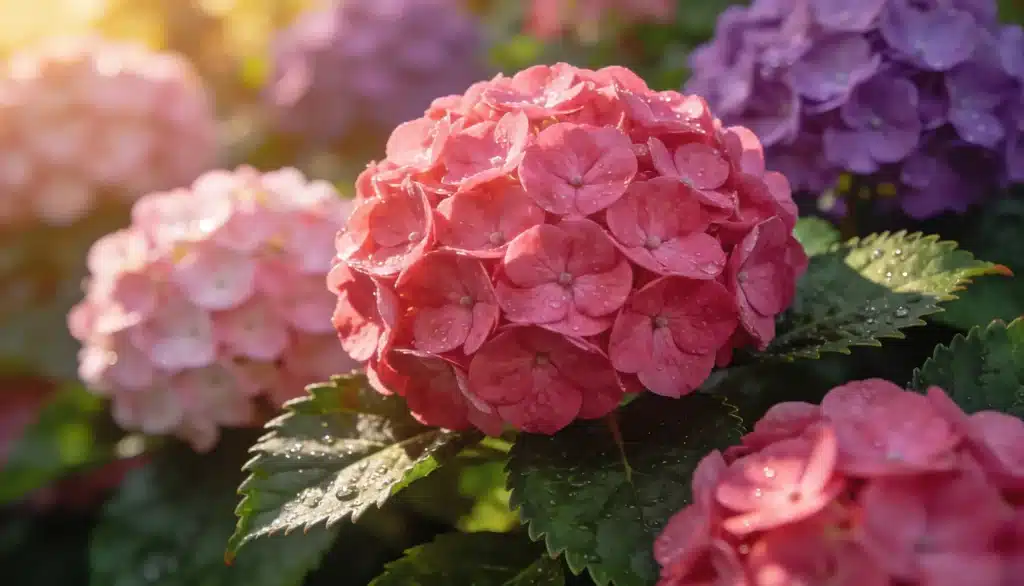
Hydrangeas are flowering shrubs known for their large, showy blooms, and are mostly used to make beautiful bouquets.
They grow in a wide range of colors, including white, pink, blue, and purple, and they are popular in home gardens because they are easy to grow and come back year after year.
Every hydrangea type is a little different. They each have their own light needs, growth habits, and bloom style.
And what are some types of hydrangeas?
- Bigleaf hydrangeas
- Panicle hydrangeas
- Oakleaf hydrangeas
- Smooth hydrangeas
- Mountain hydrangeas
Do Hydrangeas Need Full Sun?
Hydrangeas do not need full sun to grow well, but in fact, too much direct sun can hurt them.
They prefer a mix of sun and shade throughout the day.
“Full sun” means six or more hours of direct light daily, and for hydrangeas, that’s too much. Morning sun is the best kind for them to grow.
It is because its gentle, which helps the plant grow without scorching the leaves.
Harsh afternoon sun, though, dries out the soil fast and stresses the plant, so the ideal setup should be four to six hours of morning sun with afternoon shade.
How Different Hydrangea Types Handle Sunlight?
Each type has its own light preference, and planting the wrong type in the wrong spot is the mistake people often make.
Before you plant, let’s know what your hydrangea variety needs.
| Hydrangea Type | Sun Preference | Daily Sun Hours | Afternoon Shade Needed |
|---|---|---|---|
| Bigleaf | Partial shade | 3 to 4 hours | Yes |
| Panicle | Full sun to partial shade | 6 or more hours | Optional |
| Oakleaf | Partial shade | 4 to 6 hours | Preferred |
| Smooth | Partial shade | 4 to 5 hours | Yes, in hot areas |
| Mountain | Filtered light | 2 to 4 hours | Yes |
Where do Hydrangeas Grow Best?
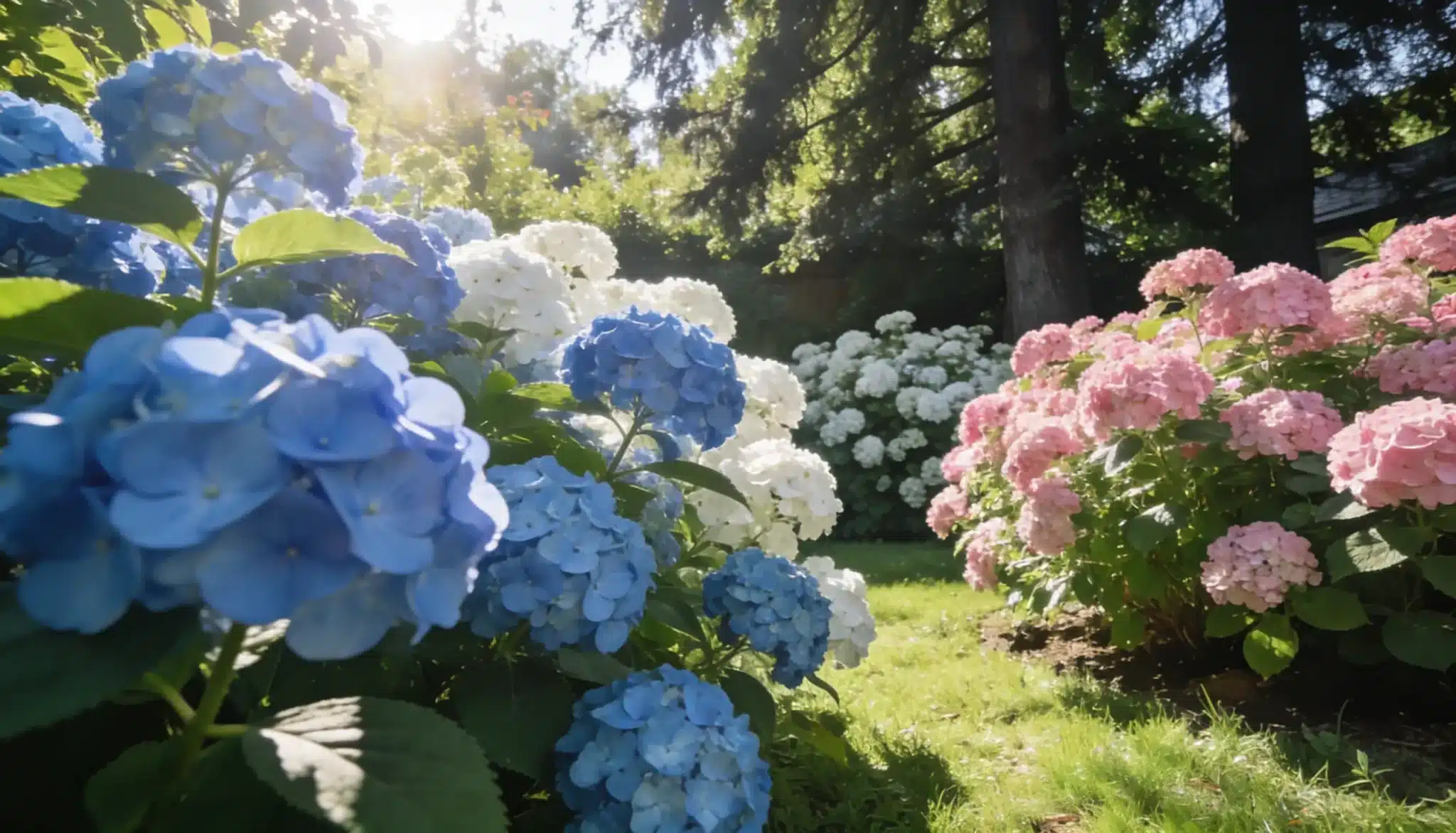
The right spot affects blooming, leaf health, and watering needs. Things go wrong when people pick a spot based solely on looks.
Best Spots to Consider
Sunlight is just one part of the equation.
Soil moisture, air flow, and surrounding structures are all important, too. These are some locations that consistently work well for hydrangeas.
- East-facing gardens get soft morning light, which means the blooms last longer and the soil stays moist.
- North-facing areas stay cool and shaded, which is great for bigleaf and mountain hydrangeas.
- Near trees or fences offers natural shelter. Keep at least three feet from large tree roots.
Spots to Avoid
Some locations look fine, but quietly stress your plant over time. Heat builds up fast in these spots, and recovery is often very slow.
- West-facing yards get harsh afternoon sun, which makes blooms fade quickly.
- Full-day sun stresses most types. Only panicle hydrangeas handle it well with regular watering.
How does Climate Change Affect the Sunlight Needs?
Most gardeners focus solely on sunlight, but climate plays an equally important role. The same plant can flourish in one region and struggle in another.
Cool Northern Climates
Cool weather is forgiving for most hydrangea types. More hours of sunlight are tolerable when temperatures stay low. Soil holds moisture longer, which helps the plant recover easily.
Hot Southern Regions
If you live in a hot region, your hydrangea needs extra protection. Afternoon shade is necessary, not optional. Mulching the base helps cool the roots. Panicle hydrangeas are the safest choice for sunnier spots.
Dry Climates and Coastal Gardens
Water deeply rather than lightly. Coastal gardens benefit from sea breezes, but salt winds can damage leaves over time.
Seasonal Changes
Spring and autumn sun are gentle and safe. Summer sun is the harshest. Afternoon shade matters most then.
How to Protect Hydrangeas in Sunny Gardens?
Too much sun does not have to mean a struggling plant.
A few simple adjustments can keep your hydrangeas healthy even in brighter spots.
Fix those, and your plant will do much better than you expect.
- Spread two to three inches of mulch around the base to keep roots cool.
- Water deeply and slowly rather than lightly and often.
- Morning is the best time to water. It gives leaves time to dry before evening.
- Use tall companion plants or shrubs on the west side for natural afternoon shade.
- Drape a light shade cloth during heat waves for quick protection.
- Add compost to the soil to improve moisture retention.
- Sandy soils drain too fast. Mix in organic matter to slow it down.
The Best Sun-Tolerant Hydrangea Varieties You Can Grow
Some hydrangeas handle the sun better than others.
If your garden gets more light than shade, choosing the right variety saves you a lot of trouble.
Limelight
Itis a panicle type that handles full sun well and blooms in lime green, slowly turning pink by late summer.
Pinky Winky
A panicle type, which starts white and deepens to pink. It is one of the most sun-tolerant varieties.
Little Lime
A compact version of Limelight, it is great for smaller gardens with plenty of sun.
Incrediball
It produces giant white blooms. It prefers partial shade but tolerates more sun than other hydrangeas.
Ruby Slippers Oakleaf
It is flexible and hardy. It handles both sun and shade without much fuss.
Fire Light
Blooms white and turns fiery red by autumn. It thrives in full sun to partial shade.
End Note!
Hydrangeas need the just the right amount of sun, and no, they are not as difficult as they feel. You just need to understand them a little better.
Give them the right amount of sun, and they will put on a show every single season.
You now know exactly where hydrangeas grow best, so pick the right variety for your garden.
Frequently Asked Questions (FAQs)
1. What is the 1/3 Rule for Hydrangeas?
Never cut more than one-third of your hydrangea at once. This keeps the plant healthy and encourages stronger regrowth.
2. Are Coffee Grounds Good for Hydrangeas?
Yes, coffee grounds add acidity to the soil. This can deepen bloom color in bigleaf hydrangeas and improve overall soil health.
3. Do Hydrangeas Come Back Every Year?
Yes, hydrangeas are perennials. They die back in winter and return every spring. Most varieties live and bloom for many years with basic care.