Many people think that moving during the winter months will be a negative experience. Yet, many Canadian families choose to do just that. Furthermore, some families actually plan their relocation to take place during the winter months. A relocation during the winter months comes with its own set of difficulties. These include icy sidewalks, heavy snow fall, short daylight hours and cold fingers. However, this type of relocation comes with advantages such as less busy schedules, greater options available and lower rental prices. With knowledge of what to anticipate prior to your move, relocating during the month of January may be easier than relocating during the month of July. The rest of this article explains how Canadian families relocate during the winter months and why some families would not relocate at any time but during the winter months.
Why Some Canadians Choose to Move in Winter
Summer is the peak season. May through September is when most leases turn over and most homes close. Movers book up fast. Prices climb. Weekends vanish months ahead.
Winter is the opposite. Trucks sit idle for stretches. Crews have open dates. You can often pick the day you want, not the day that is left over. Off-peak rates are common in the slow months. You also get a mover’s full attention instead of their busiest crew rushing between three jobs.
The catch is that the good winter crews still fill up. Snow days and holidays shrink the calendar. So start your search early. Look at movers near you who stay busy right through the season, and lock in a date before the first big storm hits. Booking ahead in winter is less about beating a rush and more about beating the weather.
Pack With the Cold in Mind
Cold affects how you pack. There are some items that don’t do well when transported by way of a frozen truck.
Many electronics have no tolerance for the cold. The screens, hard drives and batteries in most electronic equipment will be damaged or destroyed if exposed to extreme cold temperatures; they may work perfectly fine as long as they are in extremely cold temperatures but once warmed back up to normal (or warmer) temperatures, they will malfunction.
Pack your TV’s, computers, etc. into the vehicle with you. Allow them to sit at room temperature for several hours before turning them on.
Some liquids in cleaning supplies and other products can freeze and crack when left in a cold truck. Store these items separately from one another and if possible, store them in the vehicle with you.
Most houseplants will not survive traveling through very cold temperatures. If you plan on bringing plants along, wrap them up and transport them inside the vehicle with the heater operating.
Wooden furniture becomes brittle when subjected to very low temperatures. Pad the wood furniture carefully and use caution when handling it.
Place a “First Night Box” near you and fill it with: warm blankets, a change of clothing, phone chargers, and all else you might want/need as soon as you enter your home.
Frozen Ramps and Driveways
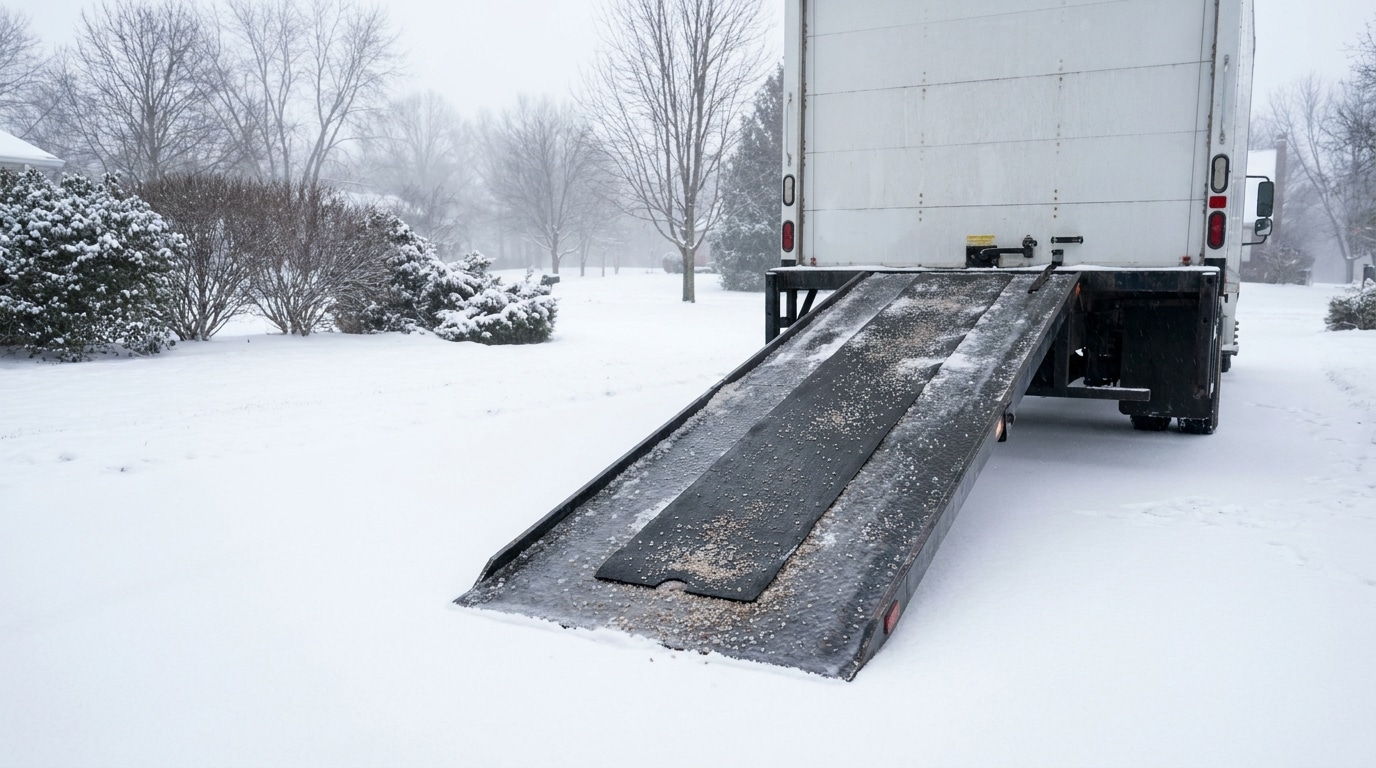
Ice is the biggest hazard on moving day. A loading ramp turns slick in minutes. A sloped driveway becomes a slide. One fall with a dresser ends the day fast, and it can end it in the emergency room.
Clear and salt every path the night before. Do it again in the morning. Keep a bag of salt or sand by the door for touch-ups through the day. Lay rubber mats or old rugs on the ramp for grip. Wear boots with real tread, not runners.
Good winter crews carry their own traction gear and know how to work an icy load. Ask about it when you book. A team that shrugs at the question is not the team you want on a frozen step.
Protect Your New Flooring From Damage by Salt & Melted Snow
Salt & Grit are tracked into homes with boots. The mixture can stain hardwood and soak deep into carpet. When the liquid evaporates; it will leave behind a hazy white substance which is difficult to remove.
Consider placing mats/runner’s at each home. If you do not have runner’s consider using cardboard, or an old sheet. Have clean towels available near all entry points to quickly wipe away puddles as they begin to develop. Request the movers to load/unload boxes in one location rather than walking throughout your home. Preparing for moving day helps protect your new flooring from damage caused by salt and slush on the same day you move.
Keep the Crew Warm and Safe
A cold crew is a slow crew. Long hours in the wind wear people down, and tired movers make mistakes.
Keep the coffee and hot water going. Set out a spot where people can warm up between loads. Winter days are short, so start early and use every hour of daylight. Good light means safer footing and fewer dropped boxes.
If you are moving yourself with friends, the same rules apply. Warm gloves with grip. Layers you can shed. Regular breaks indoors. Nobody should be rushing across ice to beat the dark.
Schedule Around Storm Systems
Canadian winter does not follow a calendar. A clear week can turn into a whiteout overnight. Watch the forecast for the days around your move, not just the date itself.
Build in a buffer. If you can hold a backup day, do it. Talk to your mover about their storm policy before you sign. A reliable company will reschedule for safety and tell you how far ahead they make the call. Book an early time slot too. Roads are clearer and parking lots are emptier in the morning, before the day’s snow piles up.
Time Your Utilities Right
This is the step people forget. Never shut the heat off before the move is done. An empty house with no heat can freeze pipes in hours. A burst pipe turns a smooth move into a flood, and a cleanup bill.
Keep power and heat on at the old place until you hand over the keys. Set up utilities at the new place before you arrive, so the furnace is running when you walk in. Confirm both with a phone call, not just an online form. Cold weather leaves no room for a missed connection or a slow start date.
Winter Moves Are More Difficult on Young Members of the Family
When your youngest members of your family move during winter months, it’s a little bit colder, a lot more chaotic, and lots of doors open.
Try to get your children to relatives or sitters while movers do their thing. This keeps the children warm, and they won’t have to worry about the people moving. If you’re bringing an animal, try to create one quiet area with food, water, and a place for the pet to rest. All of the movers that we’ve hired over the years keep doors open all day. Anytime animals run out from under the safety of those doors because of fear, the first thing they see is a large expanse of cold snow.
Packing some items in warm bags for every member of the household helps. Bringing extra pairs of socks, gloves (or mittens), and snack items really helps to make things easier when your home is at least half empty and/or your heating system hasn’t caught up yet.
Finding a Mover Who Knows Winter
Not every crew is built for January. The right mover treats winter as normal, not as a problem. They plan for ice. They protect your floors. They watch the weather with you and tell you the truth when a storm is coming.
Screen them the way you would for any move, and then some. Check for real insurance. Read recent reviews, not just the ones on their own site. Get a clear written quote with no vague add-ons. Before you sign anything, it is worth running through a few basic checks so you know you are dealing with pros and not a fly-by-night crew.
Then ask three winter questions. Do you move in snow and ice? What is your storm reschedule policy? What do you do to protect floors and prevent slips? The answers tell you fast whether a company is ready for the season, or just hoping the weather holds.
Your Winter Move Checklist
- Book early and lock in a date before the first big storm
- Salt and clear all paths the night before and again in the morning
- Move electronics, liquids, and plants in a heated car, not the truck
- Lay floor runners and keep towels at every door
- Keep the crew warm with hot drinks and indoor breaks
- Watch the forecast and hold a backup day
- Keep heat and power on at both homes through the move
- Confirm utilities by phone, not just online
- Set up a closed room for kids or pets
- Book a morning slot for clearer roads and more daylight
Winter moving is not the mistake people think it is. It is just a different set of steps. Handle the ice. Protect your floors. Keep everyone warm. Time your utilities. And pick a crew that knows the season instead of fearing it.
Do that, and a cold-weather move can be the smoothest one you ever make. You will spend less. You will wait less. And you might just wonder why anyone bothers moving in July.