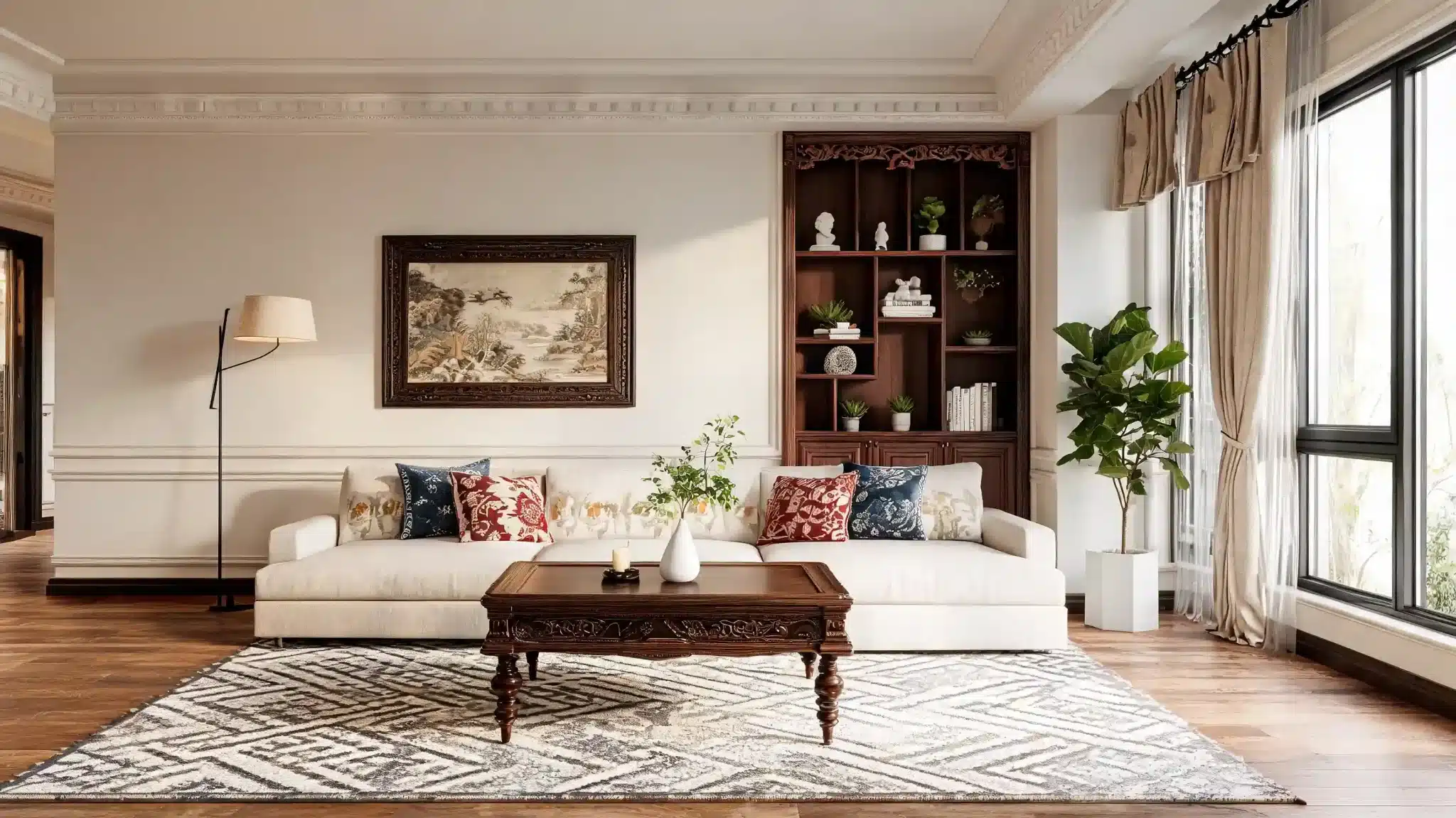
Ever stood back from a picture you just hung and felt like something was off? Chances are the frame itself is fine, and so is the wall behind it.
Most of the time, the real issue is height, not the artwork itself. Art that sits a few inches too high throws off the whole wall, no matter how good the piece really is.
Once you know the right numbers, this is an easy fix. It takes about five minutes, a tape measure, and just one extra nail hole.
In this blog, you will learn about the standard height, how high to hang art above a bed or a couch, and common mistakes to avoid.
How High to Hang Art for a Balanced Look?
Center your artwork 57 to 60 inches from the floor, the museum standard, based on average eye level. Treat it as a starting point, not a rule.
If you’re notably taller or shorter than average, or your ceilings are unusually low or high, shift the height a few inches to match.
For a blank wall with no furniture below, stick close to 57–60 inches.
Once furniture enters the picture, switch methods: leave 6–8 inches between the furniture top and the frame’s bottom instead.
How Do You Measure the Right Spot?
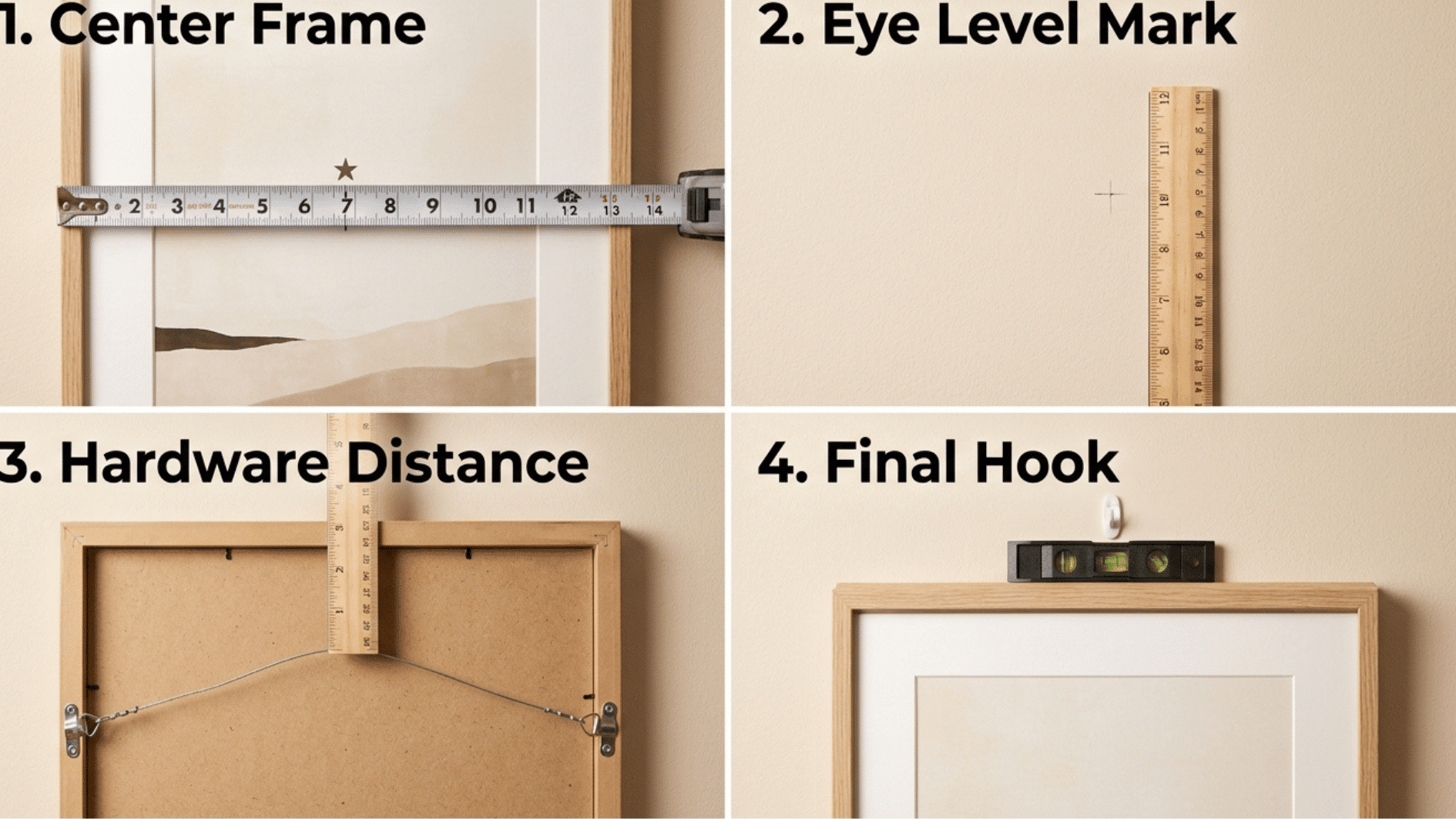
Before picking up a hammer, measure the wall, frame, and hardware to ensure your artwork lands in the perfect position.
1. Find the Center of The Artwork
Start by measuring the total height of your artwork from top to bottom. Divide that measurement by two to find the exact center point of the frame.
This center point helps you align the artwork at the correct viewing height.
This logic also applies when hanging a plate or other wall décorthe midpoint rule doesn’t just apply to framed pieces.
Lightly mark the midpoint on the back of the frame, or use it as a placement reference. Finding the center first prevents the artwork from being hung too high or too low.
2. Mark the Wall
Measure about 57 to 60 inches from the floor and mark the wall at that height. This range places the center of the artwork near average eye level for most viewers.
Use a measuring tape and pencil to create a small guide mark without damaging the wall. Consider nearby furniture, ceiling height, and room layout before final placement.
3. Measure the Hardware
Turn the artwork around and check the distance from the top edge to the hanging wire or hook.
Pull the wire or hardware taut before measuring to get an accurate placement point. This measurement tells you how far below the frame’s center the nail or hook needs to sit.
Record the distance carefully so the artwork hangs exactly where planned. Accurate hardware measurements help avoid unnecessary holes and adjustments in the wall.
4. Place the Nail
Subtract the hardware measurement from your wall mark to find the correct nail position. Mark this final spot where the nail, hook, or hanging hardware should be installed.
Use a level to confirm the placement before securing the frame. Once the nail is positioned correctly, hang the artwork and check its alignment.
This final step creates a clean, centered display that looks intentional and polished.
The Right Art Height for Every Space in Your Home
For most rooms, aim to place the center of the artwork around 57–60 inches from the floor. Adjust slightly based on furniture height, ceiling height, and how the room is used.
| Location | Gap Above Furniture | Key Considerations |
|---|---|---|
| Sofa or Console Table | 6 to 8 inches | Keep artwork around two-thirds the width of the furniture below for a balanced look. |
| Headboard | 6 to 10 inches | Taller headboards can handle a slightly larger gap, while vertical artwork works well above the bed. |
| Fireplace Mantel | 4 to 8 inches | Center artwork on the mantel itself rather than the entire wall space above it. |
| Dresser | 6 to 8 inches | Smaller frames or grouped artwork pair well with narrow dressers without overwhelming the surface. |
| Dining Table | 6 to 12 inches | Keep artwork low enough to feel connected to the table while leaving enough space for lighting and decor. |
| Entryway Console | 5 to 8 inches | Hang art where it welcomes guests at eye level without competing with mirrors or hooks nearby. |
| Bathroom Vanity | 6 to 10 inches | Choose moisture-resistant frames and leave enough space above the vanity backsplash. |
| Desk or Home Office | 4 to 8 inches | Lower artwork creates a comfortable viewing angle while working or sitting at the desk. |
| Kitchen Counter or Cabinets | 6 to 12 inches | Smaller artwork works best in kitchens where wall space is often limited. |
| Staircase Wall | Follow the Stair Angle | Arrange multiple frames along the staircase slope to create a consistent visual flow. |
| Large Empty Wall | Eye Level (57–60 inches to Center) | Center the artwork based on viewing height rather than the total wall height. |
Does The Right Height Change By Room?
Yes, the right height can change depending on the room, furniture placement, and how the space is used. In living rooms, artwork is usually hung lower so it feels connected to sofas, consoles, or seating areas.
Bedrooms may need slightly different placement, especially above headboards, where getting the sizing correctly above the bed matters as much as the height.
Large walls may require adjustments based on ceiling height and artwork size.
The goal is always to create a balanced relationship between the artwork, furniture, and the overall room layout.
Conclusion
Getting how high to hang art right instantly changes how a room feels, and it costs nothing but a few minutes. A well-placed frame looks planned and deliberate, not accidental or thrown together.
Stick to 57 to 60 inches on bare walls with nothing underneath, since that matches most people’s eye level. Drop to 6 to 8 inches above furniture once a sofa, bed, or console enters the picture.
Gallery walls and different rooms only need small adjustments from these two baseline numbers. The core measurements remain the same throughout the rest of the house.
Frequently Asked Questions
Do I Hang Art at My Own Eye Level or The Standard 57 Inches?
Use the standard 57- to 60-inch mark, not your personal eye level. It keeps every wall in your home at a consistent, gallery-style height regardless of who’s looking.
Should Art Above a Couch Touch the Wall or Float?
It should sit flat against the wall with 6 to 8 inches of space above the sofa. This keeps the piece connected to the furniture instead of floating too high.
Can I Hang Art Higher if My Ceilings are Tall?
A little higher is fine, but keep the shift small. Going more than a few inches past 60 inches starts to feel disconnected from the room.