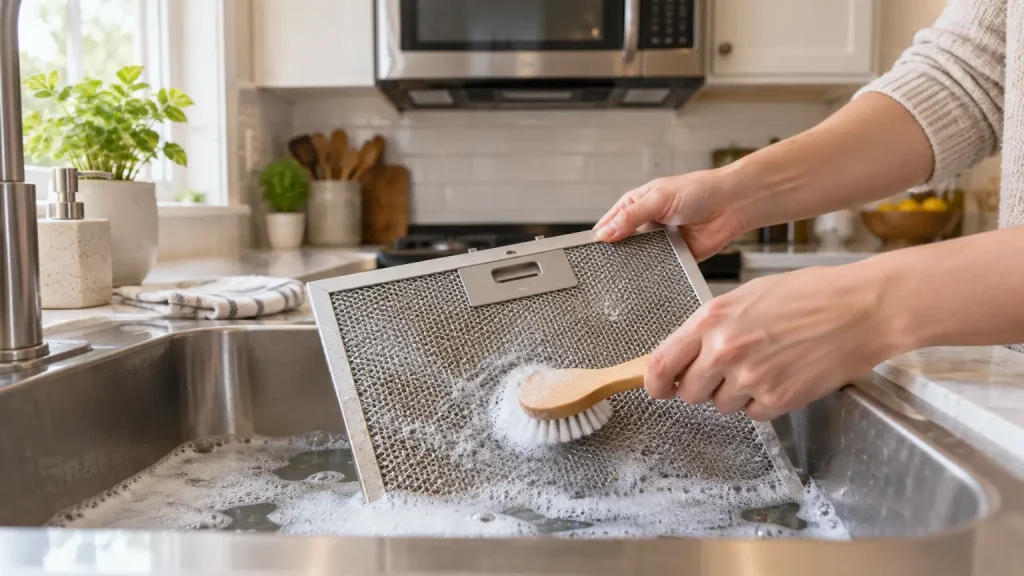
A microwave filter plays an important role in keeping your kitchen ventilation system working properly. Over time, grease, food particles, and cooking residue can build up on the filter, blocking airflow and reducing performance.
Without regular cleaning, this buildup may also cause bad odors and make the microwave harder to maintain. This guide will show you how to clean microwave filter components, spot signs of wear, and choose the right replacement parts for proper ventilation.
1. Why Microwave Filters Need Regular Cleaning
Microwave filters help capture grease, smoke particles, and cooking residue generated during food preparation. In over-the-range microwaves, these filters support the ventilation system by helping prevent grease from accumulating inside the appliance and kitchen exhaust duct.
As cooking fumes pass through the filter, grease gradually collects on its surface. Without regular cleaning, this buildup can restrict airflow, reduce ventilation efficiency, and allow more grease to accumulate around the microwave. A heavily clogged filter may also become sticky, develop unpleasant odors, and make the ventilation system work harder to circulate air.
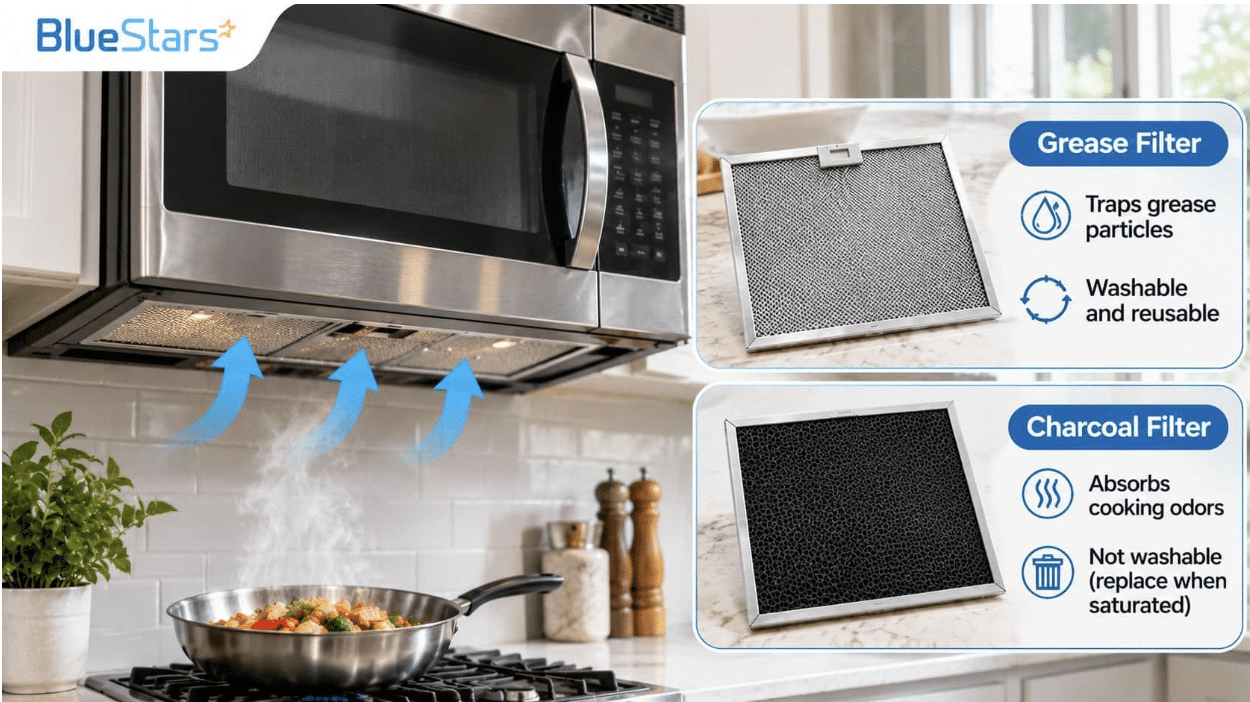
Most over-the-range microwaves use two main types of filters:
- Grease filter: Usually made of metal mesh or aluminum, this filter captures grease particles from cooking fumes. It is generally washable and can be reused after proper cleaning.
- Charcoal filter: This filter uses activated carbon to absorb odors and help reduce unwanted smells. Unlike a washable grease filter, a charcoal filter is typically not designed to be cleaned and should be replaced when saturated.
Understanding the difference between these filters is important because each requires a different maintenance approach. Cleaning a grease filter regularly and replacing a worn charcoal filter can help maintain effective kitchen ventilation.
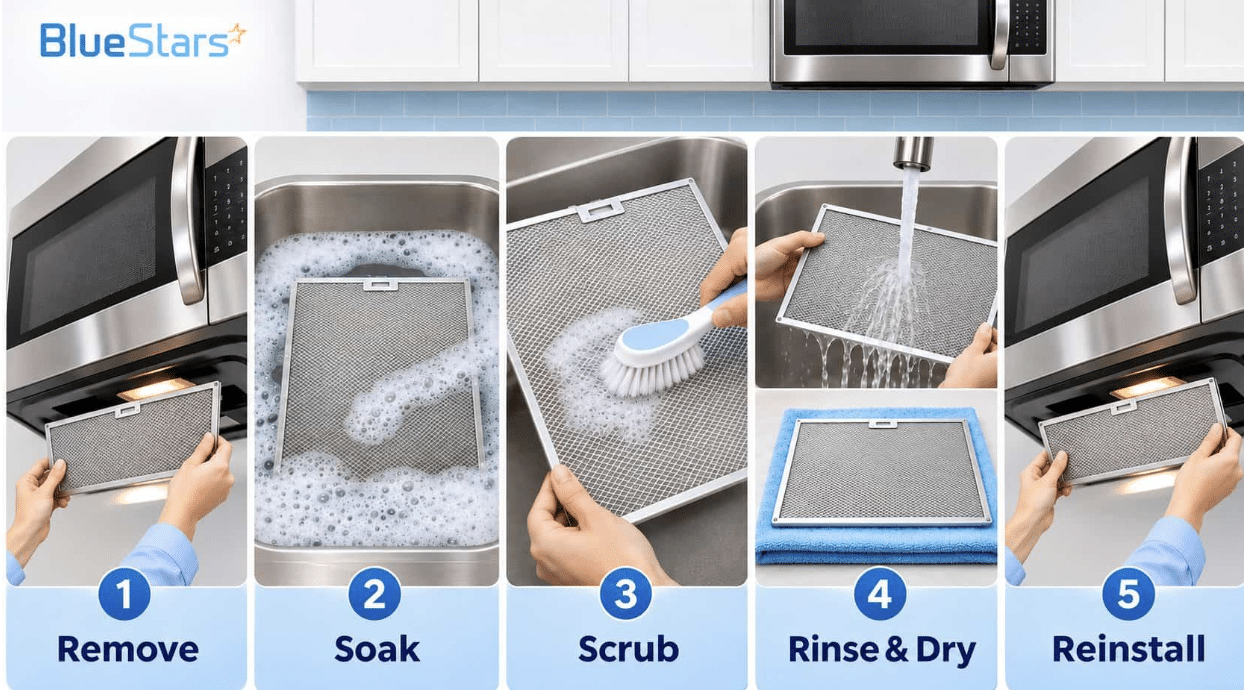
Follow these five simple steps to clean your microwave grease filter, remove buildup, and maintain proper airflow. (Source: Bluestars Parts)
2. How to Clean Microwave Filter Properly
Cleaning a microwave grease filter is a simple maintenance task that can help remove accumulated grease and restore airflow. Before starting, you should check the manufacturer’s instructions to confirm whether your filter is dishwasher-safe or should only be washed by hand. You can clean microwave filter components at home with a few simple steps below:
- Step 1: Turn off the microwave and remove the grease filter: Turn off and unplug the microwave if possible. Locate the grease filter underneath the appliance and carefully remove it according to the manufacturer’s instructions.
- Step 2: Soak the washable filter in warm, soapy water: Fill a sink with warm water and a small amount of dish soap. Let the filter soak for several minutes to loosen accumulated grease and residue.
- Step 3: Gently scrub away grease and debris: Use a soft brush or non-abrasive sponge to clean both sides of the filter. Avoid harsh chemicals or rough tools that could damage the mesh.
- Step 4: Rinse and let it dry completely: Rinse the filter thoroughly with clean water to remove soap and loosened debris. Allow it to air-dry completely before reinstalling.
- Step 5: Reinstall the filter securely: Slide or lock the dry filter back into its original position. Check that it fits properly without gaps or loose edges to support effective ventilation.
Cleaning a microwave grease filter helps remove accumulated grease and restore proper airflow (Source: Bluestars Parts)
3. Signs Your Microwave Filter Needs Replacement
Regular cleaning can help extend the life of a washable grease filter, but some filters eventually become too worn or damaged to function properly. Here are four common signs that your microwave filter may need replacement:
- Grease buildup remains after cleaning: If the filter still feels sticky or has visible grease deposits after thorough washing, it may no longer be easy to clean effectively. Persistent buildup can restrict airflow and reduce filtration performance.
- Filter mesh is bent, torn, or damaged: A damaged metal mesh may not capture grease properly. Bent edges or broken sections can also prevent the filter from sitting securely in its housing.
- Persistent odors from a saturated charcoal filter: Charcoal filters gradually lose their ability to absorb odors as the activated carbon becomes saturated. If unpleasant cooking smells remain even when the ventilation system is running, the filter may need replacement.
- Filter no longer fits securely: A loose or improperly fitting filter may leave gaps that allow grease and cooking residue to pass through. If cleaning or adjusting the filter does not resolve the issue, consider installing a compatible replacement.
4. How to Choose the Right Replacement Parts for Microwave
When your microwave filter becomes damaged or reaches the end of its service life, choosing the correct replacement is important for maintaining proper ventilation. You should consider these factors when looking for replacement parts for microwave appliances:
- Check the microwave model number: Locate the model number on the identification label, which is commonly found inside the microwave door, along the door frame, or on the back of the appliance. You can use this information to identify parts designed for your specific model.
- Check dimensions and filter type: Make sure the replacement has the correct size, shape, mounting design, and material. Also, confirm whether your microwave requires a grease filter or charcoal filter, as these components serve different purposes.
- Verify part number and compatibility: Check the original filter’s part number and compare it with the replacement listing, including product specifications and compatible model numbers. This helps ensure the replacement has the correct dimensions, mounting structure, and fit for your microwave.
BlueStars Parts offers a range of replacement parts for microwave, including turntables, door switches, or fuses. These components help address common microwave issues, restore essential appliance functions, and ensure more reliable performance for everyday cooking.
Regular microwave filter maintenance helps remove grease buildup, support proper ventilation, and keep your kitchen environment cleaner. By cleaning washable grease filters, replacing saturated charcoal filters, and checking for signs of damage, you can maintain your appliance more effectively. When replacement becomes necessary, consider BlueStars Parts to find compatible replacement parts for microwave appliances and keep your unit working reliably.
Contact information:
8 The Green, Ste A, Dover, Delaware 19901-3618, United States
Website: https://bluestarsparts.com/