An office can look tidy at the start of the day and feel neglected by lunchtime. Coffee collects around the break room machine, meeting tables pick up crumbs, and restroom supplies run low. Meanwhile, dust along the edges of the carpet may remain unnoticed for weeks.
Keeping a workplace clean takes more than occasional attention when something looks wrong. It requires a routine that accounts for how people use the space, with clear responsibilities and enough flexibility to handle busy days.
For business owners and office managers, the most useful starting point is understanding where cleaning needs arise and how to address them consistently.
Clean Around the Way People Work
An office cleaning routine should reflect what happens inside the building. Employee numbers matter, but so do visitor traffic, working hours, shared facilities, and the layout of the space.
A small office that regularly hosts clients may need frequent attention in its reception area and meeting rooms. A larger workplace with hybrid attendance may see most of its activity concentrated on two or three days each week.
Before setting a schedule, observe the office during a typical working week. Which bins fill first? Where do spills happen? Are some meeting rooms used continuously while others stay empty?
These observations help identify where cleaning time is most useful. They also reveal problems that a standard checklist might miss, such as a crowded coffee station or an entrance that needs extra attention after wet weather.
Give Shared Spaces Clear Priorities
Shared spaces deserve particular attention because several people use them throughout the day. Restrooms, kitchens, meeting rooms, and reception areas all have different demands.
Break Rooms and Kitchens
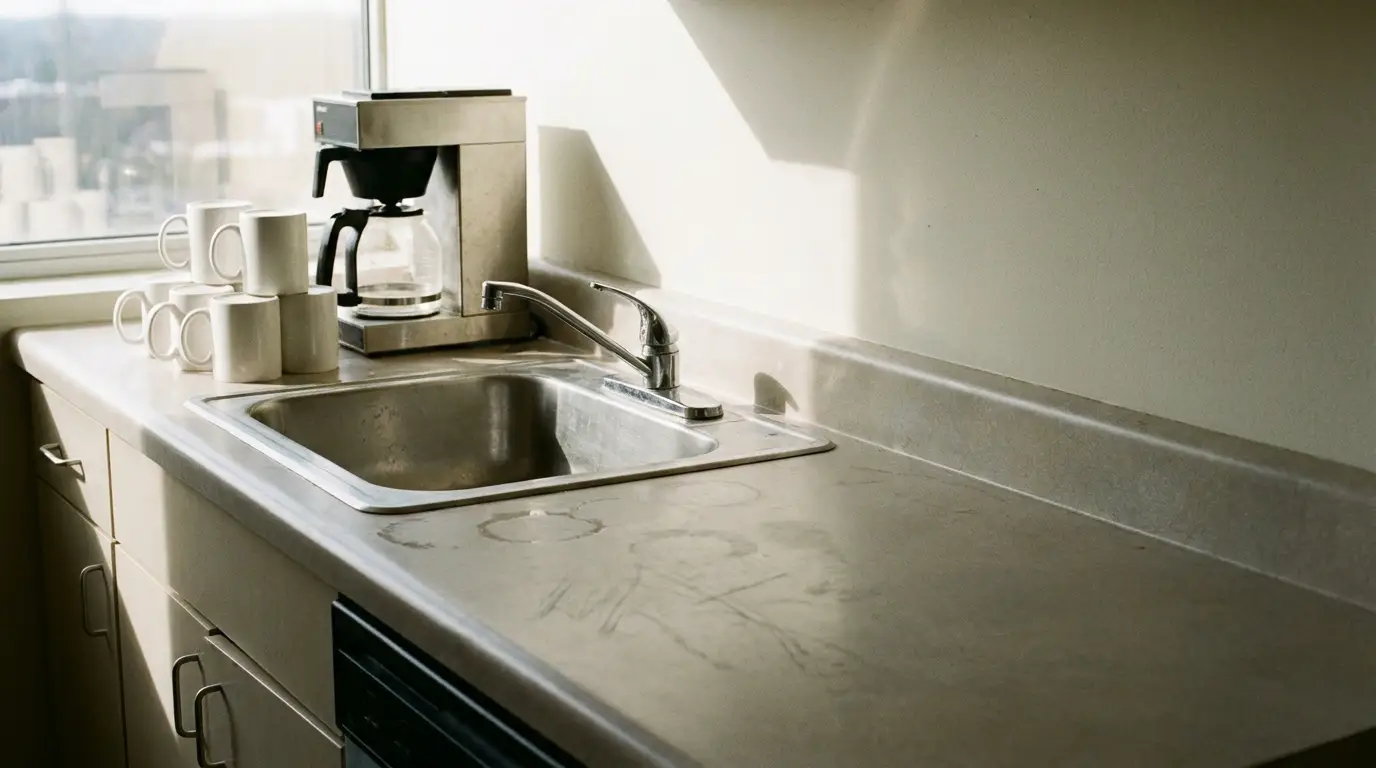
Food preparation and eating areas need a routine that covers more than taking out the trash. Tables, counters, sinks, appliance handles, and floors should each have an assigned place in the schedule.
Some tasks also need an internal office policy. Employees should know what to do with used dishes, how to label refrigerated food, and when abandoned items will be removed.
Without those agreements, the same issues tend to return even when the room receives regular cleaning.
Restrooms
Restroom upkeep includes cleaning fixtures and surfaces, emptying waste containers, and checking supplies. An otherwise clean restroom becomes difficult to use when soap or toilet paper runs out.
Busy workplaces may need supply checks between scheduled cleaning visits. Assigning that responsibility prevents a gap between evening service and daytime needs.
Meeting Rooms
Meeting rooms benefit from a simple reset between bookings. Removing cups, clearing food, and reporting spills makes the space easier for the next group to use.
More detailed cleaning can then follow the agreed schedule, including tables, accessible surfaces, flooring, and glass.
Make Everyday Responsibilities Easy to Follow
Professional cleaning and employee housekeeping work best when their responsibilities are clear.
Employees can put food waste in designated bins, clear personal belongings from surfaces scheduled for cleaning, and report spills promptly. The cleaning team can focus on the work covered by its service agreement.
Avoid leaving these expectations unwritten. A short, practical policy is easier to follow than repeated reminders after problems occur.
It may cover:
- Keeping shared tables clear after use.
- Returning dishes and utensils to designated areas.
- Reporting leaks, spills, or damaged dispensers.
- Clearing desks when surface cleaning is scheduled.
- Following agreed refrigerator cleanout dates.
Keep the instructions realistic. A complicated policy that nobody follows adds little value. Focus on the few habits that make the greatest difference to everyday upkeep.
Choose a Cleaning Schedule That Matches Demand
The right cleaning frequency depends on how quickly an area becomes dirty, its purpose, and the level of service the workplace needs.
An evening visit may address routine maintenance, but it cannot resolve a lunchtime spill several hours earlier. Businesses should decide who handles those situations and where suitable supplies are kept.
When reviewing office cleaning services in Nashville, for example, businesses can use their busiest working days and most frequently used rooms as the basis for discussing a customized plan.
Separate the schedule into three practical categories:
- Routine cleaning: Tasks performed during regular visits, such as waste removal, surface cleaning, and floor maintenance.
- Between-visit attention: Immediate needs, including spills, supply shortages, and unexpected messes.
- Periodic detailed work: Services arranged less frequently, based on the condition of flooring, furnishings, and other surfaces.
This structure helps managers see whether every need has an owner.
Plan for the Details That Are Easy to Miss
Visible surfaces naturally attract attention. Less obvious areas can remain outside the routine unless they are specifically included.
Floor edges, chair bases, windowsills, doorframes, and accessible spaces beneath furniture are useful places to inspect. Their condition can help show whether the current scope needs adjustment.
Create a separate list for periodic work rather than assuming it falls under regular cleaning. Interior windows, upholstery, carpet extraction, and specialty floor care may require different equipment or a separate appointment.
The schedule should account for the material and its care instructions. Not every floor needs the same treatment, and not every carpet requires cleaning at the same interval.
Ask what preparation is needed, how long the area will be unavailable, and whether furniture must be moved. Planning these details reduces disruption when the work takes place.
Set Boundaries Around Desks and Equipment
Workstations can contain confidential papers, personal items, and equipment that requires specific care. Cleaning expectations should account for those limits.
Decide whether cleaners may move objects or clean only cleared surfaces. Identify restricted rooms and establish how access will be managed.
For electronics, confirm responsibility and follow the equipment manufacturer’s cleaning instructions. Screens, keyboards, and shared devices should not be treated as interchangeable surfaces.
A clear desk policy can help where appropriate, but employees need advance notice. They should understand when cleaning occurs and what they must remove or secure beforehand.
These agreements protect belongings while giving the cleaning team a workable space.
Review Results and Adjust the Routine
A cleaning plan should remain useful as the office changes. More employees, different working hours, or additional meetings can alter demand.
Use brief walkthroughs to check whether agreed tasks are being completed and whether the schedule still fits. Focus on observable details: stocked dispensers, cleared waste containers, clean meeting tables, and the condition of accessible floor areas.
When something is missed, describe the location and issue clearly. Specific feedback makes it easier to identify whether the problem involves access, timing, unclear expectations, or an incomplete task.
Businesses evaluating janitorial services in Nashville or any other market, can apply the same principle: agree on the work, establish a communication process, and review the results.
A well-maintained office depends on consistent, manageable actions. Start with the areas people use most, clarify who handles each task, and revise the routine when conditions change. That gives everyone a clearer role in keeping the workplace ready for the next day.