Overspray from a weekend paint job has a way of landing exactly where it shouldn’t. The driveway usually takes the hit.
Concrete grabs onto that paint fast, thanks to its rough, porous surface, and a spill left overnight sets into the surface far more than expected.
Age and paint type both affect how to get spray paint off concrete without damaging the surface underneath.
A simple scrub lifts some stains, while others need a stronger chemical or mechanical method. The list below covers both ends of that scale.
Why Spray Paint Sticks to Concrete?
Concrete surfaces have tiny pores and rough grooves, unlike smooth glass or metal. Spray paint sinks into those pores instead of sitting on top.
A fresh spill wipes away in seconds, while a stain sitting for days grips much harder. Paint type, concrete texture, prior sealing, and stain age all decide how deep it settles.
Direct sun and heat push the paint further into the surface within hours. A water-drop test can offer a rough clue: beading suggests oil-based paint, while a drop that soaks straight in suggests water-based.
Checking the can’s label, if you have it, is the more reliable way to confirm
Supplies Needed for Paint Removal
A bucket of warm water and a stiff brush knock out most fresh spray paint spots. Dried or stubborn stains need one or two extra items from the list below.
Check the garage or under the sink before buying anything new.
- Broom
- Drop cloth or plastic sheeting
- Chosen cleaning product, measured in a small amount
- Stiff-bristle brush
- Plastic scraper
- Hose or pressure washer
- Protective gloves and safety glasses
- Sealed bags for waste disposal
Steps to Get Paint Off of Concrete
Every method below follows this same core process, whether the job needs soap and water or a chemical stripper. Working through each step in order protects the concrete from accidental scratches or discoloration.
Step 1: Prepare the Concrete

Sweep the area first; honestly, it makes everything easier. Loose dirt and gravel get in the way once you start scrubbing.
Toss a drop cloth over any nearby grass, furniture, or wall, since spray splashes past where it looks safe. This step takes five minutes and saves a much bigger mess later.
Step 2: Test Your Chosen Method

Find a corner nobody looks at, maybe behind a planter, and dab on a little product.
Give the test spot the same amount of time you plan to leave the product on for a full application, at least 15 to 20 minutes for most strippers or TSP, before checking it.
Stamped or colored concrete tends to fade or discolor in spots where plain gray concrete shrugs it off.
Step 3: Apply the Treatment

Cover the whole stain, including the corners. Check the label for how long the product needs to sit, since that part actually matters.
A stripper might need twenty minutes or more to really break the bond down. Rushing this step usually means doing it all again.
Step 4: Scrub Away Loosened Paint

Small circles with a stiff brush or a plastic scraper do the trick without tearing up the concrete underneath.
Skip the metal scraper on anything sealed or decorative; it scratches fast.
Rinsing the brush now and then keeps loosened paint from smearing right back onto the spot just cleaned.
Step 5: Rinse and Inspect Concrete

Grab a hose or a pressure washer set low, and rinse the whole area down. Wet concrete is sneaky; it hides paint that’s still stuck there.
Let it dry completely, then look again once the sun’s actually on it. Spots that seemed gone indoors often reappear outside.
Step 6: Repeat for Remaining Paint, and Dispose of Waste Safely

Oil-based paint rarely comes off in one round, so don’t expect it to. Just run through the same steps again on what’s left.
Once finished, bag up the rags and leftover chemicals. Check what the city wants you to do with hazardous waste before tossing anything out.
More Ways to Get Spray Paint Off Concrete
A few approaches cover nearly every spray paint situation. This list covers fresh spills, month-old stains, and everything in between.
1. Soap and Water
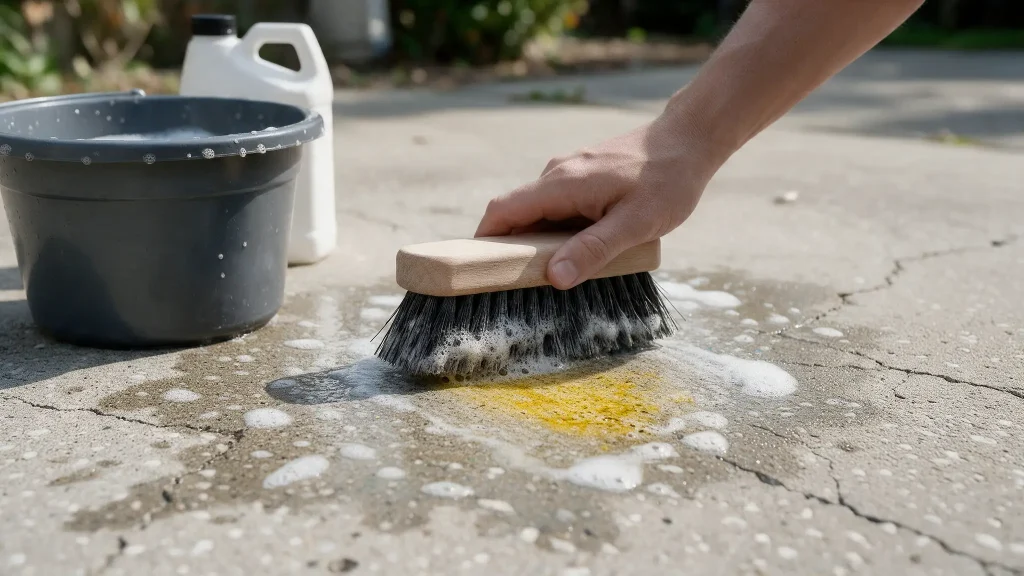
A bucket of warm water, a squirt of dish soap, and a stiff brush handle most fresh spills. Scrub in small circles, rinse with a hose, and repeat if the paint hasn’t fully lifted.
Dried spots resist this and usually call for something stronger.
Bleach fades color without lifting paint. Baking soda barely touches anything beyond dust. WD-40 isn’t built for this at all; skip it.
2. Vinegar Treatment
Mix white vinegar and water in equal parts and pour it straight onto the stain. Let it sit for ten to fifteen minutes to soften things up before you scrub.
This one struggles against paint that’s been in direct sun for weeks, so lighter or fresher marks are the better target here.
3. Concrete Paint Remover
Labels vary a lot between brands, so check the dwell time before applying anything. A cloth or plastic scraper wipes away the paint once it softens.
Paint thinner does a similar job on tougher patches. Keep going until nothing’s left.
4. Graffiti Remover
Larger areas, especially outdoors where paint’s had time to really set in, respond better to this than smaller household fixes.
Apply, wait, scrub gently in circles. A paper towel or rag helps blot up whatever lifts off, then rinse everything once finished.
5. TSP (Trisodium Phosphate)
Mix this at the ratio printed on the package and brush it on. Fifteen to twenty minutes of sit time, then scrub.
Gloves and eye protection matter; this stuff is genuinely harsh. Rinse well; leftover residue near plants causes problems.
6. Pressure Washing
No chemicals here, just water under a wide fan tip. Start low and move closer only as needed, testing the whole way, since too much force chews up softer concrete fast. Driveways and sidewalks hold up fine against this.
Remove Stubborn Paint Without Damage
Some stains just don’t quit, no matter how many rounds of soap, vinegar, or chemical remover get thrown at them. A drill and some sandpaper pick up the slack from here.
Try a Wire Cup Brush First
Attach a wire cup brush to a power drill and run it over the stain in small circles. Soften it up first with warm, soapy water before you start.
This grinds away a thin layer of concrete right along with the paint. Sealed or decorative floors lose some shine wherever the brush touches down.
Garage floors and other plain, unsealed concrete take this a lot better.
Consider Sanding or Grinding
Sandpaper or a grinder comes out when nothing else has worked. Start coarse, then move to a finer grit; otherwise, the surface gouges fast.
It’s slow, physical work, and the color or texture underneath sometimes shifts once the top layer’s gone. Save it for small patches; a whole driveway is too much.
When to Call a Professional
DIY methods handle most spray paint problems, but a few situations call for outside help instead.
- Large graffiti-covered walls or extensive overspray across a driveway
- Decorative, stamped, or colored concrete, where one wrong chemical or an aggressive scrub causes permanent damage
- Stains that survive every method already covered, especially paint soaked deep into old, unsealed concrete
A professional crew clears large jobs in a fraction of the time a manual scrub-down takes. They also bring commercial-grade equipment you won’t find at a regular hardware store.
Beyond lifting the existing paint, a concrete restoration company also offers sealing and resurfacing. Both fix the surface for good instead of leaving it exposed to the next spill.
How to Protect Concrete During Paint Removal?
Jumping straight to the strongest method available seems like the fast option, but it usually isn’t. Chemical strippers left on too long do their own damage. So does a pressure washer held too close, sometimes worse than the stain itself.
Start with the gentlest method that could realistically work, then move up only if needed, to keep the surface from wearing down.
Use products made for concrete instead of whatever general cleaner is under the sink. Follow whatever dwell and rinse times are on the label.
Cover nearby plants and grass before you start, and keep gloves and eye protection on throughout the process.
Prevent Future Spray Paint Stains
A sealed floor, a drop cloth, and a quick wipe-down handle most of this before it ever becomes a problem. None of it costs much or takes long. A minute of prep beats an hour of scrubbing every time.
Seal Porous Concrete Surfaces
Sealer closes off the pores that pull paint in deep. A sealed garage floor wipes clean days after a spill, no problem.
Cover Concrete Before Spray Painting
A drop cloth catches overspray before it ever touches the ground. Painter’s tape along the edges stops it from sliding mid-project.
Remove Fresh Overspray Quickly
Wipe up paint in the first few minutes, and it barely soaks in at all. Leave it a day, and it’s there for good.
Wrapping It Up
Spray paint on concrete doesn’t have to stay there forever. Soap, water, and vinegar clear out fresh spills fast.
Chemical removers, TSP, and a pressure washer handle paint that has already dried in. Wire brushing and a little sanding pick up whatever’s still hanging on.
Sealing the concrete ahead of time keeps the next spill from soaking in as deep as this one did. Matching the method to the stain is the real answer behind how to get spray paint off concrete.
Frequently Asked Questions
1. How Long Does Spray Paint Take to Cure on Concrete Fully?
Cure time runs 24 to 72 hours, stretching closer to a week in cold weather.
2. Does Rubbing Alcohol Work on Spray Paint Stains?
Water-based paint responds somewhat, while oil-based paint mostly shrugs it off.
3. Can Cold Weather Make Spray Paint Harder to Remove?
Cold air slows down most removers, giving paint extra time to bond with the concrete.
4. Is It Legal to Remove Graffiti from Concrete without Permission?
Personal driveways and walls are fair game, but public or shared surfaces need approval first.
5. Does Spray Paint Remover Work on Brick or Asphalt Too?
Brick handles standard removers well, though asphalt calls for a product built specifically for it.