One overhead light is ruining your room. You could have the perfect furniture arrangement, the most deliberate paint color, and a rug that ties everything together, and a single harsh ceiling fixture will still flatten all of it into something that looks like a hotel hallway. The fix isn’t expensive. It’s about building light in layers, the same way professional designers have done it for decades.
Layered lighting means placing multiple light sources at different heights, with different intensities, to serve different purposes at once. At its core, professional interior lighting is divided into three essential types: ambient, task, and accent lighting, and together they convey balance, depth, and functionality across a space. Get those three working together in a room, and something clicks. The space feels finished. More than that, it feels right.
The 3-Zone Lighting Blueprint
Before you buy a single fixture, you need a plan. Here’s a framework that works in any room regardless of size or style. Think of every room as having three distinct lighting zones, each serving a different human need.
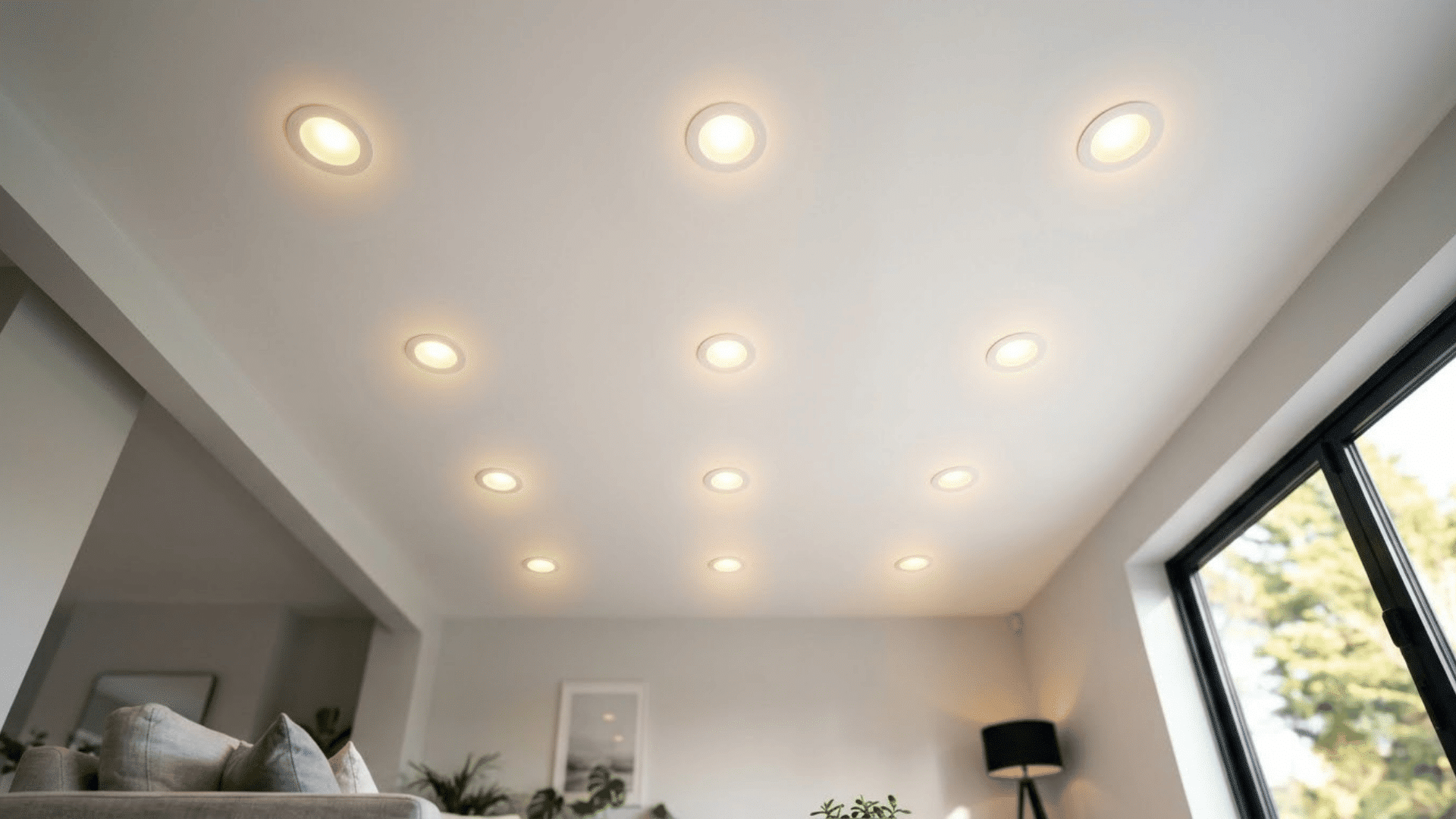
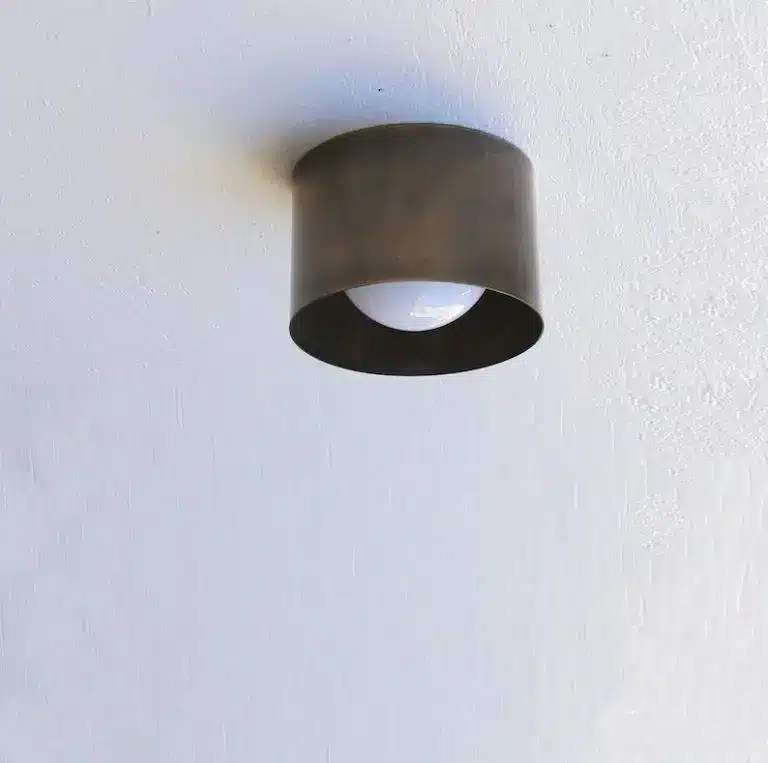
- Zone 1: The Foundation (Ambient) is your baseline. Ambient lighting provides the base level of illumination that allows safe movement through a space, typically delivered through recessed downlights, flush-mount ceiling fixtures, or indirect cove lighting. This is what you reach for when you first flip the switch. It should be dimmable, always.
- Zone 2: The Workhorse (Task) goes where you actually do things. Reading chairs, kitchen countertops, bathroom vanities, home office desks. Task lighting is directed, illuminating areas like reading nooks or kitchen countertops where precision matters more than mood. A pendant over a sink. A swing-arm sconce beside a chair. A strip light under a cabinet shelf. These fixtures don’t need to be beautiful. They need to be exactly where your hands are.
- Zone 3: The Storyteller (Accent) is where a room gets personality. Accent lighting brings drama and focus, highlighting artwork, shelving, or architectural details. Picture lights, directional spotlights aimed at a gallery wall, LED tape tucked behind a bookcase. Accent lighting is typically three times brighter than ambient lighting, making highlighted features stand out, which is why even a small accent fixture can completely change how a room reads from across the room.
Why Your Living Room Needs All Three at Once
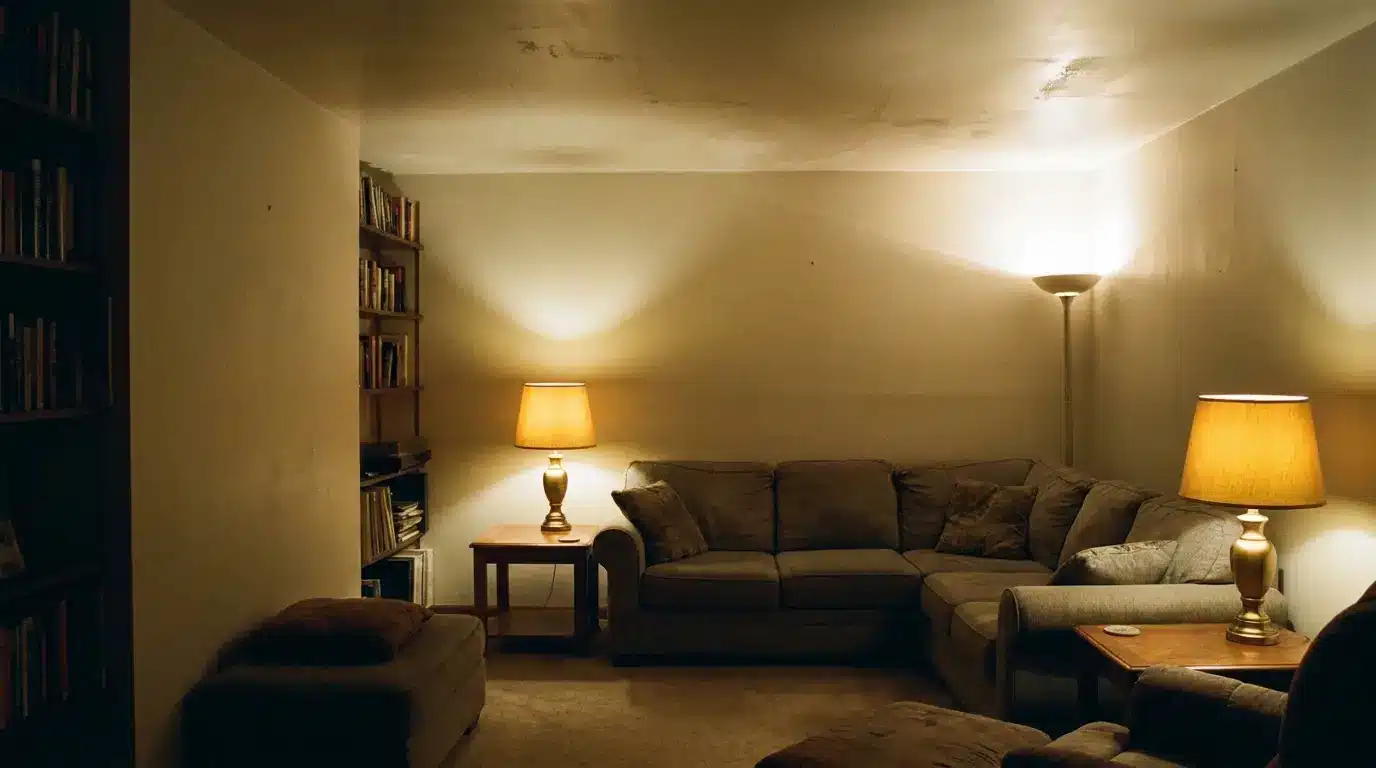
Here’s a scenario that’ll make this concrete. Say you have a mid-size living room with a sectional, a media console, and a couple of art prints on the wall. Right now you’ve got one ceiling fan with a light kit.
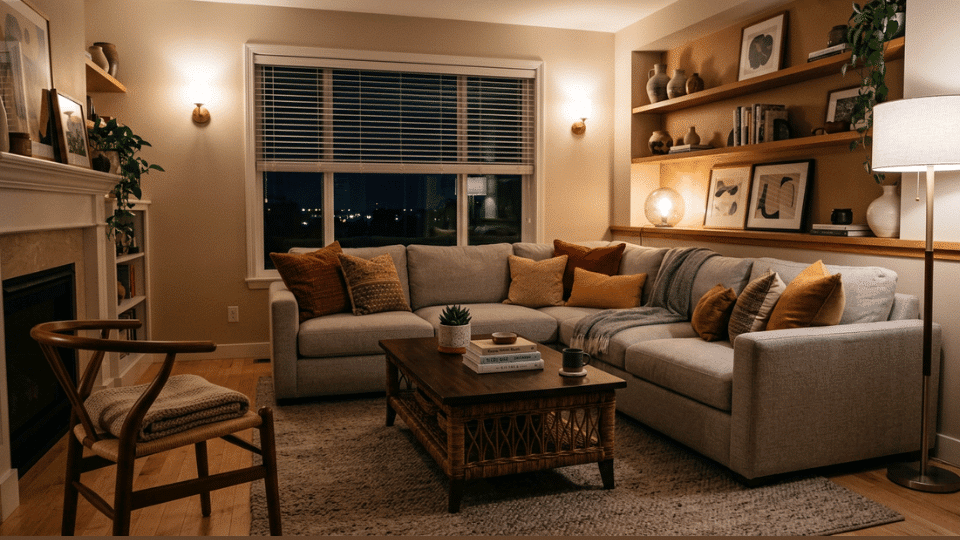
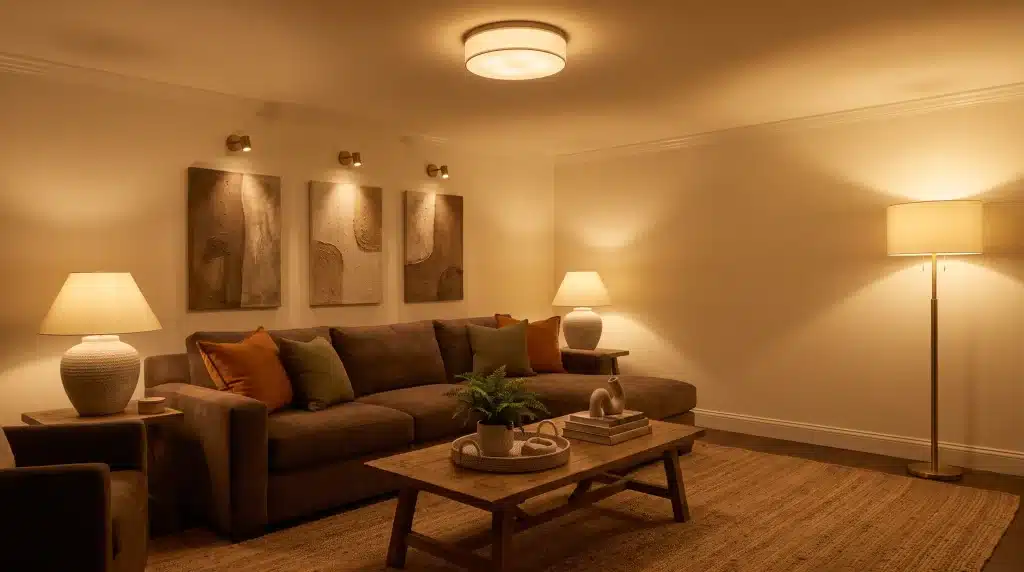
Apply the blueprint: add two table lamps on either end of the sectional (ambient fill, lower and warmer), a small picture light or two directional track heads aimed at your art (accent), and a floor lamp positioned behind the sofa angled toward the ceiling (ambient bounce). The ceiling fan light stays, but set on a dimmer at about 30% in the evening. The result is a room where your eye moves through the space naturally, landing on the things you want it to land on, and every corner feels intentional rather than ignored. That’s not decoration. That’s spatial storytelling through controlled light.
The Color Temperature Rule Nobody Mentions
You could layer all three zones perfectly and still end up with a room that looks mismatched. The culprit is almost always color temperature. Measured in Kelvins, it’s the difference between a light that looks bluish-white and one that looks golden and warm.
| Color Temperature (K) | Appearance | Best Used In |
|---|---|---|
| 2700K | Warm white, golden glow | Living rooms, bedrooms, dining areas |
| 3000K | Soft white, slightly cooler | Kitchens, bathrooms, reading lamps |
| 4000K | Cool white, crisp | Home offices, garages, laundry rooms |
| 5000K+ | Daylight, blue-toned | Art studios, craft spaces, task-heavy areas |
Stick within one Kelvin range per room. Mixing a 2700K table lamp with a 5000K recessed can in the same space is why some living rooms feel weirdly clinical despite every effort to make them cozy. If I had to pick one universal number for residential spaces: 2700K, full stop.
LEDs Changed Everything About This Conversation
Layered lighting used to cost a lot to run. Five or six fixtures per room adds up. LEDs killed that concern almost entirely. According to the U.S. Energy Information Administration’s Residential Energy Consumption Survey, 90% of U.S. households now report using LED bulbs, with over one-third using LED bulbs for all indoor lighting. That adoption rate reflects how dramatically the economics shifted.
The performance outlook is just as striking. The U.S. Department of Energy projects that energy savings from LED lighting will top 569 TWh annually by 2035, with LED lamps and luminaires anticipated to hold 84% of all lighting installations. For a home where you’re running six or seven fixtures per room, that efficiency is the reason layering your lighting doesn’t mean doubling your electricity bill.
“Light-colored walls and ceilings with high reflectance values bounce daylight deeper into a space, reducing dependence on electric lighting.”- Interior Design Institute, Lighting Design for Interiors (2026). That insight from the Interior Design Institute’s 2026 guide on lighting design is worth sitting with. Before you add a single fixture, look at your wall color. A deep charcoal absorbs light. A warm off-white bounces it. Sometimes your “lighting problem” is actually a paint problem in disguise.
Room-by-Room Quick Decisions
Not every room needs equal investment. Here’s how to prioritize.
- Living room: Full three-zone treatment. This is where you spend the most time and where guests form their impression of your home. Put a dimmer on everything.
- Bedroom: Heavy on ambient and accent, light on task. Two bedside reading sconces handle the task work. Let the rest be soft and warm.
- Kitchen: Heavy on task, moderate on ambient. Under-cabinet lighting isn’t optional; it’s a safety issue. Accent lighting on open shelving is a bonus.
- Dining room: One strong pendant or chandelier as the hero, dimmable, with candles or a buffet lamp to fill the edges. That’s it. Don’t overcomplicate it.
- Home office: Task first, ambient second. Cool color temperatures (3000K to 4000K) keep you alert. Save the warm lamps for after hours.
When to Call a Professional
Swapping out a table lamp or adding a plug-in sconce? That’s a weekend afternoon. Running new circuits for recessed cans, installing dimmer switches on existing wiring, or adding under-cabinet strip lighting hardwired into your kitchen? That’s a job for a licensed electrician. Any hardwired lighting work also has to meet the National Electrical Code (NEC), the standard that governs residential wiring, branch circuits, and fixture and dimmer installation across the U.S. Working with a NECA-affiliated contractor gives you access to professionals trained to install to the NEC and the industry’s highest standards, which matters when your lighting plan involves anything behind the wall.
The wiring behind great lighting design is as important as the fixtures themselves. A professional installation means dimmers that don’t buzz, breakers that don’t trip, and fixtures rated correctly for their location, such as the damp- or wet-rated fixtures the NEC requires in bathrooms and other moisture-prone areas.
The One Upgrade That Pays Off Fastest
If you do nothing else after reading this, add dimmers. A common thread in home design trends is the idea of personalization and making your home function specifically for you, and in the world of lighting, this is made possible with the use of dimmable bulbs. A single dimmer switch on an existing fixture transforms how that room can function across different times of day and different activities. Bright for cleaning, medium for conversation, low for a movie. Same room, same fixture, completely different feeling.
That’s the whole point of layered lighting. Not more light. Better light. The kind that makes your home feel like it was designed on purpose. Ready to rethink your room? Start with one space, identify your three zones, and add just one new source per layer. You’ll feel the difference the first evening you turn everything on together.