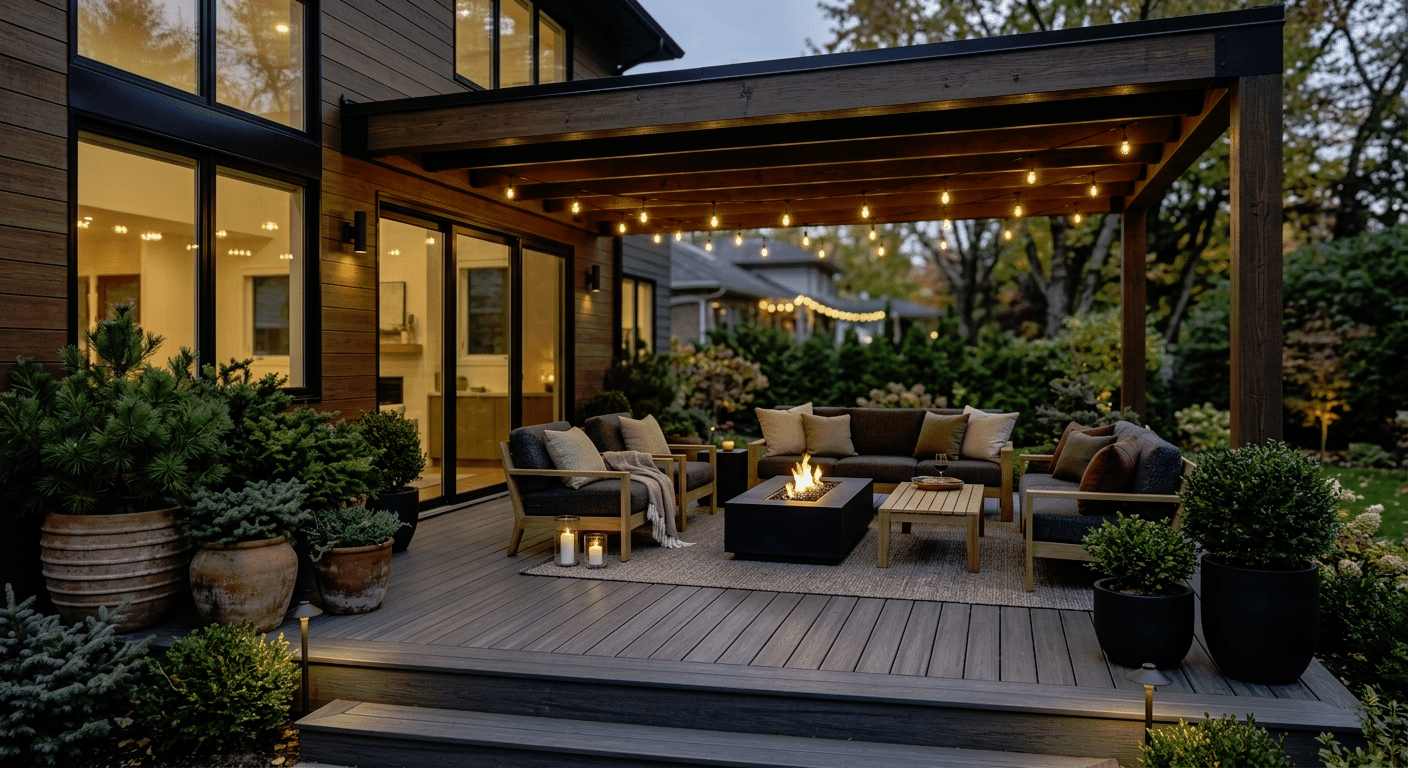
Maximize your waterfront square footage by selecting multi-functional, marine-grade materials that resist the relentless combination of sun, salt, and humidity. There are thousands of waterfront homeowners, equivalent to around 3.6% of total housing stock nationwide, struggling to balance high-end aesthetics with the reality of salt-air corrosion.
Styling a petite patio requires a shift from general landscaping to precision engineering, where every inch must justify its existence. The key is prioritizing durability with “Indoor/Outdoor Living” materials like UV-resistant bouclé-style fabrics and quick-dry foam, so your furniture can survive the spray.

The Foundation of Durable Waterfront Design
Effective small-space design starts with the floor underfoot and the zones you create to manage movement. Using large-format paving slabs helps minimize grout lines, which reduces the areas where mold and moisture typically take hold in high-humidity environments.
Once your surface is set, establish clear zones for conversation and dining to prevent a cramped feeling. Smaller patios benefit from “Organic Shapes” and curved furniture lines that soften the transition between the built environment and the natural shoreline.
Working with professional installers ensures that your patio transition to the water is seamless and structurally sound. For those in the marine construction industry looking to expand their service offerings, reviewing Wahoo Docks dealership program details provides a path toward providing high-quality aluminum docking solutions that complement a luxury patio. It could open up a whole new avenue in your commercial endeavors, as well as solve your waterfront patio conundrums.
Selecting Materials Built for the Shoreline
Traditional wood furniture often fails quickly near the water unless you apply specific protective coatings. A better way to apply spar urethane is to thin the first coat so the oil and UV inhibitors penetrate deep into the grain and remain flexible during temperature swings.
If you prefer the look of wood without the high maintenance, look for 2026 trends in wood-printed aluminum. These pieces offer the organic aesthetic of timber but possess the structural integrity to withstand salt air without rotting or warping.
Plants provide the necessary privacy and windbreaks for a small patio but they must be rugged enough to handle the environment. Consider integrating the following hardy varieties into your perimeter:
- Sea Holly for salt tolerance
- Lavender for fragrance and resilience
- Miscanthus for natural wind screening
Layering Light for Evening Utility
Modern waterfront lighting has evolved into “Solar 2.0” technology, offering reliable, dusk-to-dawn illumination without complex wiring. These systems now feature smarter energy management that ensures your patio remains visible and safe even after several overcast days.
You should prioritize shielded fixtures to prevent light pollution and ecological disruption to the local shoreline habitat. This “Human-Centric Lighting” approach uses architectural integration to highlight paths while keeping the focus on the water’s natural beauty.
Low-voltage LED systems can be combined with solar accents to create depth and layers. Focus on illuminating the edges of your patio and any steps leading toward the water to ensure safety is never sacrificed for style.
Sustaining Your Shoreline Sanctuary
Maintaining the integrity of your small patio involves a seasonal routine of rinsing salt residue from all metal and fabric surfaces. Even marine-grade finishes benefit from a fresh-water spray to prevent the gradual buildup of corrosive minerals.
Investing in high-quality covers for your furniture during the off-season will significantly extend the life of your textiles. Choose covers with built-in vents to prevent trapped moisture from creating a breeding ground for mildew.
Regularly check the tension and hardware on any umbrellas or shade sails to ensure they don’t pose a hazard during high-wind events. A well-maintained patio offers a much better return on investment and more consistent enjoyment year-round.
Maximizing Your Coastal Investment
The most successful waterfront patios are those that bridge the gap between the home and the dock. By focusing on durable materials and smart zoning, you create a space that feels expansive despite its limited footprint.
For more insights on enhancing your shoreline lifestyle, explore our latest guides on seasonal dock maintenance and coastal gardening. Keeping your outdoor space in top shape is a year-round commitment that pays dividends in relaxation.