Security cameras have now become an integral part of the management of commercial properties, but selecting cameras is just one aspect of the decision-making process. Property owners must also determine how the footage will be analyzed, recorded, saved, or accessed after an incident.
The problem of property crimes explains the significance of its previous message. The data from the FBI shows that property crimes, which include burglaries, constitute 5.99 million offenses in the United States, as of 2024. It should be noted that more than 50% of burglaries have taken place with the presence of forced entry. Nonetheless, even if the situation worsened in 2025, the property misdemeanors were reduced by 12.4%, and burglary cases decreased by 15.8%.
In case of any property crimes, video recordings could be useful from the point of view of investigation purposes. Such incidents may be as follows: illegal entry, car accidents, property theft, vandalism, or even delivery cases.
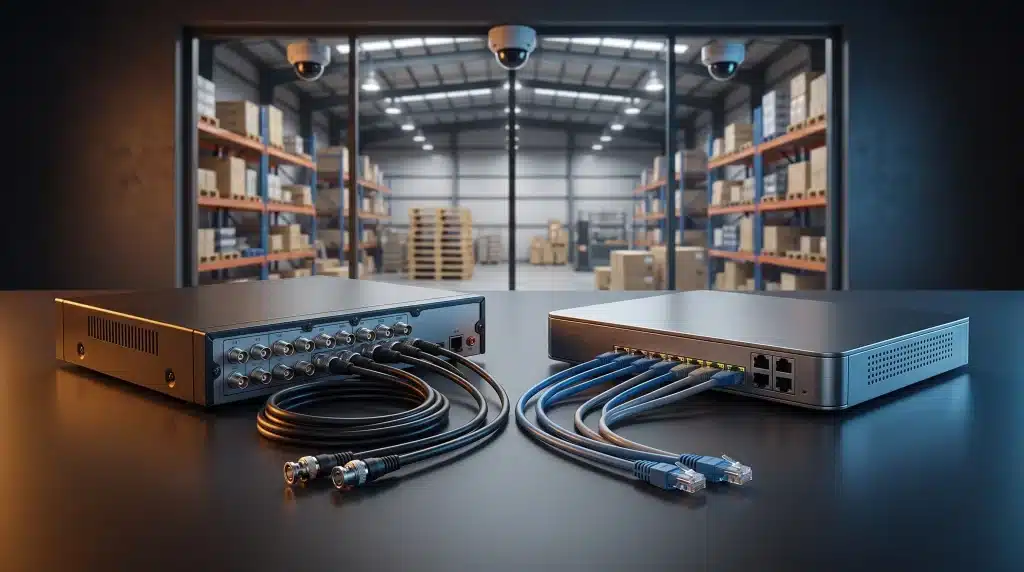
The basis of every surveillance system is either NVR (Network Video Recorder) or DVR (Digital Video Recorder), for both allow for the recording of video footage. However, the manner of their processing of video differ creating huge differences in terms of installation prices, image quality, scalability, remote access, and flexibility of changing the system as per commercial properties.
What Is a DVR Security System?
DVR systems have long been built for use with standard analog security camera systems.
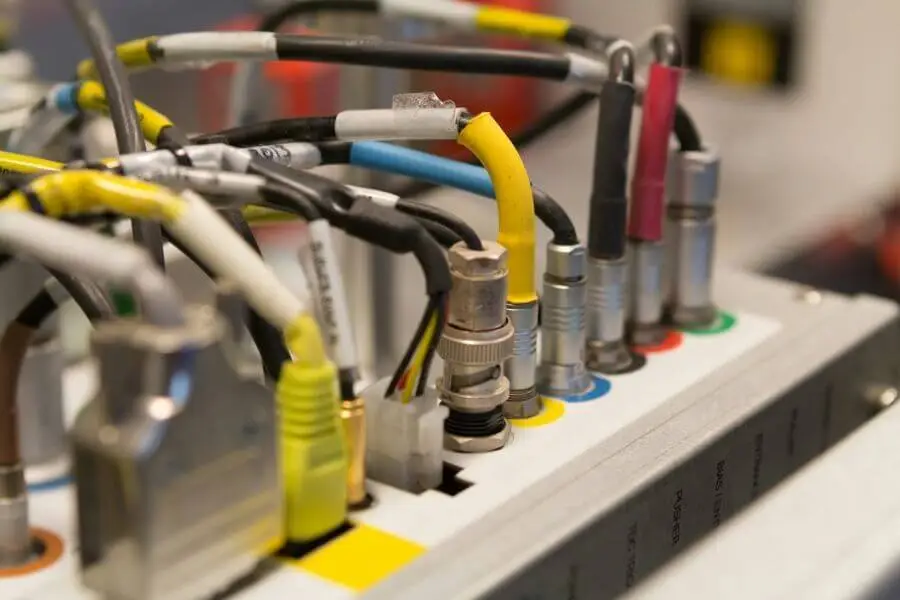
These cameras send video signals to the DVR through coax cables. The DVR converts these incoming analog signals into digital video, which can be compressed, stored viewed, and exported.
This system has been used for years in commercial surveillance applications. Many old businesses, retail stores, warehouses, workshops, apartments have existing coaxial cabling in their buildings.
Thus, one of the reasons DVRs are still being used is the established infrastructure.
If the installation of analog cameras already exists in a building, it is easy to replace only the DVR as opposed to the whole system.
DVRs can also provide remote viewing in many configurations, so security personnel does not have to be present physically next to the DVR.
Nevertheless, the system is still based on cameras transferring their video to the central unit for processing.
What Is an NVR Security System?
The operation of an NVR is not conventional.
NVR installations are mainly intended for the use of IP cameras. These cameras collect visual information in real-time and send it to the NVR after the encoding process.
Whereas with the help of traditional coaxial cables, the NVR installations are done utilizing the Ethernet network technology.
The possibility of implementing Power over Ethernet (PoE) helps with the installation because video signal and energy supply can be transmitted through the same Ethernet line.
Because of the network architecture, the property managers can choose the places for the support cables, cameras, and storage devices.
Due to this flexibility, NVR systems are preferred in business places that are either being built for the first time, are significantly rebuilt, or are being modernized to use higher camera resolutions.
NVR vs DVR: The Main Difference Is the Architecture
It is easy to think that the difference between DVR and NVR is simply that one is older and one is newer. In reality, the most important distinction is where video is processed and how it travels through the system.
DVR systems generally receive raw video from analog cameras and process it at the recorder.
NVR systems receive video that has already been digitally encoded by IP cameras and transport it across a network.
This difference influences almost everything else, from cabling and camera selection to expansion possibilities.
The information put forth by Coram is a good example that gives property owners insight into nvr vs dvr technology. As indicated, NVRs which employ IP-camera technology make it possible to store security footage in greater clarity as well as provide innovative video solutions, along with remote access and ease in expansion. At the same time DVRs can still be useful when the property is already equipped with analog cameras and coaxial setup to carry signals.
Hence, it turns into a question of matching recorder equipment appropriate for establishing the properties’ infrastructure instead of simply picking the best technology available on the market.
Image Quality Matters More on Commercial Properties
Resolution is particularly important when cameras cover large commercial spaces.
While a low-quality capture may show that an individual accessed the parking facility, it does not provide useful data for appraising what took place afterward. Commercial security units frequently need to analyze factors like the clothing worn by the person, objects, vehicle specifications, the entrances through which the person walked, and the route taken inside the building.
IP cameras used with NVR systems generally offer greater access to high-resolution options than traditional analog DVR installations.
Modern IP camera systems can support resolutions ranging from standard HD to 4K and beyond, depending on the equipment.
Higher resolution is not automatically better in every location, however.
A camera monitoring a small storage-room entrance may not require the same resolution as one covering a large loading area or parking entrance. Higher-resolution footage also consumes more storage.
Property managers should therefore choose resolution according to the scene and investigation requirements rather than specifying the maximum resolution for every camera.
Existing Cabling Can Change the Financial Equation
One of the biggest mistakes when comparing surveillance systems is looking only at recorder prices.
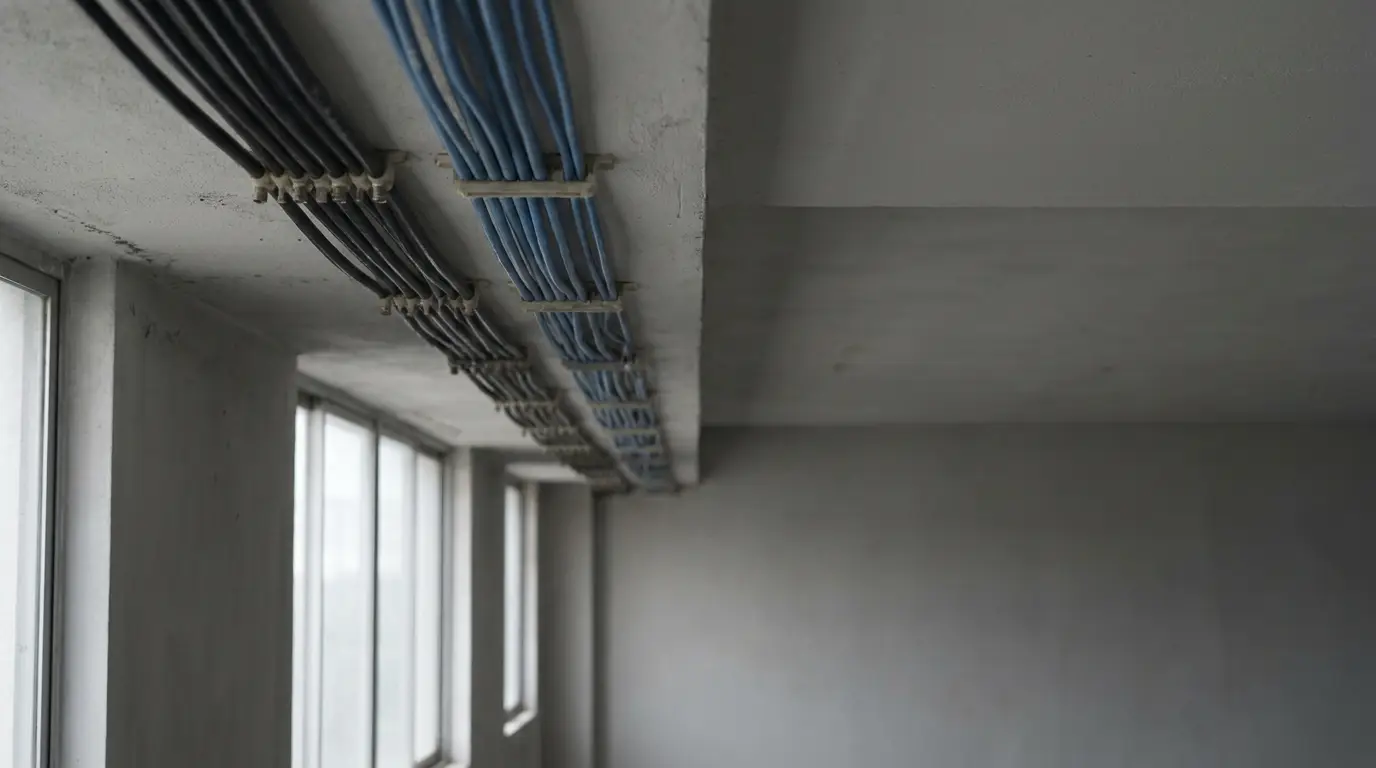
For an existing commercial building, cabling can represent a significant part of the installation.
Envision a three-story commercial building that has dozens of analogue cameras already wired in using coaxial cable. Before you even start replacing each analogue camera, and installing fresh network cables throughout the walls, ceiling, stairs, and outer facilities, the project scope grows tremendously.
In that situation, maintaining a DVR-based system or using a carefully planned hybrid migration may make financial sense.
The situation can be very different in a new development.
If a commercial building is already using Ethernet infrastructure, installation of the IP cameras as well as an NVR could be relatively simple. The cameras can also be positioned in different locations with the help of network switches.
The correct calculation should therefore consider the entire lifecycle of the installation, not simply whether a DVR recorder costs less than an NVR recorder.
NVR Systems Usually Offer More Room to Scale
Commercial properties rarely remain exactly the same.
A landlord may add another tenant suite. A warehouse may expand its loading area. A retail property may open another entrance. A commercial complex may add parking spaces or construct another building.
Every change can create new surveillance requirements.
Traditional DVR systems are often constrained by the physical number of channels available on the recorder and by the need to route camera cabling directly toward the recording infrastructure.
When the recorder reaches capacity, expanding the system may require another recorder or more substantial modifications.
NVR environments can generally provide greater flexibility because cameras operate over a network.
New cameras can be added through suitable network infrastructure as long as the system has sufficient recording capacity, bandwidth, licensing, and storage.
This scalability can be especially valuable for property managers who expect their camera footprint to grow over several years.
Remote Management Is Increasingly Important
A property manager responsible for one small commercial building may be able to visit the site whenever an incident occurs.
That becomes much more difficult when managing ten, twenty, or fifty properties.
Remote access allows authorized users to review cameras and recorded footage without travelling to each location. Both modern DVR and NVR systems may provide remote viewing, but network-based systems are generally designed more naturally around connected management.
For multi-property portfolios, this can change how security operations work.
Suppose a property manager receives a call about damage to a loading door at 7 a.m. Instead of driving across town simply to access the recorder, the manager may be able to review footage remotely, determine approximately when the incident occurred, and provide relevant information to maintenance staff or security personnel.
The benefit is not just convenience. Faster access to information can improve operational decision-making.
Pre-Installation Planning of Storage Needs
Capturing high-definition video continuously generates hefty amounts of data.
Commercial properties need to determine how long they require the footage to be available before deciding on the storage space.
A property requiring only a short retention period will have very different needs from a facility that keeps footage for 30, 60, or 90 days.
Key parameters that influence storage demand involve the number of cameras, resolution, frame rate, method of compression used, recording frequency, motion detection recording, and retention needs.
For instance, the requirement for amplified storage space arises from increased camera utilization and a change from regular resolution footage to 4K video.
That’s why property owners must analyze the needs for the retention period rather than simply choosing larger hard drives.
There might be substantial reasons that would influence the length of time video has to be kept, such as regulatory requirements, contractual obligations, insurance claims, and privacy policies.
When Does a DVR Still Make Sense?
DVR systems should not automatically be dismissed simply because IP surveillance has become more common.
For some commercial buildings, DVR remains a practical choice.
An established building with functioning analog cameras, extensive coaxial wiring, limited expansion requirements, and a straightforward security objective may gain little from replacing every component immediately.
Consider a small commercial workshop with eight cameras covering entrances, a parking area, and several interior spaces. If the current analog cameras provide adequate visibility and the company mainly needs dependable recording, a DVR replacement may meet its requirements without a major rewiring project.
A phased transition may also be possible.
Property owners can preserve useful infrastructure while developing a longer-term plan to move higher-priority areas toward IP cameras.
When Does an NVR Make More Sense?
NVR systems can be especially beneficial when there is a need for greater flexibility in regard to the property.
Cameras may be needed in the hundreds if organizations are constructing new office structures, large storage buildings, shops, storage centers, buildings with multiple purposes, or numerous commercial establishments.
In this event, quality of the image becomes critical together with the ability to scale the system, centralize management, and use the system from remote locations.
IP cameras can also provide capabilities that go beyond simply recording a continuous stream of video. Depending on the camera and management platform, systems may support motion detection, object-based search, license plate recognition, alerts, or other forms of video analytics.
Not every commercial property needs those capabilities today.
However, selecting network infrastructure can make it easier to adopt new features later without replacing an entire analog camera environment.
Cybersecurity Becomes Part of Physical Security
Moving surveillance onto a network introduces another consideration: cybersecurity.
Analog cameras connected to a traditional DVR have comparatively limited exposure to a building’s network. IP cameras, NVRs, management portals, mobile applications, and remote connections create more connected endpoints.
Those endpoints need to be managed properly.
Commercial property owners should change default passwords, use strong account controls, keep firmware updated, restrict administrative privileges, segment security devices where appropriate, and remove access when employees or contractors no longer require it.
Remote access should also be configured securely rather than exposed through poorly protected network settings.
A modern camera with excellent image quality is not an improvement if weak cybersecurity introduces another route into the organization’s systems.
Think About the Property Five Years From Now
The best surveillance decision is rarely based only on what the property needs today.
Before choosing a DVR or NVR, commercial property owners should consider:
- whether existing analog cameras and cabling still have useful life
- how many cameras may be required in the future
- whether multiple locations will need centralized monitoring
- what image detail is actually required
- how much recorded video must be retained
- whether analytics or other advanced functions may eventually be useful
- whether the building’s network can support additional security devices
While a property anticipated to stay relatively stable might have rather distinct priorities than a fast-growing commercial portfolio.
Planning for the future can stop a seemingly cheap installation from becoming expensive to replace just a few years down the line
FAQs
What Is the Biggest Difference Between NVR and DVR?
The main difference is the way in which the videos are stored and transmitted. DVR equipment uses analog cameras which send signals through coaxial cabling to the devices. NVR systems, conversely, operate with digital cameras which transmit their information via the Internet.
Is NVR Better Than DVR for Commercial Properties?
It depends on the property. NVR systems generally provide better scalability, support for high-resolution IP cameras, and greater flexibility for modern connected environments. DVR systems can still be economical for buildings with existing analog cameras and coaxial cabling that do not need major expansion.
Can a Commercial Property Upgrade From DVR to NVR?
Yes. The transition can be completed at once or gradually depending on the existing infrastructure. Some organizations replace high-priority cameras first while maintaining functioning analog equipment elsewhere. A professional assessment can help determine whether existing cabling or cameras should be retained.
Does an NVR Require an Internet Connection?
In reality, NVR is capable of recording video from IP cameras on a local network without needing to use the public internet. However, internet connectivity is needed to utilize cloud-based services, remote viewing and administration, or some added advanced functionalities.
How Much Storage Does a Commercial Security Camera System Need?
There is no single answer. Storage depends on the number of cameras, resolution, frame rate, compression method, recording schedule, and how many days of footage the organization wants to retain. Storage calculations should be completed before equipment is purchased.
Are NVR Systems More Expensive Than DVR Systems?
The initial equipment cost can be higher because NVR systems typically use IP cameras and networking equipment. However, installation conditions matter. In a new commercial building with Ethernet infrastructure already available, an NVR installation may be more practical than building around new analog infrastructure. Existing properties with extensive coaxial wiring may find DVR upgrades less expensive initially.
Conclusion
Choosing between an NVR and DVR is ultimately an infrastructure decision as much as a security decision.
DVR systems can still provide dependable and economical recording for commercial properties with existing analog cameras and relatively stable surveillance requirements. Reusing functioning cameras and cabling may reduce the cost and disruption of an upgrade.
NVR systems are generally better suited to properties that require higher-resolution cameras, easier expansion, remote management, modern analytics, or a security architecture that can evolve over time.
Commercial property owners should therefore avoid choosing based solely on equipment price. Existing cabling, camera count, required image quality, storage, cybersecurity, future expansion, and the number of locations being managed all matter.
The most sensible security setup is not necessarily the newest one. It is the system that meets today’s operational requirements while leaving enough flexibility for how the property may need to be protected tomorrow.