Owning a home in Tampa Bay means the exterior has a demanding job. Intense sun, heavy rain, humidity, salt air in coastal communities, and tropical weather can expose weak points much faster than homeowners expect. An exterior that merely looks attractive is not enough; materials and improvements also need to perform in Florida conditions.
That makes renovation priorities different from those in milder climates. Instead of chasing cosmetic trends, Tampa Bay homeowners can get more value by choosing projects that strengthen vulnerable openings, manage water, reduce maintenance, improve energy performance, and refresh the home’s appearance at the same time. The following upgrades address those goals without turning exterior improvement into a collection of unrelated projects.
Make Exterior Doors Part of Your Storm Strategy
The front entrance has an obvious visual role, but in Tampa Bay it should also be considered part of the home’s protective envelope. Homeowners researching hurricane doors Tampa Bayshould look beyond color and decorative glass and consider impact resistance, frame construction, reinforced hardware, weather sealing, and appropriate product approvals.
Hurricane-rated doors can use reinforced components and durable materials such as fiberglass, while polyurethane cores can provide insulation. Features such as reinforced hinges, weather-resistant construction, and impact-rated glazing can further strengthen the complete door system.
Installation deserves equal attention. Even a well-engineered product depends on correct anchoring and a sound surrounding frame. When replacing an exterior door, have the existing opening inspected for rot or other deterioration rather than simply covering problems with a new unit.
Treat Windows as More Than a Cosmetic Replacement
Old windows can affect several aspects of a Tampa Bay home at once. Poor seals may allow conditioned air to escape, outdated glass can contribute to unwanted solar heat, and vulnerable openings become an obvious concern when severe weather approaches.
When replacement is necessary, evaluate the entire window system rather than choosing primarily by appearance. Frame strength, impact resistance, energy performance, installation method, and water management all deserve consideration.
Energy-related specifications are particularly useful in Florida’s climate. U-factor indicates how well a window limits heat transfer, while solar heat gain coefficient helps describe how much solar radiation passes through it.
A thoughtfully selected window can therefore contribute to storm resilience while also making rooms more comfortable during long periods of hot, sunny weather.
Give the Roofline a Water-Management Checkup
A new front door or freshly painted exterior is easy to appreciate. Gutters, flashing, soffits, and drainage details are less exciting, but ignoring them can allow relatively small problems to become expensive ones.
Start by observing the house during heavy rain. Water should move away from walls and foundations rather than overflowing gutters or collecting beside the structure. Look for deteriorated fascia, damaged soffits, loose gutters, and areas where staining suggests repeated water exposure.
Downspouts should discharge water appropriately instead of concentrating it near the foundation. Homeowners should also watch for vegetation or debris that interferes with drainage.
These upgrades may not transform listing photographs, but they help protect the improvements that do. Effective water management is one of the least glamorous and most practical exterior investments a homeowner can make.
Choose Exterior Finishes for Florida Conditions
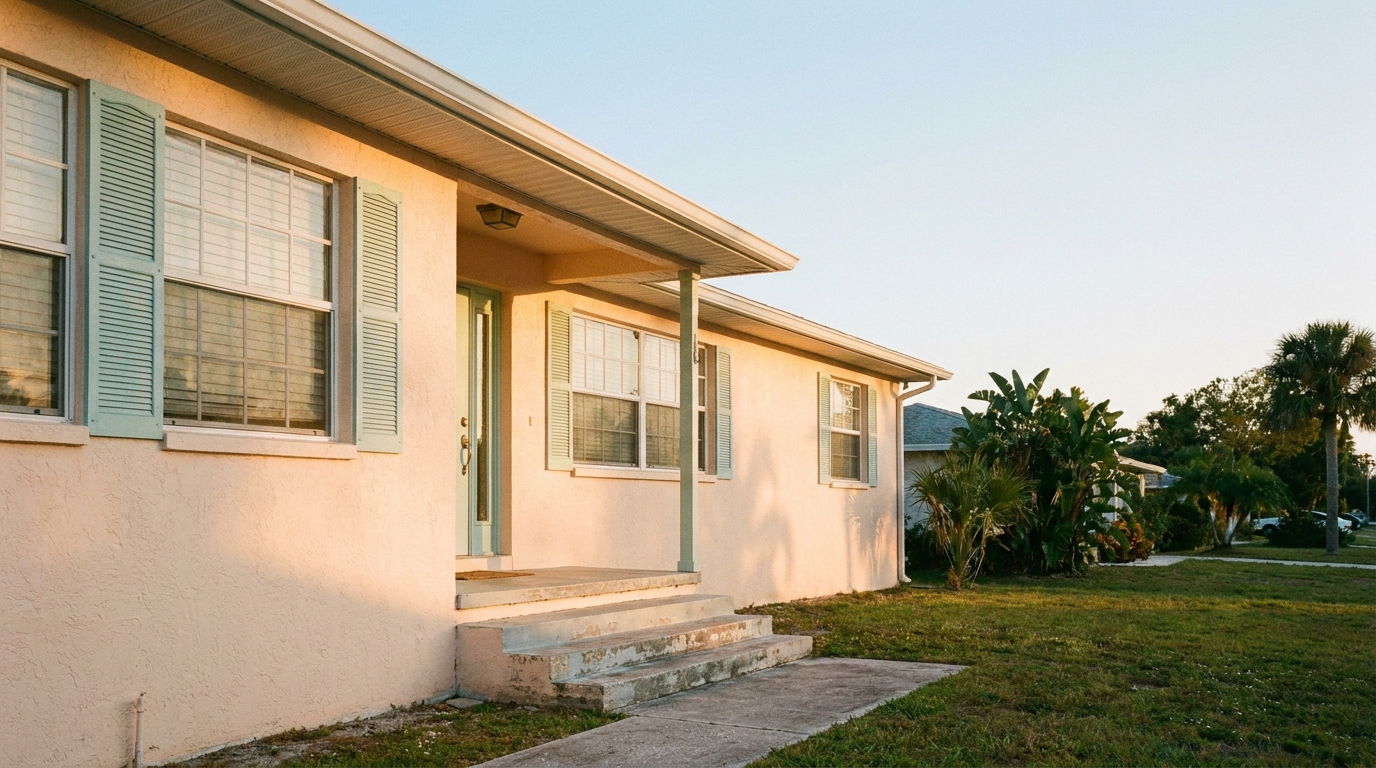
Painting a home can dramatically improve curb appeal, but Tampa Bay’s climate makes product selection and surface preparation particularly important.
Strong sunlight can fade certain finishes, while persistent moisture creates conditions where mildew and deterioration can become problems. Before painting, repair cracks, damaged siding, deteriorated caulk, and other defects that could allow moisture to penetrate.
Color choice can also serve a practical purpose. Lighter exterior colors may absorb less solar heat than very dark ones, although architecture, orientation, surrounding shade, and material type all affect actual performance.
Think beyond the walls as well. Coordinating trim, shutters, garage doors, and the main entrance can make an older exterior feel intentionally updated without requiring structural changes.
A successful paint project should protect the underlying material as well as improve its appearance.
Rethink Landscaping Around Storms and Maintenance
Tropical landscaping can make a Florida home look inviting, but placement matters. Plants should complement the house without creating unnecessary maintenance or storm concerns.
Inspect large trees for unhealthy or damaged branches, particularly those extending over roofs, driveways, or outdoor living areas. Keep shrubs from crowding exterior walls where they can make inspection and maintenance difficult.
Drainage should influence landscaping decisions too. Avoid designs that direct water toward the foundation or allow mulch and soil to build up against vulnerable exterior materials.
Native and Florida-friendly plants can be useful choices because species suited to local conditions may require less intensive watering and maintenance once established appropriately.
Good landscaping frames the architecture instead of hiding it. It should also make the property easier to care for rather than adding another long list of chores.
Turn Outdoor Living Areas Into Usable Rooms
A patio or lanai becomes far more valuable when it feels like an extension of the house rather than an empty slab behind it.
Start with shade. Covered areas, appropriate awnings, or other shade solutions can make outdoor spaces considerably more comfortable during hot parts of the day. Ceiling fans in properly designed covered areas can improve comfort further.
Then consider how people actually use the space. A dining zone needs enough room to move around chairs, while conversation areas benefit from comfortable, weather-appropriate furniture and accessible lighting.
Materials should be selected with humidity, rain, and intense sunlight in mind. Outdoor furniture and fixtures that constantly require refinishing can quickly make a beautiful patio feel like a maintenance burden.
The goal is to create somewhere the household genuinely uses, not simply another area staged for appearance.
Upgrade Exterior Lighting With Purpose
Exterior lighting can improve appearance, safety, and everyday convenience at the same time, making it one of the more versatile smaller upgrades.
Begin with functional areas. Entrances, steps, walkways, driveways, and frequently used side paths should be easy to navigate after dark. Then add restrained accent lighting where it highlights landscaping or interesting architectural details.
More fixtures do not necessarily produce a better result. Excessively bright lighting can create glare and make outdoor spaces feel harsh. Well-positioned fixtures often accomplish more with less.
Consider controls as well. Timers, motion sensors, and smart lighting can reduce the need to leave every fixture operating continuously.
When chosen carefully, lighting gives a refreshed exterior a finished appearance after sunset while making everyday arrivals and departures more comfortable.
Prioritize Upgrades as One Connected System
Exterior renovations are most effective when homeowners stop viewing the roof, doors, windows, drainage, landscaping, and outdoor areas as completely separate projects.
A new paint job makes little sense if water continues leaking onto the siding. Attractive landscaping should not block drainage or hide deterioration. An upgraded entrance performs best when the surrounding frame is sound, while replacement windows need proper installation to deliver their intended benefits.
Begin with protection and structural concerns, then move toward efficiency, comfort, and appearance. Have questionable areas evaluated by qualified professionals and verify that work requiring permits or approvals follows applicable local requirements.
For Tampa Bay homeowners, the best exterior upgrade is rarely the flashiest one. It is the improvement that solves several problems at once: stronger weather protection, easier maintenance, greater comfort, and an exterior that still looks welcoming. When projects are planned as parts of one system, curb appeal becomes more than decoration—it becomes the visible result of a better-performing home.