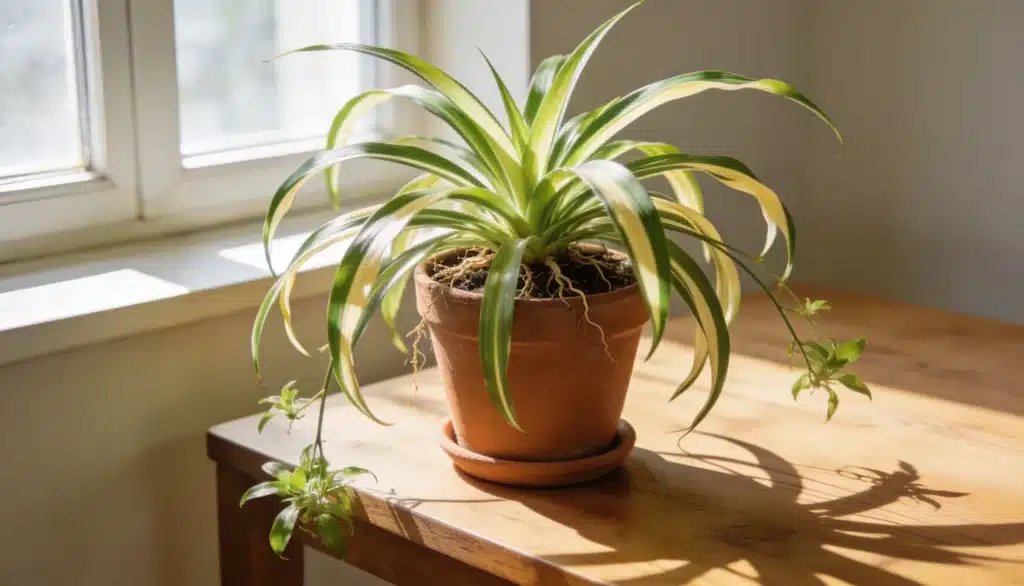
Most people bring a spider plant home thinking it will take care of itself.
For the first few weeks, that impression holds. Then the tips go brown, the leaves droop, and the easygoing reputation starts to feel like a scam.
The fix is almost always the same thing: a few habits that weren’t quite right. That is a care problem.
Spider plant care comes down to a handful of habits, and once those click into place, the difference shows fast.
And those habits? Simpler than most people expect.
Why are Spider Plants Popular?
Spider plants have been a household staple for generations, and the reasons are pretty straightforward.
They grow fast, forgive irregular watering, and do not throw a fit when conditions are less than perfect. That makes them a solid starting point for beginners.
A NASA study found spider plants removed a meaningful percentage of formaldehyde from a sealed chamber. [Source: National Wildlife Federation]
That research gets cited constantly, sometimes overstated, but the plant does filter some pollutants, and that reputation has stuck.
They adapt well both indoors and outdoors.
How to Take Care of a Spider Plant?
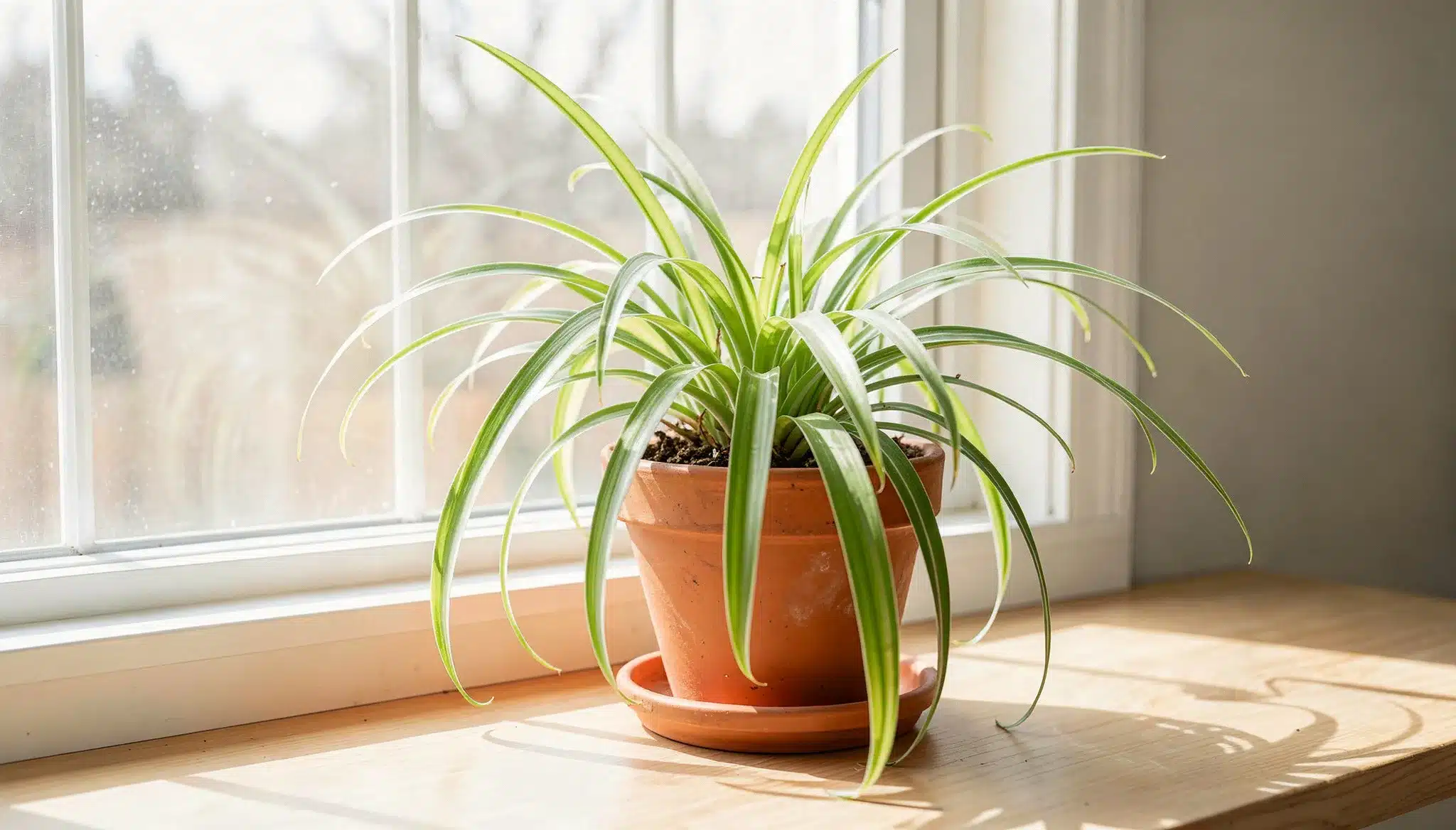
Spider plant care requires little time or effort, but it rewards consistency. Getting a few fundamentals right from the start makes everything else fall into place naturally.
Light, water, soil, and temperature each play a role, and once those are dialed in, the plant practically looks after itself.
1. Best Light for Spider Plants
Spider plants prefer bright, indirect light and do well near an east or west-facing window. Direct afternoon sun scorches the leaves fast, leaving dry patches that never recover.
Low light is manageable, but growth slows noticeably, and variegated varieties lose their stripe definition over time.
Consistent, filtered light keeps the plant looking its best through every season.
2. How Often to Water Spider Plants
Getting watering right matters more than most people realize. Too much, too often, is what kills spider plants far more than neglect ever does.
- Let the top inch or two of soil dry out before watering again
- In summer, once a week works. In winter, stretch it to ten or fourteen days
- Tap water with fluoride builds up in soil over time, causing brown tips. Filtered water works better
Avoid: Watering on a fixed schedule without checking the soil first is something a lot of plant owners do. The plant ends up sitting in moisture far longer than its roots can handle.
3. Ideal Temperature and Humidity
Spider plants are comfortable between 60°F and 80°F (15°C to 27°C), which lines up with most indoor environments.
Cold drafts are something they genuinely struggle with, so placement near drafty windows in winter is worth reconsidering.
Average indoor humidity suits them fine, but very dry air from heating systems can stress the leaves and cause browning tips over time.
4. Best Soil and Pot Type
A standard potting mix with perlite is all you need.
Terracotta pots help because they breathe, allowing moisture to escape through the walls, which gives you a wider margin for watering errors. Plastic pots work fine if you’re careful, but they’re less forgiving.
5. Fertilizing Spider Plants for Stronger Growth
Once a month with a balanced liquid fertilizer during spring and summer is enough.
- A balanced 10-10-10 liquid fertilizer or a diluted all-purpose feed works well.
- Slow-release granules mixed in at repotting time are a convenient alternative.
- Overfertilizing shows up as brown tips and white salt crust on the soil surface.
6. Pruning Spider Plants for Fuller Foliage
Pruning is simpler than most people think. Trimming tired or yellowing leaves with clean, sharp scissors redirects energy toward fresh growth.
When cutting brown tips, following the natural angle of the leaf keeps it looking neat rather than blunt and obvious.
Regular pruning also keeps the plant from looking scraggly over time.
Avoid: A lot of plant owners grab whatever scissors are nearby or just pull off dead leaves by hand. That tears the surrounding tissue and opens the plant up to stress it did not need in the first place.
7. When and How to Repot Spider Plants
Spider plants outgrow their pots quickly, and spring is the best time to make the move.
The roots are just waking up from a slower winter and respond well to fresh soil and a little extra space.
- Root bound signs: Roots pushing through drainage holes, soil drying out fast, or the plant looking cramped and top heavy
- Pot size: One size up is enough. Going too large holds excess moisture and slows growth
- Steps: Water a day before, loosen the root ball, remove damaged roots, repot into fresh mix, and keep away from direct sun for a few days
8. Easy Spider Plant Propagation Methods
Propagating spider plants takes very little effort. The parent plant sends out runners with small plantlets at the tips that root with minimal intervention.
Placing a plantlet with visible root nubs in a small glass of water gets roots growing within 1 to 2 weeks. Once roots reach an inch long, potting into soil is the next step.
Pinning the plantlet directly onto moist soil while still attached to the parent also works well. Spring gives the best results overall.
Tip: That one plantlet that looks ready but has no root nubs at the base will just sit in water going nowhere. Root nubs are the green light. No nubs, no rush.
Different Types of Spider Plants
There are several distinct varieties, and each has its own growth pattern, color, and ideal spot in the home.
1. Classic Green Spider Plant
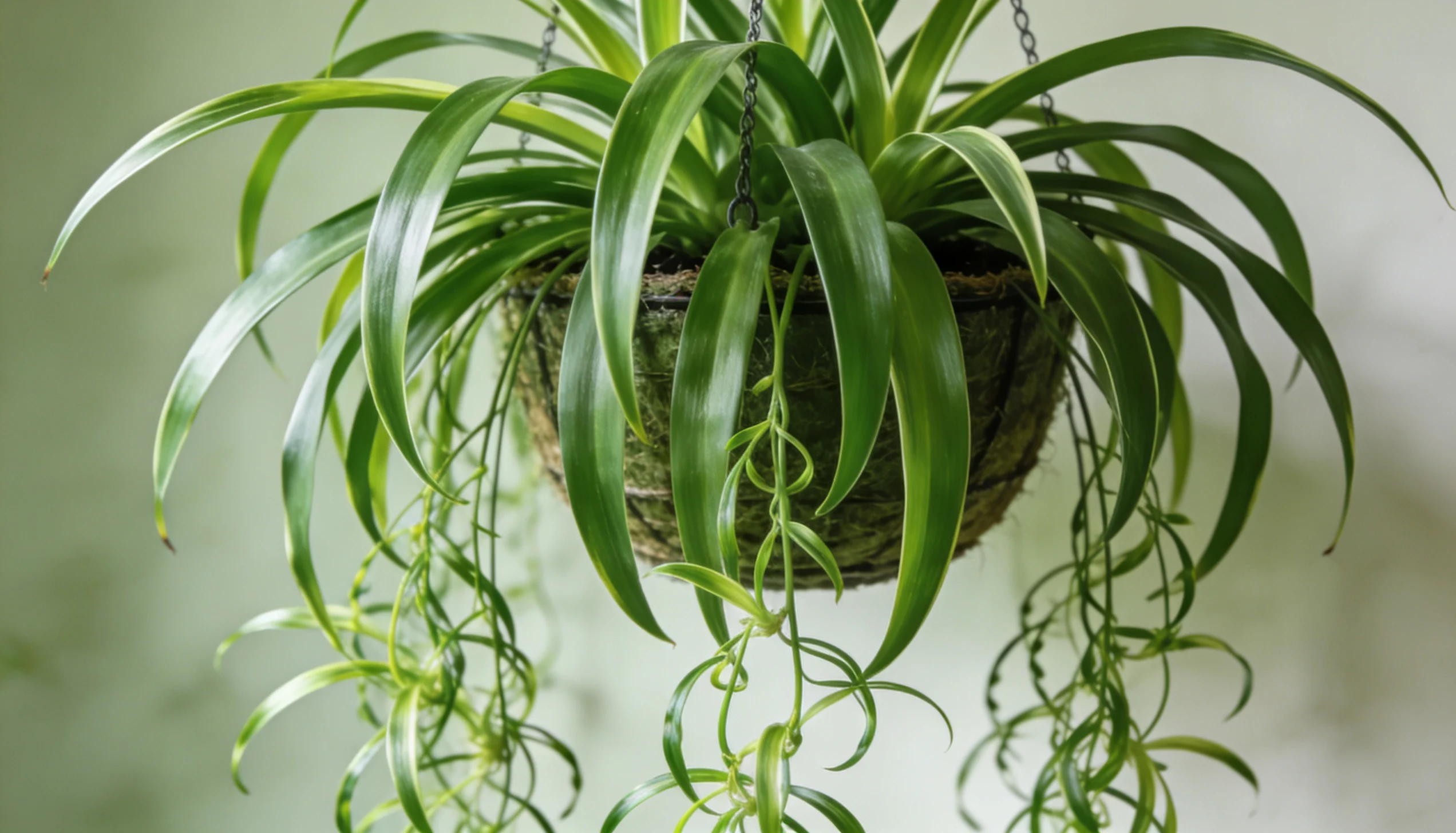
The solid green spider plant is the fastest grower of the lot. No stripes, just long arching leaves and aggressive runner production.
It fills out quickly in good light and works naturally in hanging baskets or on high shelves where the trailing growth has room to spread.
It is often overlooked in nurseries but grows more vigorously than its variegated relatives.
Most plant owners tuck this one into a dark corner thinking it will manage. The runners dry up, growth stalls, and the fastest grower in the family suddenly looks like the laziest.
2. Variegated Spider Plant
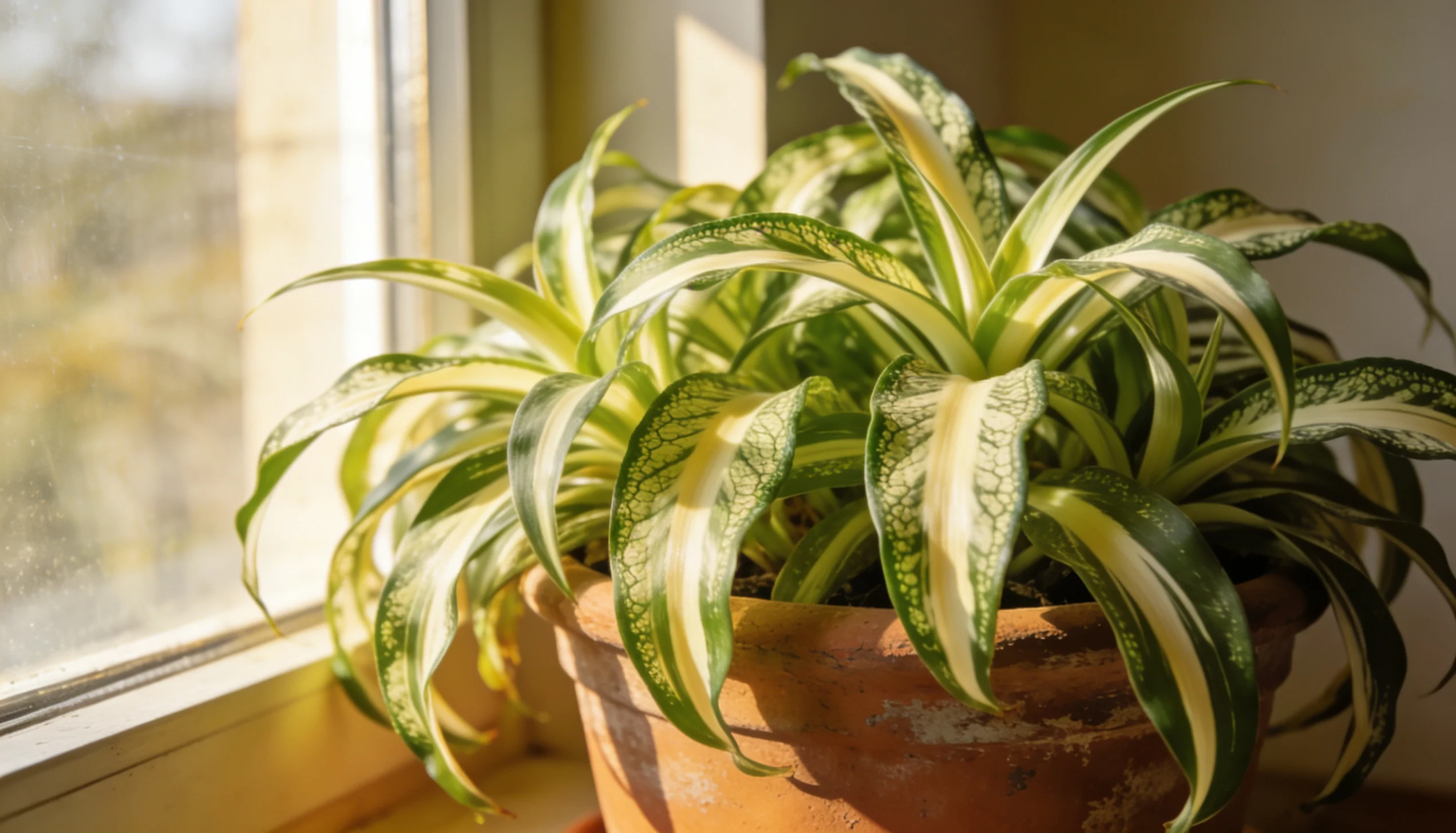
The most recognized variety has cream or white stripes running down the center of each leaf. Brighter light sharpens the stripe definition noticeably.
A variegated spider plant losing its stripes is not a lost cause. Moving it closer to a window for a few weeks usually restores the color contrast.
- Growth habit: Steady grower, produces runners freely once settled
- Best placement: East or west-facing windows, living rooms, home offices
- What to know: Stripe definition fades in low light and does not fully recover without a brighter spot
3. Curly Spider Plant
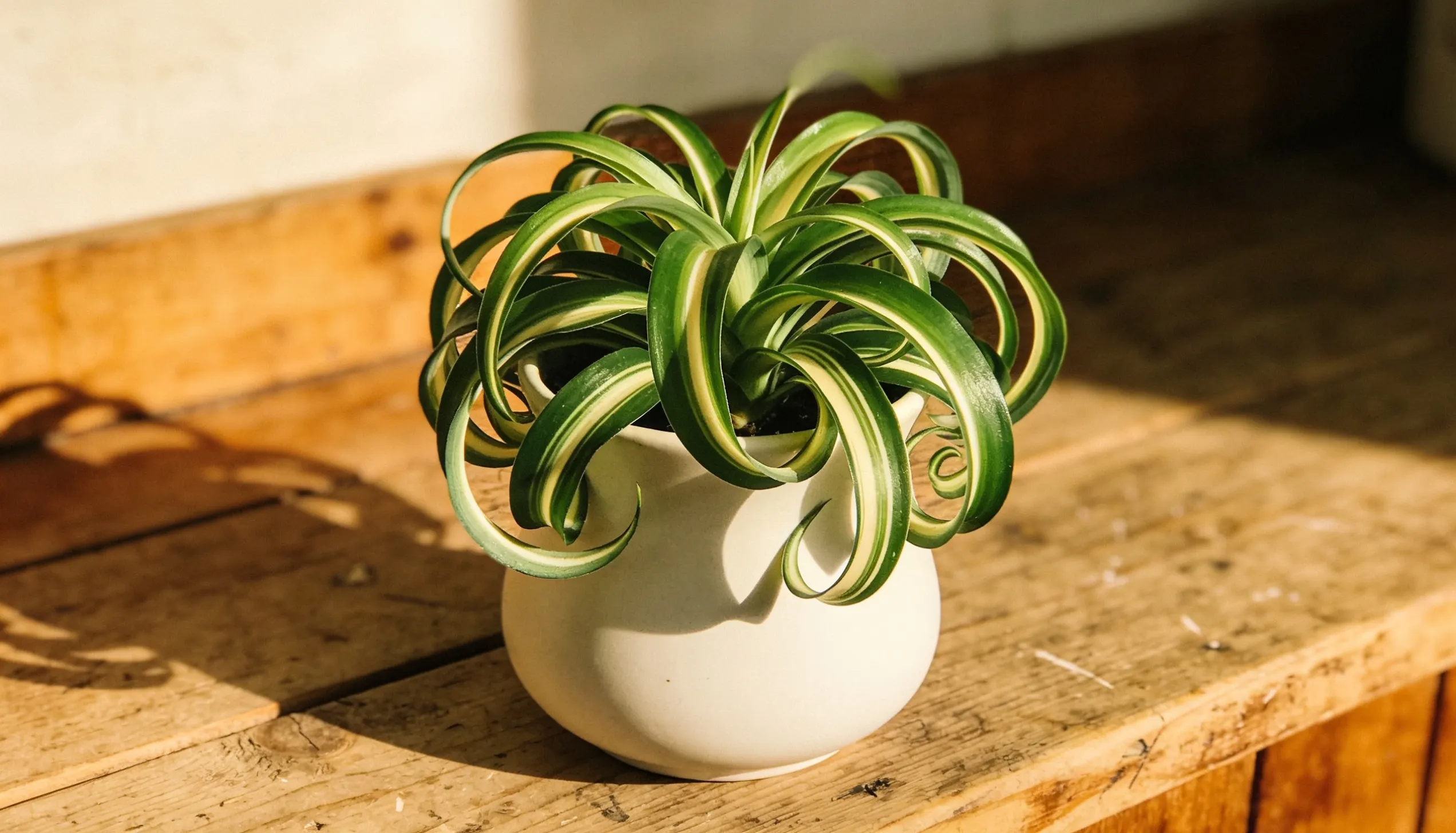
The Bonnie stays compact and curls rather than trails.
It’s the best pick for smaller spaces like desks, shelves, and bathrooms with natural light.
It doesn’t trail aggressively, suits spots where a sprawling plant would feel out of place, and holds moisture longer than its compact size suggests, so go easy on the water.
Avoid: Overwatering the Bonnie thinking its compact size means it dries out faster. It holds moisture longer than it looks like it does.
4. Reverse Variegated Spider Plant
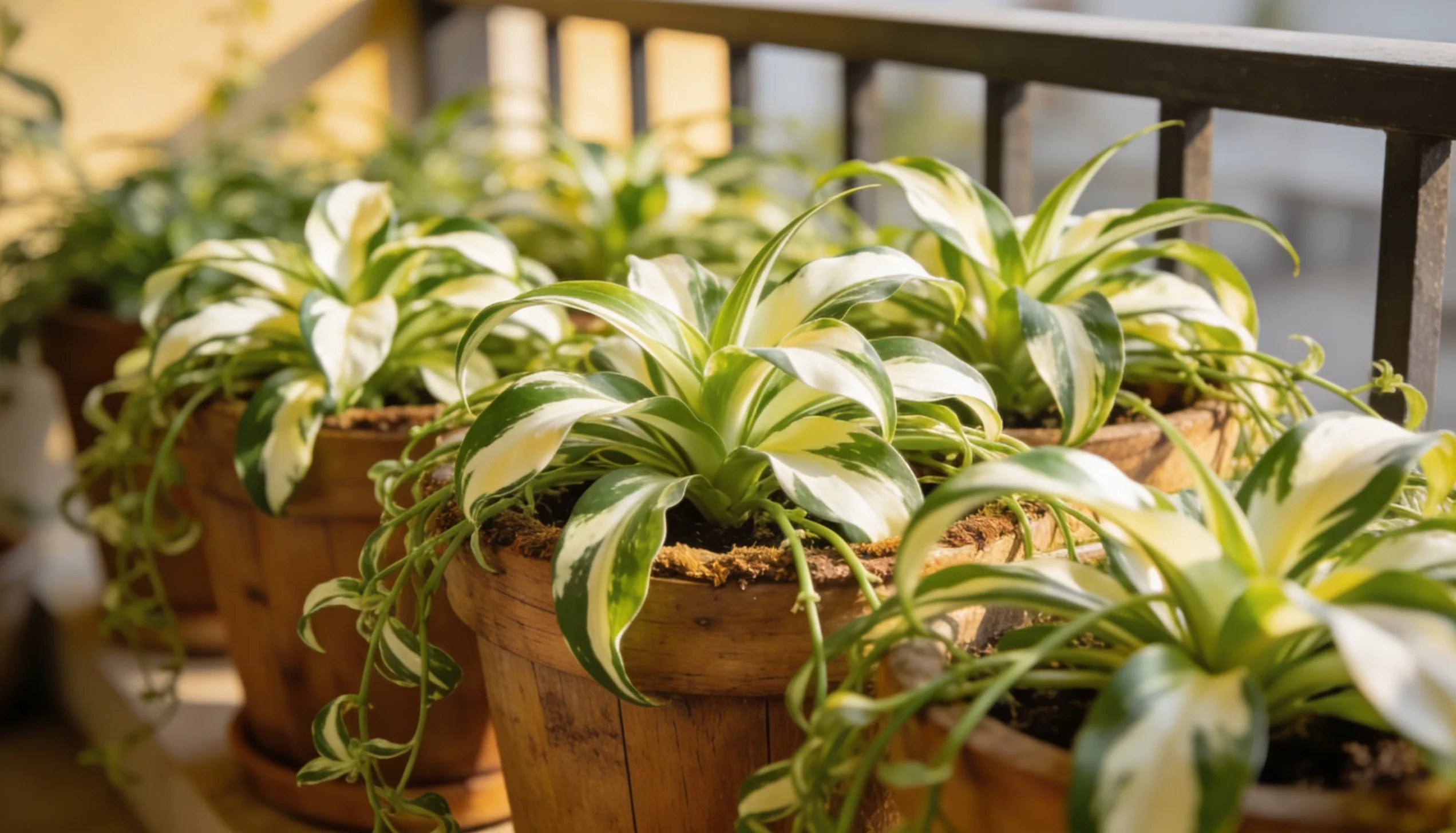
This variety reverses the color layout, with a white or yellow center and green along the outer edges.
It is harder to find but grows at a similar pace to the standard variegated type and produces runners reliably through the growing season.
Best placed somewhere it gets noticed up close, a bedside table, a reading nook, or a well-lit corner that actually gets attention during the day.
Common Spider Plant Problems Homeowners Face
Why are the spider plant tips turning brown?
Almost always fluoride in tap water or overfertilizing. Switch to filtered water and cut back on fertilizer, and new growth should come in clean within a few weeks.
Spider plant pests and diseases
Spider mites, mealybugs, and aphids are the most common culprits. Regular leaf wiping and good airflow keep most of them away.
Drooping or limp leaves
It usually means the plant is underwatered or sitting somewhere too cold. Adjusting moisture and moving it away from drafts brings it back quickly.
Yellow leaves
Spider plants often indicate the roots are sitting in water longer than they should. Pull the plant out and check. Brown, mushy roots confirm rot.
Trim the damaged roots, let them air dry for an hour, repot into fresh dry mix, and hold back on watering for the next two to three weeks.
Indoor vs Outdoor Spider Plant Care
Spider plants handle both settings well but the care approach shifts depending on where they are growing.
Outdoors, natural light and airflow speed up growth, but pests are more frequent, and the plant dries out faster.
Indoors, dry air from heating systems is the main concern in winter.
Moving a plant straight from outdoor conditions into a heated room without a transition period is where most owners run into trouble.
Quick Overview
| Factor | Indoors | Outdoors |
|---|---|---|
| Light | Bright indirect light near a window | Bright shade, no direct midday sun |
| Temperature | 60°F to 80°F, away from drafts | Mild frost free climates, above 50°F |
| Watering | Once a week in summer, less in winter | Dries faster, check more frequently |
| Soil | Potting mix with perlite | Well draining outdoor or container mix |
| Pest risk | Lower, regular leaf wiping helps | Higher, inspect before bringing inside |
| Transition | Reduce watering after moving indoors | Acclimatize gradually over one to two weeks |
Final Thoughts
Anyone who has watched a spider plant send out its first runner knows there is something quietly satisfying about it.
The plant is doing exactly what it is supposed to do because someone got the basics right.
Watering, light, soil, and the occasional trim. Nothing complicated.
And once those habits are in place, spider plant care becomes less of a task and more of a routine that runs itself.
Frequently Asked Questions
1. Can Spider Plants Grow in Water Permanently?
Spider plants can survive in water for a while, but they do not thrive long-term without nutrients, so soil is always the better permanent home.
2. Why is my Spider Plant Not Producing Babies?
A spider plant skips the runners when it is too young, in low light, or when it is recently repotted and still settling in.
3. Are Spider Plants Safe for Cats and Dogs?
Spider plants are non-toxic to dogs but they have a mild effect on cats that can cause stomach upset, so keeping them out of a cat’s reach is the smarter call.