The first cold snap always seems to catch someone off guard. One year it’s a cracked hose bib, the next it’s a fountain pump that never turns back on come spring. Most of that damage is preventable with a weekend of prep before temperatures drop for good.
Winterizing isn’t a single task so much as a checklist that touches nearly every corner of your outdoor space. Here’s how to work through it without missing anything that matters.
Why Outdoor Winterizing Matters
Water expands when it freezes. Any pipe, fixture, or container that holds standing water is at risk of cracking if that water turns to ice inside it. Once a pipe splits, you won’t know until the thaw, when it starts leaking or spraying with the first use.
The good news is that most winterizing tasks are quick, cheap, and don’t require special skills. A little effort now saves a lot of repair cost later.
Step 1: Shut Off and Drain Outdoor Faucets
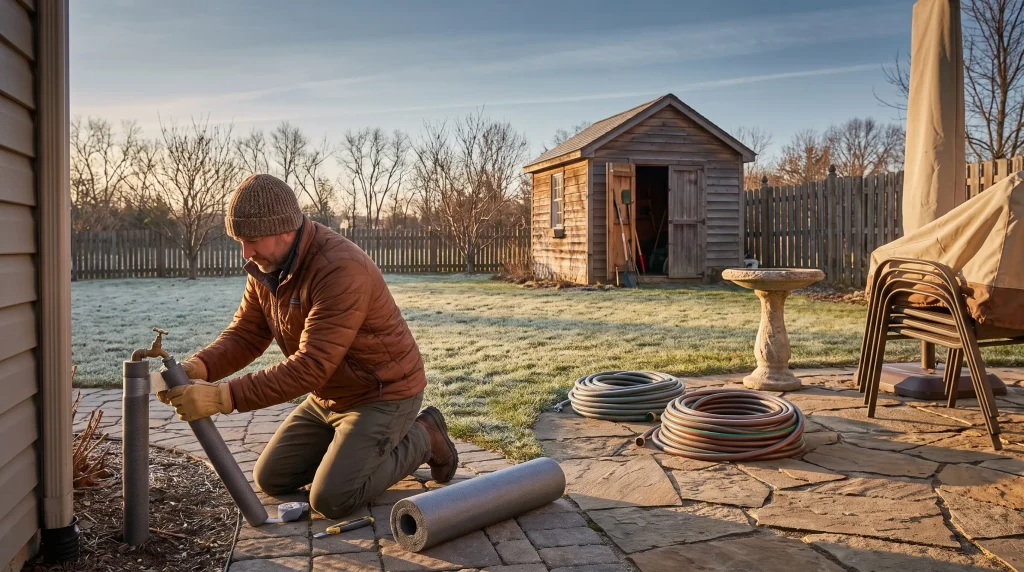
Outdoor faucets, sometimes called hose bibs, are one of the most common sources of winter pipe damage. Start by locating the shutoff valve for each outdoor faucet, usually found inside the basement or crawl space near where the line enters the house.
Turn off the valve, then open the outdoor faucet to let any remaining water drain out. Leave the faucet open through winter so any leftover moisture has somewhere to go if it expands.
If your home has frost-free spigots, they’re designed to drain automatically once shut off, but it’s still worth disconnecting hoses so water doesn’t sit in the line.
Step 2: Disconnect and Store Garden Hoses
A hose left connected over winter can trap water against the spigot, which defeats the purpose of shutting off the line. Disconnect every hose, drain it by stretching it out and letting gravity do the work, then coil it loosely for storage.
Store hoses somewhere they won’t be crushed by snow or ice, like a shed or garage. Rubber left outside all winter gets stiff and cracks faster than hose stored indoors.
Step 3: Protect Garden Fountains and Water Features
Fountains, birdbaths, and small ponds all hold standing water that can crack ceramic, concrete, or resin basins as it freezes and expands. For anything you can move, drain it completely and store the basin somewhere dry.
Built-in features that can’t be moved need a different approach. Pumps should come out and get cleaned before storage, since they’re not built to run in ice. For anything that holds standing water outdoors — from garden fountains to boat systems — a dose of marine antifreeze is far more reliable than hoping for a mild winter. It’s designed specifically to keep lines and reservoirs from cracking in freezing temperatures, and a small bottle goes a long way in a fountain pump housing or the base of a water feature that stays outside year-round.
Step 4: Winterize the Shed
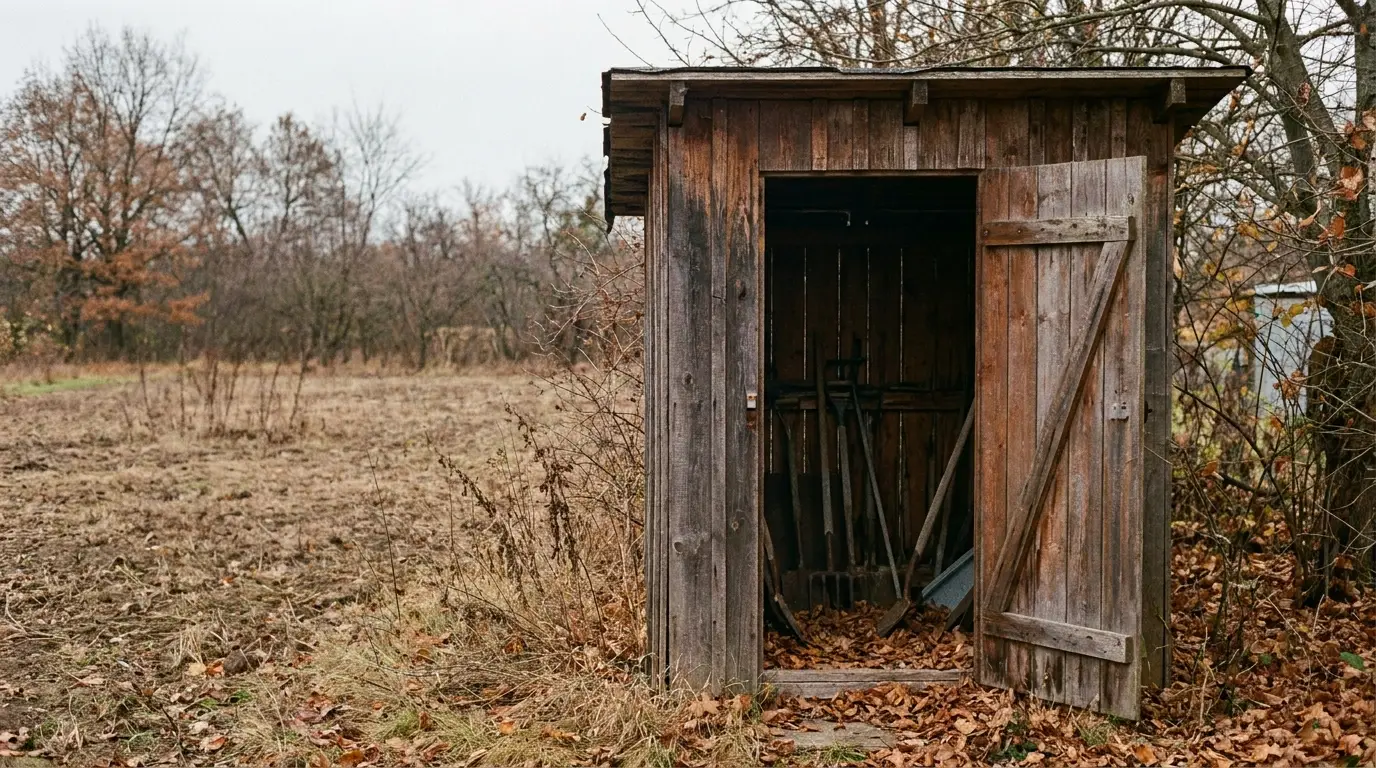
Sheds take a beating over winter if they’re not prepped. Walk through and pull out anything sensitive to freezing, like paint cans, adhesives, and half-used bags of concrete mix, and bring them somewhere temperature-controlled.
A few other shed tasks worth handling before the cold sets in:
- Check the roof and seams for gaps that could let snow or rain inside
- Sweep out leaves and debris that hold moisture against the floor
- Sharpen and oil any metal tools before they sit unused for months
Step 5: Prep Outdoor Furniture and Decor
Wood, wicker, and metal furniture all handle winter differently, but none of it benefits from sitting in snow and freeze-thaw cycles all season. Clean each piece, let it dry fully, and store it in a shed, garage, or under a well-fitted cover.
If storage space is tight, at minimum stack cushions and fabric pieces somewhere dry. Fabric left outside soaks up moisture that leads to mildew long before spring arrives.
Step 6: Check Gutters and Downspouts
Clogged gutters are one of the sneakiest sources of winter damage. Water that can’t drain properly freezes in place, adding weight that pulls gutters loose and forces ice back under roof shingles.
Clear out leaves and debris, then run water through with a hose to confirm downspouts are flowing freely. Point downspout extensions away from the foundation so melting snow doesn’t pool near the house.
Final Word
Winterizing an outdoor space doesn’t need to happen all in one day, but it does need to happen before that first hard freeze. Work through faucets, hoses, water features, the shed, furniture, and gutters one at a time, and you’ll head into the cold months with a lot less to worry about.
A little prep now means a much easier spring cleanup, and one less surprise repair bill when the thaw finally comes.
Frequently Asked Questions (FAQs)
1. When Should I Start Winterizing My Outdoor Space?
Aim to have everything done before the first hard freeze in your area, typically a few weeks before nighttime temperatures start dropping below freezing regularly.
2. Can I Leave Water in My Garden Fountain Over Winter?
It’s not recommended unless the fountain is rated for freezing temperatures. Draining it or treating the reservoir is the safer bet for avoiding cracked basins.
3. Do I Need to Winterize If I Live in a Mild Climate?
Even areas with occasional light frost benefit from draining hoses and fixtures. A single hard freeze can still do damage if pipes and fixtures aren’t prepped.
4. What Happens If I Skip Winterizing a Faucet?
Trapped water can freeze, expand, and crack the pipe. You often won’t notice until it thaws and starts leaking, which can mean a much bigger repair.