Peeling Paint Near the Roofline: Is the Problem Your Paint or Your Roof?
There’s nothing more frustrating than watching fresh paint fail. You spend a weekend scraping, priming and painting the trim under your roof, and by spring the fascia is flaking again and the top boards of siding have little bubbles all over them.
Before you buy another gallon, it’s worth figuring out whether you need a better primer or a visit from a roof repair company. Paint that peels near the roofline is often telling you something about water, and no brand of exterior paint can hold on to wood that keeps getting wet from behind.
Below, I’ll cover where roofline peeling shows up, how to read the clues, and how to repaint so the new coat lasts.
Where Roofline Peeling Shows Up
Peeling near the top of the house tends to start in three places.
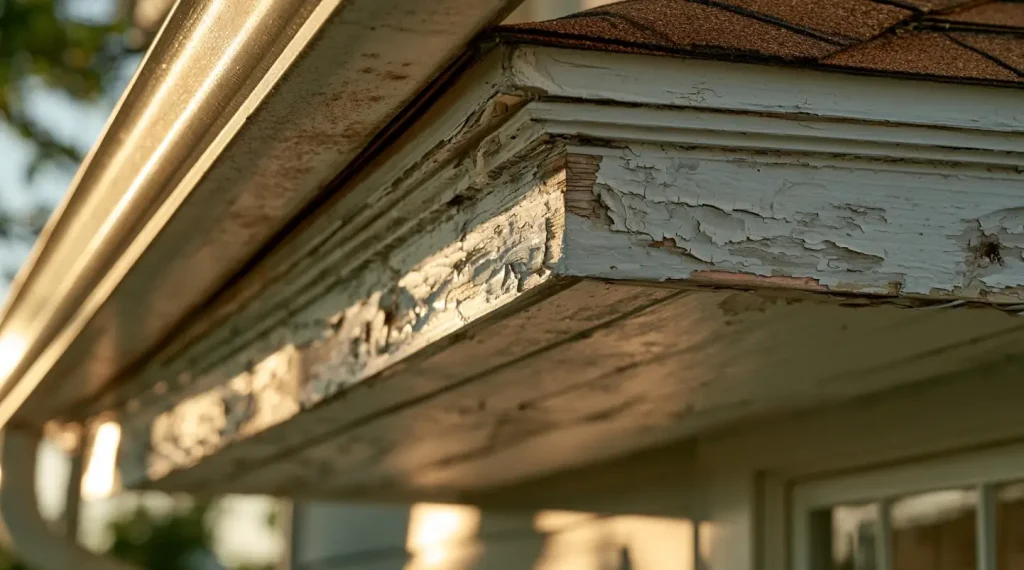
Fascia Boards Along the Gutters
The fascia is the long board your gutters hang on. When water spills over the gutter or runs behind it, this board stays damp and its paint is usually the first to go.
Soffits and Eaves
Soffits are the boards on the underside of the roof overhang. Dark streaks, bubbling or flaking here can mean water is getting in from above or that damp air from the attic is collecting behind them.
The Top Boards of the Siding
When moisture works its way into the top of the wall, the highest courses of siding soak it up first. That’s why peeling in these spots often starts right under the roofline and creeps down a few boards.
Paint Problem or Water Problem? Reading the Clues
A few minutes with a putty knife can save you from repainting the same boards twice.
The Blister Test
Find a bubble and gently break it open. If you see bare wood at the bottom, moisture pushed the paint off from behind, and you’ll need to find the water source before repainting. If you see an older coat of paint underneath, only the top layer lifted, which usually points to heat during application.
Where and When the Peeling Appears
Location matters just as much. Moisture blisters tend to return to the same spots year after year, such as near rooflines and window sills. Peeling that begins at the top of a wall and works downward is a classic sign of ice dams or a warm attic, while brittle flaking on sunny walls usually comes from sun damage. Here’s a quick way to sort it out:
|
What you see |
Likely cause |
Paint or roof? |
|
Blisters down to bare wood |
Moisture behind the paint |
Roof, gutters or ventilation |
|
Blisters with older paint underneath |
Painting in heat or direct sun |
Paint job |
|
Peeling from the top board downward |
Ice dams or warm attic air |
Roof and attic |
|
Peeling below gutter corners |
Overflowing or leaking gutters |
Gutters |
|
Brittle flakes on south or west walls |
Sun breaking down the paint |
Paint job |
|
Paint coming off in large sheets |
Poor adhesion between coats |
Paint job |
|
Soft wood under the paint |
Long-term water exposure |
Roof or gutters, then wood repair |
Roof and Gutter Culprits Behind Peeling Paint
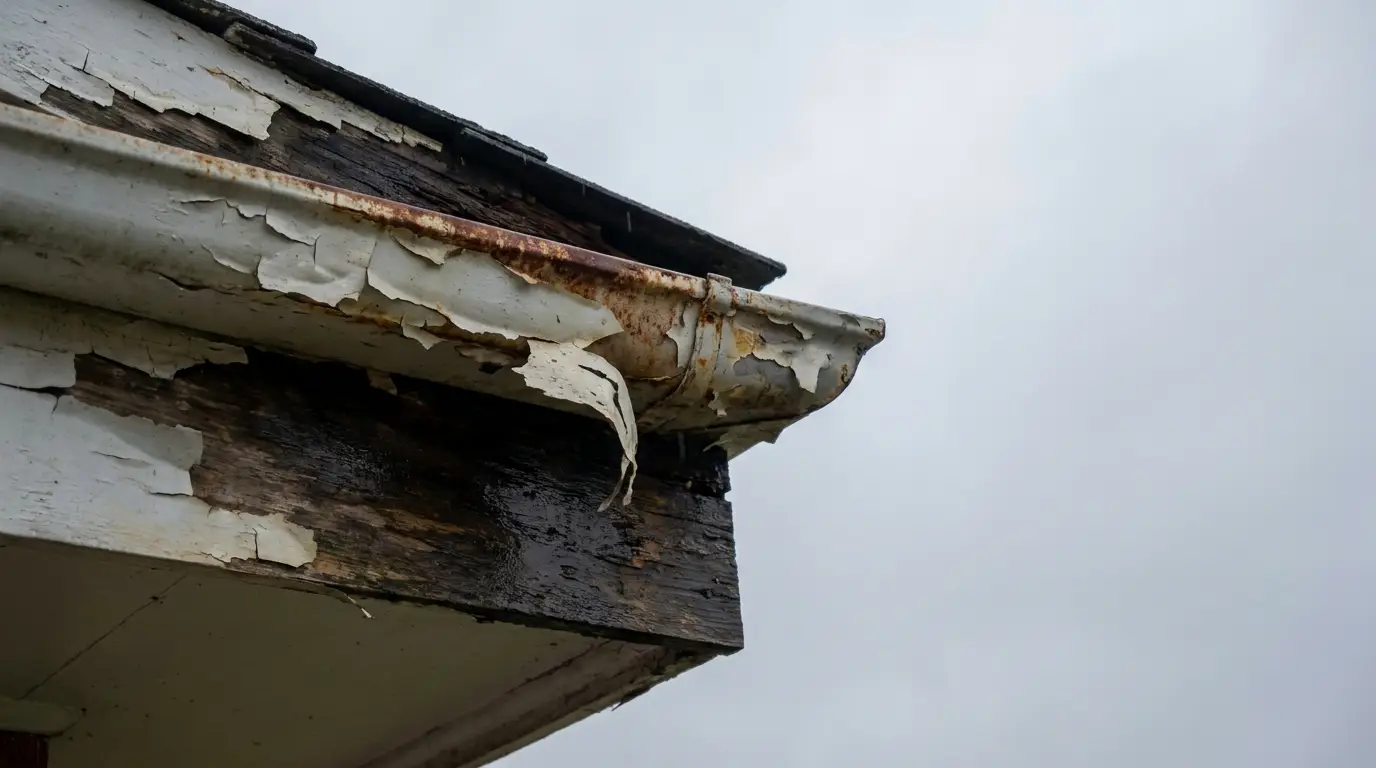
When the clues point to water, a paintbrush won’t fix these usual suspects.
Missing Drip Edge and Damaged Flashing
A drip edge is a thin metal strip along the roof edge that guides water into the gutter so it doesn’t curl back onto the fascia. Flashing seals the joints where the roof meets walls, chimneys and dormers. If either one is missing, bent or loose, water can slip behind your trim every time it rains.
Ice Dams and a Warm Attic
In snowy climates, warm air leaking into the attic melts snow on the roof. The water runs down to the cold eave, refreezes and backs up behind the ice, where it can travel under the roofing and into the soffit and wall. Purdue Extension notes that good attic insulation and ventilation can reduce ice dams or stop them entirely.
Overflowing or Sagging Gutters
Clogged gutters overflow right onto the fascia, and gutters that pull away from the house let water run down the wall behind them. Either way, the paint underneath never gets a chance to dry out.
Paint Culprits You Can Fix Yourself
Sometimes the roof is fine and the paint job is to blame. These fixes are well within DIY territory.
Painting in Direct Sun and High Heat
When paint goes on a hot surface in full sun, the top of the film dries faster than the layer underneath. That trapped layer can form blisters that only lift the newest coat. Painting on the shady side of the house and following the temperature range on the can helps a lot.
Skipping Primer or Painting Damp Wood
Bare wood needs primer, and wood that’s still damp from rain won’t hold paint well. Honestly, rushing this step after a storm is one of the most common mistakes I see.
Mismatched Layers of Old and New Paint
A new coat can peel in sheets if it can’t grip the glossy or chalky layer below. Cleaning, dulling the old surface and using a bonding primer usually solves it.
A Quick Roofline Check Before You Repaint
Grab a ladder, a screwdriver and your phone, then take about half an hour to:
- Walk around the house after a rain
- Watch gutter corners for overflow
- Look for dark stains on the soffits
- Press trim with a screwdriver for soft spots
- Check the attic for damp insulation
- Look for a metal drip edge on the roof
- Note which side of the house peels most
- Photograph every problem area
Repainting the Right Way Once the Source Is Fixed
With the water problem handled, a little patience pays off for years.
Let the Wood Dry Completely
Give repaired areas several dry days before painting. Paint applied over damp wood tends to blister all over again.
Scrape, Sand, Prime and Choose a Trim Color That Works With Your Roof
Remove all loose paint, sand the edges smooth, spot-prime bare wood, then apply two coats of quality exterior paint. This is also the perfect moment to rethink your trim color. If you have a brown roof, the brown roof color pairings on this blog are a great starting point.
Older Homes and Lead Paint
If your house was built before 1978, old layers may contain lead. Federal rules require contractors paid to disturb more than 20 square feet of exterior paint on these homes to follow lead-safe practices. Homeowners doing their own work aren’t covered by that rule, but testing first and avoiding dry sanding is still the safe way to go.
When It’s Time to Call a Pro
If your blister test shows bare wood, or the peeling keeps coming back in the same spots, it’s time for an expert look. In Pennsylvania, New Jersey and Delaware, Paramount Home Solutions handles roof repairs, soffits and fascia, and gutters, as a GAF Master Elite contractor that offers free inspections. Fix the water first and pick your paint color second, because even the prettiest shade will be flaking again next spring if the wood behind it stays wet.