A $4,672 garage door replacement returns $12,526 at resale, a 268% return, according to Zonda’s 2025 Cost vs. Value Report. An upscale kitchen remodel? Roughly half your money back. Most homeowners would have guessed the opposite.
So which home upgrades actually increase property value? Mostly the ones buyers see from the curb. Exterior projects out-earn interior remodels almost across the board, taking six of the top seven spots in the 2025 report. The National Association of Realtors’ 2025 Remodeling Impact Report tells a similar story: the projects that pay you back aren’t always the ones you’d guess.
Here are eight upgrades with the numbers to back them up.
1. Replace the Garage Door
A garage door replacement is the single highest-ROI home upgrade you can make, recouping 268% of its cost according to Zonda’s 2025 Cost vs. Value Report. The average project runs $4,672 and adds $12,526 in resale value. It has held the top spot for two years running.
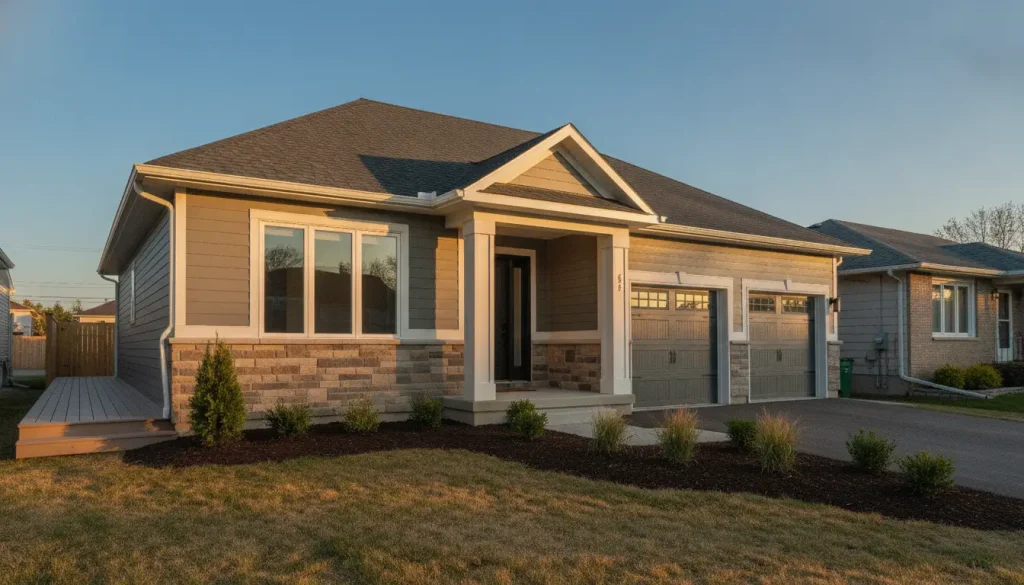
Why does a garage door beat a kitchen? Curb appeal, mostly. On many homes the garage door takes up a third of the street-facing facade. Swap a dented builder-grade door for an insulated carriage-style or modern glass-panel model and the whole house reads newer in listing photos.
One caveat: the number assumes you’re replacing an old door with a quality upgrade, not repairing a decent one that already works.
2. Swap in a Steel Entry Door
A steel entry door replacement returns 216% of its cost, per the 2025 Cost vs. Value Report. That’s about $2,435 spent for $5,270 back at resale. NAR’s 2025 Remodeling Impact Report agrees from a different angle, estimating a steel front door recovers 100% of its cost, the highest recovery of any project it measured.
The front door is the handshake of the house. Buyers touch it, stand at it and judge the home while the agent works the lockbox. A solid steel door also buys you security and energy efficiency in the same purchase.
At under $2,500 on average, this is the cheapest project on this list. It’s also one weekend of disruption instead of six.
3. Add Manufactured Stone Veneer
Manufactured stone veneer recoups about 208% of its cost, according to the 2025 Cost vs. Value Report: roughly $11,000 invested for nearly $22,900 in added value. That made it the #3 project nationally.
If you’ve never heard of it, stone veneer is a thin layer of cast stone applied over a portion of the facade, usually the entryway or the bottom third of the front wall. It gives a plain vinyl-sided house the visual weight of masonry without the structural cost of real stone.
This one is pure curb appeal arithmetic. It changes the listing photo, and the listing photo changes who shows up to the open house.
4. Replace Aging Siding
New fiber-cement siding returns about 114% of its cost, and vinyl siding about 96%, per Zonda’s 2025 data. A typical fiber-cement job runs near $19,000 and adds roughly $21,600 at resale.
Siding is where curb appeal meets deferred maintenance. Faded, cracked or warped siding doesn’t just look tired. It makes buyers wonder what else was neglected. Fresh siding answers that question before it’s asked.
Fiber cement (brands like James Hardie) costs more than vinyl up front but resists rot, insects and fire, and it holds paint longer. In snow-and-salt climates like New England, that durability sells itself.
5. Put on a New Roof
A new asphalt shingle roof recoups about 68% of its cost at resale, based on the 2025 Cost vs. Value Report: $21,501 back on an average $31,871 job. That percentage looks modest next to a garage door, but the roof plays a different game. NAR’s 2025 Remodeling Impact Report gave new roofing a perfect 10 out of 10 Joy Score, and 43% of Realtors said a new roof increased buyer interest, second only to kitchen upgrades.
Here’s the part the spreadsheets miss. An aging roof doesn’t just fail to add value. It actively subtracts it, because buyers price in the replacement themselves, usually at a premium.
“After thirty years of roofing homes around Greater Boston, I can tell you buyers look up before they look around,” says Bob O’Sullivan, owner of Ranch Roofing, a roofing company in Arlington Mass. “A roof near the end of its life becomes a negotiating chip against you at the closing table. A newer roof with a transferable warranty does the opposite. It takes the biggest what-if off the table, and around here, home inspectors and insurance companies both make sure it comes up.”
If your roof is 20+ years old and you’re selling within five years, run the numbers on replacing it before you list rather than conceding twice its cost in negotiations.
6. Build (or Rebuild) a Deck
A wood deck addition returns about 95% of its cost, per the 2025 Cost vs. Value Report: roughly $17,000 spent for $16,130 in resale value. Composite decking comes in at 89%.
Outdoor living space has stayed near the top of buyer wish lists since 2020, and a deck is the cheapest square footage you can add to a home. You’re building usable area at a fraction of the per-square-foot cost of interior additions.
Wood beats composite on ROI, but composite wins on maintenance. If you plan to stay a while before selling, composite’s no-staining lifestyle may be worth the lower percentage.
7. Do a Minor Kitchen Remodel (Not a Major One)
A minor kitchen remodel recoups about 113% of its cost: $28,458 in for $32,141 back, per Zonda’s 2025 report. A major upscale kitchen remodel returns only about half its cost.
The difference is scope. A minor remodel keeps the layout: cabinet refacing or repainting, new counters, new appliances, updated lighting and hardware. A major remodel moves walls and plumbing, and buyers won’t pay a premium for your taste in either case.
The takeaway: refresh, don’t gut. The kitchen still sells the house. NAR found kitchen upgrades drew the most buyer interest of any project, and they draw it just as well without the $80,000 price tag.
8. Renovate a Closet
A closet renovation recovers about 83% of its cost, according to NAR’s 2025 Remodeling Impact Report, quietly beating midrange bathroom remodels, which return closer to 80% nationally per Zonda.
Surprised? Storage is one of the most-searched filters in home shopping, and organized closet systems photograph well. A professionally fitted primary closet typically costs $3,000 to $8,000, making it one of the few interior projects with both a low entry price and a strong recovery rate.
It also improves your daily life immediately, which is the quiet theme of NAR’s data: the projects people love living with tend to hold value too.
How the 8 Upgrades Compare
| Upgrade | Cost Recouped | Typical Cost | Source |
| Garage door replacement | 268% | $4,672 | Zonda CvV 2025 |
| Steel entry door | 216% | $2,435 | Zonda CvV 2025 |
| Stone veneer | 208% | ~$11,000 | Zonda CvV 2025 |
| Fiber-cement siding | 114% | ~$19,000 | Zonda CvV 2025 |
| Minor kitchen remodel | 113% | $28,458 | Zonda CvV 2025 |
| Wood deck addition | 95% | ~$17,000 | Zonda CvV 2025 |
| Closet renovation | 83% |  8,000 8,000 |
NAR 2025 |
| New roof (asphalt) | 68%* | $31,871 | Zonda CvV 2025 |
*Plus a 10/10 NAR Joy Score and the second-highest buyer-interest rating of any project. A new roof also prevents the value loss a failing roof causes.
Before You Start Any Project, Check This List First
- Match the neighborhood. ROI data assumes upgrades appropriate to the home’s price tier. A $160,000 kitchen in a $450,000 neighborhood never pays back.
- Fix function before finish. A leaking roof outranks a new deck, every time. Inspectors will find what you skipped.
- Get local numbers. National averages hide big regional swings. Roof replacement recoups 86% in some states and under 35% in others.
- Keep the paperwork. Permits, warranties and receipts transfer value to the buyer. A transferable roof warranty is a real closing asset.
- Think in listing photos. If an upgrade won’t show up in the first five photos or the inspection report, question its resale math.
Frequently Asked Questions
What Home Improvement Adds the Most Value?
By percentage returned, a garage door replacement: 268% of its cost, per Zonda’s 2025 Cost vs. Value Report. By total dollars added, larger projects like siding replacement or a minor kitchen remodel add more absolute value, just at lower percentages.
Is It Worth Replacing a Roof Before Selling a House?
Often, yes, if the roof is near the end of its life. A new asphalt roof recoups about 68% directly, but an old roof invites price cuts, failed inspections and insurance complications that can cost more than the difference. NAR reports 43% of Realtors saw a new roof increase buyer interest.
What Renovations Should You Avoid Before Selling?
Anything highly personalized or major in scope: upscale kitchen gut jobs (about 50% return), upscale bathroom additions and solar panels, which returned just 24.6% to 40.7% depending on region in the 2025 Cost vs. Value Report.
What Low-Cost Improvements Add Value Without a Remodel?
Fresh interior paint in neutral colors, tidy landscaping, new exterior lighting and updated cabinet hardware all improve listing photos for a few hundred dollars each. None carry formal ROI tracking like the projects above, but agents consistently rank paint and curb-appeal touch-ups as the cheapest ways to help a sale.
Do Energy-Efficient Upgrades Increase Home Value?
Generally yes, but modestly and unevenly. Insulated garage doors and steel entry doors bundle efficiency into high-ROI projects. Big-ticket items like solar panels currently show the weakest resale returns of any tracked project, so treat them as bill-savers, not resale plays.
How Much Should I Spend on Upgrades Before Selling?
A common rule: don’t exceed 5–10% of your home’s value on pre-sale improvements, weighted toward the exterior projects at the top of this list. Spend where buyers look first (the facade, the front door, the roof) and where inspectors look hardest.