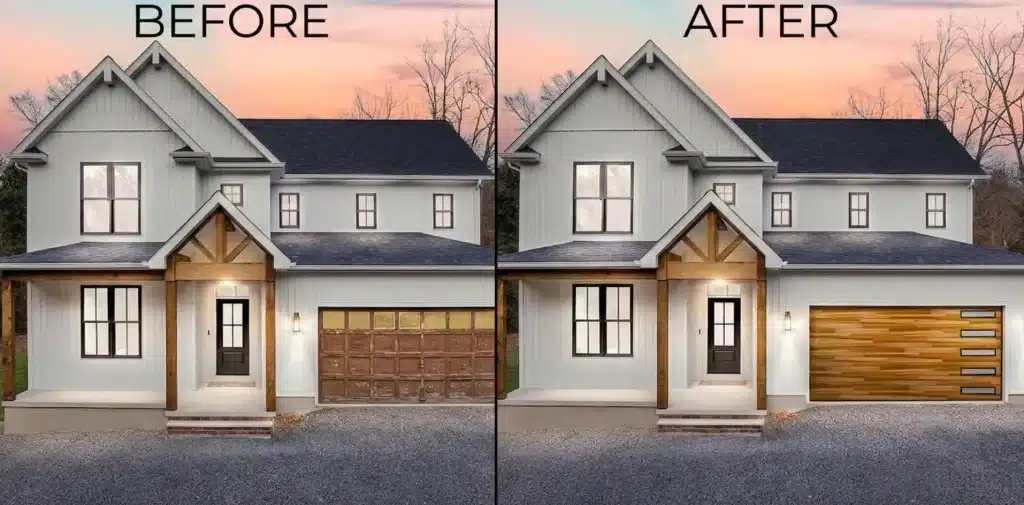
Caption: Before and after. After: The Modern Steel™ Ultra-Grain® Plank garage door is streamlined, and its wood-look finish brings in warmth.
Your garage door can take up a large part of your home’s street-facing view, so it has a big effect on curb appeal. It also protects one of the largest openings in your home and needs to work safely in all kinds of weather. That’s why it’s important to know when to replace it. A few clear warning signs can help you decide when a repair may be enough and when a new door is worth considering.
How Can You Tell If Your Garage Door Needs Replacing?
A garage door usually gives you more than one signal that it needs replacing. Here are the warning signs that your garage door is failing.
1. Structural Damage You Can See
Take a closer look at visible damage. Warped panels, large dents and cracks can affect how the door looks and operates. A small dent in one panel may be repairable when the rest of the door is in good shape.
According to Clopay®, the largest garage door manufacturer in North America, “Surface scratches and minor dents might just bug you aesthetically, but deeper dents, cracks, or warped panels can throw off your door’s entire balance.” Serious panel damage can also put extra stress on other parts of the system. When several panels are damaged, or the door has become harder to operate after the damage, a full inspection can help you decide whether repair still makes sense.
2. Failed Safety Features
Your garage door should have working safety features, especially since problems with the door can cause serious injuries. With around 35,000 garage door-related injuries reported annually, a failed safety feature should never be ignored.
So, how can you tell if your garage door is unsafe? A door may be unsafe if it fails to reverse when it meets an obstruction, moves unevenly, drops unexpectedly or has damaged springs, cables or other hardware. Any unusual behavior that affects how the door opens or closes should be checked by a professional before you continue using it.
Older doors may lack some safety features found in newer systems, such as photo-eye sensors and contact auto-reverse. Even newer doors with these features can develop problems. If your door reverses as soon as it reaches the floor but closes fully when you hold down the wall button, Clopay says it is “almost certainly a sensor issue.” The sensors may seem like a nuisance when they malfunction, but they are important safety devices that should not be disconnected. A properly aligned system can help prevent serious accidents.
3. Excessive Noise and Operational Issues
Grinding, scraping and squealing can point to worn or poorly adjusted parts. Uneven movement or a door that sags to one side can signal a bigger problem. Some noise may disappear after basic maintenance. Clopay advises calling a professional if the door still sounds unusual after maintenance or becomes unbalanced.
A well-maintained garage door should be almost completely silent during operation. “Other red flags include grinding noises that won’t quit, sudden loud bangs, or any issues with springs or cables — these components can cause serious injury if mishandled,” Clopay states. If the same problems keep coming back, it’s worth having the entire mechanism assessed.
4. Your Garage Door’s Age
p>The average lifespan of a residential garage door is about 15 to 30 years. Factors like usage, climate, maintenance and construction affect how long it lasts. A door that is 20 years old or more doesn’t automatically need replacing, though. Age becomes a stronger reason to consider a replacement when you also see damage, safety issues or recurring operating problems.
Individual parts can wear out before the door itself, too. Clopay says garage door springs may last around seven to 12 years, depending on how often you use the door. A professional can check these parts and help you judge the condition of the whole system.
5. Energy Efficiency Problems
Check for visible light around the edges of the closed door, damaged weather seals or poor insulation. These problems can allow more heat to move between your garage and the rest of your home.
This can be even more important when your garage shares a wall with living areas. According to Clopay, it can significantly impact energy efficiency throughout the home. “Non-insulated or minimally insulated garage doors allow heat to escape in the winter and enter in the summer, forcing HVAC systems to work harder to maintain a comfortable temperature in living areas,” the manufacturer explains. Since you’re using more energy, you may face higher utility bills and contribute to harmful carbon pollution.
Why Can a Failing Garage Door Put the Rest of Your Home at Risk?
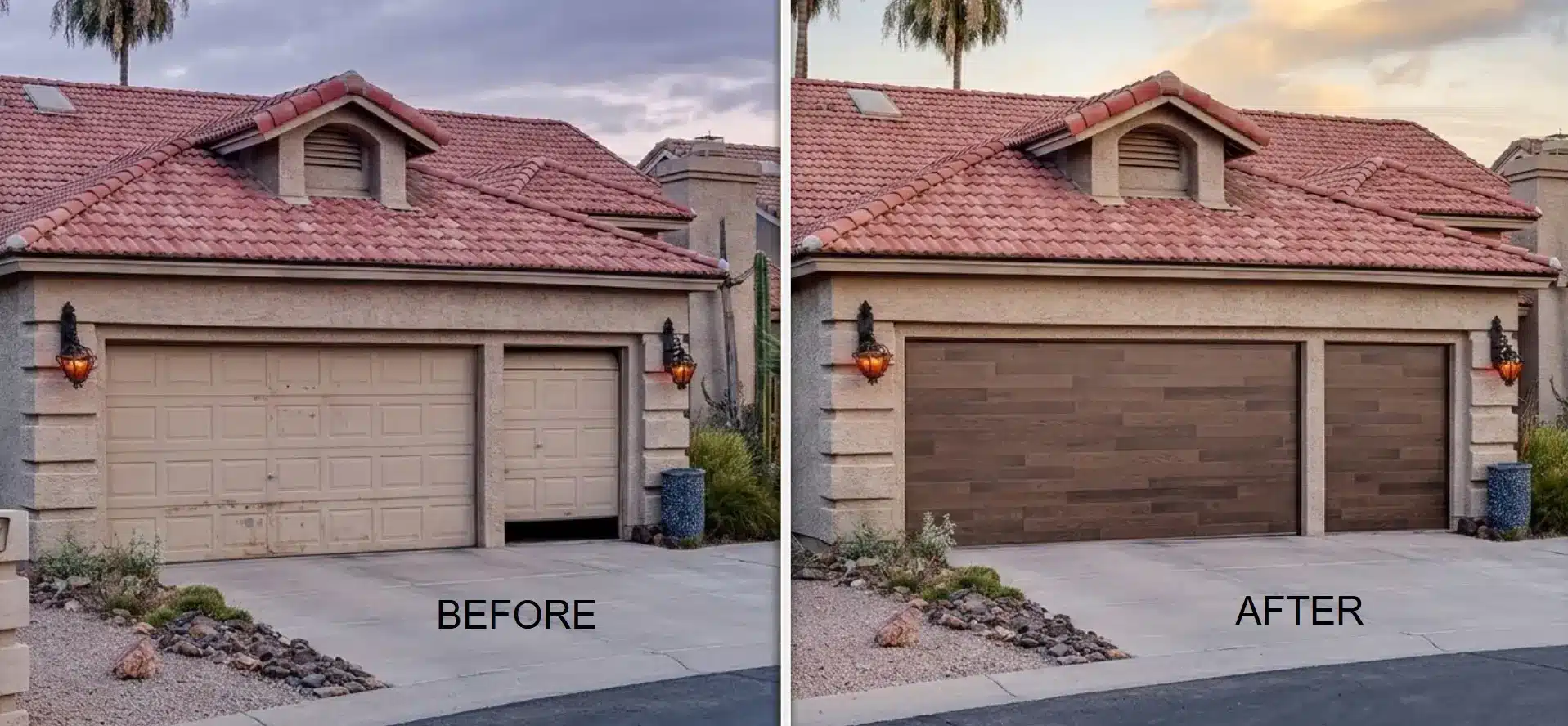
Caption: Before and after. Before: garage door sagging and weathered. After: The Modern Steel™ Ultra-Grain® Plank garage door with Kona finish, with a new smooth operating system.
Your garage door protects your home in more ways than one. During a severe windstorm x, the door also forms part of the home’s exterior envelope. If it fails, wind can enter the garage and increase internal pressure, potentially causing damage to the walls and roof.
Leslie Chapman-Henderson, president and CEO of Federal Alliance for Safe Homes (FLASH), says an intact garage door helps prevent structural damage to the roof and adjoining walls. “Research consistently shows that garage doors are one of the most important components in protecting a home’s structural integrity during high-wind events,” she says.
FLASH’s April 2026 national consumer survey found that 69% of respondents were unaware of the critical role garage doors can play during high-wind events. The survey also found that people became more willing to consider an upgrade after learning about the relationship between wind-rated garage doors and structural protection.
If you live in an area with high winds, check your local wind-load requirements before choosing a replacement. According to Clopay, you can get current information from your local building code and work with a professional garage door technician to do an inspection.
The age of your home is also important when you’re thinking about how well its garage door protects the rest of the structure. Housecall Pro reported that 69% of surveyed homeowners live in homes that are at least 20 years old, so many properties now have doors and other components that have been exposed to years of use. A door with significant age and several signs of wear may deserve a professional assessment, especially if you live in an area prone to high winds.
Is It More Cost-Effective to Repair or Replace a Garage Door?
Repair can make sense when the problem is small and isolated. If the rest of the door is in good condition but a single panel is damaged, you may be able to repair it. Problems with springs, rollers, weatherstripping or the opener can sometimes be fixed without replacing the entire door.
A newer door with no other issues is generally a good candidate for repair. Compare the repair quote with the cost of a new door before deciding. A good rule of thumb is to consider replacement when a repair costs around half as much as a new door, especially when the existing door is already older.
Replacement becomes worth considering when several panels are damaged, repairs keep coming up, the door is 20 years old or more, or safety features are failing. It can also make sense when you are already updating your home’s exterior. “When damage is widespread, a full replacement is usually the better investment,” Clopay explains.
Garage door repairs depend on the problem. A basic, non-wind-rated, uninsulated steel door in a standard size can start at around $1,200 to $1,500 with professional installation. Insulated steel and composite doors generally cost more, while custom and premium wood doors can cost more again.
You should also factor safety into your decision. Clopay warns that conventional garage door bottom brackets operate under extreme tension and can cause serious injury if you remove or loosen them yourself. If the repair involves springs, cables or other high-tension parts, have a qualified professional handle it.
What Can a New Garage Door Give You Beyond a Working Door?
Replacing your garage door gives you a chance to improve several parts of your home at once, starting with safety. Depending on the system, newer doors can include improved auto-reverse sensors, pinch-resistant panel designs and battery backup for the opener. A battery backup can keep the opener working during a power outage, while improved safety features can help reduce the risk of accidents.
You can also consider energy performance when choosing a replacement. Modern doors can use polyurethane or polystyrene insulation and improved weather seals to help minimize temperature changes and heat transfer. U-factor ratings can help you compare how much heat passes through different doors.
Moreover, smart technology can make it easier to keep track of your garage door as part of your daily routine. Compatible systems can let you check their status remotely, receive alerts and control the door from connected devices. Hyundai, for example, has integrated myQ Connected Garage technology into compatible vehicles, which allows drivers to open, close and check their garage door from the vehicle’s touch screen.
Since your garage door can account for a large part of your home’s exterior, its design deserves some thought, too. This Old House says a garage door can represent up to 40% of a home’s curb appeal. You can choose traditional, contemporary or carriage-house-inspired designs, with options such as steel, wood composite and aluminum. Clopay recommends considering your home’s roof shape, exterior materials, windows, columns and trim to find a style that complements the architecture.
A new door can also offer a strong return on the investment. Zonda’s 2025 Cost vs. Value Report found that garage door replacement recouped an average of 267.7% of its cost, which makes it the highest-returning project in the report. Your actual return will depend on your home and local market.
Give Your Garage Door a Second Look
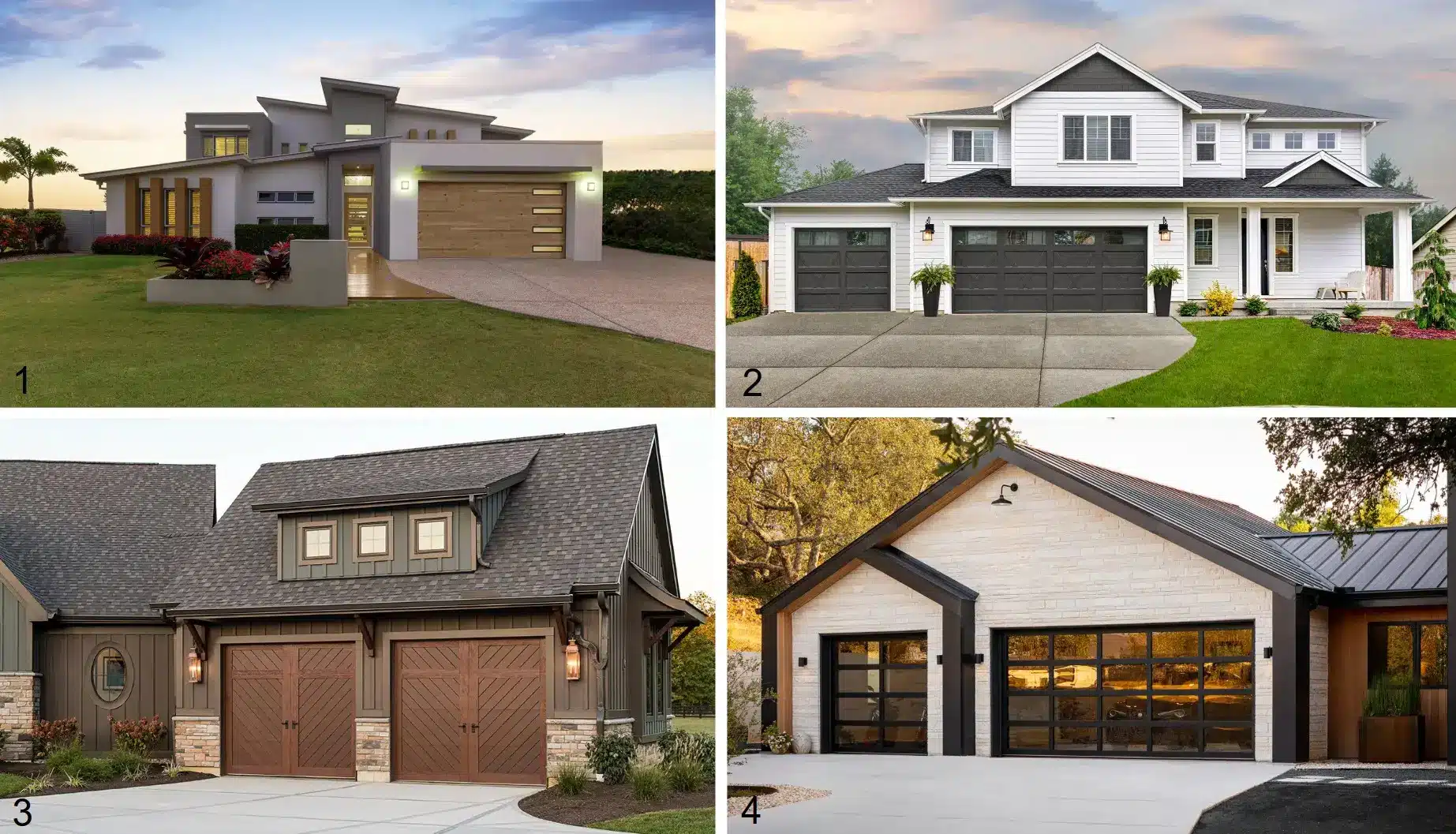
Caption: 1. The Modern Steel™ Ultra-Grain® Plank garage door with windows in natural finish. 2. The Bridgeport™ Inlay carriage house door with windows in iron ore. 3. The Canyon Ridge® Chevron door with walnut finish. 4. The Avante® garage door with aluminum frame.
A garage door does not need to stop working completely before you consider replacing it. Several warning signs together, especially safety problems, major damage or an older door with repeated issues, are good reasons to arrange a professional assessment.