A healthy rose bush needs regular pruning to improve its shape and encourage fresh growth.
Getting the timing wrong matters more than people expect, though, since cutting too early or too hard can slow the plant down as it recovers.
Late winter or early spring works for most roses, though the exact window shifts with local climate and when new growth actually kicks in.
Start by removing dead and damaged canes, then thin crowded areas and shorten healthy branches where needed.
Knock Out roses need yearly pruning too, just with a cutback that looks pretty different from most other rose varieties.
When to Prune Roses?
Right as the plant starts waking up from dormancy, late winter to early spring, that’s the sweet spot for pruning most roses.
New buds or shoots on the canes signal this clearly. Once those show up, the rose has entered active growth and can take a trim without issue.
Climate changes the timing, though. Warmer regions often see growth start sooner, while colder ones need more patience before pruning.
Hold off on heavy cuts while the plant is still fully dormant, especially with freezing weather still a real possibility.
Knock Out roses should follow the same late-winter or early-spring timing. Wait for new shoots to appear before making any cuts.
How to Prune Roses Step by Step?
Working in order makes this go more smoothly: unhealthy growth first, then crowded branches, then shaping what’s left.
1. Gather Your Pruning Tools
Smaller canes call for sharp, clean hand pruners. Thicker branches need loppers instead. Thorns are no joke, so sturdy gardening gloves earn their keep here.
Some shrub roses, Knock Out included, can even handle hedge shears just fine. Clean tools cut more smoothly and keep canes from getting crushed or torn in the process.
Check the blade sharpness first too; a clean slice through the branch beats forcing a dull blade through it every time.
2. Remove Dead, Diseased, and Damaged Canes
The whole bush deserves a once-over before anything else, cutting away dead, diseased, broken, or badly damaged canes as they turn up.
Brown, gray, dry, shriveled; that’s usually what dead wood looks like, while healthy tissue stays green right beneath the surface.
Cut back to healthy wood on anything damaged. Clearing this stuff out makes room for stronger growth and gives a much clearer picture of the plant’s overall shape.
Small damaged ends still count too; don’t skip them just because they look minor, since they can slow down healthy growth regardless of size.
3. Cut Out Crossing and Inward Growing Branches
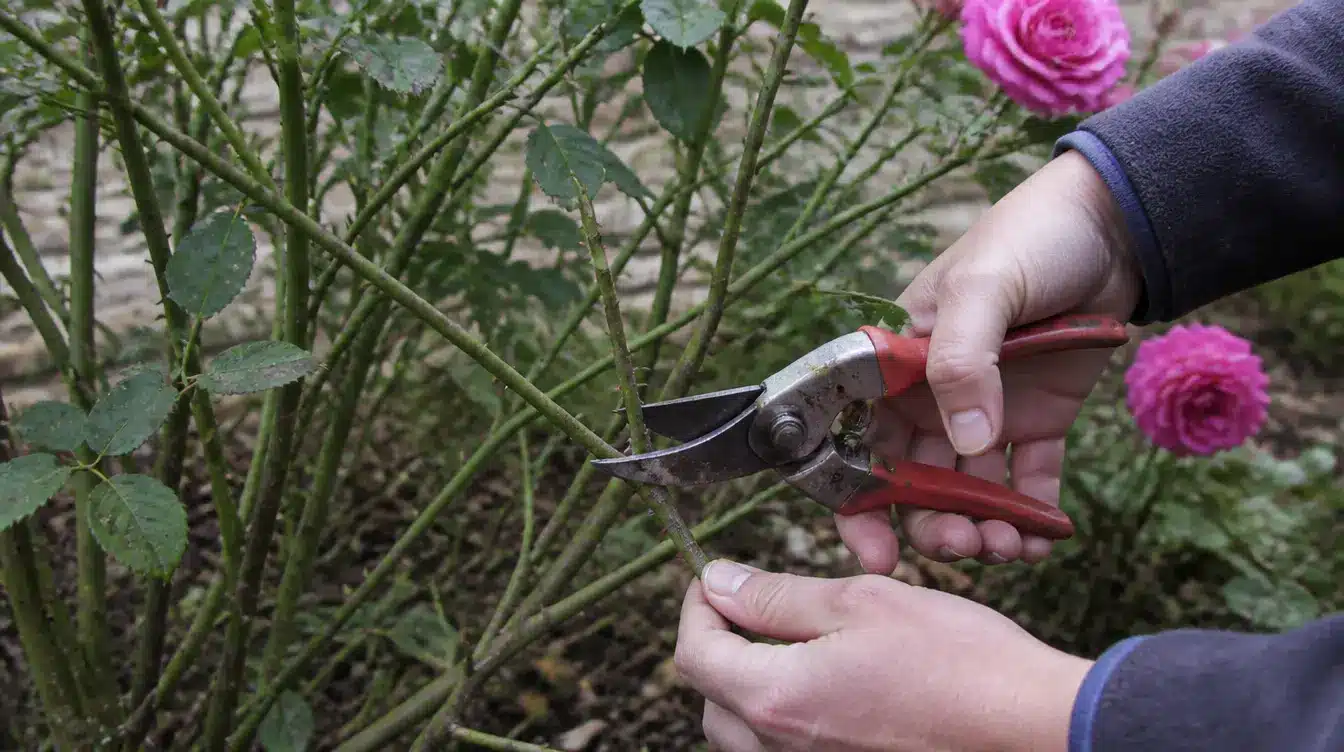
Alt text: Hands pruning a crossing rose branch with pruning shears among healthy rose canes.
The center of the bush deserves close attention here, looking for branches that cross or rub against each other. Inward-growing canes crowding that center need to go.
Constant rubbing damages branches over time, and dense growth cuts off airflow through the whole plant.
Outward-growing canes, on the other hand, build a nice open shape and are worth keeping when possible.
Selecting the right branches to remove beats cutting the whole bush down to some uniform size across the board.
4. Decide How Far Back to Cut
Variety, size, health, and shape all factor into how much actually gets cut. A bush already holding a good structure might only need a light trim, while something overgrown could need a much bigger cut.
Skip removing large chunks of healthy wood without a real reason behind it. Follow each variety’s specific pruning guidance, rather than a single cutting height for every rose.
Standard Knock Out roses, for example, handle a stronger yearly cutback than most gardeners assume.
5. Cut Above an Outward-Facing Bud
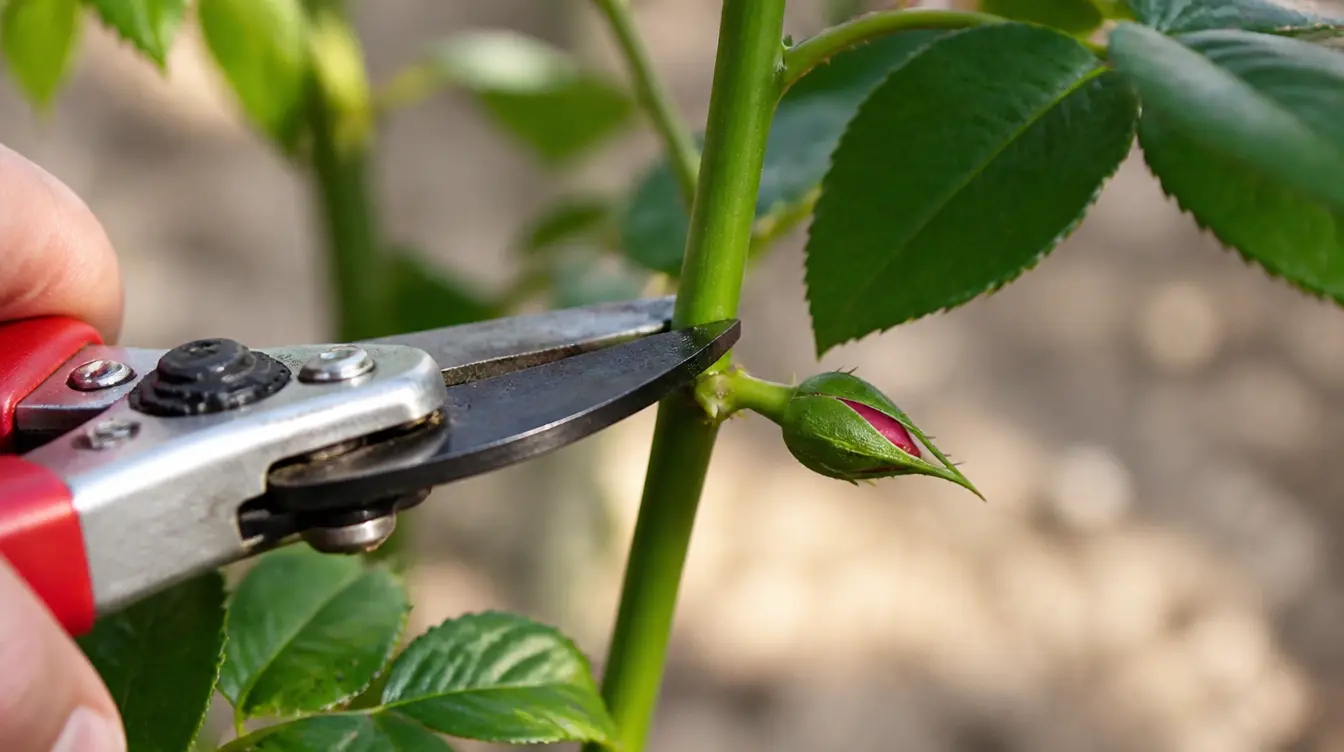
Alt text: Pruning shears cutting a rose stem just above an outward-facing bud.
To shorten a healthy cane, find a bud pointing away from the bush’s center first. Cut just above it, clean and angled.
New growth heads outward from there, keeping that open shape intact. Cutting right against the bud risks damaging it, so leave a bit of space.
6. Clean Up Around the Rose Bush
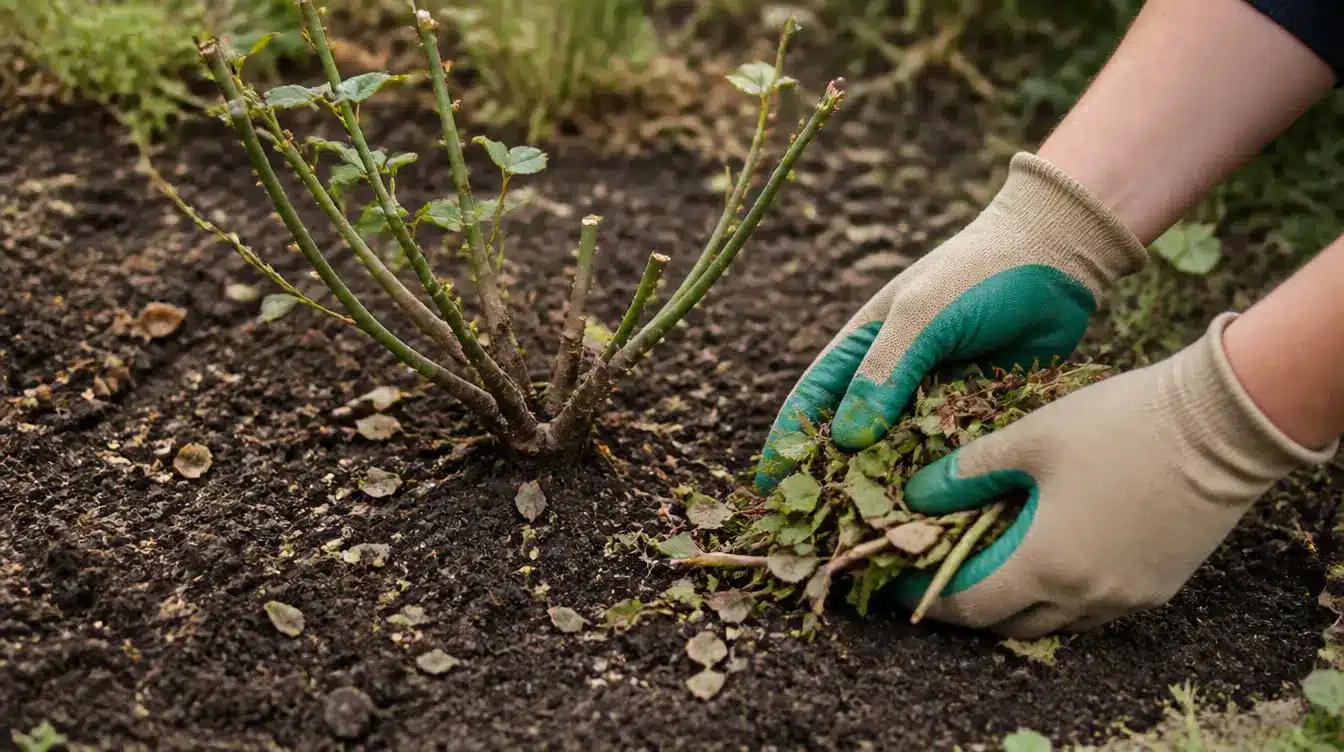
Alt text: Gardener wearing gloves cleaning fallen leaves and debris from around a pruned rose bush.
Pruning wraps up, and then it’s time to gather the removed canes, dead leaves, and other debris scattered around the base.
Piles of cut branches shouldn’t sit under the plant afterward. A clean area gives the rose a tidy space to grow in and clears out old material from around its base.
Knock Out care guides recommend the same debris cleanup after pruning.
How Far Back Should You Prune Roses?
Not every rose shares one fixed pruning height. Light pruning clears dead, damaged, weak, or unwanted growth and leaves most healthy canes alone.
Moderate pruning shortens healthy branches, bringing the plant’s size down and sharpening its shape. Heavy pruning takes a much bigger chunk off and suits overgrown bushes that need real renewal.
Match the amount removed to the plant’s condition and the final size you want.
Cutting healthy canes too aggressively without good reason weakens the plant’s structure and drags out recovery.
Roses with their own pruning instructions should follow that specific recommended height, not a generic one.
Variety, size, health, age, and the shape wanted at the end all decide how much gets cut.
How to Prune Knock Out Roses?
Once a year, late winter or early spring, that’s the usual Knock Out rose pruning schedule. Official guidance says wait for new shoots to appear on the canes first.
A standard Knock Out kept around 3 to 4 feet tall and wide gets cut back to roughly 12 inches high. That strong yearly cutback keeps the shrub within its intended size range.
Next, use hand pruners to remove smaller, damaged, or weak canes right after the main cut. Keep the center open, giving new growth room and letting air move freely between branches. Clear the debris away once done.
Petite Knock Out roses follow a different cutback schedule entirely. To stay under 18 inches, cut back to about 4 to 6 inches once a year, in that same late winter or early spring window.
Less frequent pruning works too, cutting to around 6 inches every two years instead.
How to Revive Overgrown Rose Bushes?
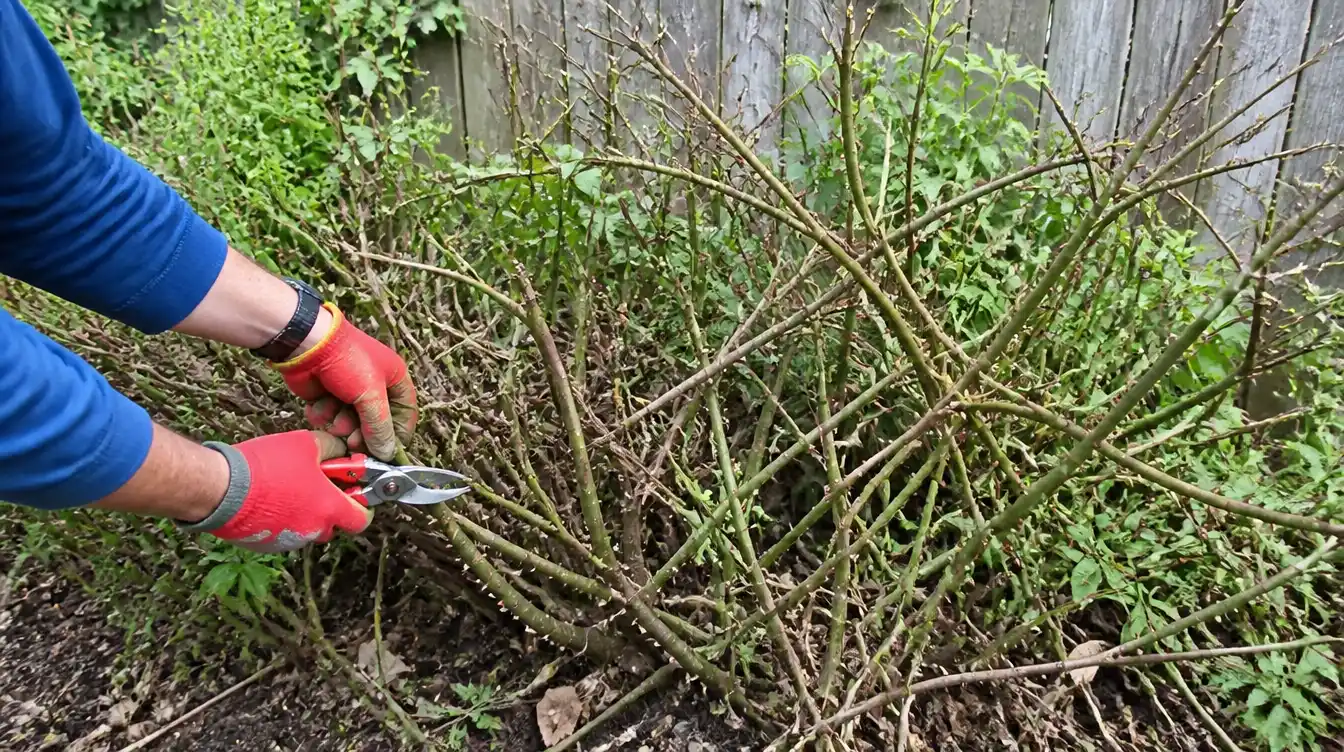
Alt text: Gardener pruning an overgrown rose bush with pruning shears.
Sometimes, real renovation beats the usual seasonal trim for old or neglected rose bushes. A gradual method works well here, removing some of the oldest, thickest canes at the base while leaving younger, healthy growth untouched.
That approach gives the plant room to send up new canes without losing most of its structure all at once. Severe renovation cuts the plant back much closer to the ground instead.
Badly overgrown bushes sometimes call for this, though it’s not the preferred route for Knock Out roses specifically, since recovery drags out longer and flowering can drop off noticeably.
Save heavy renovation for plants that genuinely need major renewal.
What to Do After Pruning
After pruning, the rose bush needs clean space to grow, plus regular checks as new growth comes in over the following weeks.
- Clean up: Clear cut canes, dead leaves, and other debris from around the base of the plant so nothing rots or attracts pests.
- Water as needed: Adjust watering based on soil moisture, rainfall, temperature, and local conditions instead of sticking to a fixed weekly schedule.
- Watch new growth: Look for healthy shoots as active growth kicks in, since strong new stems usually signal the plant is recovering well.
- Feed when appropriate: Follow fertilizer guidance suited to the specific rose variety and growing conditions rather than applying the same amount everywhere.
- Check the plant: Watch for weak or damaged new growth that needs attention as the season continues, catching small problems before they spread.
Conclusion
Pruning roses well comes down to picking the right timing, clearing unhealthy and crowded growth, and cutting in a way that supports the plant’s natural shape.
Late winter through early spring is the main window for most roses, with new growth as the clearest timing cue. Variety, health, and size should all guide how much gets cut.
Knock Out roses follow their own yearly pruning guidance, while overgrown bushes might need a slower, more gradual renovation instead. Good pruning leaves a plant open, balanced, and ready to grow.
Frequently Asked Questions (FAQs)
1. When is the Best Time to Prune Roses?
Late winter through early spring serves as the main pruning window for most roses, right as new buds or shoots appear and the plant wakes up from dormancy.
2. How Far Back Should You Prune Roses?
Variety, health, size, and shape determine how much to prune. Light pruning takes off very little, while overgrown bushes might need much heavier renovation.
3. Can You Prune Knock out Roses in The Fall?
Knock Out roses officially get pruned in late winter or early spring, once new shoots appear. Heavy fall pruning generally isn’t the recommended yearly approach.