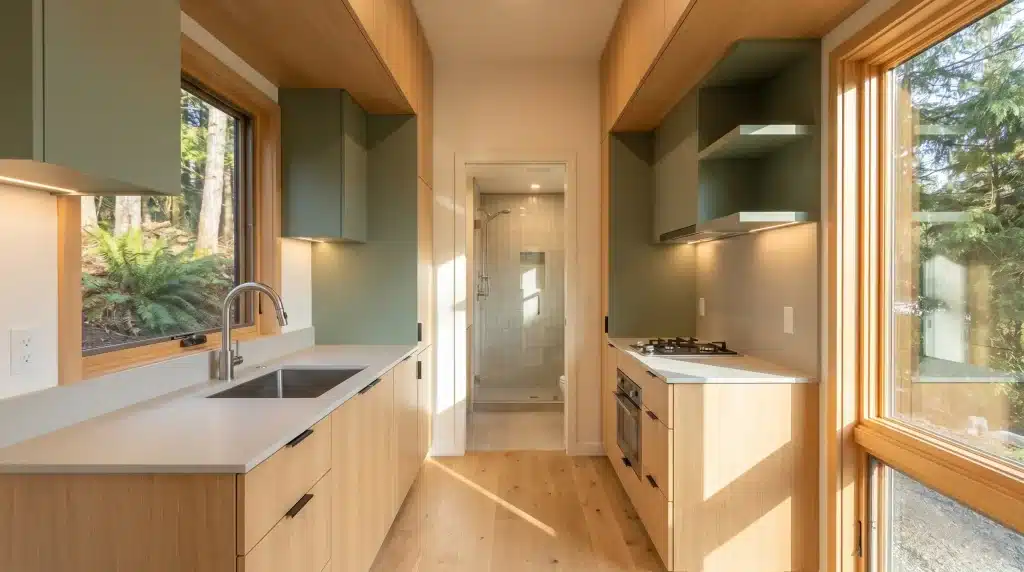
In any backyard dwelling, the kitchen and bathroom are the spaces that truly define whether the unit functions as a real home. In a compact layout, these areas carry even more weight — every decision about placement, systems, and fixtures directly impacts the rest of the build.
That’s why an experienced DADU contractor Seattle starts by resolving these two rooms first. They are the most technically demanding parts of the project, and mistakes made here are the ones homeowners notice immediately after moving in.
Why Small-Space Design Is Really a Construction Challenge
Kitchens and bathrooms are often approached as design features, but in a DADU they are primarily construction problems. Limited square footage, tight wall cavities, and shared systems mean that layout decisions must be finalized early — long before finishes are selected.
Plumbing, electrical capacity, ventilation routing, and structural considerations all need to be coordinated during the framing stage. Once insulation is installed and walls are closed, making changes becomes expensive and disruptive.
This is not just about efficiency — it’s also about value. A well-planned layout can increase rental potential significantly, while poor planning can result in costly corrections that could have been avoided with proper early coordination.
Kitchen Planning in a Compact DADU
The kitchen is often the most complex space in a small unit. Every element must be carefully positioned to ensure functionality without compromising structure or system performance.
One of the most important decisions is the placement of the sink in relation to the main drain line. Increasing the distance between them requires more space for piping, which can affect floor depth and structural design.
Ventilation is another critical factor. Range hoods must be vented to the exterior, and the duct path must be planned before walls are closed. Each turn reduces efficiency, so a direct route is always preferred.
Even small dimensional errors can create problems. Appliance spaces, such as refrigerator alcoves, must be framed with precision to avoid costly adjustments later.
Key kitchen elements that must be resolved early include:
- Sink and drain alignment within the floor system
- Exhaust duct routing to the exterior
- Appliance spacing and framing accuracy
- Coordination between plumbing and electrical systems
When these elements are planned correctly, the kitchen functions smoothly despite its compact size.
Bathroom Layout in a Compact DADU
Bathrooms present a different set of challenges, but they are just as critical to overall performance. Every decision affects plumbing, moisture control, and structural design.
The placement of the wet wall is one of the most important considerations. Locating it on an interior wall helps avoid complications with insulation and moisture management. Exterior placement increases the risk of long-term performance issues.
Drain routing must also be carefully planned, as slope requirements limit flexibility. Once the floor system is in place, making changes becomes difficult.
Another key decision is choosing between a shower and a bathtub. In smaller units, a walk-in shower often makes better use of space, while a bathtub may be more appropriate for certain living situations.
Important bathroom planning considerations include:
- Wet wall location and structural impact
- Drain slope and routing through the floor
- Waterproofing systems and material durability
- Ventilation design and exterior exhaust routing
Proper attention to these details ensures that the bathroom remains functional and durable over time.
The Cost of Getting It Wrong
Mistakes in compact construction are rarely minor. Because space is limited, even small errors can affect multiple systems at once.
For example, relocating a drain line after framing may require opening floors and walls. Adjusting ventilation paths can involve reworking structural elements. These corrections are not only expensive but can delay the entire project.
In contrast, resolving these issues during the planning stage costs far less and prevents disruption later.
Why Early Coordination Is Critical
The success of a DADU project depends heavily on decisions made before construction progresses too far. Kitchens and bathrooms require input from multiple disciplines, including structural engineering, plumbing, and mechanical systems.
An experienced contractor coordinates these elements from the beginning, ensuring that all systems work together efficiently. This approach reduces the risk of conflicts and keeps the project on schedule.
As highlighted in the original material , the quality of these early decisions becomes immediately visible once the space is in use.
Compact Design Requires Precision
In larger homes, small inefficiencies can often go unnoticed. In a DADU, every inch matters. A poorly placed fixture or misaligned system can impact the usability of the entire unit.
This is why compact construction demands a higher level of precision. Every decision must be intentional, and every system must be carefully integrated into the overall design.
Final Thoughts
Designing kitchens and bathrooms in a compact DADU is where planning, engineering, and construction all come together. These spaces require careful coordination, accurate execution, and a clear understanding of how each decision affects the entire build.
Working with a knowledgeable home contractor Seattle ensures that these critical areas are handled correctly from the start. With the right approach, even a small space can deliver comfort, functionality, and long-term performance that feels complete and well-designed.