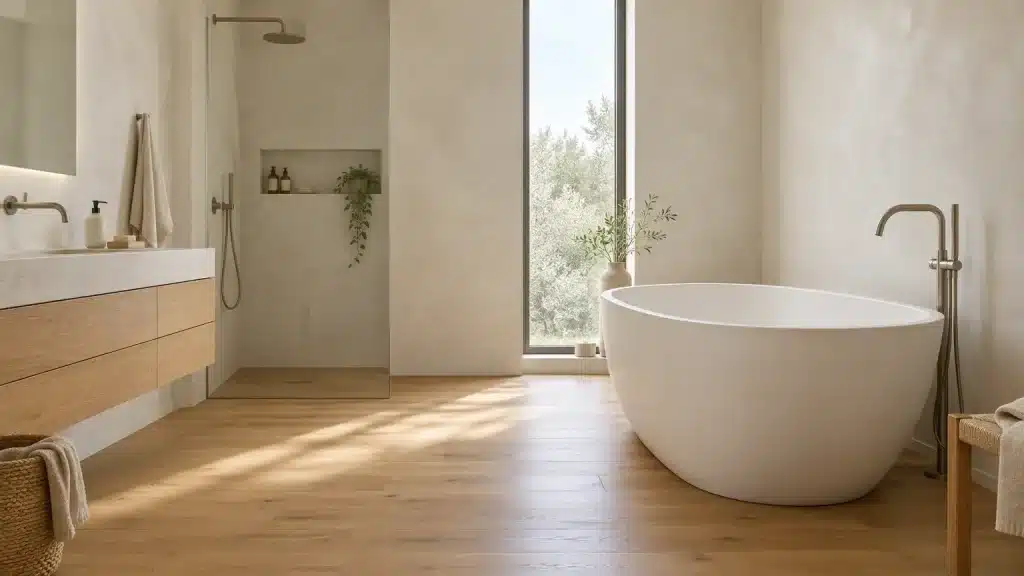
The phrase “designer bath” conjures a particular image. A sculptural freestanding tub in a vast, marble-clad bathroom, photographed for a magazine that most of us will never appear in. The assumption that follows is equally particular: that such a bath must cost a fortune, and that it belongs to a different kind of household entirely.
That assumption deserves scrutiny. The gap between a designer bath and an ordinary one is often far smaller than the gap in perception, and in some cases the designer option is the more sensible purchase.
What “Designer” Actually Means
The word is used loosely, and that looseness is part of the problem. It can refer to a bath made by a named designer for a premium brand, carrying a price to match. It can refer to a bath with a distinctive shape, a particular finish, or a recognised manufacturer’s name. It can also mean very little at all, attached to a product as marketing rather than as description.
Understanding which sense applies is the first step towards sensible buying. A well-designed bath from a reputable manufacturer, sold at a mid-market price, is a designer bath in every meaningful sense. It has been considered, engineered, and finished to a standard. It does not need a famous name to justify the label.
Why the Price Gap Has Narrowed
Several factors have brought designer baths within reach of ordinary budgets.
Manufacturing has improved. Modern production methods allow complex shapes to be made efficiently. What once required hand-crafting can now be produced at scale without sacrificing quality.
The market has grown. More manufacturers compete for the same customers, and competition pushes prices down. Brands that once occupied the premium tier now offer entry-level ranges, and brands that began at the affordable end have improved their designs.
Materials have diversified. Acrylic, stone resin, solid surface, and composite materials have made it possible to achieve a designer look without the cost of cast iron or copper. A well-made stone resin bath can cost a fraction of a cast iron equivalent while offering comparable heat retention and a more contemporary appearance.
Direct selling has expanded. Online retailers and specialist bathroom suppliers now sell directly to consumers, cutting out some of the margins that traditional showrooms relied upon. The same bath can often be found at a significantly lower price than it carried a decade ago.
Design has become democratised. Good design is no longer confined to a handful of expensive names. Mid-market brands now employ designers, and the resulting products are genuinely well considered rather than merely cheap.
Where the Money Goes
It is worth understanding what you are actually paying for, because the answer is not always what you would expect.
A significant portion of the price of a premium bath goes towards the brand name, the showroom network, and the marketing that supports it. These are real costs, but they are not costs that improve the bath itself.
What genuinely affects quality is the material, the thickness and reinforcement of the shell, the quality of the finish, the engineering of the waste and overflow, and the standard of the guarantee. These are the things to examine, and they can be assessed without reference to the label on the bath.
A mid-priced bath from a reputable manufacturer, with a solid core, a good finish, and a long guarantee, will typically outperform a cheaper bath with a famous name and a thin shell.
What You Actually Get
Better shapes. A well-designed bath is comfortable to lie in, with the right slope for the back and the right depth for soaking. Cheap baths are often uncomfortable in ways that only become apparent after use.
Better materials. Higher-quality acrylic is thicker, more rigid, and less prone to flexing. Stone resin holds heat far better than thin acrylic. Solid surface can be repaired if damaged.
Better finishes. The difference between a good finish and a poor one becomes apparent over years, not days. A well-finished bath resists staining, cleans more easily, and looks better for longer.
Better guarantees. Quality manufacturers stand behind their products, often for ten or twenty-five years. That guarantee is a meaningful signal of confidence in the product’s durability.
Better resale value. A well-chosen bath improves the appearance of a bathroom, and bathrooms matter to buyers. The difference in cost between a cheap bath and a good one is small compared with the difference it can make to a property’s appeal.
How to Buy Well
The practical route to a designer bath at a sensible price is straightforward.
Set a budget and stick to it. There are good baths at every price point. Decide what you can spend and look within that range rather than being drawn upwards by showroom displays.
Research materials. Understand the difference between acrylic, stone resin, solid surface, and cast iron. Each has strengths and weaknesses, and the right choice depends on your priorities.
Check the specification. Look at the thickness of the shell, the reinforcement, the type of waste, and the guarantee. These details reveal more about quality than any marketing claim.
Look beyond the obvious brands. Mid-market and specialist manufacturers often offer better value than the names everyone recognises.
Buy at the right time. Sales, end-of-line clearances, and ex-display models can reduce prices substantially. A bath is a durable purchase, and a slight delay in buying can pay for itself.
Consider ex-display. Showroom models are often sold at significant discounts. Inspect carefully for damage, but a well-chosen ex-display bath can be an excellent buy.
The Small Bathroom Advantage
There is a further argument that is often missed. Designer baths frequently come in a wider range of sizes and shapes than budget models, including compact options designed for small bathrooms.
A small, well-designed freestanding bath can fit a space that a standard built-in tub would dominate. A Japanese-style soaking tub takes up less floor area than a conventional bath and offers a more restorative experience. A compact slipper bath suits a narrow room.
In a small bathroom, the designer option may be the only one that fits properly. That makes the price comparison considerably more favourable.
The Point
Designer baths are not as expensive as the phrase suggests. The premium is often smaller than expected, and the practical benefits are real: better comfort, better materials, better durability, and a bathroom that looks and feels considered.
The mistake is to assume that quality must carry an impossible price, or that a cheap bath is the sensible choice simply because it is cheap. Neither assumption survives contact with the market.
Do the research. Understand what you are buying. Choose a bath that is well made rather than merely well known. The result will be a bathroom that serves you for decades, at a cost that is far more reasonable than the label might suggest.