A worthwhile kitchen upgrade should solve a recurring problem. The best smart appliances reduce monitoring, improve cooking accuracy, simplify cleanup, or help prevent costly household damage. Connectivity alone is not enough. Before buying, consider how often you will use the appliance, whether its core functions work without an app, and how easily it will fit into your existing kitchen.
What Makes a Smart Appliance Worth Buying?
A connected screen or mobile app can be convenient, but those features do not necessarily make an appliance intelligent. Useful smart appliances combine technology with a clear household benefit.
A smart appliance may be worth adding when it can:
- Monitor food or appliance conditions accurately
- Automate a repetitive task
- Notify you when attention is required
- Adjust its operation using sensor data
- Reduce unnecessary energy or water use
- Provide an early warning of leaks or maintenance issues
- Make successful results easier to repeat
The technology should require less attention from the user, not introduce a longer setup process. If an app merely duplicates a physical timer or remote control, the upgrade may offer limited value.
1. A Smart Oven with Doneness Control
A conventional oven cooks according to the time and temperature selected by the user. It does not know whether the center of a chicken breast, roast, or steak has reached the intended level of doneness.
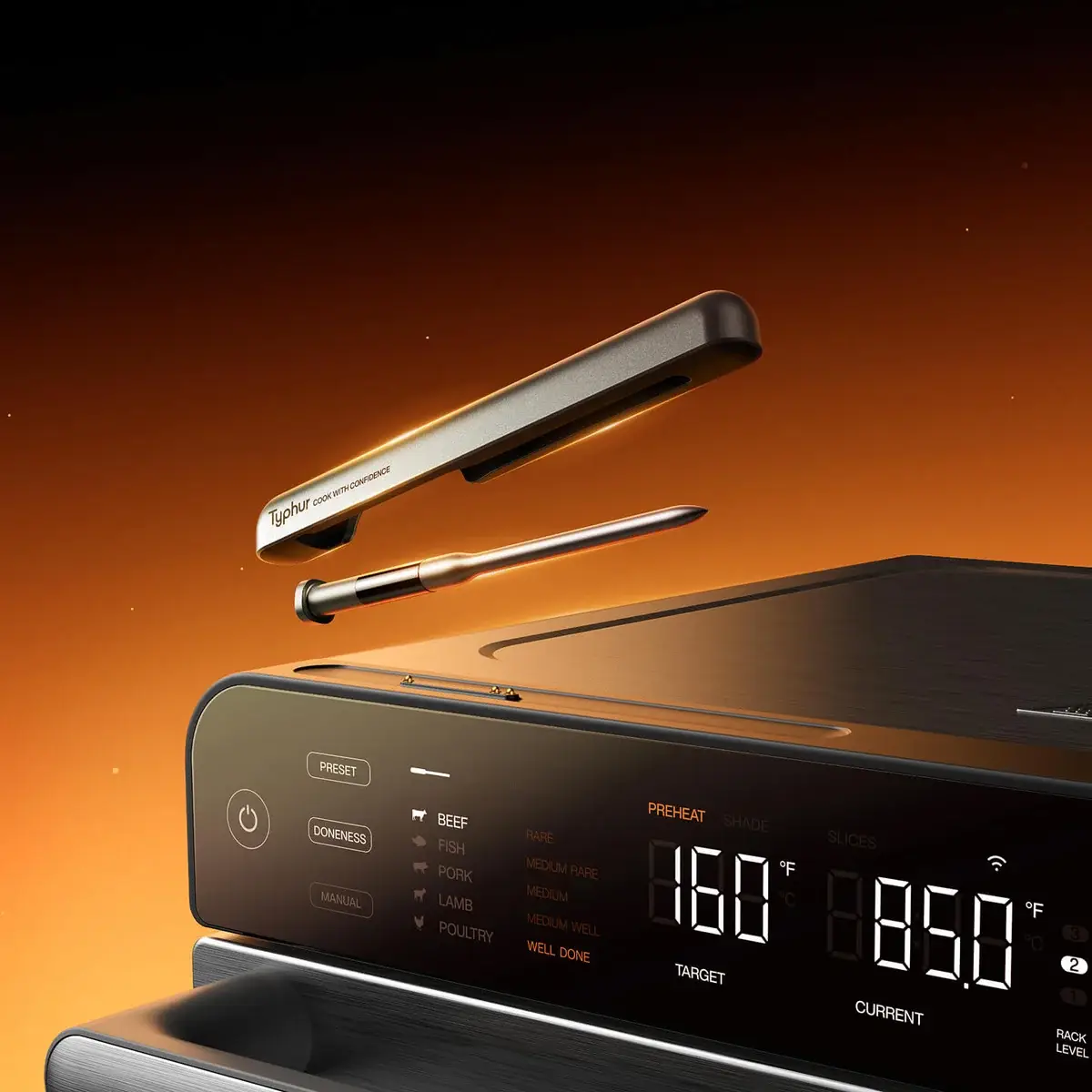
A smart oven with temperature-based doneness control can make that process more reliable. It uses a food probe to monitor internal temperature while cooking and responds when the selected endpoint is reached.
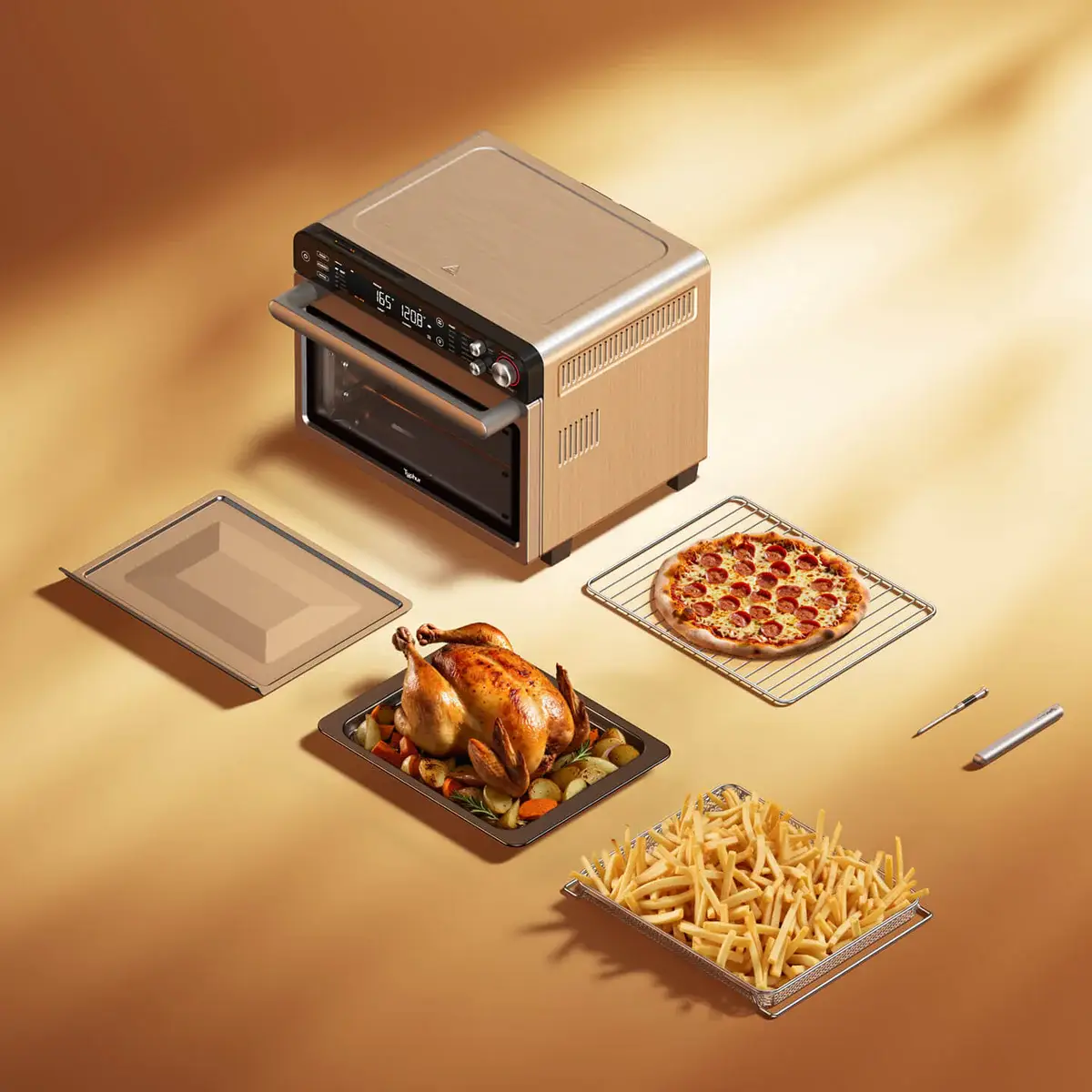
The Typhur Sync Oven is one example. Its integrated wireless probe communicates with the oven throughout cooking. Once the food reaches the target internal temperature, the oven automatically stops cooking instead of continuing until a fixed timer expires.
This can be useful for foods with a relatively small margin between properly cooked and dry, including:
- Chicken breast
- Turkey
- Steak
- Pork tenderloin
- Fish
- Larger roasts
The benefit is not simply remote monitoring. It is the oven’s ability to use measured doneness as the endpoint.
Brands such as Typhur Robotics are developing cooking tools that combine temperature sensing, wireless monitoring, and appliance automation to reduce repeated checking and improve consistency.
Before adding a countertop oven, measure its full dimensions and account for the space needed to open the door. Check ventilation clearances and confirm that the intended outlet can support the appliance.
2. A Versatile Smart Air Fryer
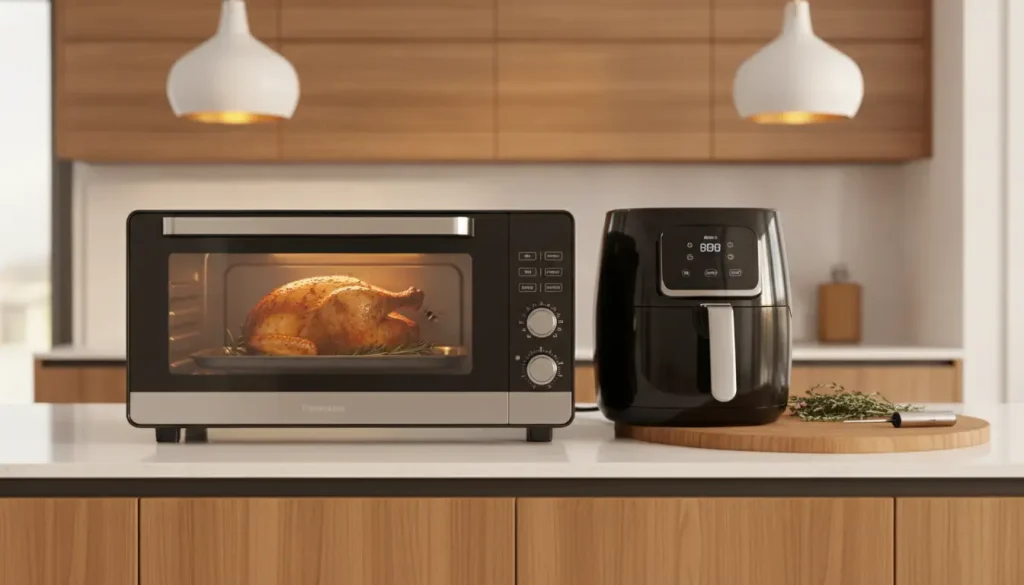
An air fryer can be a valuable upgrade for households that regularly prepare smaller meals, frozen foods, roasted vegetables, or leftovers. It usually heats more quickly than a full-size oven and can restore crispness better than a microwave.
Basket design is just as important as total capacity. A wide basket allows food to spread into a single layer, while a deep, narrow basket may require stacking or multiple batches.
The Typhur Dome 2 uses a wide, low-profile 5.6-quart basket that fits a 12-inch pizza. Its dual heating elements apply heat from above and below, helping food cook evenly with less turning. It also includes preset cooking functions, app-based controls, and a self-cleaning mode designed to assist with internal maintenance.
When comparing smart air fryers, look beyond the number of presets. Consider:
- The usable cooking surface
- Heating performance
- Countertop footprint
- Manual controls
- Ease of cleaning
- App functions you will genuinely use
- Clearance required to remove the basket
A smart air fryer earns its counter space when it replaces several routine tasks—not when its complicated interface makes reheating dinner more difficult.
3. A Wireless Food Thermometer
A wireless food thermometer is one of the least disruptive ways to make a kitchen smarter. It does not require replacing an oven or grill, and it can improve cooking accuracy across several appliances.
The probe remains in the food during cooking and sends temperature data to a receiver, mobile device, or connected appliance. This allows you to follow cooking progress without repeatedly opening the oven, grill, or smoker.
Wireless thermometers are particularly helpful for:
- Whole poultry
- Roasts
- Smoked meat
- Thick steaks
- Pork shoulder
- Brisket
- Long outdoor cooking sessions
Some systems measure both the food’s internal temperature and the temperature around it. This can be useful because an oven or grill may not maintain exactly the temperature displayed on its controls.
Before purchasing, check the thermometer’s transmission range, temperature limits, water resistance, app requirements, and replacement-probe availability. Also determine whether it uses Wi-Fi, Bluetooth, another wireless protocol, or a combination.
For quick spot checks rather than continuous monitoring, an instant-read thermometer may be the more practical choice.
4. An Induction Cooktop
An induction cooktop uses an electromagnetic field to heat compatible cookware directly. The surface itself does not generate heat in the same way as a traditional electric element, although it still becomes hot from contact with the cookware.
Induction offers several practical advantages:
- Fast heating
- Responsive temperature adjustments
- A flat surface that is easier to wipe clean
- Less heat released into the surrounding room
- Automatic pan detection on many models
- Timers and safety shutoff features
Some connected induction cooktops also provide app-based monitoring, guided settings, and compatibility with temperature sensors. However, core performance matters more than connectivity.
Before upgrading, confirm that your cookware is induction-compatible. A simple test is to see whether a magnet attaches firmly to the bottom of the pan.
A full-size induction cooktop may also require electrical work. Consult a qualified professional to confirm circuit and installation requirements. Renters or homeowners who are not ready for a major renovation can experiment with a portable induction burner first.
5. A Smarter Dishwasher
A dishwasher upgrade can improve more than convenience. Newer models may use soil sensors to adjust the wash cycle according to how dirty the dishes are rather than applying the same amount of water and time to every load.
Useful smart dishwasher features can include:
- Cycle-completion notifications
- Leak alerts
- Automatic detergent dispensing
- Maintenance reminders
- Remote diagnostics
- Adjustable racks
- Load-sensitive washing
- Delayed operation
App notifications are most valuable when the dishwasher is quiet enough that it is difficult to tell whether the cycle has finished. Leak detection can also provide reassurance, particularly when the machine is located above a finished basement or near moisture-sensitive flooring.
Internal layout should remain a priority. Bring a few commonly used plates, bowls, and glasses when shopping if possible. A dishwasher with advanced software is not a good upgrade if its racks do not accommodate the dishes your household uses every day.
Check filter access as well. A filter that is easy to remove and clean can have a greater long-term impact than an extra app feature.
6. A Connected Refrigerator with Practical Features
Smart refrigerators range from relatively simple models with temperature alerts to elaborate appliances with internal cameras and large touchscreens.
The most useful features are usually the least dramatic:
- Open-door alerts
- Temperature warnings
- Water-filter reminders
- Ice-maker status notifications
- Energy monitoring
- Adjustable temperature zones
These functions can help protect stored food and identify a problem before the refrigerator stops cooling completely.
Internal cameras and inventory systems may be useful for some households, but they should be evaluated carefully. Consider whether you will actually check the refrigerator app while grocery shopping and whether the camera can see the items you typically store.
The basic refrigerator design still matters more than the screen. Examine shelf flexibility, drawer capacity, door clearance, ice-maker placement, and repair availability.
A refrigerator is expected to remain in service much longer than a phone or tablet. Make sure essential cooling controls remain accessible if its connected platform or display becomes outdated.
7. A Programmable Coffee Maker or Espresso System
A connected coffee maker can be worthwhile when coffee preparation is part of a consistent daily routine. Scheduling, saved preferences, and maintenance reminders can remove several small tasks from the morning.
Depending on the machine, useful features may include:
- Scheduled brewing
- Adjustable water temperature
- Saved drink profiles
- Bean or water level alerts
- Descaling reminders
- Automatic shutoff
- Remote status monitoring
A machine should not sacrifice coffee quality for connectivity. Temperature stability, grinder quality, ease of cleaning, and access to replacement components are more important than the number of app settings.
Also consider how much daily maintenance the system requires. Automatic milk functions and internal tubing may provide convenience during preparation but add cleaning steps afterward.
For households with several coffee drinkers, saved profiles can be genuinely useful. For someone who only needs a basic cup each morning, a reliable programmable machine may be sufficient.
8. A Smart Range Hood
Ventilation is frequently overlooked during kitchen upgrades, but it affects odors, grease buildup, heat, and indoor air quality.
A smart range hood may include:
- Automatic fan-speed adjustment
- Heat or smoke sensors
- Filter-cleaning reminders
- Delayed shutoff
- App or voice controls
- Integrated task lighting
Automatic fan control can be particularly helpful because users often forget to turn on the hood before cooking. A delayed shutoff allows ventilation to continue for several minutes after the cooktop has been turned off.
Performance should still be evaluated based on airflow, noise, ducting, installation height, and the type of cooking performed. A powerful hood that is unpleasantly loud may be used less often, reducing its practical value.
Whenever possible, vent the hood outdoors. Recirculating models can filter some grease and odors but do not remove heat and moisture as effectively as properly ducted systems.
9. Smart Leak Detectors and Automatic Shutoff Systems
A leak detector may not be the most visually exciting kitchen upgrade, but it can be one of the most valuable.
Small sensors can be placed near:
- The dishwasher
- Refrigerator water lines
- The sink
- Water filtration systems
- Ice makers
- Coffee stations with plumbing connections
Basic models send an alert when they detect water. More advanced systems can monitor household water flow and shut off the main supply when they identify an unusual pattern.
Placement matters. A sensor should sit where water is likely to collect during the earliest stage of a leak, not several feet away from the appliance.
Check batteries regularly and test alerts according to the manufacturer’s instructions. A detector provides little protection if it has lost power or disconnected from the network.
10. Smart Lighting for Work and Atmosphere
Kitchen lighting should support preparation, cooking, cleaning, dining, and entertaining. One ceiling fixture rarely handles all those activities well.
Smart lighting can make a layered lighting plan more adaptable. Useful options include:
- Dimming
- Adjustable color temperature
- Scheduled lighting
- Motion activation
- Under-cabinet task lights
- Preset scenes
- Voice control
Bright task lighting can improve visibility over the cutting board, sink, and cooking surface. Warmer, dimmer lighting can make the same room feel more comfortable during dinner.
Smart switches are often more practical than relying entirely on smart bulbs. A wall switch allows anyone to operate the lights normally, even if they do not have the app.
Avoid creating a system that requires a phone for every adjustment. Physical controls should remain easy to understand for guests and other household members.
How to Decide Which Upgrade to Make First
Begin with the part of the kitchen that causes the most repeated frustration.
Choose a smart oven or wireless thermometer if:
- Meat is frequently overcooked.
- You prepare long roasts or smoked foods.
- You repeatedly interrupt cooking to check temperature.
Choose a smart air fryer if:
- You often cook smaller meals.
- You reheat leftovers frequently.
- A full-size oven feels inefficient for everyday portions.
Choose a dishwasher or leak detector if:
- Cleanup is the main difficulty.
- You are concerned about unnoticed water leaks.
- Your current dishwasher is noisy or unreliable.
Choose induction if:
- You want faster, more responsive stovetop cooking.
- The kitchen becomes uncomfortably hot.
- Easy surface cleaning is a priority.
Choose smart lighting if:
- Work surfaces are poorly illuminated.
- The kitchen serves as both a workspace and gathering area.
- A full appliance replacement is not currently practical.
The best first upgrade is the one that improves a task performed several times each week.
Upgrade for a Better Routine, Not More Technology
A smart kitchen does not need every appliance to be connected. It needs tools that make everyday routines easier, safer, or more reliable.
Temperature-controlled ovens and wireless probes can reduce uncertainty around doneness. Air fryers can simplify smaller meals. Dishwashers, range hoods, and leak detectors can address cleanup, ventilation, and maintenance. Lighting controls can make the entire room more adaptable.
Begin with a problem your household regularly experiences, then choose the simplest appliance that solves it well. The most worthwhile kitchen technology often does not demand more attention—it quietly removes a task you no longer need to manage yourself.
Questions to Ask Before Buying a Smart Appliance
Before making a purchase, consider the full ownership experience.
Can It Work Without an App?
Essential controls should be available directly on the appliance. A network outage or discontinued app should not prevent basic operation.
Does It Require a Subscription?
Determine whether advertised features are included or require recurring payments.
Is the Electrical Supply Appropriate?
High-powered ovens, air fryers, induction cooktops, and other appliances may require dedicated circuits or specific outlets.
What Happens When the Internet Is Unavailable?
Check whether cooking programs, schedules, and saved settings continue to work offline.
Are Replacement Parts Available?
Probes, filters, baskets, seals, racks, and accessories may wear out before the main appliance.
How Long Is the Warranty?
Review what is covered and whether labor, shipping, or in-home service is included.
What Data Does the App Collect?
Connected appliances may collect account details, usage information, device identifiers, and diagnostic data. Review permissions and privacy settings before connecting the product.