Great cooking doesn’t begin at the stove; it starts before the flame even heats the pan. It begins with the preparation and arrangement of ingredients.
This is the idea behind mise en place. The term implies a well-thought-out process or plan that supports flawless cooking.
Understanding the meaning of mise en place helps both professional chefs and home cooks turn chaotic cooking sessions into calm, controlled ones.
What Does “Mise en Place” Mean, and Where Did It Originate?
Mise en place is a French term that translates to “everything in its place.”
Mise en place as a formal kitchen discipline is closely associated with 19th-century French chef Auguste Escoffier, who helped modernize professional kitchen organization.
It solved the chaotic inefficiency common in 19th-century kitchens, where chefs often worked in isolation rather than as a coordinated team.
It refers to the process of preparing and arranging ingredients, tools, and workspace before cooking actually begins.
It is not the same as having a tidy kitchen. It is a deliberate system built around readiness, keeping kitchens running smoothly from the first chop to the final plate.
How Do You Pronounce Mise en Place?
The French phrase is pronounced “meez ahn plahs”; the H remains silent.
If you pronounce the first word entirely on its own, it ends with a soft “z” sound (MEEZ). Because the next word starts with a vowel sound (ahn), a linguistic phenomenon in French known as liaison occurs.
Instead of pausing between the words, native speakers use that ending “z” sound as a bridge to slide directly into the next word.
Many chefs shorten it in daily conversation and simply call it “mise.” You will often hear line cooks ask if their mise is ready before service starts.
What Does Mise en Place Include?
Mise en place covers several practical tasks that come together before actual cooking starts.
It changes slightly depending on the recipe, but the core steps stay consistent across most kitchens.
- Gathering all required ingredients
- Measuring and portioning items accurately
- Washing, peeling, chopping, slicing, and trimming
- Preparing sauces, stocks, marinades, or garnishes ahead of time
- Setting out knives, cookware, and utensils
- Organizing the workstation for easy access.
What Does Mise En Place Mean in a Professional Kitchen?

In a restaurant, mise en place looks different at every station. A grill cook preps proteins and marinades, while a pastry station measures out flour, sugar, and butter in advance.
The setup always depends on the dish being made and the role each cook plays during service.
1. Mise en Place for a Stir-Fry
Stir-frying moves fast, so you need to chop all vegetables and proteins and have them ready before the pan heats up. Also prep sauces and aromatics like ginger or garlic in advance.
Since there is no time to stop and chop mid-cook, preparation becomes essential rather than optional.
2. Mise en Place for Baking
Baking depends on precision, so ingredients need to be measured out before mixing starts.
Grease or line pans ahead of time, and let ingredients like eggs or butter reach room temperature first.
Getting the sequence right matters just as much as getting the amounts right.
3. Mise en Place for A Restaurant Service
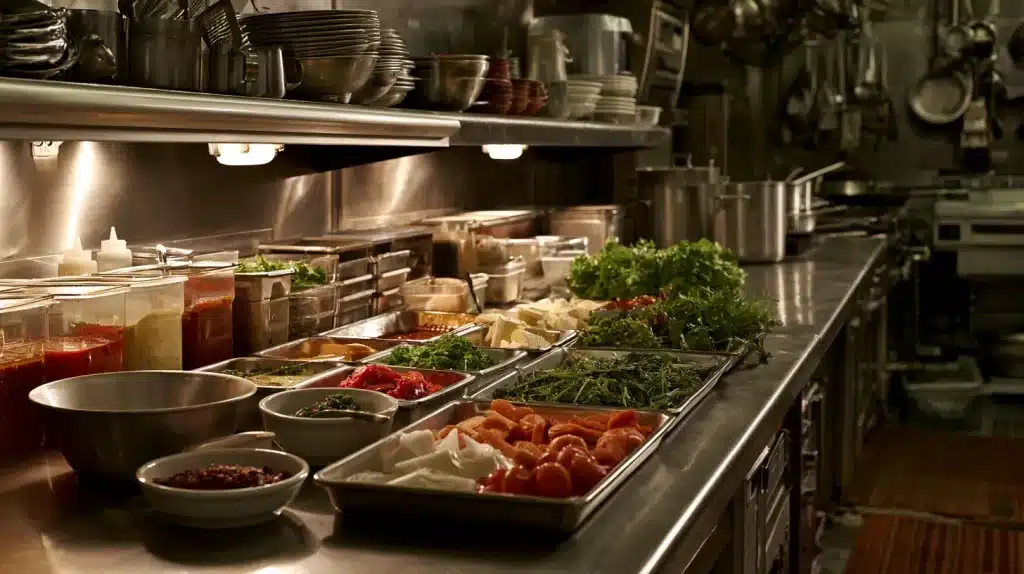
At a restaurant station, cooks prepare sauces, garnishes, proteins, and vegetables in labeled containers before doors open.
Everything is arranged for quick access during a busy rush. This setup allows a kitchen to turn out consistent dishes quickly, even during peak hours.
Why Do Chefs Rely on Mise en Place?
Once the basics are clear, it helps to understand why professional kitchens treat this system as non-negotiable.
It is not just a “fancy” term; when executed properly, it guarantees better kitchen workflow and service.
The benefits go beyond simple organization.
1. Helps Maintain Consistency
Proper portioning supports repeatable results, which matters most in restaurants where every plate needs to match the last.
Guests expect the same dish to taste the same way every time.
2. Reduces Mistakes and Last-Minute Problems: Prepping in advance helps cooks catch missing ingredients or equipment before the heat is even on.
This cuts down on last-minute scrambling during service.
3. Makes Busy Kitchens Easier to Manage: Organized stations allow chefs to coordinate better when orders pile up.
Mise en place supports teamwork by giving every cook a predictable rhythm to follow, even under pressure.
How To Use Mise En Place At Home

It doesn’t need to be difficult to implement for home cooking; it is all about planning and execution.
- How to Use Mise en Place at Home: Home cooks do not need a professional setup to benefit from this method. A few simple habits can make weeknight cooking far less stressful.
- Read the Recipe Before You Start: Look over the ingredients, prep steps, cooking times, and any tools you will need. This helps avoid surprises halfway through.
- Prepare Ingredients in Advance: Chop, measure, and portion everything according to the recipe before turning on the stove. This keeps the actual cooking process focused and quick.
- Set Up Your Workspace for the Cooking Process: Keep the tools and ingredients you use most within easy reach. A clear, uncluttered space makes it easier to move between steps without losing momentum.
Mise en Place vs Meal Prep
Mise en place and meal prep are often confused as the same thing, but there are many differences between the two that make the concept of mise en place unique in the kitchen.
It is important to understand these differences rather than using them interchangeably.
| Feature | Mise en Place | Meal Prep |
|---|---|---|
| Translation/Meaning | “Everything in its place” | “Meal preparation” |
| Primary Goal | Flawless, stress-free cooking flow | Saving time and effort on busy days |
| Time Horizon | Minutes before the cooking starts | Days or a full week in advance |
| State of Food | Raw, measured, and unmixed components | Fully cooked dishes or batch-prepped items |
| Origin | Professional French restaurant kitchens | Home fitness, budgeting, and wellness culture |
Final Thoughts
At its simplest, mise en place means having everything prepared and in place before cooking begins.
Its real value lies in the calm, efficient, and consistent process it creates once the heat turns on.
Whether you are cooking a single weeknight meal or running a professional kitchen through a dinner rush, being ready before you start can make the entire experience smoother and far less stressful.
Frequently Asked Questions (FAQs)
1. What Does Mise En Place Mean in Cooking?
It means having all ingredients, tools, and workspace prepared before you start cooking.
2. Why is Mise En Place Important?
It helps cooks stay efficient, avoid mistakes, and keep results consistent every time.
3. Do Home Cooks Need To Follow Mise En Place?
Yes, even simple prep steps like chopping ahead of time can make home cooking easier and faster.
4. Is Mise En Place Only for Professional Chefs?
No, it applies to any cook who wants a smoother and more organized cooking process.
{
“@context”: “https://schema.org”,
“@type”: “FAQPage”,
“mainEntity”: [
{
“@type”: “Question”,
“name”: “What Does Mise En Place Mean in Cooking?”,
“acceptedAnswer”: {
“@type”: “Answer”,
“text”: “It means having all ingredients, tools, and workspace prepared before you start cooking.”
}
},
{
“@type”: “Question”,
“name”: “Why is Mise En Place Important?”,
“acceptedAnswer”: {
“@type”: “Answer”,
“text”: “It helps cooks stay efficient, avoid mistakes, and keep results consistent every time.”
}
},
{
“@type”: “Question”,
“name”: “Do Home Cooks Need To Follow Mise En Place?”,
“acceptedAnswer”: {
“@type”: “Answer”,
“text”: “Yes, even simple prep steps like chopping ahead of time can make home cooking easier and faster.”
}
},
{
“@type”: “Question”,
“name”: “Is Mise En Place Only for Professional Chefs?”,
“acceptedAnswer”: {
“@type”: “Answer”,
“text”: “No, it applies to any cook who wants a smoother and more organized cooking process.”
}
}
]
}